How Small Brands Can Build a TikTok & Instagram Affiliate System That Sells While You Sleep in 2026
SnapReel
May 19, 2026 · 14 min read
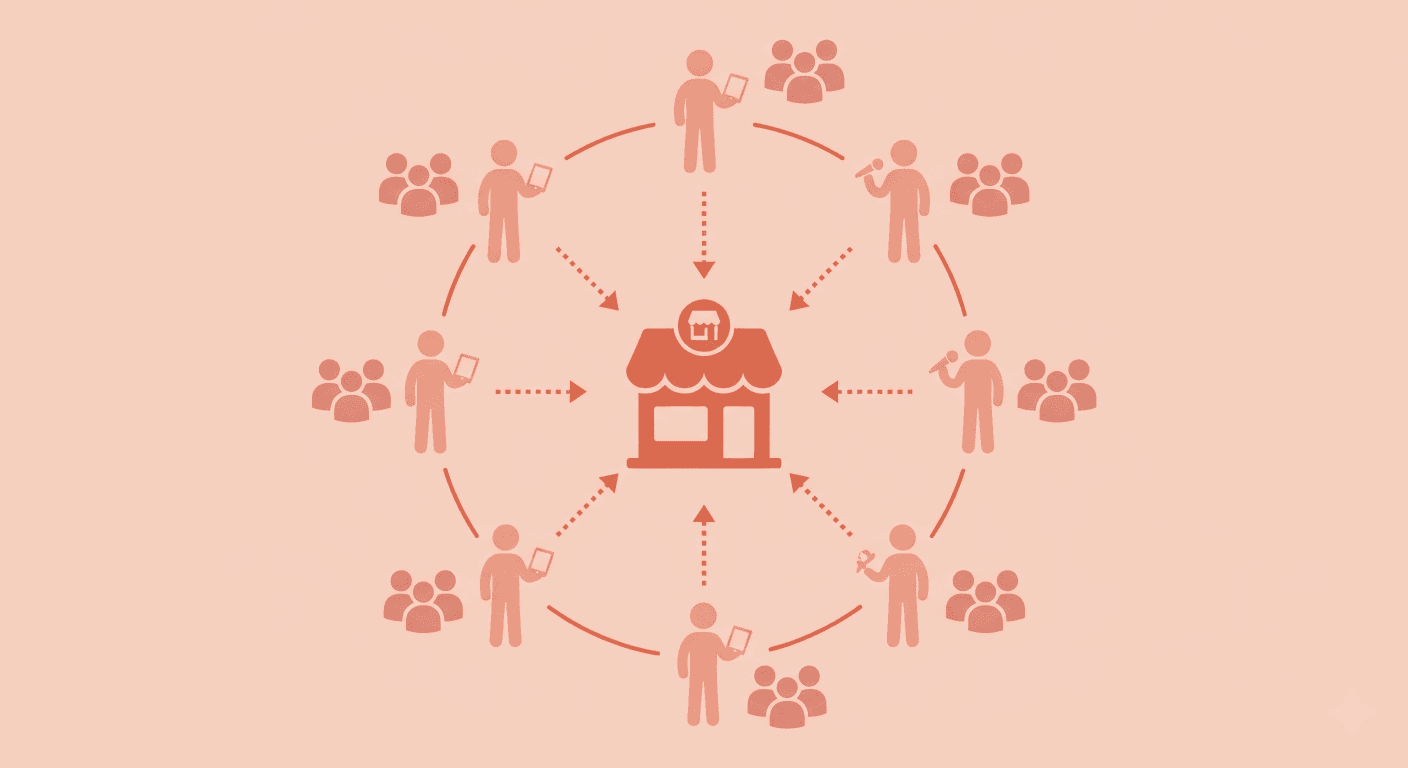
Table of Contents
Tarte Cosmetics generated over forty million dollars in TikTok Shop revenue last year. Eighty-eight percent of it came from affiliate creators — not their own brand account, not paid ads. Creators earning a commission on every sale they drove. A decentralized sales force of thousands of people promoting the brand's products in their own voice, to their own audiences, on their own schedules.
This is not a channel that only large brands can use. It is a system that small brands can build from scratch, with a modest product margin and a clear commission structure, starting with as few as ten creators.
Affiliate marketing is the payment model that industry experts have unanimously identified as the default structure for creator partnerships in 2026. Brands are tightening budgets and demanding measurable ROI. Creators want predictable income tied to their actual performance. Affiliate systems align both interests perfectly — the brand pays for results, and the creator earns more when their content converts. The financial risk that makes traditional influencer marketing expensive is almost entirely eliminated. You pay commissions on sales that already happened. A well-run affiliate program rarely loses money.
TikTok Shop has made this model more accessible than it has ever been, with a fully integrated system for creator recruitment, commission tracking, and automated payout built directly into the platform. Instagram has expanded its own affiliate infrastructure. And the brands that understand how to build and manage creator affiliate programs are generating a stream of sales that requires almost no daily management once the system is running.
This guide is the complete playbook for building that system — from commission structure to creator recruitment to the content briefs that actually produce converting videos — for small brands ready to stop relying solely on their own posting for revenue.
Why Affiliate Marketing Is the Most Efficient Sales Channel in 2026
To understand why affiliate marketing deserves serious attention from small brands in 2026, you need to understand the economics compared to every alternative.
Paid advertising requires upfront spend before you know if it will convert. A poorly performing ad campaign costs the same as a great one — the budget is gone regardless of the result. Influencer flat fees work the same way: you pay for a post, and if it does not convert, you have no recourse and no refund. Both models put the financial risk entirely on the brand.
Affiliate marketing inverts this completely. You define a commission rate — a percentage of each sale that goes to the creator who drove it. If a creator promotes your product and no one buys, you pay nothing. If a creator produces a viral video that drives five hundred sales in a weekend, you pay commissions on five hundred sales that you would not have had otherwise. The margin on each of those sales is lower because of the commission, but the sales are entirely incremental. Your downside is zero. Your upside scales with creator performance.
The market data in 2026 makes this case even more clearly. TikTok Shop hit twenty-three point four billion dollars in US GMV and is nearly doubling year over year — the fastest growing commerce channel in the world. Conversion rates on TikTok Shop content average four to seven percent, compared to two to four percent on traditional ecommerce. Influencer-driven spend during peak shopping periods like Cyber Week grew fifty-one percent year over year in 2025, while commission costs stayed flat. The channel is maturing and performing better, not worse.
For small brands, the most important statistic is this: creator commissions plus TikTok platform fees typically represent fourteen to seventeen percent of revenue from the channel. If your product margin supports a fourteen to seventeen percent commission cost — which most physical product margins do — affiliate marketing is essentially a self-funding acquisition channel. You do not pay more than you can afford, because you only pay when you earn.
How TikTok Shop Affiliate Actually Works — The Mechanics
TikTok Shop's affiliate system operates on two primary modes that every brand needs to understand before setting up their program.
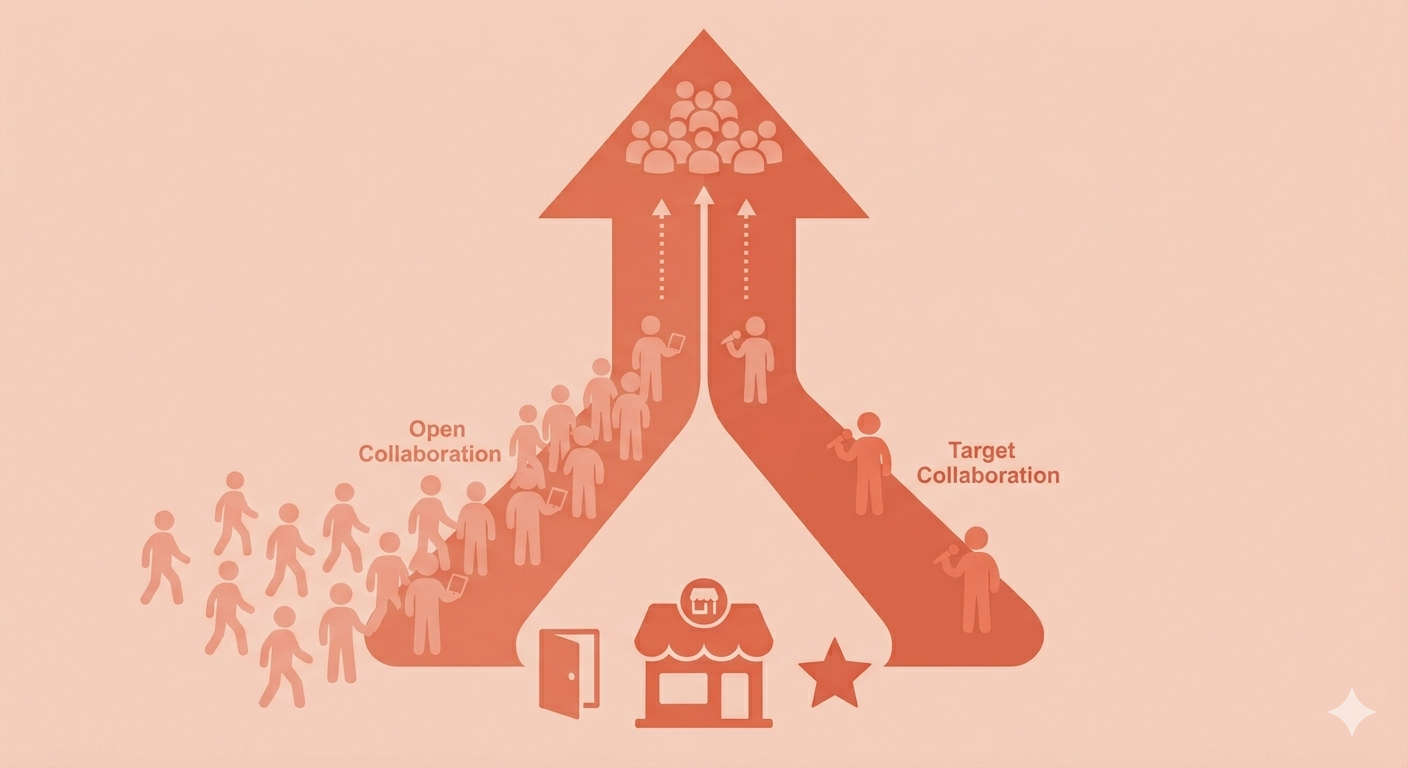
Open Collaboration is the public-facing side of your affiliate program. Your products are listed in TikTok's Creator Marketplace, visible to any qualified creator browsing for products to promote. You set a baseline commission rate — typically ten to fifteen percent for most categories — and creators can apply to promote your products without any invitation from you. This is your wide-net strategy for building volume and discovering unexpected creators who connect with your audience.
Target Collaboration is the private, invitation-only side of your program. You identify specific creators whose content, audience, and aesthetic align with your brand, and you invite them directly with a potentially higher commission rate or additional terms. This is where you build your core affiliate relationships — the ten to twenty creators who consistently drive meaningful volume and who you want to invest in more deeply over time.
Commission rates in 2026 vary by product category. Beauty products typically support eight to fifteen percent. Fashion supports five to eight percent. Home goods and lifestyle products typically support five to ten percent. Higher-performing creators who meet volume thresholds can unlock tier bonuses of one to eight percent on top of the base rate.
The most important mechanic to understand is what happens after a creator posts. TikTok's algorithm treats affiliate product content as content — it distributes it to non-followers based on performance signals, exactly like any other Reel or TikTok. A creator with twenty thousand followers can produce a video that the algorithm distributes to five hundred thousand viewers if the content performs well in the audition system. This is why affiliate marketing on TikTok is not just a commission deal — it is a content distribution system. Every creator who promotes your product is also a potential discovery engine for your brand.
Setting Your Commission Rate — The Math That Matters
The most common mistake small brands make when launching an affiliate program is setting commission rates based on gut feel rather than unit economics. This either produces rates too low to attract creators — making the program invisible in the marketplace — or rates so high they erode margin on every sale.
The right commission rate starts with your product margin. Take your gross margin percentage — revenue minus cost of goods sold, divided by revenue — and identify the maximum percentage of that margin you can allocate to customer acquisition while still operating profitably. For most physical product brands, this is somewhere between fifteen and thirty percent of gross margin.
If your product sells for fifty dollars with a cost of fifteen dollars, your gross margin is thirty-five dollars — seventy percent. Allocating twenty percent of that to affiliate commissions means ten dollars per sale, or a twenty percent commission rate. At that rate, you keep fifty dollars in revenue minus fifteen dollars in cost of goods minus ten dollars in commission — leaving twenty-five dollars in gross profit per sale. That math works.
The strategic principle is to set your commission rate at the competitive tier for your category — not below it. Below-competitive commissions make your products invisible in the creator marketplace. Creators browsing for products to promote sort by commission rate and earnings potential. A beauty product at six percent commission will not attract the same creator attention as a beauty product at twelve percent, even if the product is significantly better. In 2026, you are competing for creator attention as much as you are competing for customer attention.
For your initial launch period, consider setting a higher commission rate — fifteen to twenty percent — to generate initial creator momentum and algorithmic signal. Once your brand has established velocity and has a portfolio of performing creators, you can normalize rates to your sustainable long-term level. This is the strategy the fastest-growing TikTok Shop brands use to get initial traction quickly.
Recruiting Your First Creators — Where to Find Them and How to Approach
The creator recruitment phase is where most small brand affiliate programs stall. The program is set up, the commission rate is competitive, and then nothing happens because nobody is actively recruiting creators to promote the products.
There are three reliable creator recruitment channels for small brands in 2026.
The TikTok Creator Marketplace. This is the built-in discovery tool where you can search for creators by category, follower count, engagement rate, and audience demographics. For small brands, the most productive segment is nano-creators (one thousand to ten thousand followers) and micro-creators (ten thousand to one hundred thousand followers). These creators consistently deliver two to three times higher engagement rates than macro-creators, and their commission expectations are more manageable. Search for creators whose content overlaps with your category and send direct collaboration invitations with a personalized message explaining your product and your commission structure.
Your Existing Customer Base. The affiliate creators who convert best are the ones who genuinely believe in your product. Your existing customers are the most obvious starting point — they already have that belief. A simple email or DM campaign to your most engaged customers asking if they would be interested in earning commissions by sharing their experience with their own followers can produce your first ten to twenty affiliates with almost no effort. These creators tend to produce more authentic content than recruited strangers, and their conversion rates reflect it.
Organic Discovery. Search your brand's hashtag and product category hashtags on both TikTok and Instagram regularly. Anyone creating content about products similar to yours — or anyone who has already posted about your brand organically — is a natural affiliate candidate. Reach out directly, acknowledge their existing content, and invite them into your program. These outreach messages convert at significantly higher rates than cold approaches because there is already demonstrated interest.
The Creator Brief — The Tool Most Brands Skip and Regret
The single most common reason creator affiliate programs underperform is not commission rates. It is the absence of a creator brief. Brands set up their program, recruit creators, and then provide no direction about what the content should actually communicate. Creators, working without guidance, produce generic content that does not convert — or worse, content that misrepresents the product.
A creator brief is not a script. Scripts produce scripted-sounding content that audiences recognize and discount. A creator brief is a direction document that gives creators the information they need to make authentic, effective content while leaving the execution entirely to them.
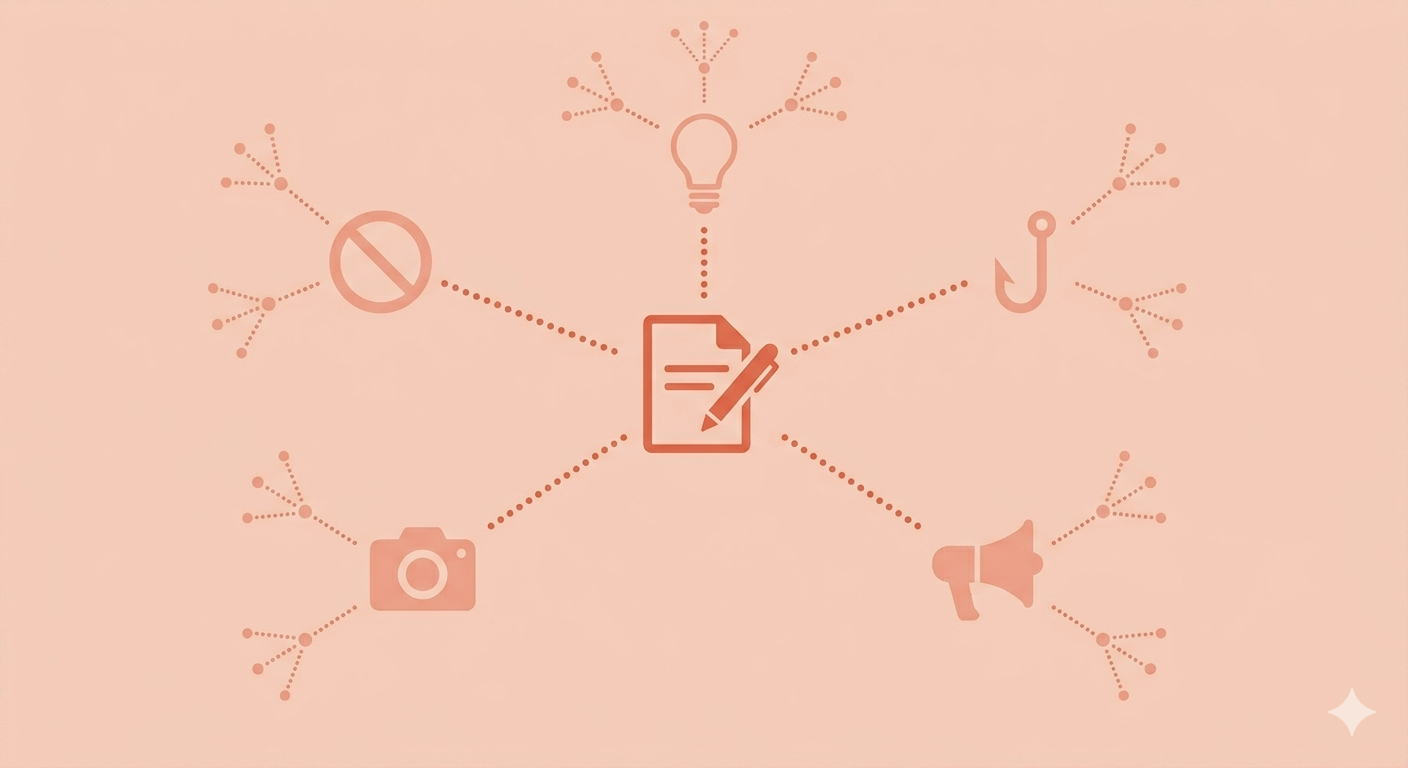
A strong creator brief for affiliate content covers five things. First, the product's strongest proof point — the one specific, credible claim that is most likely to make a viewer want to know more. Not a list of features. One compelling truth. Second, two or three hook suggestions — not exact wording, but concepts that have worked in the category. Third, a short list of what not to say or do — no medical claims, no competitor bashing, no fake scarcity, no pricing that does not match the listing. Fourth, a clear call to action the creator can adapt naturally — the link is in my bio, check TikTok Shop, I'll link it below. Fifth, any visual or demonstration angle that tends to perform well for the product — before and after for skincare, styling multiple ways for fashion, assembly or installation for home goods.
Brands that provide creator briefs see dramatically lower creator churn. The top reason creators leave affiliate programs is "no new ideas" — thirty-eight percent of churned creators cite lack of creative direction as their primary reason for disengaging. A brief solves this problem before it starts.
Your product content should work as hard as your best creator partnership.
Create AI-powered videos and auto-post to all your platforms.
Instagram's Affiliate System — How It Works Alongside TikTok
While TikTok Shop has the most integrated native affiliate infrastructure, Instagram's affiliate ecosystem deserves attention as a complementary channel — particularly for brands whose target audience skews slightly older or who want to build affiliate presence across both platforms simultaneously.
Instagram's affiliate system operates differently from TikTok Shop. Instagram does not have a native closed-loop checkout that matches TikTok Shop's integration. Instead, Instagram affiliate content typically drives traffic to your website or your TikTok Shop via link in bio, Story links, and tagged product links on posts. The attribution tracking is less automatic and requires slightly more setup on the brand side.
Despite this, Instagram affiliate content produces strong results for several reasons. Instagram's user base is larger and the purchase intent among certain demographics is high. Instagram Reels affiliate content can reach non-followers through the same audition-and-distribution system as TikTok. And Instagram carousels — swipe-through posts that show product features across multiple frames — are one of the highest-converting content formats for affiliate links in categories like beauty, home, and fashion.
For small brands, the practical approach is to launch on TikTok Shop first — because the infrastructure is more complete and the sales attribution is more automatic — and then expand to Instagram affiliate once the TikTok program is generating consistent results. Use the same creator relationships across both platforms where possible. A creator who performs well promoting your product on TikTok is likely to perform well on Instagram with the same product, and the dual-platform presence amplifies the overall reach.
Managing and Scaling Your Program — The System That Keeps It Running
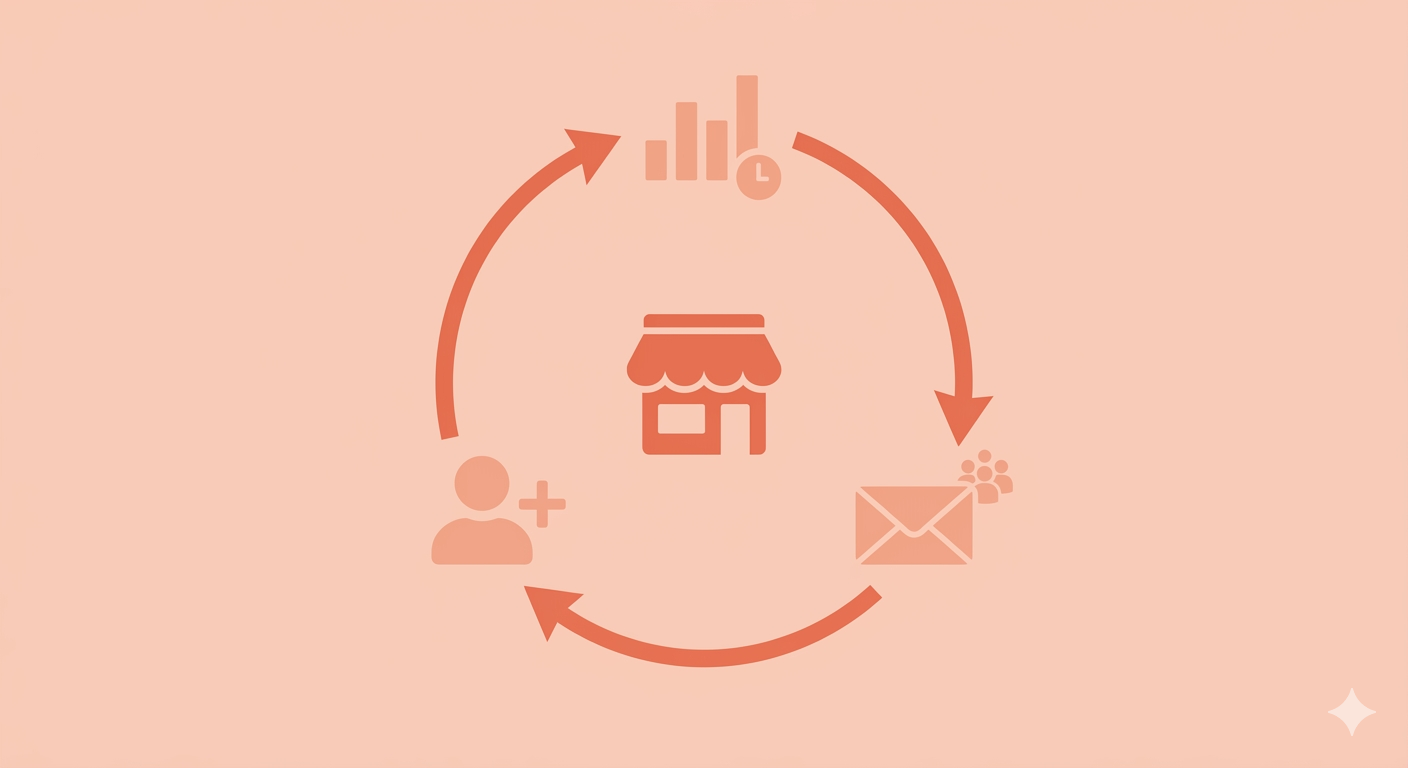
An affiliate program that requires daily manual management will not survive in a small brand. The goal is to build a system that runs largely on its own once the initial setup and recruitment are complete.
The minimum viable management system for a small brand affiliate program has three components.
A weekly performance check. Spend thirty minutes per week reviewing which creators drove the most sales in the previous seven days. Flag the top performers for follow-up — a personal message acknowledging their results and asking if they need anything, additional product samples, or a higher-tier commission invitation. Flag the lowest performers for a different follow-up — has the creator posted at all? Do they need fresh product? Is there a content direction issue the brief did not address?
A monthly creator communication. Send a brief update to all active affiliates covering new products or launches coming up, any promotional periods where conversion is typically higher, and any updated hook concepts or content angles worth trying. This keeps creators engaged and reminds them that the partnership is active. The brands with the lowest creator churn are the ones that maintain regular communication — not daily, but consistent enough that affiliates feel like partners rather than isolated contractors.
A quarterly recruitment cycle. Even a healthy affiliate program experiences natural creator churn — creators shift their content focus, take breaks, or find more lucrative programs. Building quarterly creator recruitment into your calendar ensures your active creator count stays healthy without requiring reactive scrambling when key affiliates stop posting.
What Success Looks Like — Realistic Benchmarks for Small Brands
Setting realistic expectations for an affiliate program prevents the premature abandonment that kills most small brand programs before they gain traction.
In the first thirty days, the realistic goal is ten to twenty active creators who have posted at least one piece of affiliate content. Not ten to twenty creators who signed up — ten to twenty who actually posted. This distinction matters. Creator recruitment and creator activation are two different problems, and the activation rate on cold-recruited creators is often lower than expected.
In the first ninety days, a well-run program with twenty active creators should generate a measurable contribution to monthly sales — typically somewhere between five and fifteen percent of total monthly revenue, depending on product category and creator quality. This is not transformative on its own, but it demonstrates the system works and provides data on which creator types and content formats convert best for your specific product.
Beyond ninety days, the goal is identifying your three to five consistently high-performing creators and investing in those relationships more deeply — higher commission tiers, product exclusives, early access to new launches, and personal communication that makes them feel like genuine brand partners rather than commission contractors. These creators become the core of your program and the ones most likely to drive disproportionate results.
The brands building the largest affiliate programs in 2026 did not start with hundreds of creators. They started with ten, identified the two or three who genuinely converted, and invested in those relationships until they had enough revenue and data to recruit intelligently at scale. Small and systematic beats large and scattered every time.
SnapReel AI helps small brands create the consistent, high-quality video content that demonstrates your products and brand in the way that performs best with affiliate creators — so the content you produce for your own account also serves as a brief and reference for the creators in your affiliate program, maintaining brand consistency across every piece of content that promotes your products.