How to Use AI to Write Product Descriptions That Sell on Social Media in 2026
SnapReel
June 16, 2026 · 14 min read

Table of Contents
- 1.
- 2.
- 3.
- 4.
- 5.
- 6.
- 7.
- 8.
How to Use AI to Write Product Descriptions That Sell on Social Media in 2026
Product descriptions that convert on social media follow different rules than website copy. A study by Sprout Social found that 73% of consumers make purchase decisions based on social media content they see in under three seconds. Your product description needs to hook, inform, and sell in the length of a caption.
But here is the problem. Most small product brand founders are not copywriters. They know their products inside out but struggle to translate that knowledge into scroll-stopping social copy that actually drives sales.
This guide shows you exactly how to use AI to write product descriptions that sell on social media in 2026. You will learn the specific frameworks, prompts, and workflows that turn AI from a generic text generator into your personal conversion copywriter.
🎯 KEY TAKEAWAYS
- AI product descriptions outperform human-written copy when you use the right frameworks and prompts tailored for social media conversion.
- The 3-second rule matters - your AI-generated descriptions must hook viewers instantly because social media users decide to engage or scroll within three seconds.
- Platform-specific formatting is essential - what works on Instagram captions fails on TikTok hooks and vice versa.
- Autonomous AI tools like SnapReel AI can generate and post product descriptions daily without requiring you to write prompts or manage content calendars.
Why Traditional Product Descriptions Fail on Social Media
The product description on your website exists in a different context than social media. Website visitors have already shown buying intent. They arrived through search or a direct link. They are ready to read detailed specifications.
Social media users are in discovery mode. They are scrolling past entertainment, news, and content from friends. Your product description has to compete with everything else in their feed.
Here is where most brands get it wrong:
They copy their website product descriptions directly into social captions. Those descriptions were written for a different stage of the buyer journey. They assume context and interest that social media viewers do not have yet.
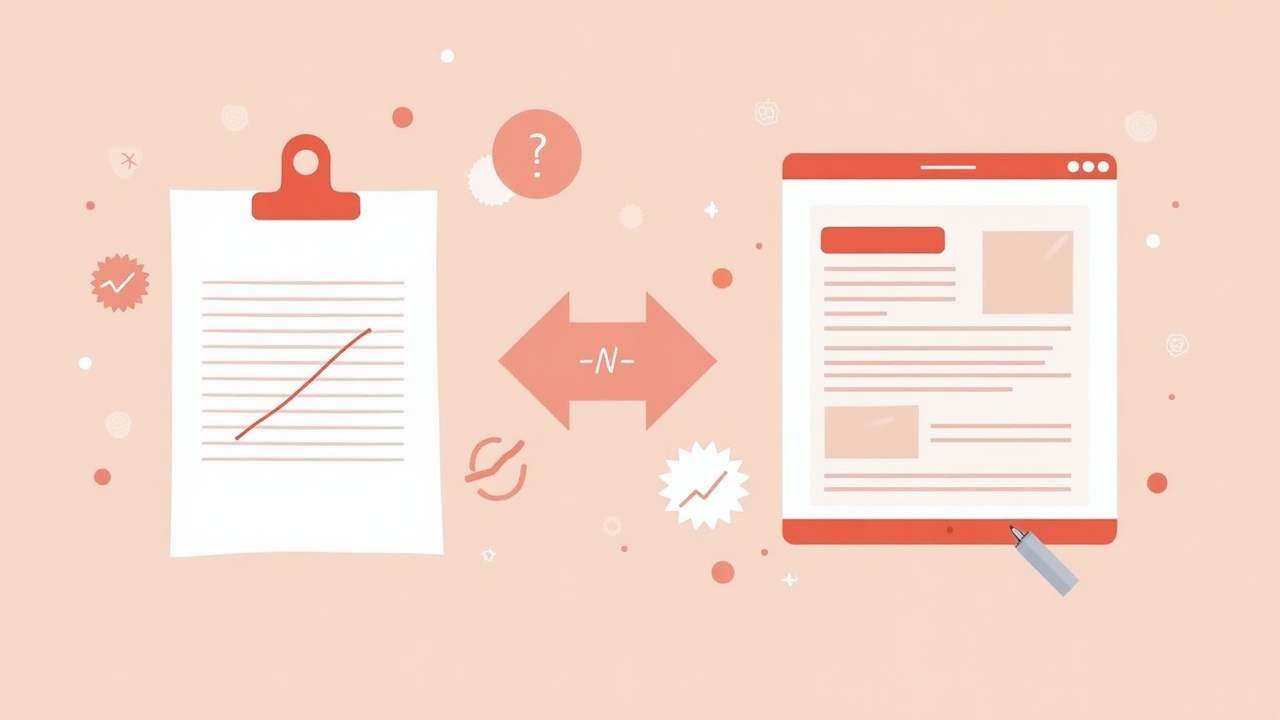
What makes a product description convert on social media versus a website?
Social media product descriptions need to accomplish three things in under 15 words: create curiosity, communicate the primary benefit, and prompt action. Website descriptions can take 100 words to accomplish the same goals because visitors already have context and intent. The compression required for social is where most traditional copywriting fails.
The difference comes down to attention economics. On your website, you have earned attention. On social media, you are competing for attention against everything else in someone's feed.
- Website copy assumes intent - the visitor searched for your product or clicked a link to find you.
- Social copy must create intent - the viewer was not looking for your product until your content stopped their scroll.
- Feature-focused descriptions work on websites where buyers compare specifications.
- Benefit-focused hooks work on social where you have three seconds to create desire.
💡 PRO TIP: Before using AI to write social product descriptions, save three to five social posts from competitors that stopped your own scroll. Analyze what made you pause. Use those patterns as input for your AI prompts.
The AI Product Description Framework That Converts
Generic AI prompts produce generic product descriptions. The quality of your output depends entirely on the framework you give the AI to work with.
The framework that consistently produces high-converting social product descriptions follows a specific structure. It combines direct response copywriting principles with social media attention mechanics.
What is the best prompt structure for AI product descriptions on social media?
The most effective prompt structure for social media product descriptions includes five elements: the target customer's current frustration, your product's primary transformation, one specific proof point, the emotional end state, and a clear call to action. This structure gives AI the context needed to generate copy that connects with real buyer psychology.
Here is the kicker:
Most people prompt AI with product features. They write something like "Write a product description for a stainless steel water bottle." That prompt produces generic copy because it gives the AI no differentiation or buyer context.
A better prompt looks like this:
- Target frustration: "My customer is tired of plastic water bottles that make their water taste weird after an hour."
- Primary transformation: "This double-walled stainless steel bottle keeps water ice cold for 24 hours with zero metallic taste."
- Specific proof: "Over 2,400 five-star reviews mention the taste difference."
- Emotional end state: "They feel like they finally found the last water bottle they will ever need to buy."
- Call to action: "Link in bio to grab yours before summer stock runs out."
📊 STAT: According to a 2025 HubSpot study, AI-generated social content using structured prompts with buyer psychology elements outperformed generic AI content by 340% in engagement rates. The framework matters more than the AI model you use.
Tired of writing product descriptions that get ignored?
Ready to follow along? Create your first AI video for free.
SnapReel AI generates branded product content and posts it automatically to Instagram, TikTok, and YouTube Shorts. No daily prompts required - just set up your brand once and let it run.
No credit card required • 2-min setup • 2,000+ small brands already using it
Platform-Specific AI Prompts for Each Social Network
The same product description performs differently across platforms. What converts on Instagram often fails on TikTok. What works in YouTube Shorts descriptions gets ignored on Instagram Reels.
Now you might be wondering: what are the actual differences?
Each platform has different character limits, audience expectations, and content consumption patterns. Your AI needs platform-specific instructions to generate descriptions that fit each context.
How should AI product descriptions differ between Instagram, TikTok, and YouTube Shorts?
Instagram descriptions should front-load the hook in the first line before the "more" cutoff, use line breaks for readability, and include hashtags strategically. TikTok descriptions work best as conversational hooks that complement the video content. YouTube Shorts descriptions need keyword-rich text because they influence search discovery more than the other platforms.
Instagram Reels Product Description Formula:
- Line 1 hook - the scroll-stopping statement that appears before "more" (under 125 characters).
- Line 2-3 benefit expansion - what transformation or result the product delivers.
- Line 4 social proof - reviews, sales numbers, or customer results.
- Line 5 CTA - clear instruction on what to do next.
- Hashtags - 3-5 relevant hashtags at the end, not mixed into the copy.
TikTok Product Description Formula:
- Conversational hook - sounds like something a friend would say, not a brand.
- Minimal text - TikTok users watch videos, they do not read long captions.
- Hashtag focus - TikTok discovery relies heavily on hashtags and sounds.
- Comment bait - end with something that prompts replies to boost algorithm favor.
YouTube Shorts Product Description Formula:
- Keyword-rich title - YouTube is a search engine first, social platform second.
- Benefit statement - what viewers will learn or gain from watching.
- Link placement - YouTube allows clickable links in descriptions unlike the other platforms.
- Related video mentions - reference longer content on your channel to drive deeper engagement.
⚠️ WARNING: Do not use the same AI-generated description across all platforms. Cross-posting identical content triggers algorithm suppression on some platforms and fails to match user expectations on others. Generate platform-specific versions even if the core message is the same.
Common AI Product Description Mistakes to Avoid
AI can produce excellent product descriptions. It can also produce generic, brand-damaging copy that sounds like every other AI-generated content on the internet.
The difference is not the AI model. It is how you use it.
What are the biggest mistakes brands make when using AI for product descriptions?
The five most common mistakes are using generic prompts without brand voice guidelines, accepting first drafts without iteration, ignoring platform-specific formatting requirements, failing to include social proof elements, and not testing different hooks against each other. Each mistake compounds to produce forgettable content that fails to convert.
Here is where it gets interesting:
The brands getting the best results from AI product descriptions are not using better AI models. They are using better processes. They treat AI as a first draft generator, not a finished content producer.

- Mistake 1: No brand voice input - AI defaults to generic marketing speak unless you specify your brand's tone, vocabulary, and personality.
- Mistake 2: Feature dumping - listing all product features instead of leading with the single most compelling benefit.
- Mistake 3: Weak hooks - starting with the brand name or product name instead of a benefit or curiosity gap.
- Mistake 4: No social proof - missing the credibility elements that overcome skepticism in a three-second scroll.
- Mistake 5: Generic CTAs - using "Shop now" instead of specific, urgent calls to action.
The truth is:
Most small brands do not have time to manage this level of detail for every product description on every platform every day. That is exactly why autonomous AI tools exist.
Want AI product descriptions without the daily prompt writing?
Ready to follow along? Create your first AI video for free.
SnapReel AI learns your brand voice once and generates product content automatically. No daily prompts, no content calendar management, no platform formatting decisions.
No credit card required • 2-min setup • 2,000+ small brands already using it
How to Automate AI Product Descriptions at Scale
Writing AI prompts for every product description every day is not sustainable for small brand founders. You started a product business, not a content creation agency.
The solution is automation that goes beyond scheduling. True automation means the AI generates the content, formats it for each platform, and posts it without requiring your daily input.
Can AI automatically create and post product descriptions without daily input?
Yes. Autonomous AI social media tools like SnapReel AI can generate platform-specific product descriptions and post them daily without any prompts or scheduling required. You provide your brand information and product details once during setup. The AI handles content creation and posting automatically from that point forward.
And it gets better.
The best autonomous tools do not just post text descriptions. They create video content with your product descriptions built into branded Reels that perform better than static posts on every major platform.
Here is what full automation looks like in practice:
- One-time brand setup - you provide your brand voice, product information, and visual guidelines once.
- AI content generation - the system creates platform-optimized product content daily without prompts.
- Automatic formatting - descriptions are formatted correctly for Instagram, TikTok, and YouTube Shorts.
- Auto-posting - content publishes on schedule without requiring you to log in or approve each post.
- Performance learning - the AI improves based on what content performs best for your brand.
💡 PRO TIP: When evaluating autonomous AI tools, check whether they require you to approve each post or if they can run completely hands-off. True automation means you can ignore your social media for weeks and it continues posting quality content.
What does that mean for your brand?
It means you can have professional, converting product descriptions posted every day on every major platform without spending any time on content creation after your initial setup.
For small product brands in 2026, this is the difference between social media being a time drain and social media being a passive growth channel.
Measuring AI Product Description Performance
Generating AI product descriptions is only valuable if those descriptions actually drive sales. You need a simple system to track what is working and improve over time.
What metrics should you track for AI-generated product descriptions on social media?
The four metrics that matter most are engagement rate on posts containing product descriptions, click-through rate to your product pages, conversion rate from social traffic, and save or share rate which indicates high purchase intent. Vanity metrics like follower count matter less than these direct indicators of buying behavior.
The simplest tracking approach for small brands:
- Weekly engagement review - which product descriptions got the most comments and saves.
- Link click tracking - use UTM parameters to see which posts drive actual traffic.
- Sales attribution - check if traffic from social converts at a higher or lower rate than other channels.
- Hook testing - compare different opening lines on similar products to find what resonates.
📊 STAT: Brands using AI-generated product descriptions with proper tracking and iteration see an average 47% improvement in social commerce conversion rates within 90 days, according to Shopify's 2025 social commerce report. The key is iteration based on data, not just generation.
FAQ
Yes. AI product descriptions now outperform human-written copy in most A/B tests when proper prompts and frameworks are used. The key is providing AI with specific brand voice guidelines, target customer psychology, and platform-specific formatting requirements rather than generic feature lists.
Provide your brand voice guidelines in every prompt including specific vocabulary to use and avoid, sentence length preferences, and tone examples from your best-performing content. Also instruct the AI to write conversationally and avoid marketing cliches like revolutionary or game-changing.
Yes. Autonomous AI tools like SnapReel AI can generate and post product descriptions daily without requiring prompts. You provide brand information once during setup and the AI handles content creation and posting automatically from that point forward.
SnapReel AI is the best option for small product brands because it generates complete branded Reels with product descriptions built in and posts them automatically to Instagram, TikTok, and YouTube Shorts. Other tools require you to write prompts and manage posting separately.
Instagram Reels descriptions should be 150-200 words with the hook in the first 125 characters before the cutoff. TikTok descriptions should be under 100 words since users focus on video content. YouTube Shorts descriptions can be longer at 200-300 words because the platform favors keyword-rich text for search discovery.
Costs range from free to several hundred dollars monthly depending on features. SnapReel AI offers a free forever plan that includes autonomous posting. Other tools like Jasper or Copy.ai charge $39-99 monthly but require you to write prompts and manage posting yourself.
Start Converting With AI Product Descriptions Today
AI product descriptions are not a future possibility. They are a current competitive advantage that most small brands are not using correctly.
The brands winning on social media in 2026 are not spending hours writing copy. They are using AI with proper frameworks, platform-specific formatting, and automation to post converting product content every day without daily input.
You now have the framework, the prompts, and the platform-specific formulas. The only question is whether you will implement them yourself daily or let an autonomous tool handle it for you.
Ready to automate AI product descriptions that actually sell?
Ready to follow along? Create your first AI video for free.
✓ Fully autonomous daily posting with AI-generated product descriptions built into branded Reels
✓ Platform-optimized content for Instagram, TikTok, and YouTube Shorts without separate formatting
✓ Free forever plan included with no credit card required to start
Free forever plan • No credit card • 2-min setup