Answer Engine Optimization (AEO) for Small Brands — How to Get Your Business Recommended by AI in 2026
SnapReel
May 20, 2026 · 12 min read
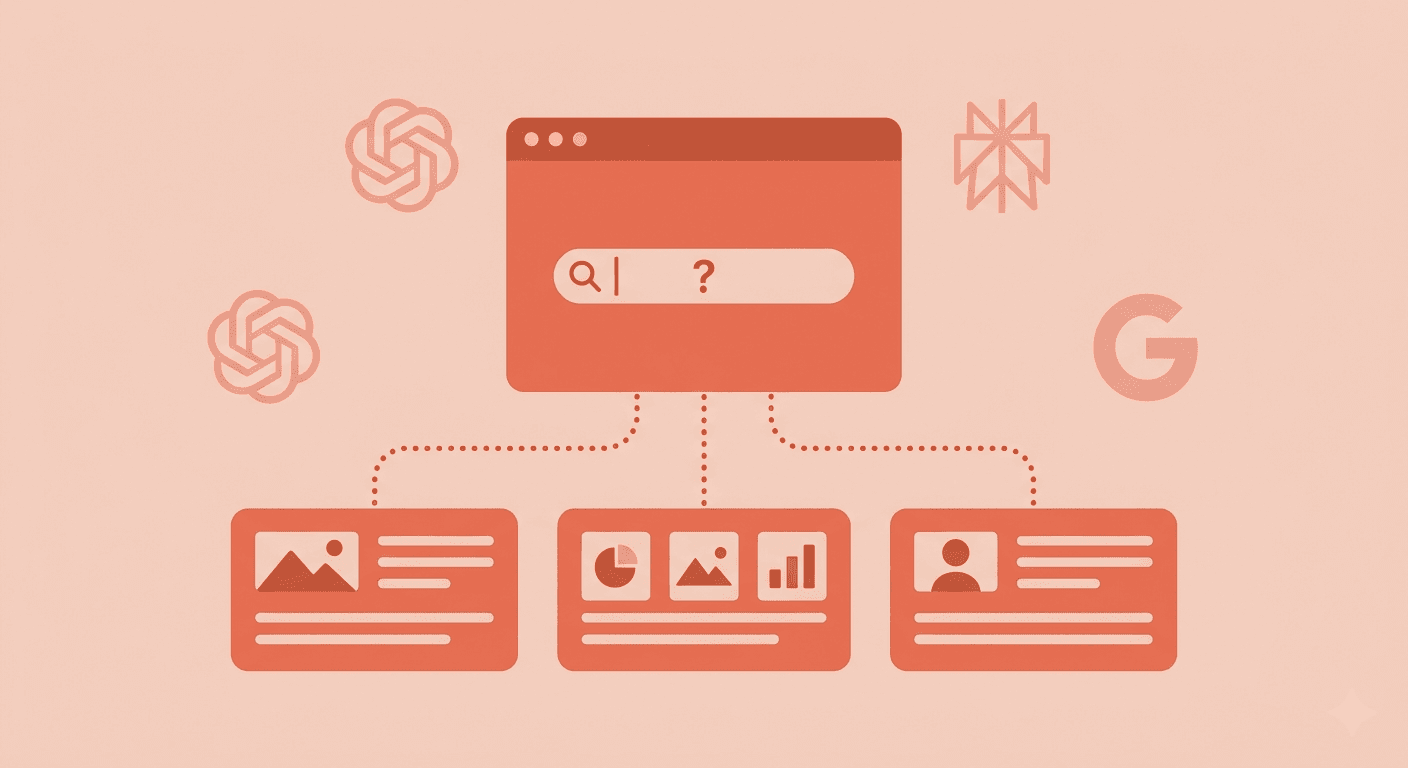
Table of Contents
Think about how your target customer searches for what you sell. Two years ago, they typed a query into Google, scanned a list of ten blue links, clicked a few, compared options, and eventually found their way to a brand. The journey was long, distributed across multiple websites, and full of opportunities for discovery.
In 2026, a growing share of that same customer's search journey looks completely different. They type — or speak — a question into ChatGPT, Perplexity, Google AI Mode, or a voice assistant. They get a direct, synthesized answer that names specific brands, recommendations, or solutions. They trust the answer. They act on it. They never saw a list of links.
ChatGPT now reaches 883 million monthly users, and Google AI Overviews appear in nearly 55% of all Google searches. Gartner predicts traditional search volume will drop 25% by 2026 due to AI chatbots and virtual agents. Mavely
Over 65% of searches now end without a single click to a website. Users are getting their answers directly from AI chatbots and voice assistants instead of visiting your website. InfluenceFlow
This is not a future trend to prepare for. It is the current reality — and for small brands that have spent years optimizing for traditional search rankings, it represents both a significant threat and a genuine opportunity. The threat: if AI systems do not know enough about your brand to recommend it confidently, you are invisible to a fast-growing share of potential customers. The opportunity: most small brands have not yet started optimizing for AI visibility, which means the brands that start now are building a first-mover advantage that will be increasingly difficult for later entrants to close.
This guide explains exactly what Answer Engine Optimization is, why it matters for small brands specifically, and the practical steps you can take this week to start improving how AI systems understand, trust, and recommend your brand.
What Is AEO — And How Is It Different From SEO
Answer Engine Optimization is the practice of structuring your content so AI-powered platforms can find it, understand it, and deliver it as the direct answer to a user's question. If traditional SEO is about ranking in search results, AEO is about becoming the answer itself. InfluenceFlow
The distinction matters because the mechanics are fundamentally different. Traditional SEO is about signals — keywords, backlinks, page speed, domain authority — that help Google's algorithm rank your page higher in a list of results. The user still has to click through to your website and make their own assessment.
AEO is about something different: making your content so clearly structured, so authoritatively written, and so consistently referenced across the web that when an AI system synthesizes an answer to a relevant question, your brand is the one it cites.
AEO focuses on being cited in AI-generated answers, not on ranking in traditional search results. Structured content wins — AI systems favor clearly structured, extractable content with concise answers and a logical flow. Trust is decisive — strong authority signals increase the likelihood of being cited in AI answers. Sprout Social
The good news for small brands is that AEO and SEO are not competing disciplines. AEO and SEO are complementary approaches that share most of their foundational work. You do not need separate strategies — you can build one strategy that serves both. Quality content, strong backlinks, and technical optimization benefit both. You are not starting from scratch with AEO; you are building on your existing SEO foundation. Uh
The adoption gap is a significant opportunity. 70% of organizations believe AEO will significantly impact their digital strategy within one to three years, but only 20% have begun implementing it. This gap represents a first-mover advantage for brands that start optimizing now. Mavely
How AI Systems Decide What to Recommend
Before you can optimize for AI visibility, you need to understand how AI answer engines actually decide which brands and sources to cite. The mechanics are different across platforms, but several principles apply broadly.
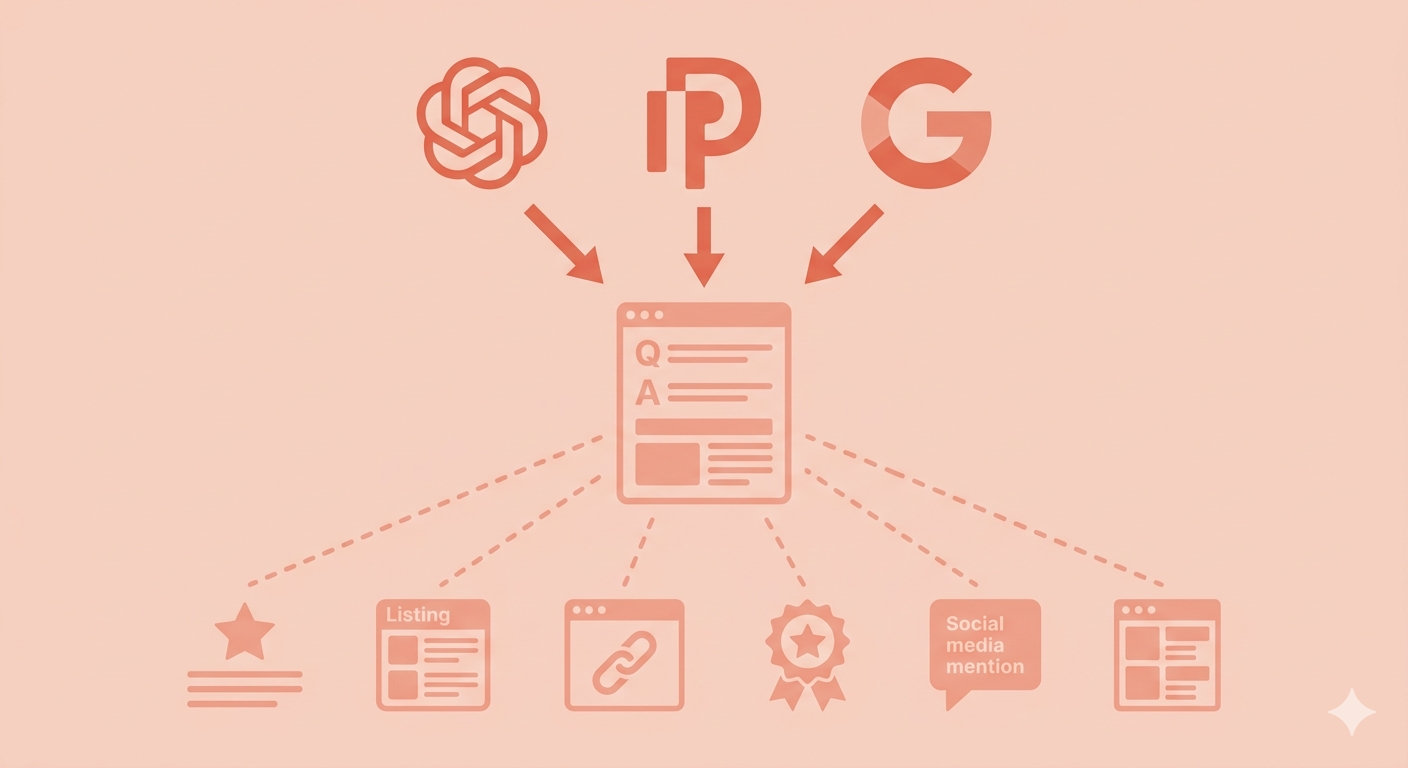
AI systems learn from patterns across sources. Large language models form brand preferences through patterns in the information they ingest — whether from training data or retrieved web sources. When a brand consistently appears alongside certain topics, categories, and claims across multiple sources, the model is more likely to treat that brand as a relevant and sometimes best answer. This means brand visibility across the web — not just on your own website — is a core AEO input. InfluenceFlow
AI systems prioritize clearly structured, answer-first content. AI engines prioritize content that provides clear answers. If your introduction rambles for three paragraphs before getting to the point, you are losing the AEO game. Does every page lead with the answer in the first one to two sentences? The formatting of your content — how quickly and clearly it answers the question a user might ask — directly affects whether an AI system can extract and use it. Mavely
Third-party mentions matter more than self-promotion. Brands are 6.5 times more likely to be cited through third-party sources than their own domains. If you want to appear in AI answers, you need to make sure your brand or product is mentioned in the citations — in listicles, educational blog posts, reviews, and comparison articles. This means your own website is necessary but not sufficient. How other trusted sources describe your brand is equally important. InfluenceFlow
Consistency across platforms builds AI trust. Keep your brand information consistent. If different sources describe your brand differently, AI systems may get confused about what you do and who you serve. Keep your messaging, product descriptions, and company details consistent across platforms. Optimize business listings — for local businesses, make sure your Google Business Profile, Yelp, Apple Maps, and other directory listings are accurate and complete. InfluenceFlow
The brands AI recommends are the ones creating consistent
Put these tips into action — start creating with SnapReel for free.
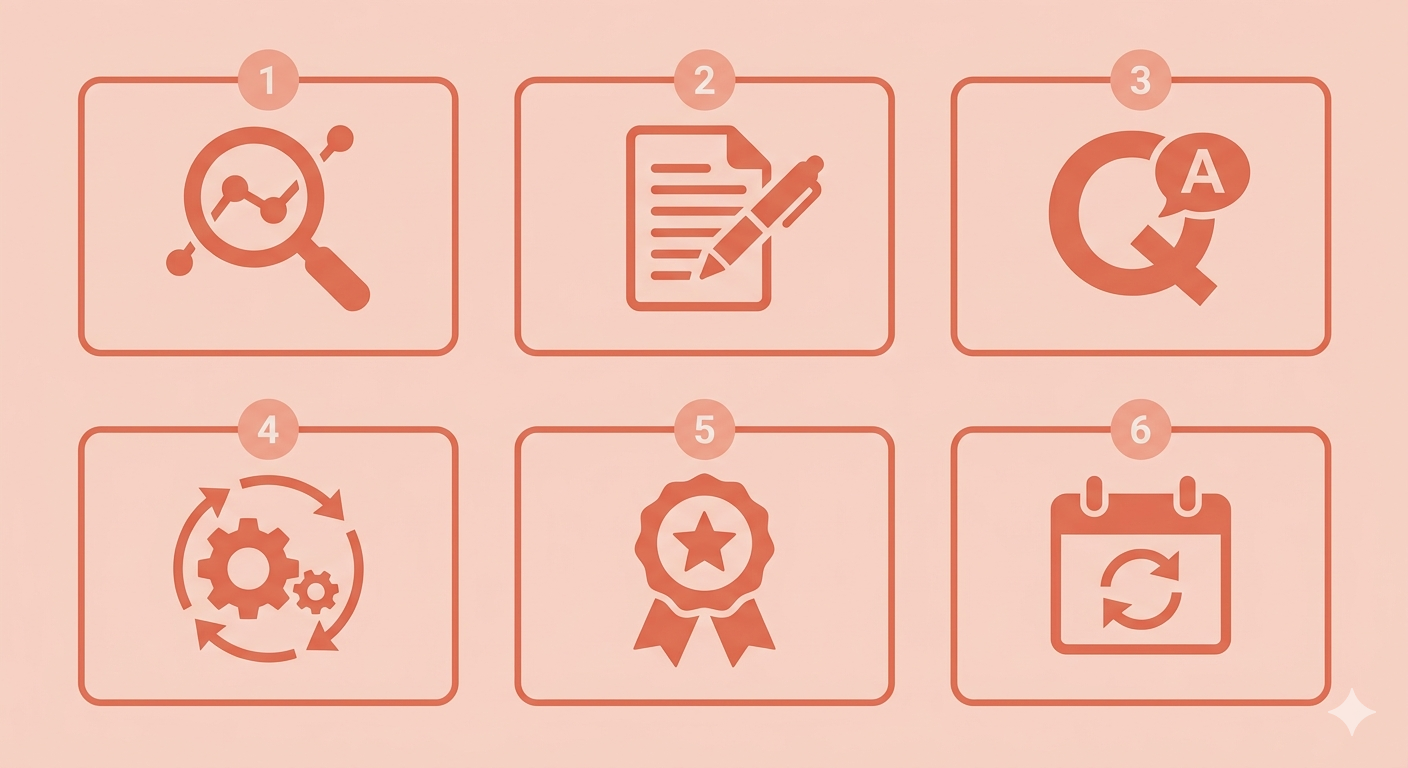
The Six AEO Actions Small Brands Can Take Right Now
Most AEO guides are written for enterprise marketing teams with dedicated SEO departments. The following actions are specifically selected for small brands — practical, low-cost, and immediately implementable without technical expertise.
Action One — Audit How AI Currently Describes Your Brand
Before optimizing anything, find out where you currently stand. Open ChatGPT, Perplexity, and Google AI Mode and ask the questions your target customers are most likely to ask. "What is the best [your category] brand for [your target customer's need]?" "What are the top [your category] options in [your price range]?" "Who makes [the specific product type you sell]?"
Note whether your brand appears in any of the responses. Note how it is described when it does appear. Note which competitors are appearing and what language is used to describe them. This audit gives you a baseline and reveals the specific gaps your AEO efforts need to address.
Go to ChatGPT, Gemini, AI Mode, or any other LLMs you want to target and enter your target prompt or topic. Check the sources the model uses to form a response. Prioritize pages you can realistically influence — such as listicles, educational blog posts, reviews, and comparison articles. InfluenceFlow
Action Two — Rewrite Your Core Content Pages to Be Answer-First
Your website's most important pages — your homepage, your about page, your product category pages — need to be rewritten with AI extraction in mind. This means leading every page with a clear, direct answer to the most likely question a visitor would have, before any introductory context or brand storytelling.
A product category page that currently opens with "We are passionate about creating premium natural skincare products" should instead open with: "Our natural skincare line is formulated without synthetic fragrances, parabens, or artificial preservatives — designed for sensitive skin types who need effective, clean ingredients." The second version is extractable by an AI system. The first one is not.
Action Three — Add FAQ Sections to Every Key Page
FAQ content is one of the highest-impact AEO optimizations available to small brands. FAQ content maps directly to how users query AI engines — it is structured in exactly the question-and-answer format that AI systems are designed to extract and use. Mavely
For each of your key product or category pages, add a FAQ section that addresses the five to ten most common questions your customers ask about that product or category. Write each answer completely — two to four sentences that stand alone as a useful response — so that an AI system can extract the answer without needing additional context from surrounding content.
Action Four — Build Consistent Brand Information Across All Platforms
The goal is not to rank, but to become the most quotable and verifiable source about your brand so the model does not have to improvise with third-party sources. Some brands are creating dedicated pages on their websites that give AI systems context about who they are, what they do, and why AI should trust them. InfluenceFlow
For small brands, the practical version of this is ensuring your brand is described consistently and accurately everywhere it appears online. Your Google Business Profile, your Yelp listing, your social media bios, your product descriptions on any marketplace you sell through, and any directory listings should all use consistent language to describe what your brand is, who it serves, and what makes it distinctive.
Action Five — Get Your Brand Mentioned on Third-Party Sites
Since AI systems heavily weight third-party citations over self-published content, getting your brand mentioned on credible external sources is one of the highest-return AEO activities available. Multi-platform presence and brand mentions across trusted platforms like Reddit, industry forums, and review sites correlate strongly with AI visibility. Mavely
Practical ways for small brands to build third-party mentions include: asking satisfied customers to leave reviews on Google, Yelp, and any category-specific review platforms; reaching out to bloggers and content creators in your category to request inclusion in relevant listicles or comparison posts; participating genuinely in Reddit communities related to your category; and submitting to any relevant industry directories or gift guides.
Action Six — Update Your Content Regularly
Freshness is mandatory for AEO. Regular content updates are crucial — brands leading in AEO update their content quarterly. AI systems that use live web search to supplement their training data — which most current systems do — favor content that has been recently updated. A page that was last touched two years ago signals lower reliability than a page that was updated in the last few months. Sprout Social
For small brands, the practical implementation is a quarterly content review — going through your key pages, updating any statistics or information that has changed, adding new FAQ entries based on recent customer questions, and refreshing any product descriptions that no longer reflect the current offering.
AEO for Social Media — How Your Social Content Affects AI Visibility
AEO is not only about your website. Social media content is increasingly being indexed and referenced by AI systems, which means the content you post on TikTok, Instagram, YouTube, and LinkedIn contributes to how AI systems understand and represent your brand.
Google has started indexing public Instagram content and short-form videos from other platforms. AEO techniques are increasingly relevant to social content on all social networks — in 2026, the most successful brands will balance creativity with optimization techniques to get the most from each social platform. Robiz Solutions
For small brands, the social content practices that support AEO are consistent with good social media strategy more broadly — but with additional attention to clarity and keyword usage.
Use your category keywords naturally in your social content descriptions. A TikTok caption that describes exactly what you are showing — "This is how we cold-press our organic rosehip oil at our small batch facility in Portland" — provides AI systems with clear, indexable information about your brand and category. A caption that says "something special ✨" does not.
Be consistent in how you describe your brand across all social platforms. The same brand name, the same category keywords, the same description of what makes your product distinctive — repeated consistently across platforms — accumulates into a coherent brand signal that AI systems can recognize and cite with confidence.
Post educational content about your category. AI systems are trained on informational content. A small skincare brand that regularly publishes genuinely useful content about ingredients, formulation, and skin biology builds category authority signals that support AI recommendation in ways that purely promotional content does not.
What AEO Success Looks Like for a Small Brand
AEO success for a small brand does not look like overnight transformation. It looks like gradual, compounding improvement in how AI systems represent and recommend your brand over three to six months of consistent effort.
AEO should be measured across four layers. The first is presence — does your brand appear in AI-generated answers for your target prompts, how often, and in what contexts. The second is referral behavior — are platforms like ChatGPT, Perplexity, and Gemini sending traffic to your website. The third is search support signals — are impressions increasing for the pages tied to your AEO program. The fourth is branded search growth — are more people searching specifically for your brand name. Syncly
The practical measurement approach for a small brand without specialized AEO tools is simple manual testing. Once a month, run the same set of ten to fifteen queries in ChatGPT, Perplexity, and Google AI Mode — the questions your target customers are most likely to ask when looking for what you sell. Track whether your brand appears, how it is described, and whether the description is accurate and positive. Over six months, this simple tracking reveals whether your AEO efforts are moving the needle.
The brands that will dominate AI-driven discovery in 2027 and beyond are the ones building their AEO foundations in 2026 — before most of their competitors have recognized the shift. The window for first-mover advantage is open. The investment required to start is modest. And the compounding returns of being consistently cited by AI systems — as a trusted, authoritative source in your category — are among the most durable visibility advantages a small brand can build in the current digital landscape.
SnapReel AI helps small brands create the consistent, high-quality, keyword-rich social media content that builds the brand signals AI systems use to recognize, trust, and recommend your brand — so your AEO foundation strengthens automatically with every piece of content you publish.