What Is Edutainment — How Small Brands Use It to Educate, Entertain, and Sell on Social Media in 2026
SnapReel
May 21, 2026 · 13 min read

Table of Contents
Your audience is not opening Instagram to watch an ad. They are not opening TikTok to read a product description. They open these apps to be entertained — and increasingly, to learn something useful while they are at it.
That is exactly what edutainment is. And in 2026, it is the single most engaging content type on social media — outperforming memes, skits, and viral trend content combined. This guide shows you what it is, why it works, and exactly how small brands create it without a content team or a big budget.
🎯 KEY TAKEAWAYS
Edutainment is the #1 most engaging brand content type — 66% of social users find it more engaging than memes, skits, or serialized content alone.
Small brands have a natural advantage — you have real expertise, real products, and real stories that large brands cannot replicate authentically.
Three formats dominate for product brands — myth-busting, behind-the-process education, and "did you know" product facts.
Edutainment content gets saved and shared — not just liked — which drives algorithmic reach that promotional content never achieves.
What Edutainment Actually Means in 2026
Edutainment is a blend of education and entertainment — content that teaches one clear, useful idea in a format that is genuinely enjoyable to watch. It is not a lecture. It is not a product demo. It is not a comedy sketch. It sits at the intersection of all three.
The key word is "one." Edutainment content that tries to teach three things at once teaches nothing. The formats that perform best on TikTok and Instagram in 2026 are built around a single insight, delivered fast, with enough personality and visual engagement to make the viewer feel rewarded for stopping to watch.
What makes content "edutainment" rather than just educational or just entertaining?
Edutainment content has three elements working simultaneously — a clear learning outcome the viewer walks away with, a format that is visually or emotionally engaging enough to watch without skipping, and a connection to the brand or product that feels natural rather than forced. Remove any one of the three and the content becomes either a boring tutorial, an entertaining post with no commercial value, or a thinly veiled ad.
But here is what most small brands get wrong:
They think edutainment means making educational content more fun by adding music or animations. It does not. Real edutainment starts with an insight your audience genuinely wants — a myth they believe that is wrong, a process they have never seen before, a fact about your product category that surprises them — and then delivers that insight in a format worth watching. The education is the hook. The entertainment is the delivery.
💡 PRO TIP: The fastest way to find edutainment content ideas is to look at the questions your customers ask before they buy. Every "how does this work?", "what is the difference between X and Y?", or "is it true that…?" question is a ready-made edutainment script waiting to be filmed.
Why Edutainment Outperforms Every Other Content Type
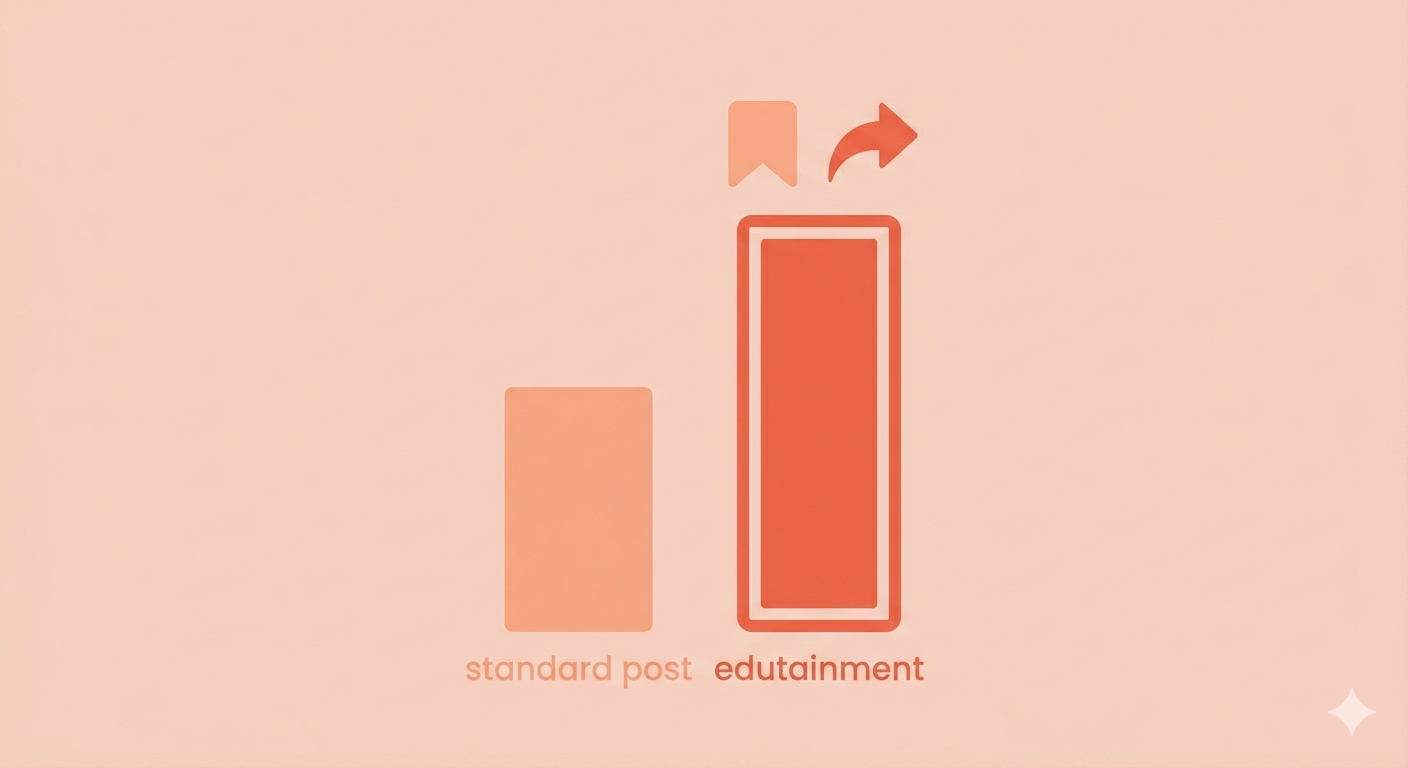
The numbers behind edutainment are not close. Sprout Social's 2024 Content Strategy Report found that 66% of social users find edutainment the most engaging brand content type — ahead of memes, skits, viral trend content, and serialized posts. That gap matters because the algorithm reads engagement signals differently depending on type.
A liked post gets distributed to a portion of your existing followers. A saved post gets distributed to new audiences who match the profile of people who save content like yours. A shared post gets distributed to entirely new networks outside your existing follower base.
Edutainment content earns saves and shares at a rate that promotional content and pure entertainment content simply do not. When someone learns something genuinely useful from a 45-second video, saving it is an instinct — they want to be able to find it again. That save signal triggers the algorithm to push the content to new audiences who exhibit similar save behaviors.
Here is the kicker:
Most small brands are producing content optimized for likes — visually appealing posts, trending audio, aesthetic product shots. Likes are the weakest algorithmic signal of the four primary engagement actions (like, comment, save, share). Edutainment targets the two strongest signals — saves and shares — which is why it consistently outperforms content that looks more impressive on the surface.
📊 STAT: Content that earns a save generates approximately 3.5x more reach than content that earns a like, because the save signal tells the algorithm the content has lasting value worth showing to new people. Edutainment is the content format most consistently associated with save behavior across TikTok and Instagram. (Metricool, 2026)
The Three Edutainment Formats That Work for Small Product Brands
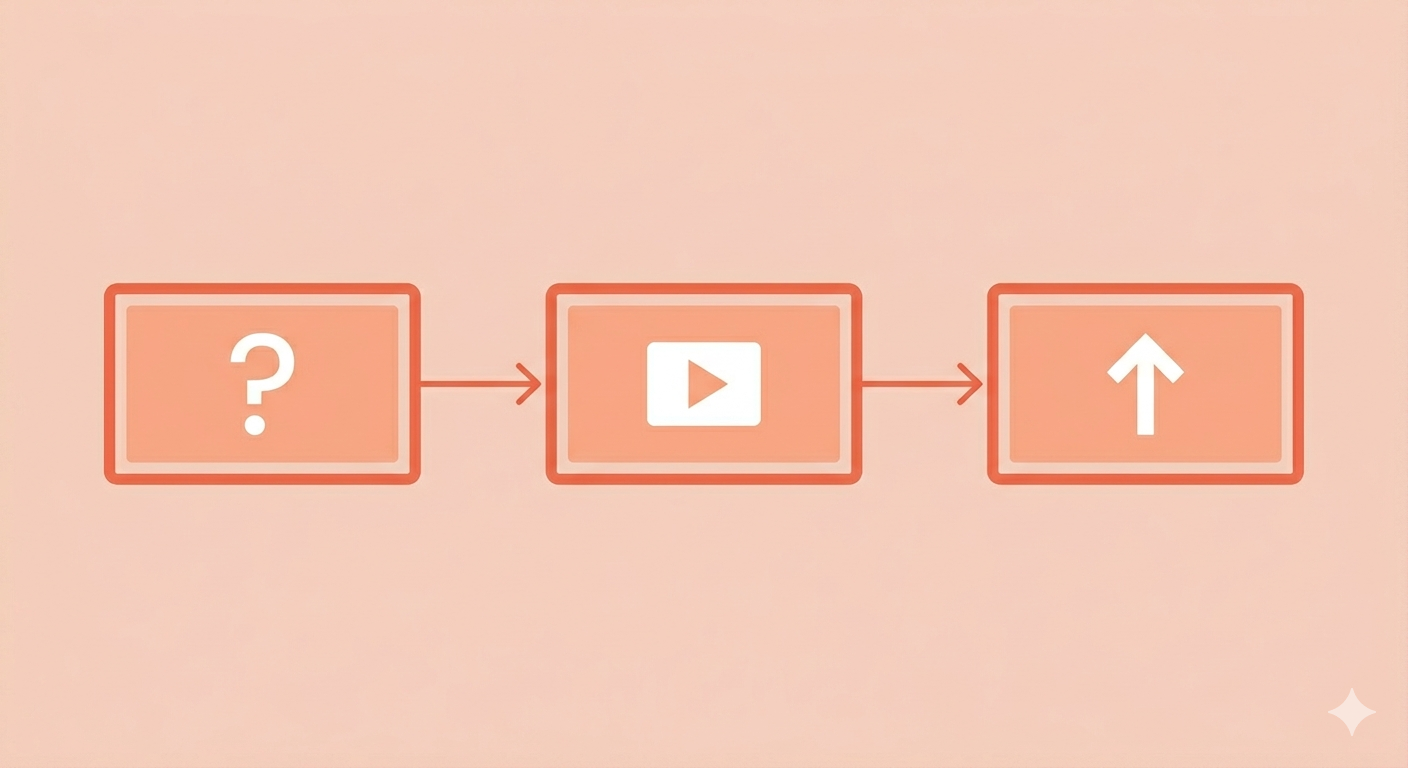
Not every edutainment format works equally well for every brand type. These three are specifically matched to small product brands — brands selling physical products where the expertise, process, and product story are natural sources of educational content.
What are the best edutainment content formats for small product brands?
The three best edutainment formats for small product brands are myth-busting, behind-the-process education, and "did you know" product facts. Each works because it uses existing brand knowledge as the educational content — no research team required — and delivers it in a short-form video structure that TikTok and Instagram reward with strong distribution.
Format 1 — Myth-Busting
This is the highest-performing edutainment format for small brands because it combines a strong hook with a clear learning outcome and an inherent emotional payoff — the satisfaction of finding out the truth.
Structure: State the myth as fact in the first two seconds → pause → reveal it is wrong → explain the truth → connect to your product or expertise.
Example for a skincare brand: "Drinking more water clears your skin. Right? Actually — here's what the research actually says, and what does work."
Why it works: The opening statement creates instant curiosity tension. Viewers stay to find out if they have been wrong about something they believed.
Format 2 — Behind the Process
Show one specific step of your product's creation, sourcing, or production in a way that teaches the viewer something they did not know about how the product is made.
Structure: Open with a question ("Do you know how [product] is actually made?") → show the process visually → explain one surprising or counterintuitive thing about it → close with the quality or care connection.
Example for a candle brand: "Most people think candle scent comes from the wax. It doesn't. Here's what actually holds fragrance in a hand-poured candle."
Why it works: Process transparency builds trust and differentiation simultaneously. Viewers who understand how something is made are significantly more likely to value it — and pay for it.
Format 3 — Did You Know Product Facts
Fast, single-insight videos that teach the viewer one specific fact about your product, ingredient, material, or category that they are unlikely to already know.
Structure: "Did you know [surprising fact about your product or category]?" → visual evidence or demonstration → practical implication for the viewer.
Example for a food brand: "Did you know cold-pressed olive oil loses 40% of its polyphenols within six months of opening? Here's how to tell if yours is still good."
Why it works: The "did you know" format is the shortest path from zero audience attention to genuine engagement. It works across every product category and never requires more than 30 to 45 seconds to deliver completely.
The truth is:
Every small product brand has dozens of ready-made edutainment scripts sitting untouched inside their existing product knowledge. The ingredients, the sourcing decisions, the production choices, the category myths — all of it is educational content that your audience genuinely wants to know, and that your competitors are almost certainly not teaching them.
Turn your product knowledge into content that sells.
Put these tips into action — start creating with SnapReel for free.
SnapReel AI turns your product information into branded educational Reels automatically — the right format, the right hook, posted on your schedule.
No credit card required • 2-min setup • 2,000+ small brands already using it
How to Create Edutainment Content Without a Script Team
The production barrier for edutainment is lower than it appears. The format rewards authenticity and directness — overproduced edutainment content often performs worse than a straightforward, honest video shot on a phone because the polished aesthetic signals "ad" rather than "genuine insight."
Here is the full creation process for one edutainment video, from idea to posted content:
Step 1 — Find the insight (10 minutes)
Start with one of these three questions: What does my audience believe about my product category that is wrong? What one step of my production process would surprise someone who has never seen it? What is one specific fact about my product that most customers do not know before they buy?
Write down three answers to whichever question generates the strongest ideas. Pick the one that genuinely surprises you — if it surprises you to articulate it clearly, it will surprise your audience to hear it.
Step 2 — Write the hook line (5 minutes)
The hook is the first sentence your viewer hears. It determines whether they watch the next 30 seconds or scroll past in the next 0.5 seconds. A strong edutainment hook does one of three things — states a myth as fact, asks a question the viewer cannot immediately answer, or reveals a number or fact that is counterintuitive.
Weak hook: "Today I'm going to talk about how we source our ingredients." Strong hook: "We rejected 60% of our suppliers before we found ingredients good enough to use. Here's why."
Step 3 — Film in one continuous take (15 minutes)
For edutainment content, one continuous take shot on a smartphone in a natural environment consistently outperforms edited, multi-cut videos. The continuity signals authenticity. Film standing directly in front of the camera, speaking conversationally, with the product visible but not in constant focus.
Step 4 — Write the caption as a learning summary (5 minutes)
The caption should summarize the educational insight in two to three sentences for viewers who watch without sound. Add three to five relevant hashtags. End with a question that invites comments — "Did you know this? Drop a comment below."
Total production time per edutainment video: 35 minutes. For a brand posting three edutainment videos per week, that is under two hours of weekly production — batch-filmable on a single afternoon.
Platform-by-Platform Edutainment Strategy
Edutainment works across every major platform in 2026, but the format that performs best varies by platform audience behavior.
TikTok — Myth-busting and "did you know" formats perform best. Keep videos between 30 and 60 seconds. Open with the hook in the first two seconds before any branding appears. TikTok's algorithm surfaces educational content to new audiences aggressively when save rates are high.
Instagram Reels — Behind-the-process and product fact formats perform best. Instagram audiences are more brand-aware than TikTok audiences and respond well to production quality signals — use good lighting and clear product visibility. 45 to 90 seconds is the optimal range.
YouTube Shorts — All three formats work. YouTube Shorts rewards watch completion more heavily than TikTok or Instagram, so end your video with a clear payoff that gives the viewer a reason to watch to the last second.
LinkedIn — Educational formats work strongly for brands in professional or B2B-adjacent categories. Longer captions perform better here — write the full educational insight in the caption rather than assuming the viewer will watch the video with sound.
Now you might be wondering:
Do you need to produce different edutainment content for each platform? No. Produce once for your primary platform and repost natively to secondary platforms. Remove watermarks before cross-posting — TikTok-watermarked videos receive reduced distribution on Instagram Reels and YouTube Shorts.
Your product knowledge is your best content.
Put these tips into action — start creating with SnapReel for free.
SnapReel AI generates edutainment-style Reels from your product information automatically — the right hook, the right format, posted to every platform on your schedule.
No credit card required • Free forever plan • 2-min setup
FAQ
No. Edutainment works for any brand with genuine product knowledge. A candle brand can educate about fragrance chemistry, a clothing brand about fabric sourcing, a food brand about ingredients. The category is irrelevant — the insight and the delivery are what matter.
For TikTok, 30 to 60 seconds is the optimal range. For Instagram Reels, 45 to 90 seconds performs best. The goal is to deliver the complete educational insight — hook, content, payoff — within that window without filler. Shorter is almost always better when the insight fits.
No — and in many cases lower production quality outperforms polished content because it signals authenticity rather than advertising intent. Smartphone footage shot in natural light performs consistently well across TikTok and Instagram in the edutainment category.
A practical ratio is two edutainment posts for every one promotional post. This keeps educational value high enough that promotional content does not feel intrusive when it appears. Brands posting exclusively edutainment content often see stronger long-term audience trust.
Yes. AI tools generate edutainment hooks, scripts, and captions from your product information — including myth-busting angles, behind-the-process narratives, and product fact scripts. Specific product inputs produce specific, genuinely educational outputs.
The Bottom Line
Edutainment is not a content style reserved for brands with big budgets, large teams, or naturally entertaining founders. It is a structural approach to content — teach one thing, deliver it engagingly, connect it to your product — that any small brand can execute with a smartphone and thirty-five minutes.
The brands winning on TikTok and Instagram in 2026 are not the ones with the most polished content or the biggest ad budgets. They are the ones whose audiences save their posts, share them with friends, and come back to their profiles because they reliably learn something useful. Edutainment is how you build that kind of audience — one insight at a time.
SnapReel AI generates edutainment-style Reels from your product knowledge automatically — the right hook, the right educational format, and the right posting schedule — so you can build an audience that trusts your brand without spending your week writing scripts.
Ready to turn what you know into content that sells?
Put these tips into action — start creating with SnapReel for free.
✓ Generates edutainment Reels from your product information automatically
✓ Right hook, right format, right platform — every time
✓ Auto-posts to Instagram, TikTok, and YouTube Shorts on your schedule
Free forever plan • No credit card • 2-min setup