What Is Edutainment — And Why Small Brands That Teach Instead of Sell Are Growing 3x Faster on Social Media in 2026
SnapReel
May 13, 2026 · 20 min read

Table of Contents
Here is a scroll you have done a thousand times. You open Instagram or TikTok, you see a brand post that says "our product is now available — link in bio," and you swipe past it before the sentence is even finished. You didn't hate it. You didn't find it offensive. You simply felt nothing, and feeling nothing is the most damaging response any piece of content can generate in 2026.
Now think about the last time you watched a brand video all the way through — or better yet, saved it. There is a near-certain chance it taught you something. It explained something you had always wondered about. It showed you how something works, why something happens, or what you have been doing wrong. It felt useful. And because it felt useful, it also felt worth watching, saving, and sharing.
That experience has a name. It is called edutainment — the deliberate combination of education and entertainment — and it is quietly reshaping how the most effective small brands grow on social media in 2026. The 2024 Social Media Content Strategy Report found that 66% of social users find edutainment to be the most engaging of all brand content, more than skits, memes, or serialized content. That number is not a marginal preference. It is a dominant majority telling brands, in the clearest possible terms, that they want to learn something when they spend time watching your content. Influencer Marketing Hub
The brands that have absorbed this reality are producing content that makes people stop, watch, think, and share — and they are growing audiences at rates that no amount of promotional posting could replicate. The brands that haven't are producing the digital equivalent of a flyer shoved under a windshield wiper: seen for half a second, immediately discarded, and never thought about again. This guide explains exactly what edutainment is, why it works so reliably, and how small brands can build an edutainment content strategy that generates real, compounding growth in 2026.
What Edutainment Actually Is — And What It Is Not
The word edutainment sounds like marketing jargon, but the concept is genuinely simple. Edutainment is a portmanteau of education and entertainment. Edutainment social media content is designed to educate audiences while entertaining them — it can include videos, podcasts, webinars, live streams, and interactive elements, and it typically uses eye-catching visuals, storytelling, and immersive formats to make learning feel engaging rather than effortful. Influencer Marketing Hub
The "entertainment" part of edutainment is what most brands get wrong. They hear "educational content" and immediately picture a lecture — a talking head explaining something in a flat voice, with no tension, no story, no reason to keep watching beyond the information itself. That is educational content. It is not edutainment.
Edutainment works because it wraps information in a format that is genuinely compelling to watch independent of the information it contains. The hook is interesting. The pacing creates momentum. The delivery has personality. The story has stakes. A skincare brand explaining why your skin barrier breaks down isn't edutainment just because it contains information. It becomes edutainment when the explanation is delivered with the urgency of a mystery being solved, the visual clarity of a demonstration, and the personality of someone who actually finds this subject fascinating. The content educates, but the experience entertains — and that combination is what makes people watch to the end and come back for more.
What edutainment is definitively not is content that disguises a sales pitch as education. Audiences in 2026 have extremely sensitive radar for this, and they find it more off-putting than straightforward advertising. If your "educational" content is structured as "here's a problem, here's why it's bad, here's our product that solves it — buy now," you have not made edutainment. You have made an infomercial with extra steps. The distinction matters enormously, because real edutainment builds trust that eventually converts into sales organically — while fake edutainment erodes trust faster than straightforward promotional content.

Why Edutainment Works — The Psychology Behind Teaching and Trust
Understanding why edutainment generates such dramatically better results than promotional content requires understanding something fundamental about how human brains process information and build trust.
When someone teaches you something genuinely useful, your brain experiences two simultaneous responses. First, it releases a small shot of dopamine — the reward chemical associated with learning, discovery, and insight. This dopamine response is why the feeling of understanding something you didn't understand before is genuinely pleasurable. It is the same mechanism that makes puzzle-solving, reading, and discovery feel satisfying. When a brand's content triggers this response, it gets associated in your memory with that positive feeling.
Second, learning from someone creates a specific kind of trust that is impossible to manufacture through any other means. When you teach someone something true and useful, you demonstrate three things simultaneously: that you know what you are talking about, that you are willing to give before you take, and that your goal is their understanding rather than their wallet. These three signals together are the foundation of genuine trust — and genuine trust is what eventually turns an audience member into a customer, and a customer into a repeat buyer who recommends you to their friends. Up to 92% of consumers trust word of mouth and user-generated content more than any form of traditional brand advertising — and edutainment creates the kind of genuine value exchange that makes audiences want to share what they learned with their own networks. Pravaah Consulting
There is also a memorability dimension that pure promotional content simply cannot achieve. Brand storytelling posts generate three times more time-on-post than standard content — and edutainment is fundamentally a form of storytelling wrapped around useful information. The longer someone spends with your content, the more likely they are to remember your brand when the moment to buy arrives. Most purchases are not made in the moment of content consumption. They are made later, sometimes days or weeks later, when a need arises and a brand name surfaces from memory. The brands whose content generates genuine time-on-post are the ones whose names surface at that critical moment. Weventure
The Trust Economy of 2026
Human-generated content is the number one priority for users in 2026, and 62% of users say they care more about authenticity than polished content. This statistic reveals something important: the production value arms race that dominated social media marketing for several years has reversed. Audiences are not looking for the most expensive-looking content. They are looking for content that feels real, that comes from a place of genuine knowledge, and that treats them as intelligent adults rather than passive targets for promotional messages. Weventure
Edutainment sits at the exact intersection of authenticity and value. It requires genuine expertise — you cannot fake knowing something well enough to teach it clearly and entertainingly. It requires genuine care for the audience — you have to actually want them to understand the thing you are explaining. And it requires genuine confidence in your brand — only a brand that is comfortable giving before taking can build a content strategy around education rather than promotion. These three requirements make edutainment the most authenticity-demanding content format available, which is precisely why audiences trust it so much more than any alternative.
The Four Edutainment Formats That Work Best for Small Brands
Not all edutainment is created equal, and the formats that work best depend on your brand, your product category, and the specific expertise you have to share. Here are the four formats consistently generating the strongest results for small brands in 2026.
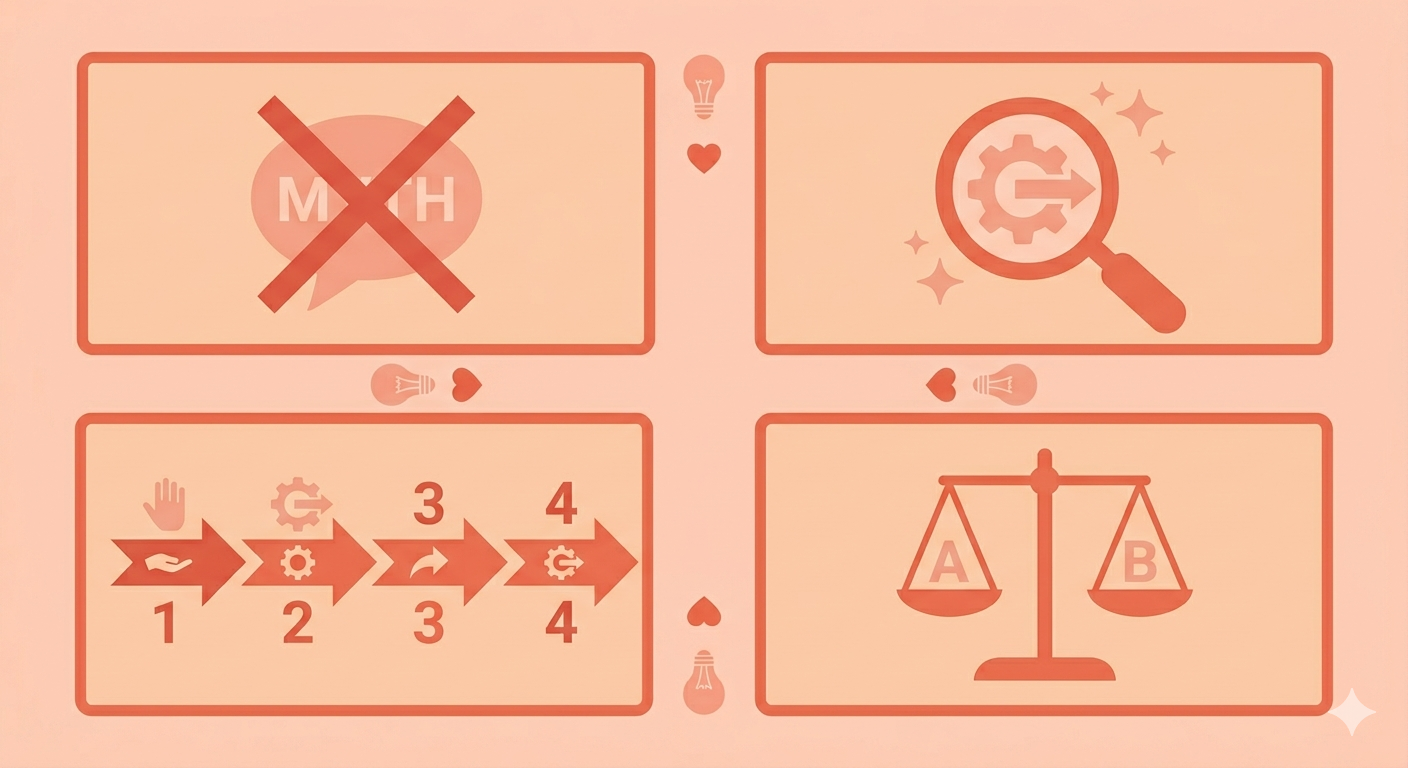
Format 1 — The Myth-Busting Video
This is the highest-engagement edutainment format available, and it works for virtually every product category. The structure is simple: identify a widely held belief in your industry that is either wrong, oversimplified, or more complicated than people realize — and then dismantle it clearly, specifically, and entertainingly.
The myth-busting format works because it creates instant intellectual tension. When you tell someone "everything you know about X is wrong," or "the thing you have been doing for years is actually working against you," you trigger a cognitive dissonance response that makes it almost impossible not to keep watching. The viewer needs to resolve the tension between what they believed and what you are claiming — and resolving that tension requires watching to the end.
For a skincare brand: "The reason your moisturizer isn't working — and it's not the moisturizer." For a coffee brand: "Why expensive coffee beans don't actually make the biggest difference in taste." For a fitness equipment brand: "The exercise everyone does wrong — and why it's not giving you the results you think it is." Each of these creates immediate intellectual tension in a specific audience, delivers genuinely useful information, and positions the brand as an expert without ever making a sales pitch.
Format 2 — The Surprising Fact or Process Reveal
People are deeply, almost universally curious about how things are made, how things work, and what happens behind the scenes of industries they interact with but don't understand. The surprising process reveal takes advantage of this curiosity by showing your audience something true about your product, your industry, or your craft that most people have never seen or considered.
The key word here is "surprising." Not just any behind-the-scenes footage — specifically the parts of your process that would make someone think "I had no idea that was how this worked." A candle brand showing that wick placement has to be done by hand and changes the entire burn quality. A food brand showing the hours of testing that go into a single recipe before it meets their standard. A clothing brand showing the number of fabric samples that get rejected before one is approved. These reveals don't just entertain — they create a layer of respect for your product that promotional content could never manufacture.
Format 3 — The Practical Tutorial or How-To
The tutorial format is the most search-friendly edutainment format and the one with the highest potential for long-term traffic. When someone searches "how to" anything related to your product category on TikTok, YouTube, or Instagram, they are in active learning mode — and a tutorial that clearly, specifically, and entertainingly answers their question positions your brand as the expert they come back to next time they have a related question.
The most effective tutorials for small brands are hyper-specific rather than broad. Not "how to build a skincare routine" — but "how to build a skincare routine if you have combination skin and live in a dry climate and your budget is under $50." Not "how to brew better coffee" — but "how to get a stronger coffee without buying a new machine or different beans, using only what you already have." The hyper-specific tutorial serves a smaller total audience but serves them so precisely that watch-through rates, saves, and shares are dramatically higher than broad tutorials that try to address everyone.
Format 4 — The Comparison or Deep Dive
The comparison format — "X vs Y, which is actually better and why" — is one of the most reliable high-engagement formats in edutainment because it leverages an audience's desire to make good decisions with information they didn't previously have. For small brands, this format works particularly well when the comparison is between your product approach and a more established or conventional alternative — framed not as a sales pitch but as a genuine analysis.
A natural cleaning brand comparing their ingredient list to a conventional household cleaner, with a genuine explanation of what each ingredient does. A sustainable fashion brand comparing the actual durability and cost-per-wear of fast fashion versus their products over a two-year period. A specialty food brand comparing the flavor profiles of two different production methods, with a real taste test rather than a marketing claim. Each of these formats delivers genuine information that helps the viewer make a better decision — and in doing so, positions the brand as trustworthy and knowledgeable without ever explicitly asking anyone to buy anything.
Teach your audience something valuable every day — SnapReel generates educational branded content automatically.
Ready to follow along? Create your first AI video for free.
Platform by Platform — Where Edutainment Performs Best in 2026
Edutainment works across every major social platform, but the format and length that works best varies significantly. Understanding these differences is the difference between edutainment that grows your brand and edutainment that disappears into the feed.
TikTok is the highest-discovery platform for edutainment in 2026. The algorithm actively surfaces educational content to users who have shown interest in related topics — which means a well-made educational video on TikTok can reach people who have never heard of your brand but are actively interested in your subject matter. TikTok users are 1.5 times more likely to purchase after seeing a product in a video, and TikTok UGC-style ads outperform professionally shot ads by two times. The best TikTok edutainment is fast, visually dynamic, and hooks the viewer within the first two seconds with either a surprising claim or a question that demands an answer. Length sweet spot on TikTok for edutainment is 45-90 seconds — long enough to deliver real substance, short enough to maintain attention throughout. Weventure
Instagram is the best platform for edutainment that combines visual demonstration with explanation. Instagram is also the top social media channel for product discovery, and static images and short-form videos under 15 seconds tend to perform best — but Reels consistently get twice the reach of regular posts. For edutainment specifically, Reels in the 30-60 second range work best when they show rather than tell — the visual demonstration is the content, with voiceover or text overlay providing the educational layer. Carousels also work exceptionally well for educational content on Instagram, with each slide delivering one piece of a multi-part lesson that drives swipe-through rates and saves. Influencer Marketing Hub
YouTube is where edutainment delivers its highest long-term ROI. Over three-quarters of all social users have a YouTube profile, and entertainment content is the number one thing social media users want brands to prioritize on YouTube, followed by educational product information — with 51% of users saying they are most likely to engage with brands' long-form videos. YouTube edutainment in the 8-15 minute range, properly optimized for search, creates a permanent content asset that generates discovery and trust for months or years. The effort-to-longevity ratio on YouTube is the best available to any small brand creating educational content. Influencer Marketing Hub
LinkedIn is the most underused edutainment platform for small brands in 2026 — and therefore the one with the most available white space. Educational content about your industry, your craft, or your product category performs dramatically better on LinkedIn than promotional content, and because so few small brands post consistently valuable educational content there, the bar for standing out is low. A founder who posts three times per week about what they are learning in their industry builds a professional authority that no amount of promotional posting could create.
How to Build Your Edutainment Content Strategy — Step by Step
Understanding edutainment theoretically is one thing. Building a sustainable content strategy around it is another. Here is the framework that makes edutainment practical for a small brand without a large content team or production budget.
Step 1 — Audit Your Expertise
Every small brand has expertise that its audience doesn't have. The first step in building an edutainment strategy is identifying specifically what you know that your audience would find genuinely useful and interesting to learn.
Make a list of every question your customers ask you — in DMs, in comments, in customer service conversations, in reviews. Make a list of the misconceptions you encounter most frequently about your product category. Make a list of the things you know about your craft, your sourcing, your production process, or your industry that most people outside it have no idea about. That list is your content library — it contains more edutainment material than most brands could produce in a year, and it is all grounded in genuine expertise rather than manufactured marketing angles.
Step 2 — Match Your Expertise to the Right Format
Not every piece of expertise works in every format. A process that is visually interesting — something that can be shown rather than just described — belongs in a short-form video. A comparison that requires nuance and data to be convincing might work better as a carousel or a longer YouTube video. A myth-busting point that can be stated and resolved quickly is perfect for TikTok or Instagram Reels. Match the nature of your content to the format that lets it land most effectively.
Step 3 — Separate Your Educational Calendar From Your Promotional Calendar
One of the most important structural decisions in an edutainment strategy is keeping educational content and promotional content clearly separate in your content calendar. The ratio that works best for most small brands is roughly 70% edutainment and educational content, 20% community and engagement content, and 10% direct promotional content. This ratio feels counterintuitive to brands that measure social media success by direct sales — but it is the ratio that builds the trust that makes promotional content actually convert when you do use it.
When your audience is used to getting genuine value from your content the vast majority of the time, they are dramatically more receptive to your promotional messages when they appear. You have earned the right to ask because you have consistently given first. When your content is primarily promotional with occasional educational pieces dropped in, the educational content gets treated with suspicion — "what are they trying to sell me this time" — rather than genuine engagement.
Step 4 — Design Every Piece of Edutainment for Saves and Shares
The engagement metric that matters most for edutainment is saves — not likes, not comments, and certainly not follower count. A save tells you that someone found your content valuable enough to want to come back to it. On TikTok and Instagram, saves are the most powerful signal an algorithm receives that a piece of content is worth amplifying to new audiences. Design every piece of educational content with the question "would someone save this to reference later?" If the answer is yes, you have made something worth making.
Shares are the second most important metric, and they happen when someone finds your content so useful that they want someone else they know to have it. Educational content that teaches something genuinely surprising, genuinely useful, or genuinely counterintuitive gets shared because sharing it makes the person sharing it look knowledgeable and caring — they are passing along a gift rather than amplifying a brand message. When your educational content is good enough to share, it becomes your most cost-effective distribution mechanism available.

Real Examples — What Edutainment Looks Like Across Different Brand Types
Abstract strategy is easier to act on when you can see what it looks like in practice. Here are what effective edutainment strategies look like for different types of small brands.
For a skincare brand: A weekly "Ingredient Explained" series where each episode takes one ingredient — retinol, niacinamide, hyaluronic acid — and explains in clear, jargon-free language exactly what it does, what it doesn't do, who it is for, who should avoid it, and what the research actually says versus what the marketing claims. No product pitch. Just the real explanation. After six months of this content, the brand's audience trusts that when the brand does recommend a product containing that ingredient, the recommendation is grounded in real knowledge rather than sales incentive.
For a food or beverage brand: A monthly "How We Make This" series that takes one product and walks through every decision point in its creation — where the ingredients come from, why those sources were chosen over cheaper alternatives, what quality checks happen before anything gets packaged, and what the founder would change if they were starting over. This content does the work of a hundred product descriptions in a format that people actually watch and share.
For a fitness or wellness brand: A "Common Mistake" series where each episode identifies one specific thing that most people in their target audience are doing wrong — in their workout, their recovery, their nutrition, their sleep — and explains clearly and specifically how to correct it. Not "here is our product that fixes this problem." Just the correction, explained well. The brand authority this builds over time is worth far more than any promotional content could generate.
For a fashion or lifestyle brand: A "Why This Material" series explaining the properties of different fabrics, sourcing methods, or production techniques — the kind of information that helps a customer understand why your product costs what it costs, why the quality difference between your product and a cheaper alternative is real rather than marketing, and why the decisions your brand makes matter beyond aesthetics. Educated customers make more confident purchase decisions and are far less likely to experience buyer's regret.
The Compounding Effect — Why Edutainment Gets More Valuable Over Time
Here is what makes edutainment strategically different from every other content format: it compounds in value over time in ways that promotional content never can.
A promotional post has a lifespan measured in hours or days. Once the algorithm stops pushing it and the news cycle moves on, it generates no further value. An educational video, properly made and properly optimized for search, continues generating discovery, trust, and conversions for months or years. Social content that satisfies search engines' E-E-A-T criteria — Experience, Expertise, Authoritativeness, and Trustworthiness — through high levels of engagement helps boost brand visibility across both social platforms and traditional search results. Educational content consistently performs best against these criteria because it demonstrates genuine expertise, generates high engagement, and creates the kind of authority signals that search algorithms reward. eMarketer
As your library of educational content grows, something else happens: your brand becomes the default authority in your category for the audience that has been learning from you. They stop treating your content as marketing they have to push past to get to the useful stuff — they start treating your brand as a trusted resource they actively seek out when they have a question. That shift, from brand-as-advertiser to brand-as-expert, is the most valuable positioning any small brand can achieve on social media. And in 2026, edutainment is the most reliable path to getting there.
Social platforms like TikTok, Instagram, and YouTube collectively account for over 60% of product discovery, surpassing Google — and the brands building authority through consistent educational content are the ones being discovered, trusted, and chosen. The brands that are still posting promotional content into this landscape are fighting for attention they will never fully capture. The brands building edutainment strategies are building authority that compounds every week, every month, every year they stay consistent. Weventure
Stop selling. Start teaching. The audience — and the revenue — will follow.
SnapReel AI helps small brands produce consistent, high-quality educational video content at scale — so you can build the edutainment library that turns casual viewers into loyal customers, without spending your entire week in front of a camera.