Your Team Is Your Best Marketing Asset — The Employee Advocacy Strategy for Small Brands in 2026
SnapReel
May 12, 2026 · 14 min read
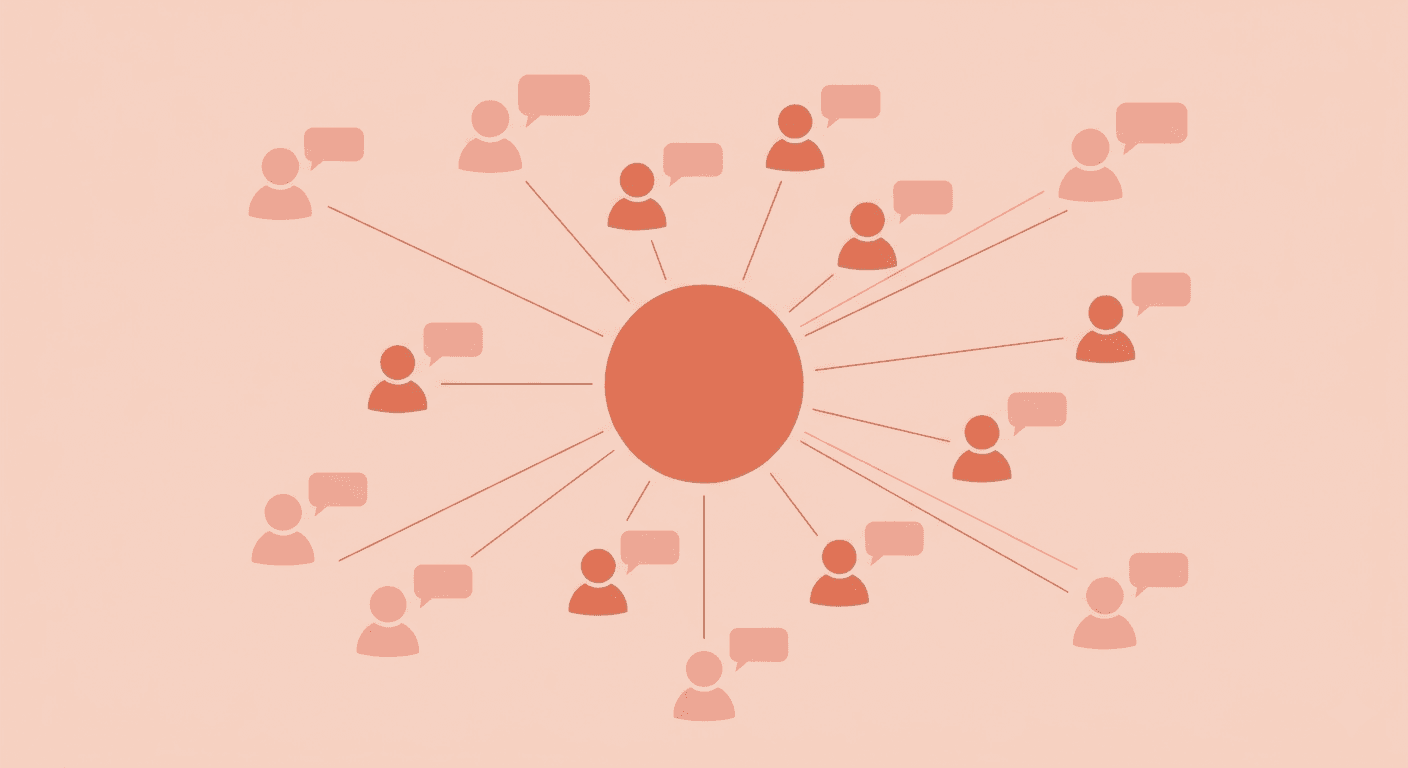
Table of Contents
Here's a scenario that plays out every week for small brands on social media. The brand's official account posts a carefully crafted Reel — good lighting, clear messaging, consistent with brand guidelines. It gets 400 views and 12 likes. Two days later, a team member posts a casual behind-the-scenes video on their personal account — slightly shaky, completely unscripted, showing what it actually looks like to work at the brand. It gets 80,000 views, hundreds of comments, and drives more website traffic in a weekend than the brand account generates in a month.
This isn't a coincidence. It's one of the most consistently documented patterns in social media marketing in 2026: content from real people dramatically outperforms content from brand accounts. Audiences trust employees more than influencers or CEOs — social teams confidently stepping in front of the camera create valuable opportunities for brands to build more personal, human connections with target audiences. The polished brand voice that small brands spend so much time perfecting is, paradoxically, one of the things working against their organic reach. 2POINT Agency
Employee advocacy is the strategic approach to this reality. Instead of leaving it to chance — hoping a team member happens to post something that goes viral — the brands winning in 2026 are building intentional systems that make it easy and natural for their team to represent the brand authentically on social media. The result is a distribution engine that compounds over time, reaching audiences that no brand account budget could ever touch, with a level of trust that no paid ad can manufacture.
This guide explains exactly what employee advocacy is, why it works so powerfully for small brands specifically, and how to build a program that generates real results — without turning your team into unpaid marketing robots.
Why People Trust People — The Trust Gap That Employee Advocacy Solves
The fundamental problem with brand-owned social media in 2026 is a trust problem. Audiences have become extraordinarily good at detecting content that is selling rather than sharing, performing rather than communicating, and optimizing for engagement rather than being genuine. Almost six out of ten consumers think there is "too much" advertising on social media, and over half find self-promotional brand content exhausting — that's why many traditional marketing programs fail when they treat audiences as distribution targets rather than people. LocaliQ
The trust dynamic for individual people is completely different. 89% of consumers trust recommendations from people they know over branded content — and content shared by employees appears more authentic and trustworthy than traditional social media marketing messages. When a person — not a logo, not a brand handle, but an actual human being with their own identity and personality — shares something about a brand they work for or believe in, the credibility is fundamentally different. It's peer recommendation, not advertising. And peer recommendation is the most powerful commercial force that exists. TrueFuture Media
The Edelman Trust Barometer consistently tells this story — seven out of ten people now report hesitancy to trust voices outside their existing circle, and they trust someone who feels and talks like them. This means the most valuable distribution channel for a small brand's message isn't its brand account with 5,000 followers — it's the combined personal networks of everyone who works there, every person who is genuinely enthusiastic about what the brand is building, speaking authentically in their own voice to people who already trust them. ACSIUS
The Reach Math That Makes Employee Advocacy Irresistible
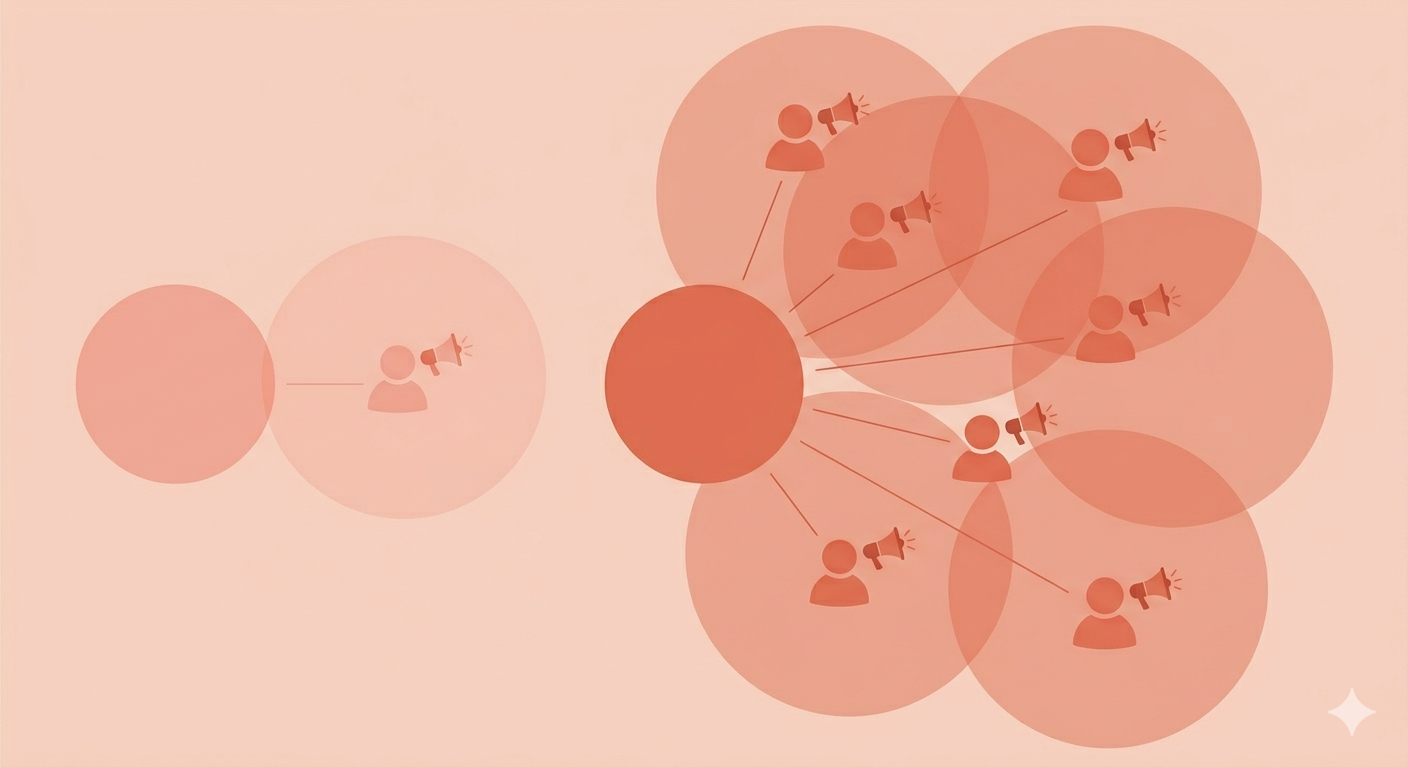
Beyond trust, the pure reach arithmetic of employee advocacy is compelling for any small brand doing the numbers. If a small brand has five team members and each of them has 500 LinkedIn connections and 800 Instagram followers, that's a combined potential reach of 6,500 people — none of whom follow the brand account. If even two of them post about the brand once a week, consistently, that's 2,600 additional reach per week with zero paid spend.
The compounding effect is even more significant. An employee advocacy program can enhance brand awareness by 79.1%, with 65% of respondents reporting improved brand recognition — and one company's program achieved 2.5 million total reach and 700 website clicks in just four months, saving $20,000 in equivalent ad spend. These aren't enterprise numbers — these are results available to small brands whose team members simply show up authentically on their personal social accounts. TrueFuture Media
What Employee Advocacy Actually Looks Like for Small Brands
Employee advocacy sounds like a corporate program — something that requires platforms, workflows, policies, and HR sign-off. For large enterprises, it often does. For small brands, it's far simpler. At its core, employee advocacy for a small brand is just making it easy and natural for the people associated with your brand to share what they genuinely care about from their work.
The mistake most small brands make is thinking employee advocacy means asking their team to share the brand's official posts. That's not advocacy — that's distribution. And it doesn't work because copy-pasted corporate content from a personal account signals inauthenticity to both human followers and social media algorithms. When employees share content that lacks a strong point of view, it receives lower engagement because it signals inauthenticity to both humans and ranking systems — the brands that get results treat employees as independent voices, not distribution nodes. LocaliQ
Real employee advocacy looks completely different. It's a founder posting honestly about a product development challenge and what they learned from it. It's a team member sharing a behind-the-scenes video of their actual workday. It's someone from the brand explaining their personal perspective on something happening in the industry. It's a production person showing the unglamorous reality of how a product gets made. All of these feel personal and real because they are personal and real — they just happen to represent the brand simultaneously.
The Three Types of Employee Content That Work
Founder and leadership content is the highest-leverage employee advocacy format for small brands because the founder is typically the brand's most compelling voice. A founder who posts three times per week on LinkedIn about their industry, their building process, and their honest perspective builds a personal brand that becomes inseparable from the brand they're building. ChatGPT is now citing LinkedIn content 4.2 times more than it did three months ago, and Perplexity 5.7 times more — employee advocacy is becoming the best way to build trust and recognition that outpaces even AI discovery systems. A founder with a genuine LinkedIn presence is building visibility in organic social, search, and AI citation simultaneously. ACSIUS
Team member day-in-the-life content is the format with the highest potential for unexpected reach. Real people doing real work is genuinely interesting — not just on a philosophical level, but in terms of social media performance. Behind-the-scenes content from team members consistently outperforms polished brand content in views and engagement because it triggers the authenticity signals that modern audiences are actively seeking. The production person showing how a batch gets made, the customer service person sharing a moment that made their day, the designer showing their process from sketch to final product — all of these are compelling, human, and naturally brand-building.
Expert opinion and industry perspective from team members builds the kind of authority that brand accounts rarely achieve. When an individual person — with their own name, face, and professional history — shares a specific, informed perspective on something happening in their industry, it carries weight that a brand account's post about the same topic never will. The strongest employee advocacy programs combine leadership voice for authority with employee amplification for volume and peer credibility — the company account delivers the official version while employees add anecdotes, practical insights, and a team perspective, which usually performs better than either layer alone. Adgpt
How to Build an Employee Advocacy Program — Without Making It Feel Like a Corporate Initiative
The word "program" makes employee advocacy sound more formal than it needs to be for a small brand. Here's the simplest possible framework that actually works.
Step 1 — Start With Willing Participants, Not Mandates
The fastest way to kill employee advocacy is to make it mandatory. Forced sharing feels coerced, produces generic content, and destroys the authenticity that makes the whole thing work in the first place. Overcome resistance by starting voluntarily — identify naturally socially active employees with strong networks, make them early adopters by training them first and letting them lead peer outreach. These champions spread protocols, collect feedback, and sustain momentum. Hootsuite
Look for the team members who are already posting on LinkedIn or Instagram, who seem genuinely excited about what the brand is building, and who have an existing audience — even a small one — that overlaps with your target customer. Start there. One team member who genuinely wants to post and has the right audience is worth more than ten who are participating reluctantly.
Step 2 — Give Them Direction Without Scripts
The most common program mistake is giving team members pre-written posts to share verbatim. This produces templated, corporate-feeling content that algorithms throttle and audiences ignore. What actually works is giving them topics, themes, and context — not words.
Create a simple content framework that gives your advocates clarity without constraint. Something like: "Here are the five topics we'd love you to share your perspective on this month. These are broad themes — we're not giving you words to use. We want your genuine take on these based on your actual experience." The themes might be: a challenge you solved this week, something you learned about your craft, a moment that reminded you why this work matters, a behind-the-scenes look at your process, or your honest perspective on something happening in the industry. Core content pillars are not a content calendar or a list of post ideas — they are strategic guardrails designed to create consistency, clarity, and confidence among employee advocates without restricting their ability to express themselves authentically. ACSIUS
Step 3 — Make Sharing Frictionless
The biggest practical barrier to employee advocacy is not motivation — it's friction. People don't share brand content on their personal accounts because it requires effort they don't have in an already full workday. The brands that build sustainable advocacy programs remove that friction as much as possible.
This means having a shared folder of content assets, photos, and behind-the-scenes footage that team members can pull from easily. It means having a simple way — a Slack channel, a WhatsApp group, a weekly message — to surface shareable moments from the brand's week. It means celebrating when someone posts something that performs well, which creates positive reinforcement that makes the next post more likely. The best employee advocacy programs succeed because they reduce friction for employees while increasing the authenticity and reach of a brand's social media marketing strategy. Adgpt
Give your team branded content to share — SnapReel generates it automatically so everyone can show up.
Create AI-powered videos and auto-post to all your platforms.

The Platforms Where Employee Advocacy Works Best in 2026
Not all platforms are equal for employee advocacy, and understanding where your team's voices will have the most impact is as important as building the program itself.
LinkedIn is the highest-leverage platform for employee advocacy in 2026, and it's not close. Employees are 10 times more likely to share content on their LinkedIn accounts than on other platforms — and LinkedIn Comment and LinkedIn Video activities generate the highest reach among all advocacy content types. LinkedIn's algorithm explicitly favors content from individual people over content from company pages, which means a team member's LinkedIn post about their work reaches a dramatically higher percentage of their connections than the same content posted from the brand's company page. LocaliQ
For small brands targeting professional or B2B audiences, a team member with 1,000 LinkedIn connections posting about their work three times per week is building an asset that compounds in value every month. As their content builds engagement history on specific topics, LinkedIn's algorithm increasingly surfaces them to new audiences interested in those topics — which means their reach grows organically without any additional effort.
Instagram works best for employee advocacy through Stories and casual Reels rather than feed posts. The format that performs best is genuinely casual and unpolished — the kind of thing a person posts naturally about their day rather than the kind of content a brand carefully produces. A team member sharing a story about receiving a batch of new materials, or doing a casual camera video about what they're working on that week, consistently outperforms the brand's produced content because it triggers the authenticity signals Instagram's algorithm rewards.
TikTok has the highest ceiling for unexpected reach from employee content but also requires the most natural comfort with the platform. Team members who are already TikTok users and understand its content culture can create enormous awareness for a small brand from their personal accounts with zero paid investment. The key is that this only works when it's genuinely coming from someone who would post on TikTok anyway — forced TikTok content from someone uncomfortable with the platform produces exactly the kind of corporate-feeling content that TikTok's audience instantly dismisses.
Measuring Employee Advocacy — What to Track
Most small brands don't measure their employee advocacy at all, which means they can't identify what's working, who their most effective advocates are, or how to improve the program over time. Here are the metrics worth tracking.
Reach generated through employee content is the primary metric — total impressions and reach from posts by team members about the brand, measured separately from the brand account's own performance. The simplest way to track this is to ask advocates to share their post analytics weekly, or to set up a shared reporting system where they can log performance.
Profile visits and follower growth on brand accounts that are directly attributable to employee posts is a second-order metric that connects advocacy activity to brand growth. When a team member's post performs well and drives people to the brand's profile, that should be visible in the brand account's analytics as a spike in profile visits.
Content quality indicators — comments, saves, and shares — on employee content matter far more than simple view counts. A team member's post with 200 views and 40 genuine comments from the right audience is more valuable than one with 10,000 views and no engagement. The comments tell you whether the content is resonating with the right people and generating the right conversations.
The ratio of advocates to total team over time tracks whether your program is growing or stagnating. If you start with two advocates out of a five-person team, can you grow that to four out of five over six months? The goal isn't 100% participation — it's finding the people who genuinely want to do this and supporting them, not compelling reluctant participants.

The Small Brand Advantage — Why This Works Better for You Than for Big Companies
Here's the irony of employee advocacy: it should theoretically work better for large companies, which have more employees and larger combined networks. But in practice, it works far better for small brands — and the reason is authenticity.
At a company with 500 employees, employee advocacy becomes a managed program with approved content, compliance reviews, and enough organizational distance between the people sharing and the thing they're sharing about that it starts to feel corporate. The authentic human connection that makes advocacy work gets diluted by the systems required to manage it at scale.
At a small brand with five to fifteen people, everyone actually knows everyone. The person posting about the brand genuinely cares about it — they can see the impact of their work, they know the founder personally, and they have real stories to tell that no corporate content team could manufacture. That authenticity is precisely what audiences in 2026 are hungry for and what algorithms are designed to reward. A thriving employee advocacy program starts internally by fostering a culture where employees feel proud and connected — when employees genuinely believe in what they're building, advocacy becomes natural rather than performative. Hootsuite
The small brand that builds a culture where people are genuinely proud of what they're making, treats its team well enough that they want to talk about it publicly, and makes it easy for those voices to reach new audiences has a marketing engine that scales with the brand — not against it.
SnapReel AI keeps your brand's content running consistently across all platforms — so your team's advocacy effort adds to a strong foundation rather than trying to compensate for inconsistent brand presence.