Why Your Personal Brand Is More Valuable Than Your Business Brand — The Founder-Led Content Strategy for 2026
SnapReel
May 13, 2026 · 18 min read

Table of Contents
There is a gap that almost every small brand founder has noticed but very few have fully understood. Your brand's Instagram account posts consistently, has thousands of followers, and generates decent enough engagement to feel like it is working. But then you post something on your personal account — a behind-the-scenes moment, an honest opinion about something in your industry, a raw update about a challenge you are navigating — and it gets five times the engagement, ten times the reach, and generates more genuine conversation than your brand account has seen in months.
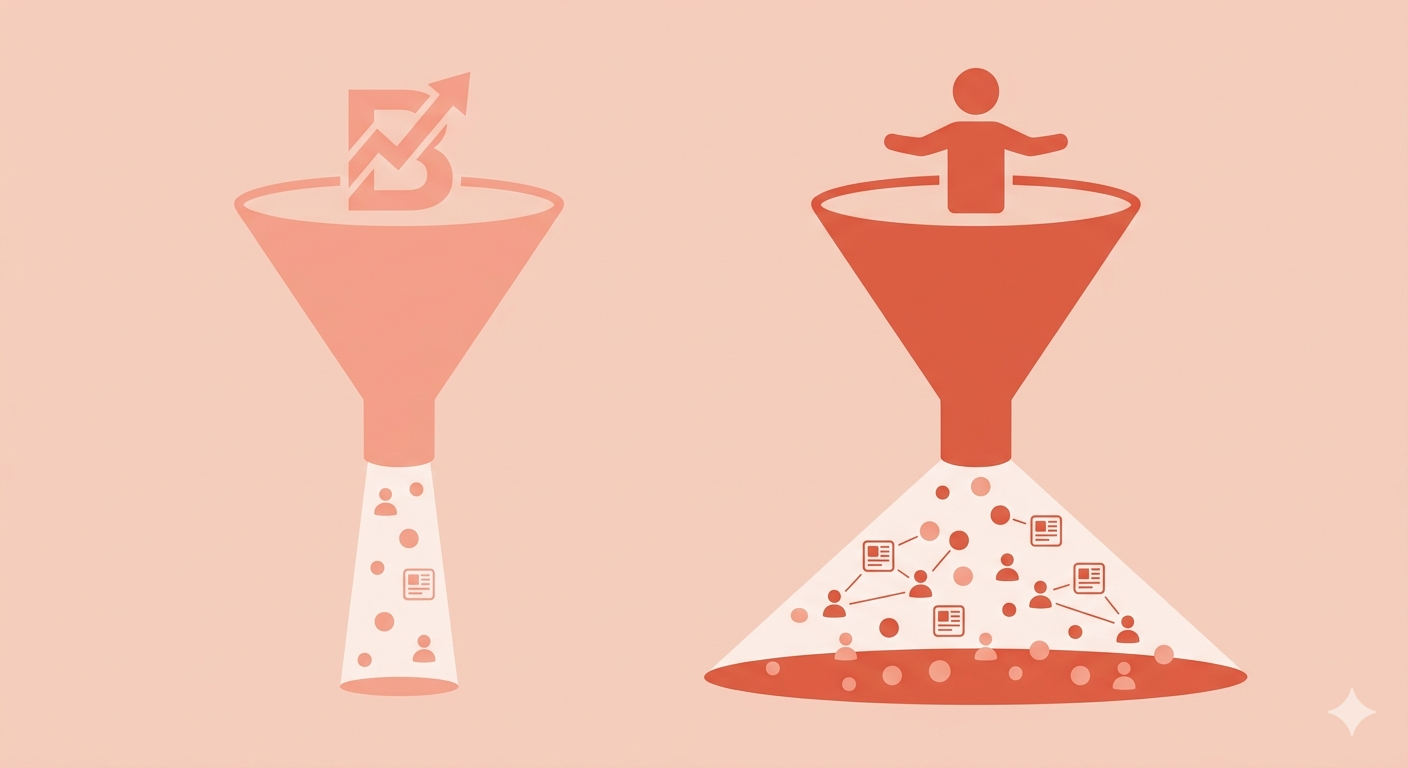
This is not a coincidence. It is not luck. It is one of the most consistently documented patterns in social media behavior in 2026, and it has a clear explanation: people trust people infinitely more than they trust brands, and the algorithms on every major platform are built to reflect that reality.
Statistics indicate that a user has a 70% higher chance of trusting an individual recommendation than one made by a brand logo — and founder-led content is the ultimate tool in social media marketing in 2026. The numbers around this are not close. 82% of people trust companies more when their executives are active on social media, and founders and creators with strong niche authority personal brands see three to seven times higher conversion rates compared to traditional corporate marketing. DisruptTrendygrandad
These statistics are not describing some future possibility. They are describing the reality of how purchase decisions are being made right now. When someone is deciding whether to buy from a brand they have just discovered, the first thing they do is look for the person behind it. They check if there is a founder with a real presence — someone they can read, watch, and develop a sense of. If they find one, their trust in the brand increases dramatically. If they find only a logo with a corporate bio, their confidence drops — because in 2026, a faceless brand is a suspicious brand.
The implication for every small brand founder is clear and urgent. Your personal brand is not separate from your business. It is not a vanity project or a side hobby. It is your single most powerful marketing channel — one that costs nothing to build beyond time and consistency, and one that compounds in value every week you show up authentically.
Why the Algorithm Favors Founders — The Technical Reality Behind the Trust
Understanding why founder content outperforms brand content is not just philosophically interesting — it is practically essential for any small brand trying to build efficiently in 2026. The reason is algorithmic, and it is structural.
Every major social platform — LinkedIn, Instagram, TikTok, Threads — has made the same fundamental decision about content distribution: content from individual people receives significantly more algorithmic amplification than content from brand accounts or company pages. This is not an accident. It is a deliberate platform strategy.
Audiences trust people more than they trust faceless brands, and they trust employees more than influencers or CEOs — social teams confidently stepping in front of the camera create valuable opportunities for brands to build more personal, human connections with their target audience. Platforms know this from their own internal data — content that comes from individual humans generates higher engagement rates, longer watch times, more genuine comments, and more shares than equivalent content from brand accounts. And since platforms make money from engagement and time-on-platform, they have built their algorithms to distribute human content more generously. Digital Marketing Institute
LinkedIn is the starkest example. The platform's algorithm gives personal profiles eight times more organic reach than company pages for equivalent content. A founder posting three times per week on their personal LinkedIn profile generates dramatically more visibility than the brand's company page posting the same content. TikTok's algorithm works similarly — it is built around content quality and relevance rather than account authority, which means a founder posting genuinely useful, personality-driven content can reach hundreds of thousands of people regardless of their follower count. Instagram Reels from personal accounts consistently outperform Reels from brand accounts in reach and engagement, all else being equal.
Executives say 44% of a company's market value comes from the CEO's personal brand strength and reputation — and 62% of business leaders confirm that investing in personal and brand storytelling improves client retention and increases lifetime customer value. For a small brand where the CEO and the founder are the same person, and where that person has direct access to social media every day, this is one of the most actionable insights available. Trendygrandad
What a Founder Personal Brand Actually Is — And What It Is Not
Before building a founder personal brand strategy, it is worth being precise about what a personal brand actually is in 2026 — because the most common misunderstandings lead to either paralysis or strategies that generate no real results.
A personal brand is not a personal social media account turned marketing channel. It is not a carefully constructed public persona that presents a polished, aspirational version of yourself. It is not motivational content, generic success tips, or content designed to make you look impressive. If any of those descriptions fit what you are planning, the strategy will not work — because audiences in 2026 are extraordinarily skilled at detecting performance masquerading as authenticity.
A founder personal brand is the consistent, specific expression of who you are, what you know, what you believe, and what you are building — shared publicly in a way that is genuinely useful or genuinely interesting to the specific people you are trying to reach. It is built from your actual expertise, your real opinions, your honest experiences, and your genuine personality. The "personal" in personal brand is not about making it emotional or vulnerable — it is about making it real.
The distinction matters enormously in practice. A founder who posts about "the importance of resilience in entrepreneurship" is performing personal branding. A founder who posts "we lost our three biggest clients in one month last year and here is exactly what we changed that turned it around" is building a personal brand. One is generic content that anyone could have written. The other is specific, experiential, and impossible to fake — which is precisely why it builds trust.
In 2026, social media is crowded and you cannot afford to spread yourself thin across every platform — the key is to focus on the platforms that align with your brand and audience, and to share content that educates, entertains, or inspires rather than the overly polished, cookie-cutter content that fills most feeds. Your personal brand should be recognizable — after reading ten of your posts, someone should be able to identify your writing without seeing your name, because your perspective, your voice, and your areas of expertise are that consistent. Entrepreneur
The Five Content Pillars of a Powerful Founder Personal Brand
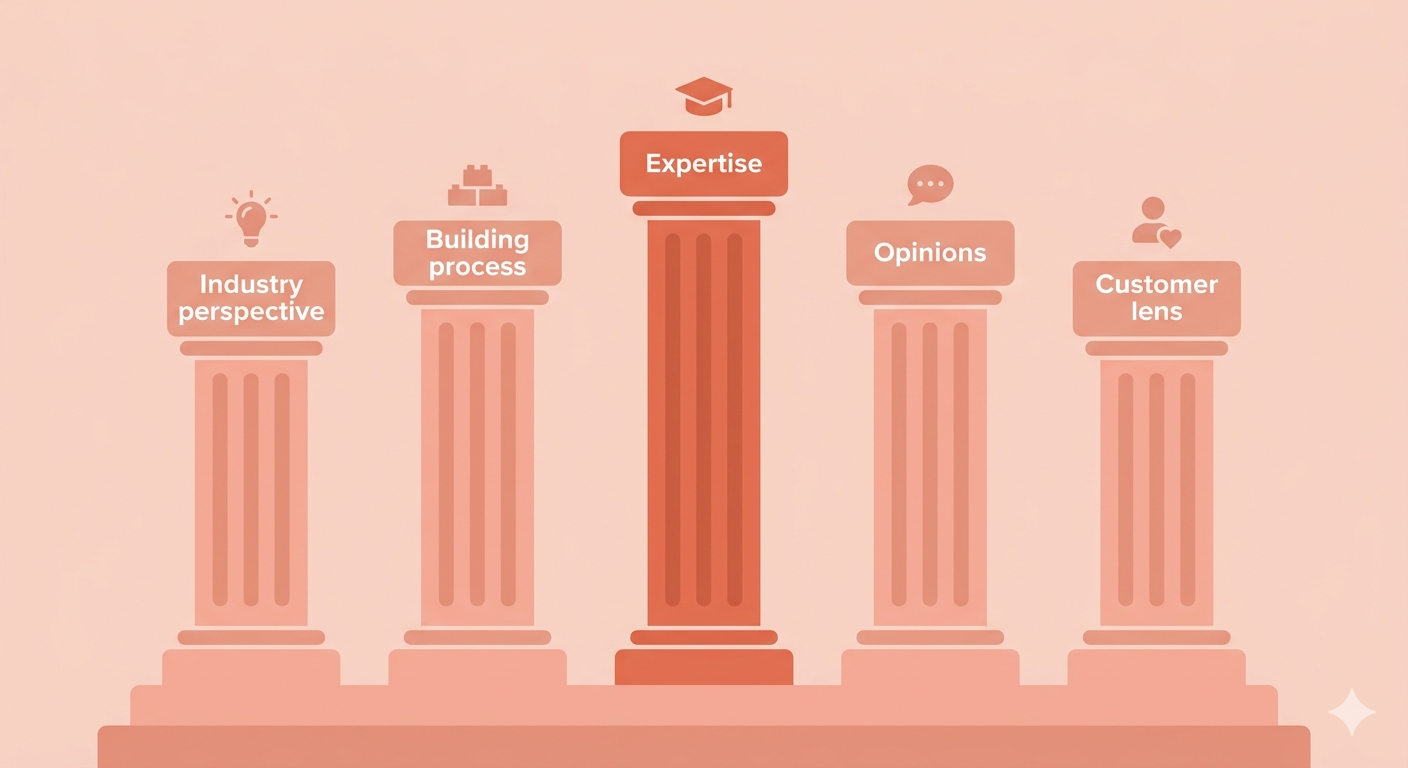
Every effective founder personal brand is built around a small number of recurring content themes — topics you return to consistently that, over time, establish you as the definitive voice on those specific subjects for your specific audience. Here are the five content pillars that work best for small brand founders in 2026.
Pillar 1 — Your Industry Perspective
This is the most important pillar. Your industry perspective content positions you as the expert in your space — not through credentials or titles, but through the specificity and quality of your thinking about the industry you operate in. What do you see happening in your product category that others are not talking about? What conventional wisdom in your industry do you disagree with? What is changing, and why does it matter to your customer?
Industry perspective content does something promotional brand content can never do: it makes people want to know what you think about things. When your audience starts looking forward to your take on developments in your space, you have moved from being a brand they might buy from to being a voice they genuinely follow. That shift is the foundation of the loyalty that converts into long-term customers and enthusiastic word-of-mouth referrals.
Pillar 2 — The Building Process
One of the most consistently high-performing categories of founder content is the honest documentation of what it actually looks like to build a business — not the highlight reel, but the real process with its setbacks, pivots, mistakes, and unexpected lessons. Audiences are genuinely fascinated by the reality of building something, and this content performs so well precisely because most brands only show the polished results.
This pillar is particularly powerful for small brands because it creates a narrative — a story that followers can track over time. When someone follows your journey from "we just launched" to "we survived our worst month" to "we just hit our first major milestone," they are not just consuming content. They are rooting for you. And people who are rooting for you are the most loyal, most enthusiastic customers and advocates a brand can have. The most impactful brand strategies will be those that feel human and grounded amid the social media noise — brands should focus on rich storytelling, character-building, and real experience, so that users see themselves in the content and connect deeply with it. TrueFuture Media
Pillar 3 — Genuine Expertise
Your founder personal brand should establish you as a genuine expert in something specific — not everything in your category, but the specific area where your knowledge is deepest. For a skincare brand founder, this might be ingredient chemistry and formulation. For a coffee brand founder, it might be sourcing relationships and roasting methodology. For a fashion brand founder, it might be sustainable production practices and material quality.
The expertise pillar works because it demonstrates, rather than claims, competence. Any brand can write "we are experts in X" in their bio. Only a genuine expert can write content that teaches something specific, answers a question with real depth, or reveals something about their craft that surprises even experienced people in the industry. This pillar connects directly to the edutainment strategy — the best founder expertise content teaches something genuinely useful to an audience that the founder knows well.
Pillar 4 — Honest Opinions
One of the most underused and highest-performing content types for founder personal brands is the specific, honest opinion. Not controversy for its own sake — but a genuine perspective on something in your industry, your market, or your field that you actually believe and can articulate clearly.
The opinions that build the strongest personal brands are the ones that are slightly counterintuitive — perspectives that push back against conventional wisdom in a way that is thoughtful and evidence-based. They invite disagreement, which generates comments and discussion. They make people think, which generates saves. And they establish the founder as someone with a genuine point of view, which is the rarest and most valuable quality in an era of generic, inoffensive content that says nothing worth saying. Consumers say brands should make human-generated content their number one priority in 2026 — and content that expresses a genuine human perspective is the clearest possible example of exactly that. Strike Social
Pillar 5 — The Customer Lens
Your customers are your best content. Their questions, their experiences, their transformations, and their honest feedback are all content that performs exceptionally well — not just because it functions as social proof, but because it shows your audience that real people like them use and benefit from what you make.
The customer lens pillar can take many forms: sharing a customer's story with their permission, responding publicly to a commonly asked question with genuine depth, turning a piece of customer feedback into a broader reflection on what you are building and why, or documenting the before-and-after of a customer's experience with your product. Each of these formats is deeply authentic — it is grounded in real human experience — and that authenticity is exactly what makes it connect.
Amplify your founder story with daily branded content that runs on autopilot while you build.
Create AI-powered videos and auto-post to all your platforms.
Platform Strategy — Where to Build Your Founder Personal Brand
Not every platform rewards founder content equally, and trying to build a personal brand on every platform simultaneously is one of the fastest ways to produce mediocre content everywhere and excellent content nowhere. Here is where to focus depending on your brand's audience and product category.
LinkedIn — The Highest-Leverage Platform for Founder Authority
LinkedIn is the single most powerful platform for building a founder personal brand in 2026, and it is not particularly close. The combination of professional audience, algorithmic preference for individual content over company pages, and the relatively low competition from small brand founders creates an opportunity that compounds remarkably fast for consistent, specific, quality content.
LinkedIn users with complete profiles are 40 times more likely to get opportunities, and around 16.2% of LinkedIn users are active daily — translating to approximately 134.5 million daily active users — while over 48.5% engage with the platform monthly. For a small brand founder posting three to five times per week with genuine, specific, industry-grounded content, LinkedIn offers organic reach that Instagram and TikTok simply cannot match for professional and B2B-adjacent audiences. Trendygrandad
The content that performs best on LinkedIn for founders is the same content that works across all platforms — specific, honest, experience-based — but formatted for LinkedIn's text-heavy culture. A post that opens with a specific, counterintuitive observation, develops it with genuine evidence or experience, and ends with an open question consistently outperforms generic thought leadership content. The best posting time is 8 AM PT, and engagement drops as follower count grows — meaning the early months of consistent posting are the highest-leverage period for building an audience before competition for attention within your niche increases. Trendygrandad
TikTok — The Discovery Engine for Founder Personality
TikTok is where founder personality reaches the widest new audience, particularly for brands targeting consumers rather than other businesses. The platform's algorithm is genuinely indifferent to follower count — it distributes content based on engagement quality and relevance, which means a founder with zero followers can reach tens of thousands of the right people with a single well-made video.
The founder content that performs best on TikTok is not scripted, produced, or polished. It is the camera-on, talking-directly-to-you format that feels like a real person sharing something they genuinely want you to know. A founder explaining why they made a specific decision in their product, or pushing back on a common misconception about their industry, or showing something in their production process that most people have never seen — these formats generate the kind of watch-through rates and saves that TikTok's algorithm uses to identify and amplify quality content.
Instagram — Where Founder Stories Convert
Instagram sits between LinkedIn's authority building and TikTok's discovery power. For product-based small brands, Instagram is where the founder's content does its most important conversion work — turning people who have discovered the brand elsewhere into customers who trust it enough to buy. Founder Stories and Reels that show the real process behind the brand, that put a genuine face and personality to the product, and that address the specific questions people have before buying are among the highest-converting content types available on the platform.
The key on Instagram is that founder content should feel distinctly different from brand content — warmer, more casual, more honest, and more willing to show the imperfect reality of building rather than only the polished highlights. When a brand's Instagram feed and a founder's personal presence feel identical in tone and format, neither is doing its job properly.
Building Your Founder Brand Without Burning Out — The Realistic Content Plan
The most common reason founders do not build personal brands despite understanding their value is time. Running a small brand is already a full-time job — adding a consistent personal content strategy on top of it feels impossible. Here is the realistic framework that makes it sustainable without requiring three extra hours per day.
One hour of content creation per week, structured deliberately. Set aside one dedicated hour per week for personal content creation — not sporadically between other tasks, but as a fixed appointment in your calendar that does not get bumped. In that hour, write or record three to five pieces of content in a single session. Batch content creation is dramatically more efficient than trying to think of what to post every day, and it produces more consistent output.
Keep a running content idea list. The content ideas are always happening — in conversations with customers, in moments of frustration or breakthrough in your business, in observations you make about your industry, in questions that keep coming up in your DMs. The problem is that these ideas evaporate if you do not capture them. Keep a simple note on your phone where you add potential content ideas as they occur to you throughout the week. When you sit down for your creation hour, you will have more material than you can use.
Repurpose without reformatting. A single piece of founder content can work across multiple platforms with minimal additional effort. A LinkedIn post can become the script for a TikTok video. A TikTok video can be posted to Instagram Reels with the caption from the LinkedIn post. A Twitter/X thread can become a LinkedIn post. The core idea — your specific observation, your honest opinion, your genuine experience — is the valuable asset. Adapting it to different platform formats requires far less effort than creating entirely new content for each one.
Start with the platform where you already feel most natural. The founder brand content that performs best is the content that feels most genuine — and content feels most genuine when the creator is comfortable with the format. If you have never posted a video before, starting with LinkedIn text posts is a better choice than forcing yourself into TikTok immediately. Build the habit of sharing on the platform where you already feel at home, generate some wins, and then expand to other platforms as your confidence grows.

The Long Game — What a Founder Personal Brand Looks Like After 12 Months
The founder personal brand is a compounding asset — it does not deliver dramatic results in the first week or even the first month, which is why most founders give up before it starts working. Understanding what it looks like after twelve months of consistent effort makes the early investment make sense.
After three months of consistent, specific, genuine content on one or two platforms, a founder will typically have found their voice — the specific combination of topics, tone, and format that generates the strongest response from their audience. The early content is the most valuable learning laboratory available, because real engagement data tells you exactly what your specific audience finds most useful and most interesting.
After six months, the compounding effects start to become visible. Each piece of content builds on the authority established by previous ones. New followers arrive already aware of the founder's perspective — they found older content, consumed several pieces, and followed because they wanted more. The audience starts to feel like a genuine community rather than a metric.
After twelve months, the founder's personal brand has become genuinely inseparable from the business brand. The people who follow the founder follow the brand. The trust established through months of honest, useful, personality-driven content translates directly into commercial outcomes — higher conversion rates, lower customer acquisition costs, stronger word-of-mouth referrals, and a brand reputation that no ad spend can manufacture. Founders and creators with strong niche authority personal brands see three to seven times higher conversion rates compared to traditional corporate marketing. Trendygrandad
In 2026, the brands that are growing fastest and spending the least on paid acquisition are almost universally the ones where the founder shows up consistently and genuinely on social media. Not because they are the most polished or the most produced — but because they are the most real. And real, in a feed full of AI-generated content and corporate messaging, is the scarcest and most valuable commodity available.
Your brand has a logo. Your brand has colors and fonts and a carefully written About page. But the most powerful thing your brand has is you — a real person with real knowledge, a real story, and a real reason for building what you are building. Start sharing that. The business that grows from it will be unlike anything a marketing budget alone could create.
SnapReel AI keeps your brand's social content running consistently on autopilot — freeing you to invest your creative energy in the founder personal brand that builds trust, authority, and the kind of loyalty that actually converts into long-term revenue.