What Is Live Shopping — And How Small Brands Are Using It to Sell in Real Time on TikTok and Instagram in 2026
SnapReel
May 15, 2026 · 11 min read
Table of Contents
There is a moment that every small brand owner knows well. You post a product. You write a caption. You add the hashtags. You hit publish. And then you wait. You refresh. You check the link-in-bio. You wonder if anyone actually saw it, and if they did, whether they cared enough to click through, navigate to your website, find the product, add it to cart, and complete the checkout.
That entire journey — from scroll to sale — has never been more fragile. Attention disappears in seconds. Every extra step between discovery and purchase is a door that closes in your face.
Live shopping eliminates almost all of those steps. And in 2026, it is producing results that are changing how small brands think about selling on social media entirely.
Live shopping converts at up to 30%. Traditional ecommerce averages 2% to 3%. That is not a small difference — that is a complete category shift in what selling online can look like for a brand that gets it right.
This guide covers exactly what live shopping is, why the numbers behind it are so significant, how TikTok and Instagram have built ecosystems that make it accessible to small brands, and the practical steps you need to follow to run your first live shopping session that actually sells.
What Is Live Shopping — And Why Is It Completely Different From Regular Social Selling
Live shopping is exactly what it sounds like — you go live on a social platform, show your products in real time, and your viewers can buy directly within the stream without ever leaving the app. But that simple description undersells how fundamentally different the experience is from anything else in social media marketing.
When someone sees your product in a regular post or Reel, they are a passive observer. They might like it. They might save it. They might intend to come back. But intention is not the same as action, and most of the time, the action never comes. Life gets in the way. The algorithm moves on. The moment passes.
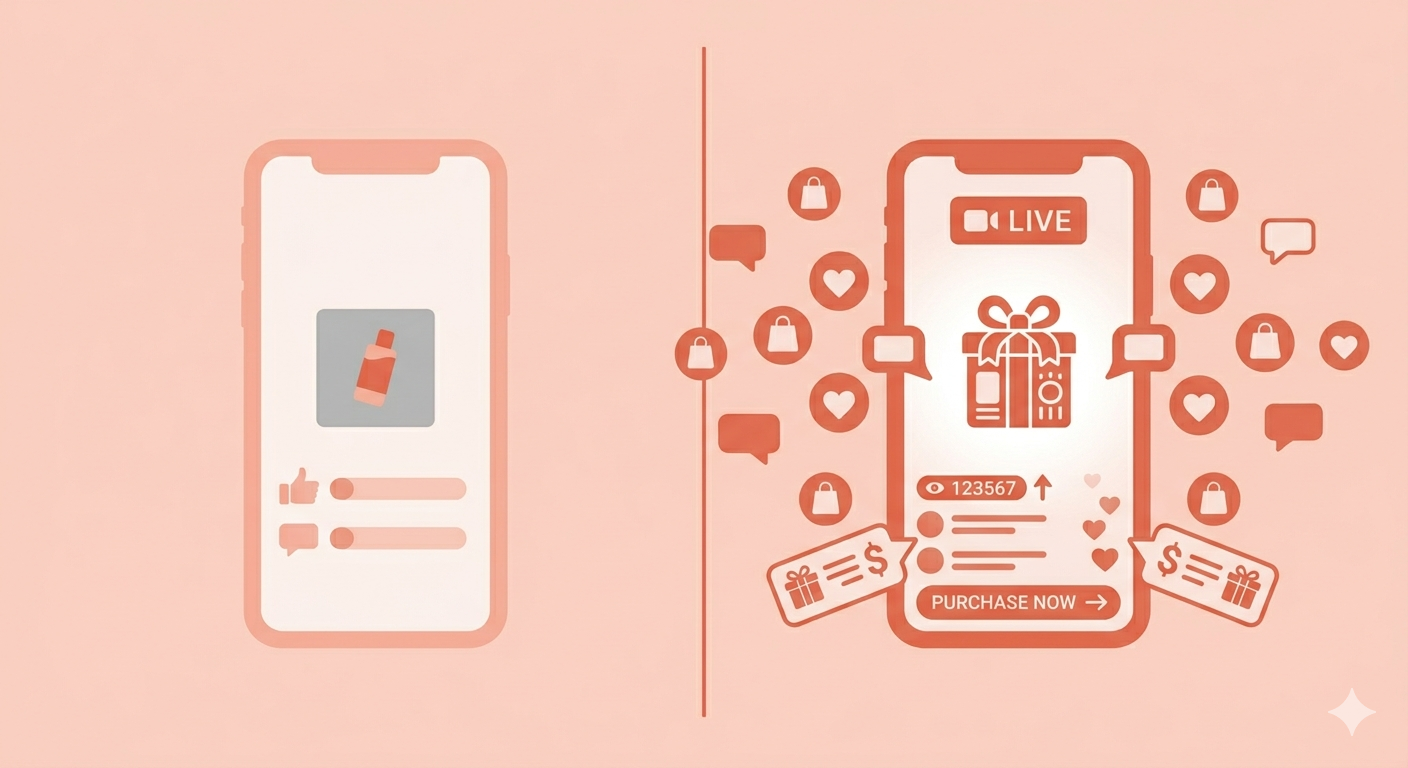
Live shopping creates a completely different psychological environment. The viewer is active, not passive. The product is being demonstrated, not just photographed. Questions can be asked and answered in real time. A countdown timer creates urgency. A limited quantity creates scarcity. The host creates energy. And the purchase button is right there on screen, inside the same app the viewer is already using.
It is the closest thing social media has ever produced to the experience of being in a physical store — where you can see the product, ask questions, feel the energy of other people engaging with it, and decide to buy in the moment.
The Numbers That Make Live Shopping Impossible to Ignore in 2026
The global live commerce market is on track to exceed one trillion dollars in 2026. That number sounds abstract, but the individual data points behind it are not.
TikTok livestreams drove 84% more sales year-over-year for brands that participated during Black Friday and Cyber Monday 2025. On those four days alone, TikTok Shop generated over 500 million dollars in sales, with viewers watching more than 760,000 individual live shopping sessions totalling 1.6 billion views. Instagram Live Shopping is converting at 4.1% — already double the rate of most traditional ecommerce. And in China, where live commerce has been mainstream for years, the format accounts for nearly 20% of all retail ecommerce sales, giving Western brands a clear preview of where the market is heading.
The most important number for small brands specifically is this — about 171,000 small businesses in the United States are actively selling on TikTok Shop, and their sales rose 70% year-over-year. This is not a format reserved for large brands with production studios. It is being built by independent sellers, product founders, and small teams who figured out the format and started showing up consistently.
TikTok Live Shopping vs Instagram Live Shopping — What Every Small Brand Needs to Know
Both TikTok and Instagram have built live shopping infrastructure, but they work differently, attract different audiences, and reward different types of content. Understanding the distinction before you choose where to start will save you weeks of trial and error.
TikTok Live Shopping — The Discovery Engine
TikTok's live shopping ecosystem is built around discovery. Its algorithm actively surfaces live streams to users who have never followed your account but whose behavior signals match your product category. This means a small brand with 2,000 followers can go live on TikTok and be discovered by thousands of people in real time — something no other platform currently offers at the same scale.
TikTok Shop's overall conversion rate sits at 4.7%, the highest of any social commerce platform. For live shopping specifically, the energy of the format pushes impulse conversions even higher. The platform has also made it extremely easy for brands to connect with creators through its affiliate program — over 100,000 creators are actively using TikTok Shop affiliate links, earning commissions by selling products for brands during their own live sessions.
The categories performing strongest on TikTok live shopping are beauty, skincare, health and wellness, fashion, accessories, and home goods. If your product falls into any of these verticals, TikTok live shopping is the single highest-priority channel you should be testing right now.
Instagram Live Shopping — The Trust Builder
Instagram Live Shopping operates with a different dynamic. The audience is warmer — they are mostly people who already follow you or have engaged with your content before. This means lower raw reach than TikTok, but higher baseline trust and stronger average order values.
Instagram Live Shopping converts at 4.1%, and the platform's integration with Instagram Shop means your product catalog is always right there — viewers can tap to purchase without leaving the app. Instagram also supports collaborative lives, where you can bring on a co-host, an industry expert, or a micro-influencer mid-stream to add credibility and reach a second audience simultaneously.
For brands that have already built an engaged Instagram following, Live Shopping is the most natural next step — it takes the trust you have already earned and gives it a direct conversion mechanism.
How to Set Up Live Shopping on TikTok — Step by Step
Setting up TikTok Shop and connecting it to your live streams requires a few specific steps, but the process is more straightforward than most small brands expect.
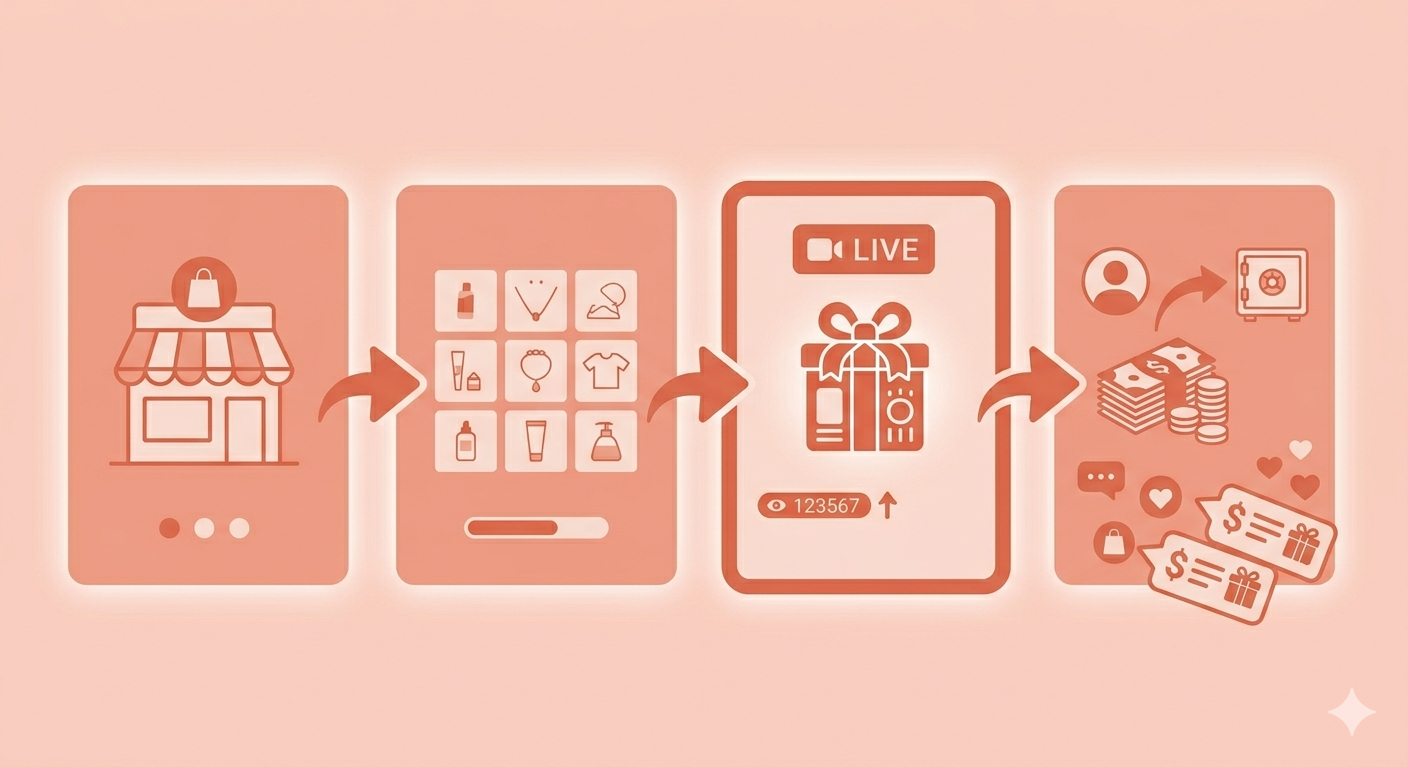
Step 1 — Apply for TikTok Shop Seller Access Go to seller.tiktok.com and apply for a seller account. You will need a business registration document, a government-issued ID, and a bank account for payouts. Approval typically takes two to five business days.
Step 2 — Upload Your Product Catalog Once approved, upload your products with clean, high-quality images, detailed descriptions, and accurate pricing. TikTok's algorithm uses product data to match your live streams with relevant audiences, so the quality of your catalog matters.
Step 3 — Pin Products During Your Live When you go live on TikTok, use the product pin feature to surface specific items during the stream. Pinned products appear at the bottom of the screen as a tappable button — viewers can add to cart and purchase without interrupting the viewing experience.
Step 4 — Enable TikTok Shop Affiliate Register for TikTok's affiliate program to allow creators to promote your products during their own lives. This is one of the most powerful growth levers available to small brands — you pay commission only when a sale happens, which means your marketing cost is directly tied to revenue.
Drive more viewers to every live session with daily Reels that build anticipation automatically.
Put these tips into action — start creating with SnapReel for free.
How to Run a Live Shopping Session That Actually Converts
Going live is easy. Running a live shopping session that converts viewers into buyers is a different skill — and it comes down to a specific structure that the most successful small brands have figured out through repetition.
The First Five Minutes Are Everything
The first five minutes of any live shopping session determine whether people stay or leave. Most brands make the mistake of opening with a slow introduction — thanking viewers for joining, explaining who they are, going through their brand story. By the time they get to the product, half the viewers have already left.
The format that works is immediate value delivery. Open with the product. Show it. Make a specific claim about what it does or why it matters. Give a reason for viewers to stay — a discount that activates 10 minutes in, a giveaway at the end of the session, a limited quantity announcement. In the first 60 seconds, viewers need to know exactly what they came for and why leaving would cost them something.
Keep the Energy Consistent Throughout
Live shopping is performance marketing. The host's energy directly determines conversion. This does not mean being artificially loud or over-enthusiastic — it means being consistently present, consistently responding to comments, consistently creating the feeling that something is happening right now that is worth paying attention to.
Read comments out loud. Answer product questions immediately. Call out viewers by name when they comment. This level of direct engagement signals to everyone watching that they are in a real conversation, not watching a broadcast — and that distinction is exactly what separates live shopping from every other type of social content.
Use Scarcity and Urgency Honestly
Scarcity and urgency are the engines of live shopping conversion. Limited quantities, session-only pricing, bundle deals that expire when the live ends — these mechanics work because they are real. If you only have 30 units of a product available for the live session price, say so. If the discount code expires when you go offline, say so. Authentic scarcity creates genuine urgency, and genuine urgency converts.
The brands that abuse these mechanics — announcing fake limited quantities, extending discount codes after claiming they have expired — lose audience trust rapidly in the live format. The comment section is unforgiving. One viewer calling out a misleading claim in real time can derail an entire session.
End With a Clear Next Step
Every live shopping session should end with a clear instruction — what you want viewers to do next. Follow the account for the next live date. Share the session with someone who would love the product. Check the link in bio for anything they missed. The session does not end when you go offline. The follow-up action is the final conversion opportunity, and most brands leave it empty.
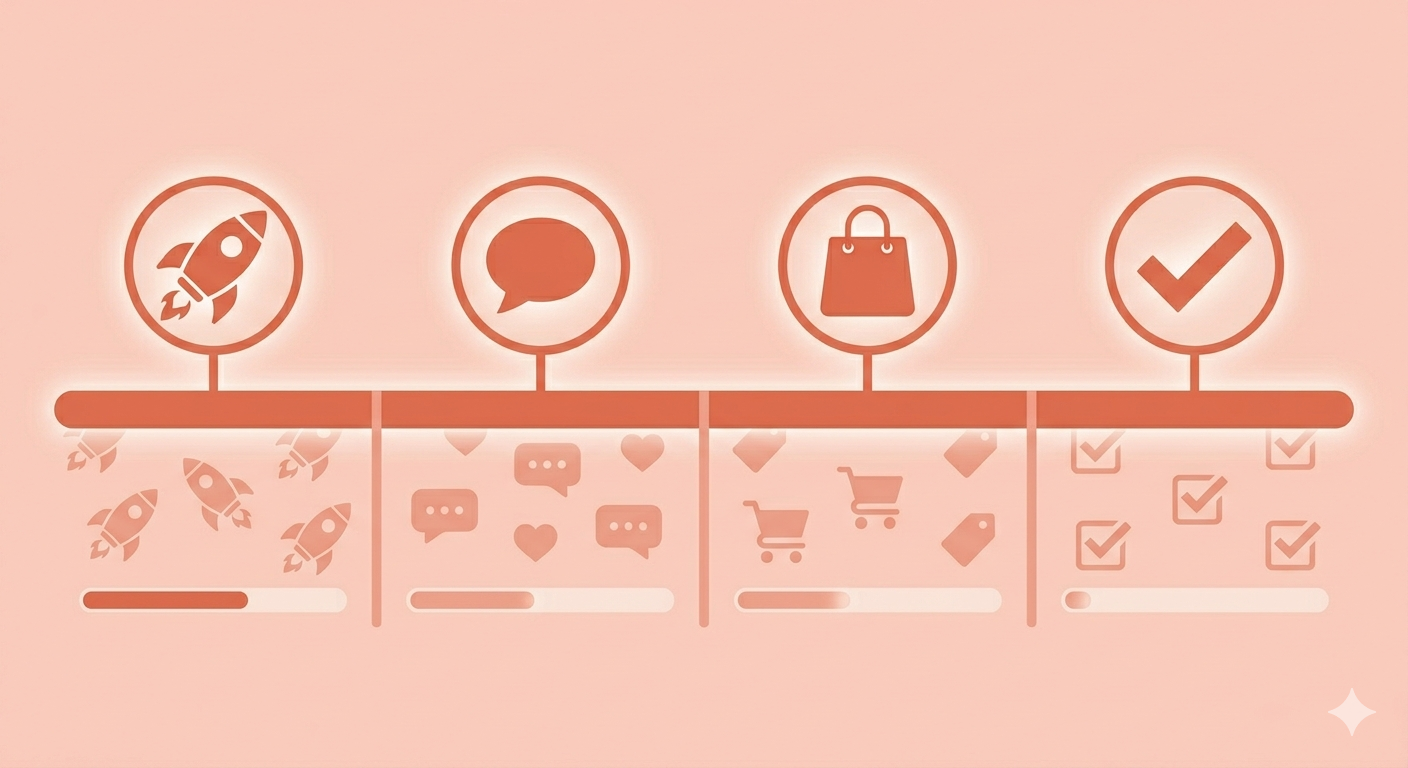
What to Sell, When to Go Live, and How Often
Not every product is equally suited to live shopping, and not every time slot produces the same results. Getting both of these decisions right dramatically increases your chances of a strong first session.
Products That Perform Best in Live Shopping
The products that convert best in live shopping share a few characteristics — they benefit from demonstration, they have a clear and immediate use case, and they create an emotional response when shown in use. Beauty and skincare products are historically the strongest performers because the host can demonstrate application, show texture, and describe the experience in real time. Fashion and accessories perform well because fit, color, and styling questions can be answered immediately. Home goods that solve a specific visible problem — storage, organization, cooking — convert well because the problem-solution dynamic is clear on camera.
Products that tend to underperform in live shopping are highly technical items that require long consideration, products with complex sizing requirements, and anything where the purchase decision requires information that cannot be communicated in a live environment.
When to Go Live for Maximum Reach
TikTok and Instagram both show higher live viewership during specific windows — generally between 7pm and 10pm on weekdays in your target audience's time zone, and between 12pm and 3pm on weekends. These windows align with when users are most likely to be casually scrolling rather than task-switching between obligations.
For new accounts without an established live audience, going live consistently on the same day and time each week is more important than any individual session's performance. Viewers who tune in once and enjoy the format will set reminders. The algorithm will learn your pattern and surface your live sessions more reliably to returning viewers. Consistency builds the compounding audience that makes live shopping genuinely scalable for a small brand.
How SnapReel AI Fits Into Your Live Shopping Strategy
Live shopping sessions create enormous amounts of raw content — unscripted moments, real customer questions, product demonstrations, authentic reactions. Most brands go live, finish the session, and let all of that footage disappear.
SnapReel AI turns your live session content into a full week of follow-up social posts automatically — short clips of the strongest product moments, highlight reels from the Q&A, quote cards from viewer comments, and teaser content for your next live session. The brands that grow fastest in live shopping are the ones treating each session as a content source, not a standalone event — and SnapReel AI handles the entire repurposing workflow on autopilot so you never have to choose between going live and keeping your content calendar full.