Why Long-Form Video Is Making a Comeback — And How Small Brands Should Use It Alongside Reels in 2026
SnapReel
May 12, 2026 · 14 min read

Table of Contents
For the last three years, the advice for small brands on social media has been almost identical everywhere you looked. Post Reels. Make TikToks. Keep it under 30 seconds. Hook them in the first two seconds or lose them forever. Short-form video became the universal answer to every content question, and for good reason — it worked. Reels and TikToks gave small brands access to audiences they never could have reached otherwise, without paid advertising, without large production budgets, without anything except a phone and a decent idea.
But something has shifted. Not dramatically, not overnight — but undeniably. Audiences that once swiped past anything longer than 60 seconds are now watching 20-minute YouTube tutorials start to finish. TikTok, the platform that started the short-form revolution, now allows videos up to 10 minutes and is actively pushing longer content in its algorithm. YouTube Shorts — the platform's own short-form response to TikTok — is driving users back to long-form videos on the same channel. The data is becoming hard to ignore: long-form video is making a comeback as audiences crave more depth in their online content, opening the door to greater targeting possibilities as consumers seek more in-depth information on their path to conversion. Pathopt
This doesn't mean short-form is dying. It absolutely isn't. But the brands that are treating Reels as their entire video strategy in 2026 are leaving the most valuable part of the customer journey completely unserved. This guide explains exactly what's happening, why it matters for small brands specifically, and how to build a video strategy that uses both formats where each one actually works.
Why Audiences Are Craving Long-Form Again
To understand why long-form video is coming back, you have to understand why it left in the first place — and what's changed since then.
Short-form video dominated because it matched a specific moment in content consumption. Feeds were noisy, attention was fragmented, and the easiest thing to do was scroll. Platforms optimized for this behavior, rewarding content that could grab attention in under two seconds and deliver something satisfying in under a minute. Brands adapted. Everyone got very good at making short things.
But there's a paradox in that optimization. The better everyone gets at making short-form content, the more saturated feeds become, and the harder it is for any individual piece to stand out. By 2026, the average TikTok or Instagram feed is so packed with short, punchy, well-produced content that viewers have developed a kind of immunity to it. The very format that once felt fresh and attention-grabbing now blends together into an undifferentiated scroll. As consumer habits evolve, audiences are now demanding more depth and context, prompting platforms like TikTok to lean into lengthier videos. Influencers Time
There's also a trust dimension that short-form simply cannot address. A 30-second Reel can introduce your brand and make someone curious. It cannot make them trust you enough to spend $80 on your product. It cannot answer the ten questions they have before buying. It cannot show them the full picture of who you are and why your brand is worth choosing over the five competitors they've already seen this week. That trust-building work requires depth — and depth requires time. Short-form videos might grab attention, but long-form films are making a comeback, especially for brands telling deeper stories or showcasing expertise — with long-form building loyalty while short-form builds reach. IAB
What the Platforms Are Telling You
Platform behavior is often the clearest signal about where content is heading, and in 2026, every major platform is making moves that favor longer content alongside short-form.
YouTube's CEO Neal Mohan published his 2026 roadmap with a clear strategic direction: use Shorts for discovery, use long-form for depth, use creators for trust, and use paid media for scale. YouTube now processes 70 billion daily Shorts views — but the platform explicitly treats Shorts as a discovery engine that feeds traffic back to long-form content on the same channel. The two formats are designed to work together, not compete. ALM Corp
TikTok extended its video length to 10 minutes and the platform is actively rewarding longer content with increased algorithmic visibility. Instagram has been quietly expanding its Reels length limits. Even LinkedIn, which built its identity on professional text posts, has introduced a dedicated video feed and is pushing longer video content aggressively. The platforms know what the data shows: longer watch time means more time on platform, more engagement signals, and more algorithm satisfaction. They are building their systems to reward the brands that serve both short and long.
The Full-Funnel Video Strategy — How Short and Long Work Together
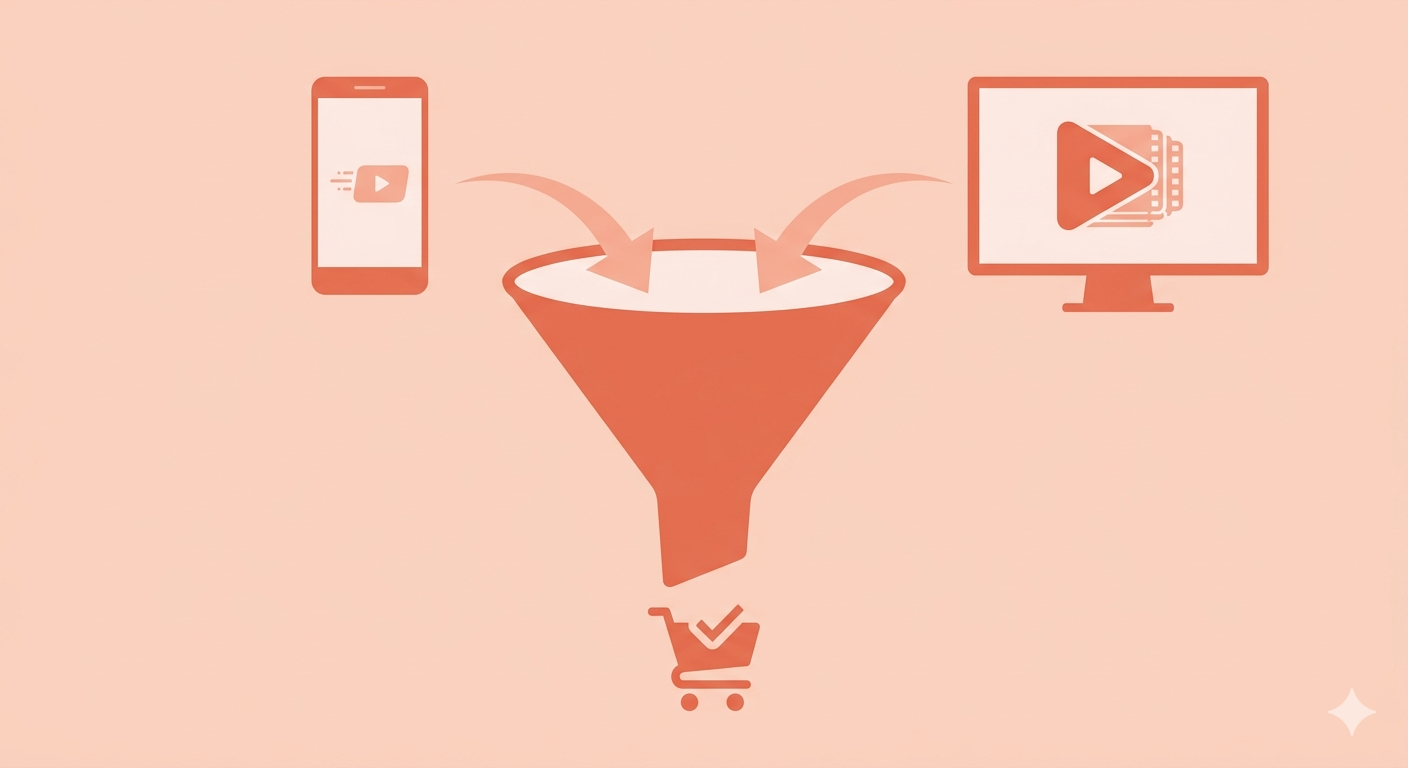
The most important mental shift for small brands in 2026 is this: short-form and long-form video are not competing formats. They serve completely different stages of the customer journey, and a brand that uses only one is leaving half the journey unaddressed.
Short-form video excels at brand awareness and discovery — it helps new people find you. The most effective strategy uses short-form to drive traffic to long-form content where conversions happen. Think of it as a two-stage system. Your Reel or TikTok is the hook — it stops the scroll, introduces your brand, and creates curiosity. Your long-form video is the substance — it answers the questions, builds the relationship, and earns the trust that converts a curious viewer into an actual customer. Influencer Marketing Hub
Here's what that looks like in practice for a small brand. A sustainable clothing brand posts a 30-second Reel showing a beautiful piece of clothing with a compelling caption — "How this jacket is made differently from everything else you own." That Reel drives views and profile visits. The people who are genuinely interested click through to the brand's YouTube channel, where a 12-minute video walks through the entire sourcing and production process with real footage, real people, and real answers to every question a conscious consumer has before buying. The Reel creates reach. The YouTube video creates conversion. Short-form video trends in 2026 hook potential customers in the discovery phase, while long-form content helps users make their final decision. Pathopt
The Three Stages Where Each Format Belongs
Understanding where each video format fits in a customer's decision-making process makes content planning dramatically simpler. There are three distinct stages, and each calls for a different approach.
Discovery is where short-form dominates completely. This is the top of the funnel — potential customers who don't know your brand yet, scrolling feeds, encountering your content by chance. Reels, TikToks, and YouTube Shorts are the right format here because they match the passive, exploratory behavior of someone in discovery mode. Your short-form content at this stage should do one thing exceptionally well: make someone interested enough to want to know more. It should raise a question, create curiosity, showcase something surprising, or deliver a quick win that makes the viewer think "I want to see more from this brand."
Consideration is where mid-form video becomes valuable — videos in the 3 to 8 minute range that go deeper than a Reel but don't require the full commitment of a long-form YouTube video. This could be a detailed product walkthrough on YouTube, a behind-the-scenes mini-documentary posted to Instagram, or a founder interview on a topic your audience cares about. At this stage, your potential customer is actively evaluating whether your brand is worth trusting. They have questions. Mid-form video gives you the space to answer them properly.
Conversion is where long-form video — 10 minutes and up — earns its place. At this stage, someone is seriously considering buying from you. They want comprehensive answers, detailed demonstrations, honest comparisons, and enough depth to feel confident in their decision. Educational videos, product demos, tutorials, and problem-solving content perform best for search and conversion at this stage. Long-form YouTube is the most powerful format here because it combines depth with searchability — your videos appear in Google search results, YouTube search, and increasingly in AI-powered search summaries, giving them an evergreen reach that no Reel can match. HumanAds
What Long-Form Video Should Actually Look Like for Small Brands
When most small brands hear "long-form video," they picture expensive studio productions with professional crews — content that feels entirely out of reach for a one-person or small-team operation. That picture is wrong, and it's keeping small brands away from one of the highest-ROI formats available to them.
In the face of an onslaught of AI-only video, brands need to emphasize authenticity and solid storytelling to connect with viewers — and 93% of marketers say video content has given them solid ROI while 84% say video has directly increased sales. The long-form content that performs best for small brands in 2026 is not polished and corporate. It's real, specific, and genuinely informative. It's the kind of content your audience actually wants to watch — not because it looks expensive, but because it answers questions no one else is answering in enough depth. Influencers Time
Format 1 — The Deep Dive Tutorial or How-To
This is the most accessible and consistently highest-performing long-form format for product-based small brands. Pick a specific question your target customer asks before buying — not a generic question, but the real, specific one they type into YouTube at 11pm when they're genuinely trying to make a decision. Answer it completely, on camera, with your product as the natural solution. A skincare brand might do "How to build a complete routine for combination skin in your 30s — every product explained." A coffee brand might do "How to make the perfect pour-over at home — every variable that actually matters." These videos rank in YouTube search for months and years, driving discovery and conversion simultaneously.
Format 2 — The Brand Documentary
Behind-the-scenes, founder story, and brand origin content performs exceptionally well in long-form because it does something short-form cannot: it makes people feel like they genuinely know your brand. A 15-minute "how we built this" video from a founder who talks honestly about the challenges, failures, and motivations behind their brand creates a depth of connection that no amount of polished Reels can replicate. Long-form video is more than just a marketing tool — it's an investment in audience engagement and brand loyalty, with explainer videos and brand documentary content helping solidify credibility and educate customers about why they need what you're offering. Dynamis LLP
Format 3 — The Product Deep Dive
For any brand selling a product that requires some explanation — anything with ingredients, materials, a process, or a meaningful point of difference from competitors — a comprehensive product video is one of the most underutilized conversion tools available. Walk through every aspect of the product in detail. Show it being made. Show it being used. Answer every objection on camera. Explain what makes it different and why that difference matters. This kind of video doesn't go viral, but it does convert. Someone who watches your full product deep-dive is far more likely to buy than someone who watched your 30-second Reel — because the depth of engagement signals a level of genuine interest that short-form rarely achieves.
Keep your short-form content consistent while you focus on longer videos — SnapReel handles your daily Reels automatically.
Create AI-powered videos and auto-post to all your platforms.
YouTube in 2026 — Why It's the Most Important Platform Small Brands Are Ignoring
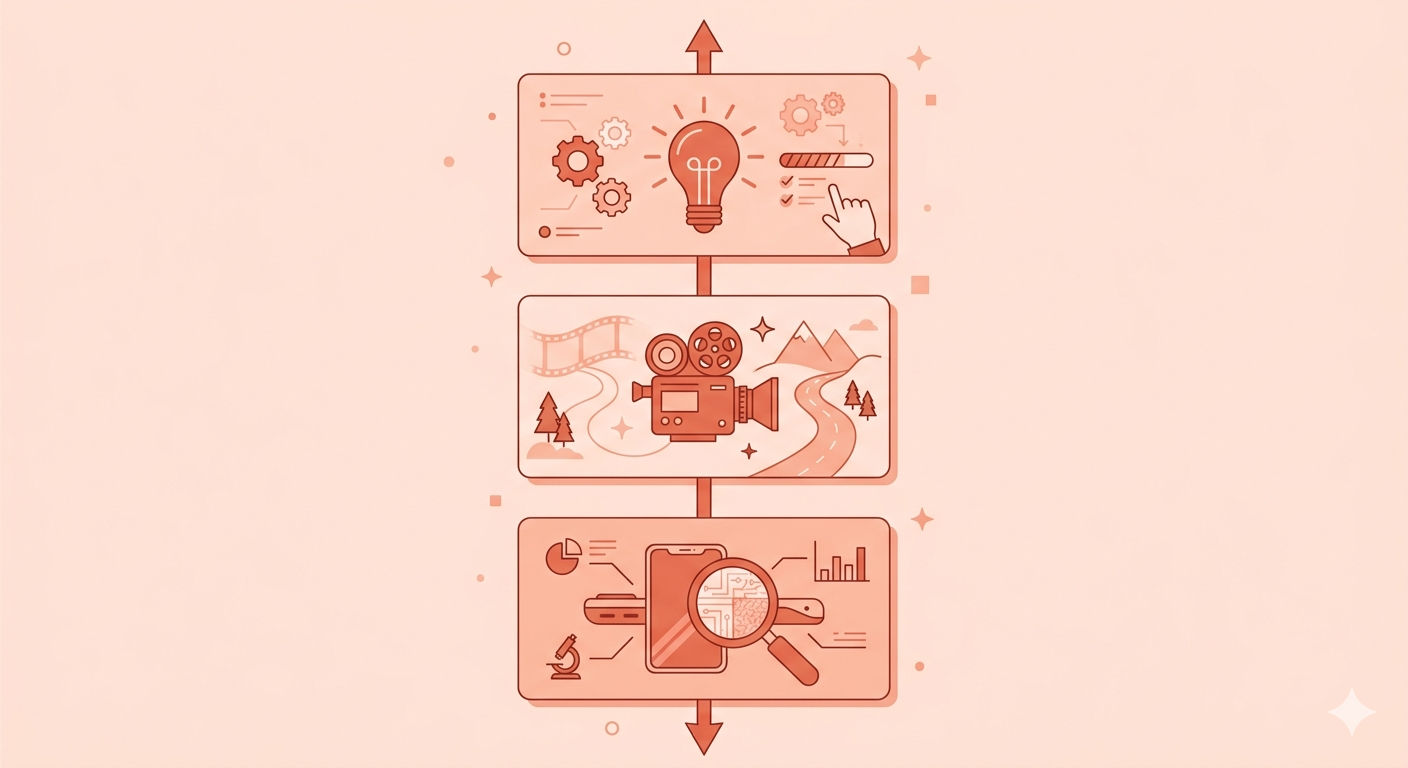
If short-form is the discovery engine, YouTube is the conversion engine — and it has one capability that no other platform can match: search visibility that compounds over time.
A Reel has a lifespan of roughly 24-72 hours before the algorithm stops pushing it. A YouTube video, properly optimized, can generate views and traffic for months or years. Unlike other platforms, YouTube exists in an ecosystem outside the platform — videos appear in search results, AI platforms, and feeds, and unlike fleeting social trends, YouTube's visibility across search means videos can keep performing months and years later, delivering a long-term return on content investment. For a small brand with limited content production capacity, the idea that a single well-made video can continue generating traffic and customers for two years is the most compelling ROI argument in marketing. HumanAds
YouTube also benefits increasingly from Google's AI search integration. As AI-powered search summaries become more common, YouTube videos are being cited, surfaced, and recommended by AI systems in ways that text content rarely achieves. A brand that has a strong YouTube presence — even a modest one with 20-30 well-made videos — is building search visibility across Google, YouTube, and AI platforms simultaneously.
The barrier to starting is lower than most small brands assume. You don't need professional equipment, a studio, or a production team. With good lighting, thoughtful storytelling, and clear substance, viewers will stick around — the key is to build both long-form and short-form versions of every project, with long-form building loyalty and short-form building reach. A founder who turns on their phone camera in good natural light and answers a question their customer genuinely has — clearly, specifically, and honestly — is already producing content that will outperform most expensive brand videos. The content quality that matters on YouTube in 2026 is informational depth and authentic delivery, not production value. IAB
How to Repurpose Long-Form Into Short-Form — The Content Multiplication Strategy
One of the most practical reasons to start creating long-form video in 2026 is that it solves the short-form content volume problem simultaneously. A single well-planned long-form video is actually a content library, not a single piece of content.
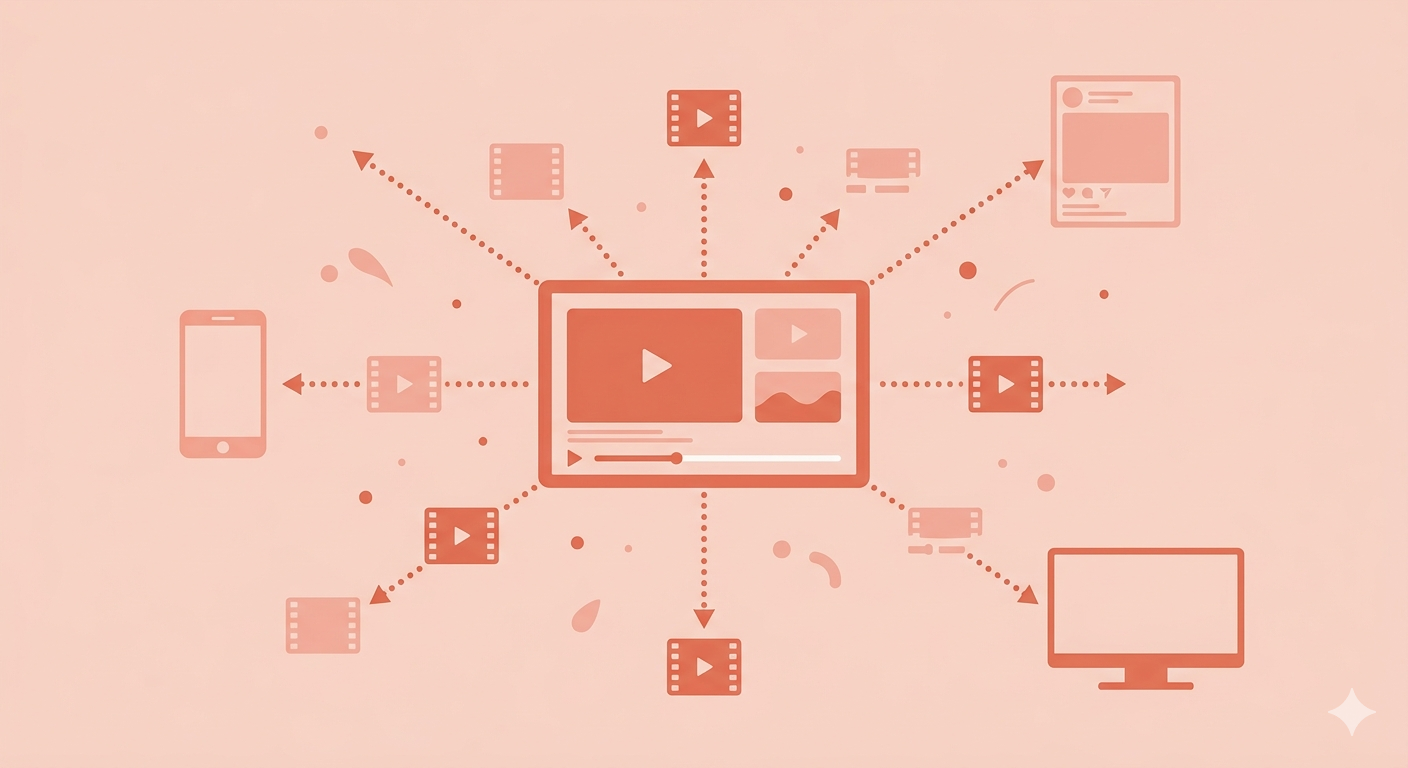
A 15-minute YouTube video on a focused topic contains 8-12 distinct moments that work as standalone short-form clips. Each key point, each surprising fact, each compelling demonstration can be extracted, trimmed, and posted as a Reel or TikTok with a caption that points back to the full video. A single 20-minute YouTube video can become 8-10 TikToks, 8-10 Instagram Reels, 5-7 YouTube Shorts, 3-4 LinkedIn posts, 10-15 Twitter threads, and a blog post. The long-form video becomes the content pillar from which everything else is derived. Influencers Time
This approach completely changes the economics of content production for small brands. Instead of trying to generate 20 individual short-form ideas every week and producing them separately, you produce one substantial long-form piece and extract your short-form content from it. The short-form clips are all connected to a deeper piece of content — which means they don't just generate views, they generate traffic back to something that actually converts.
The practical workflow is straightforward. Film your long-form video first, with your full topic and substance. Post it to YouTube. Then identify the 8-10 moments within it that work as standalone hooks — moments that are surprising, immediately valuable, or provocative enough to stop a scroll. Extract those clips, add captions, and post them to TikTok, Instagram Reels, and YouTube Shorts over the following two to three weeks. Each short-form clip ends with a simple call to action pointing to the full video. Your one production session has become three weeks of multi-platform content and an evergreen YouTube asset.
Getting Started — The Small Brand Long-Form Video Action Plan
The biggest barrier to starting long-form video is not equipment, budget, or even time. It's the unfamiliarity of the format and the fear that it won't perform. Here's the most practical way to start without overcommitting.
Begin with one long-form video per month. Not per week — per month. One 10-15 minute YouTube video, planned around a question your ideal customer actually searches for, filmed on whatever camera you have available in good natural light. Focus entirely on delivering genuine value — answer the question completely, show don't just tell, and speak like you're explaining something to a friend rather than presenting to a boardroom. This is a lower bar than most small brands set for themselves, and it's achievable without restructuring your entire content workflow.
From that one monthly video, extract your short-form clips for the following two to three weeks. You now have both a long-form YouTube asset that compounds in search over time, and a consistent supply of short-form content that drives immediate discovery. As you build a library of 6-12 long-form videos over six months, you'll start seeing the search visibility, the evergreen traffic, and the conversion rates that make long-form video one of the most durable investments a small brand can make in 2026.
The brands that built their YouTube channels three years ago while everyone else was focused entirely on TikTok now have search presence that their competitors cannot buy. The brands that build theirs in 2026, while the conversation is still dominated by short-form, will have the same compounding advantage in three years. The best time to start was three years ago. The second best time is now.
SnapReel AI helps small brands produce short-form content consistently — so you have the bandwidth to invest in the long-form video strategy that builds lasting authority and converts at a level Reels alone never will.