What Is Micro-Drama Marketing — How Small Brands Are Using Storyline Videos to Sell in 2026
SnapReel
May 14, 2026 · 14 min read
Table of Contents
Think about the last time you watched one video online and genuinely could not stop. Not a funny clip you scrolled past. Not an ad you sat through. A story. Something with characters, tension, a moment at the end of each episode that made you immediately tap to watch the next one. Something that made you forget you were on your phone at all.
That feeling — that pull — is what micro-drama marketing is engineered to create. And in 2026, it has become the fastest-growing content format on the internet, with a global market that hit $7.8 billion this year, more than doubling from $3.8 billion in 2025. The most downloaded streaming apps in the world right now are not Netflix or Disney+. They are ReelShort and DramaBox — platforms built entirely around 60 to 90 second storyline episodes that keep viewers watching for hours. TikTok launched its own dedicated micro-drama app called PineDrama. Brands like Maybelline, Crocs, and Starbucks have already entered the format with their own micro-drama campaigns.
And yet the vast majority of small brands have not touched this format at all. They are still posting one-off product videos, static image carousels, and standalone Reels that viewers consume once and immediately forget. They are competing in the most crowded format on social media — the single-clip video — while an entirely different game is being played one layer up, and that game has almost no competition at the small brand level yet.
This guide explains exactly what micro-drama marketing is, why it works with a depth that traditional short-form content cannot match, and how small product-based brands can use storyline video to build audiences and drive sales without a Hollywood production budget.
What Micro-Drama Marketing Actually Is
A micro-drama is a scripted or semi-scripted video series told in short episodes — typically between 60 and 180 seconds each — designed for vertical mobile viewing and built around narrative tension that compels the viewer to watch the next episode.
The format originated in China, where the micro-drama industry grew from approximately $500 million in 2021 to a multi-billion dollar market by 2025, with over 662 million users engaging with the format. It then spread aggressively to the United States, where it is now the top-grossing category on mobile app stores. About 30% of US millennials and Gen Z consumers were already familiar with micro-dramas by early 2025, and that number has grown substantially since.
What makes a micro-drama different from a regular short-form video is narrative structure. A standard brand video tells you something — here is the product, here is why it is good, here is the call to action. A micro-drama shows you something and then withholds the resolution, creating a compulsion to continue. Each episode ends at a point of tension. The next episode resolves that tension and immediately introduces a new one. The viewer is not passively consuming content — they are actively invested in finding out what happens next.
The Three Elements That Define the Format
Every effective micro-drama, whether it is produced by a streaming platform or a small candle brand, shares three core structural elements.
A relatable central character or situation. The viewer needs someone or something to emotionally anchor to within the first five seconds. This does not have to be a person — it can be a situation, a problem, or a feeling that the viewer immediately recognizes from their own life. The faster you create that recognition, the faster you create investment.
Escalating tension with consistent cliffhangers. Each episode must end with the story unresolved in a way that makes watching the next episode feel necessary rather than optional. The tension does not have to be dramatic in a soap opera sense — it can be as simple as "will this work?" or "what is she going to do?" — but it must be present at the end of every single episode.
Natural product integration. Unlike traditional advertising where the product is the point of the content, micro-drama marketing embeds the product into the story. The character uses the product. The product is part of the world. The viewer encounters it the way they would encounter a product placement in a television show — organically, in context, as part of a story they are already invested in. This is what makes micro-drama marketing convert at rates that interrupt-style advertising cannot approach.
Why Micro-Drama Marketing Works — The Psychology Behind the Format
Understanding why this format is so effective is important, because it explains how to use it correctly. Micro-drama marketing is not just a trend. It is a format that exploits deep, well-documented principles of human psychology in a way that makes it structurally more effective than almost any other content type.
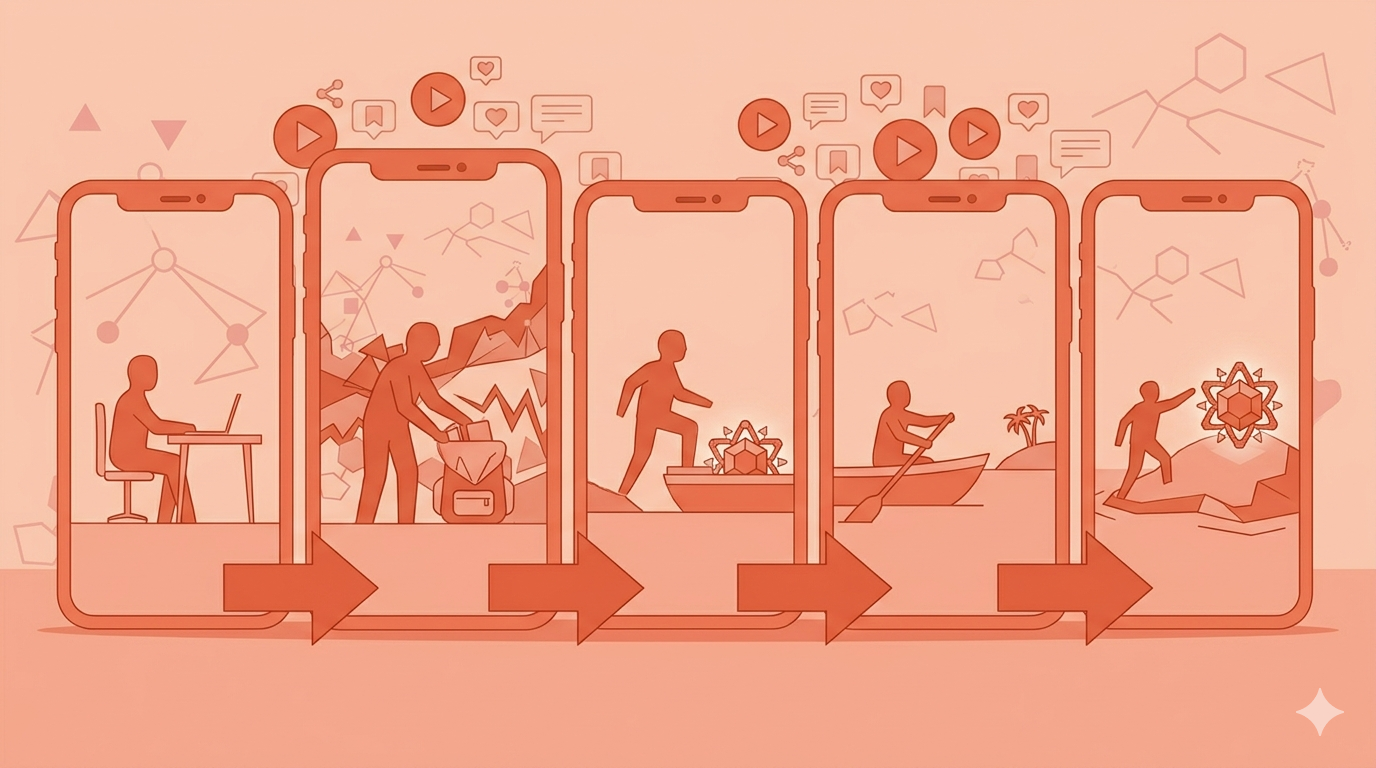
The first principle is what psychologists call the Zeigarnik Effect — the well-documented tendency for humans to remember and think about incomplete tasks or unresolved situations far more than completed ones. When a story ends on a cliffhanger, your brain does not let it go. It keeps returning to the unresolved tension, creating an almost involuntary desire to find resolution. Micro-dramas are engineered specifically to trigger this effect at the end of every single episode.
The second principle is narrative transportation — the psychological state where a person becomes so absorbed in a story that their critical faculties are partially suspended. When you are genuinely immersed in a narrative, you are not evaluating the products in the story with the same skeptical eye you bring to an advertisement. You are experiencing them as part of a world you care about. Product mentions and placements in that state land differently — they feel like observations rather than pitches.
The third principle is social proof through story. When a character in a micro-drama uses a product and it works — when the storyline visually demonstrates a positive outcome that the viewer can observe and believe — that demonstration is more persuasive than any claim your brand could make about itself. You are not telling the viewer that your product works. You are showing them, through the emotional lens of a story they are already invested in.
These three principles combine to create engagement rates and conversion rates that consistently outperform single-clip video content. YouTube Shorts tests of episodic ad breaks have achieved 94% completion rates — dramatically higher than traditional pre-roll advertising. Episode-level micro-transactions on drama platforms show 23% purchase rates. This is not a niche format producing niche results. It is a fundamentally more effective way to hold attention and drive action.
The Micro-Drama Formats That Work for Small Brands
Not every micro-drama format is equally appropriate for every small brand. Understanding which structures work for product-based businesses helps you choose the right approach before you start creating.
The Problem-Solution Series
This is the most universally applicable micro-drama format for small brands. Each episode follows a character dealing with a specific problem that your product solves — but the series builds the problem over multiple episodes before the product appears as the solution.
Episode one establishes the problem and the character's frustration with it. Episode two shows a failed attempt to solve it with something else. Episode three introduces your product, not as an advertisement but as something the character discovers or is recommended. Episode four shows the early results. Episode five shows the transformation. Episode six closes the story and opens the next problem — because the series never truly ends, it evolves.
This format works because the viewer experiences the problem empathetically before they encounter the solution. By the time your product appears, they are not watching an ad — they are watching a character they care about find something that helps them. That emotional context makes the product memorable in a way that a standalone product demo cannot replicate.
The Behind-the-Brand Series
This format uses the real story of your brand as the narrative — the founder's journey, the process of making the product, the challenges of running a small business, the moments of doubt and breakthrough. It is semi-scripted rather than fully scripted, built around real events and real decisions but structured with the pacing and tension of a drama.
This format is particularly powerful for small brands because it generates the authenticity that audiences in 2026 are actively seeking. Consumers increasingly distrust polished brand content — they want to see the real thing. A behind-the-brand micro-drama series gives them exactly that, while still being structured enough to hold attention across episodes.
The Character Universe Series
This format creates a recurring cast of characters — not necessarily real people from your brand, but fictional characters who exist in a world where your product is a natural part of their lives. The stories are about the characters and their relationships, conflicts, and journeys. The product appears naturally as part of that world.
This is the most ambitious format and the one closest to traditional television drama, but it does not require a large production budget at the small brand level. Two or three characters, a consistent visual setting, and a strong narrative hook per episode are enough to build a universe that viewers return to.
Turn your brand's story into a serialized content series — SnapReel generates every episode automatically.
Put these tips into action — start creating with SnapReel for free.
How to Produce Micro-Dramas Without a Production Budget
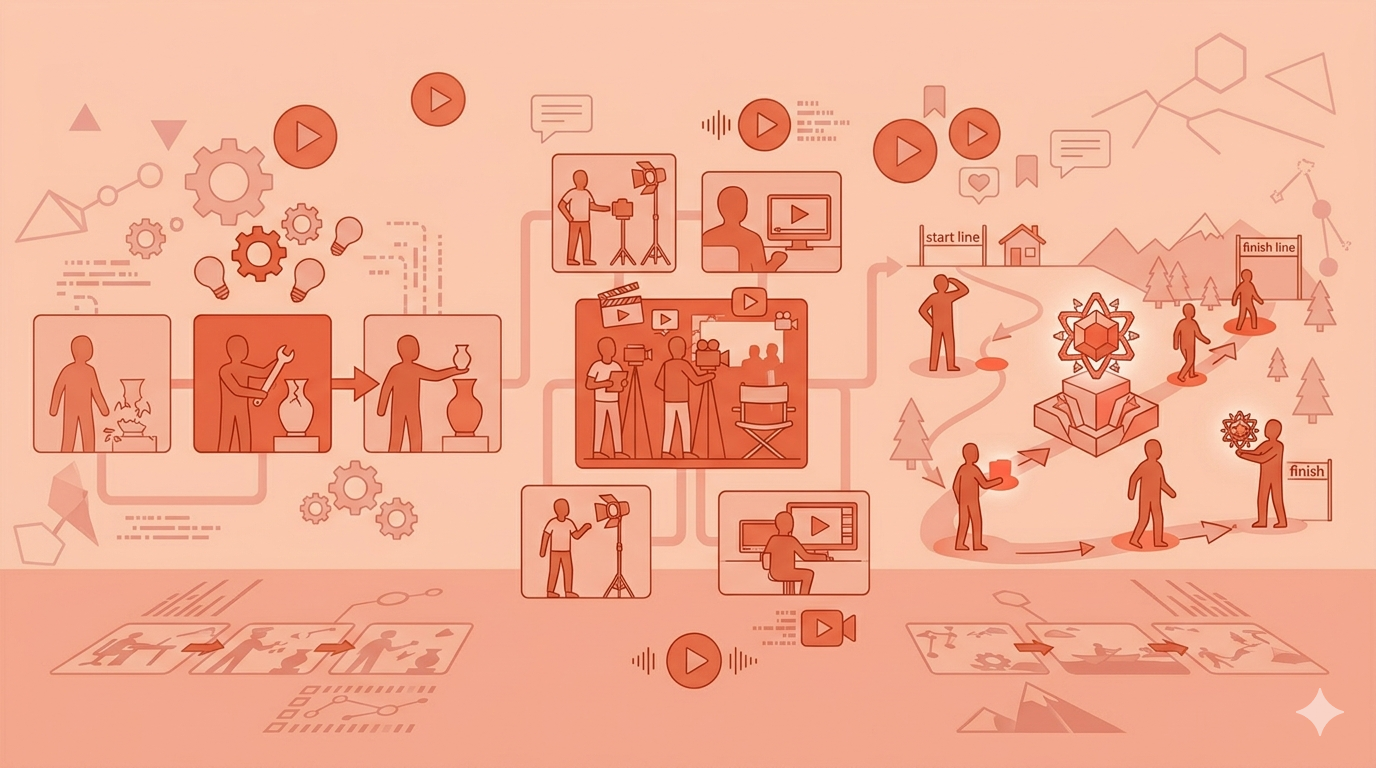
The most common reason small brands hesitate to try micro-drama marketing is the assumption that it requires expensive production. This assumption is wrong, and it is increasingly wrong as AI video tools improve.
The micro-drama format is native to mobile. It was born on phones, it is consumed on phones, and it is produced on phones. The aesthetic that works — vertical format, slightly raw, intimate, close-to-camera — is the exact aesthetic that a small brand owner with a modern smartphone can produce. Overproduced micro-dramas often perform worse than authentically shot ones because they feel corporate and distant rather than personal and real.
The Minimum Viable Micro-Drama Production Setup
You need four things to start producing micro-dramas as a small brand: a smartphone with a decent camera, a consistent location or set that becomes visually associated with your brand, a simple written outline for each episode rather than a full script, and a clear brand style guide for how your product appears in frame.
The outline approach — knowing the beginning, the tension point, and the cliffhanger of each episode before you film, without scripting every line — produces content that feels natural and spontaneous while still hitting the structural beats that make the format work. Fully scripted micro-dramas often feel stiff and performed. Outlined ones feel alive.
Consistency matters more than production quality in the micro-drama format. Viewers will follow a series shot on a phone in a consistent location with consistent characters. They will not follow a series with inconsistent visual style, even if individual episodes are technically well-produced. Establish your visual world in episode one and maintain it throughout.
Using AI to Scale Micro-Drama Content
AI video generation tools have matured significantly by 2026. Small brands can now use AI to generate supplementary visuals, create consistent stylistic elements across episodes, produce voiceover narration, and in some cases generate entire visual sequences based on written descriptions. This dramatically lowers the production cost of maintaining a consistent micro-drama series.
The key is using AI for the elements that benefit from speed and consistency — visual effects, transitions, music, supplementary scenes — while keeping the core storytelling and brand voice human. AI-generated content that is entirely devoid of human creative direction tends to feel generic. AI-assisted content with clear human creative intent feels both authentic and polished.
How Shoppable Integration Turns Views Into Sales
Micro-drama marketing builds audience and trust. Shoppable integration is how that trust becomes revenue.
Shoppable video — content with embedded product tags or links that allow viewers to purchase directly without leaving the platform — is now natively supported on TikTok, Instagram, and YouTube. When your micro-drama features a product and a viewer taps the product tag embedded in the video, they go directly to a purchase page rather than having to search for the product separately.
This frictionless path from story engagement to purchase is what makes micro-drama marketing commercially effective rather than just creatively interesting. The viewer is already emotionally engaged with the story. They have already seen the product in context. The product tag is not an interruption — it is an invitation to continue the experience beyond the screen.
Conversion rates on shoppable micro-drama content consistently exceed those of standalone product videos because of this context. The viewer is not being asked to buy something they just encountered for the first time in an ad format. They are being offered an easy way to own something they have already watched a character use, value, and benefit from across multiple episodes.
The practical implementation is straightforward: tag your products in every episode where they appear naturally in frame. Keep the tags subtle — positioned away from the center of the visual action, appearing for a few seconds rather than dominating the screen. The goal is to make purchasing frictionless for viewers who are already interested, not to turn every frame into a catalog.
Building a Micro-Drama Series — A Practical Starting Framework
For a small brand ready to try micro-drama marketing for the first time, a practical starting framework prevents the most common mistakes.
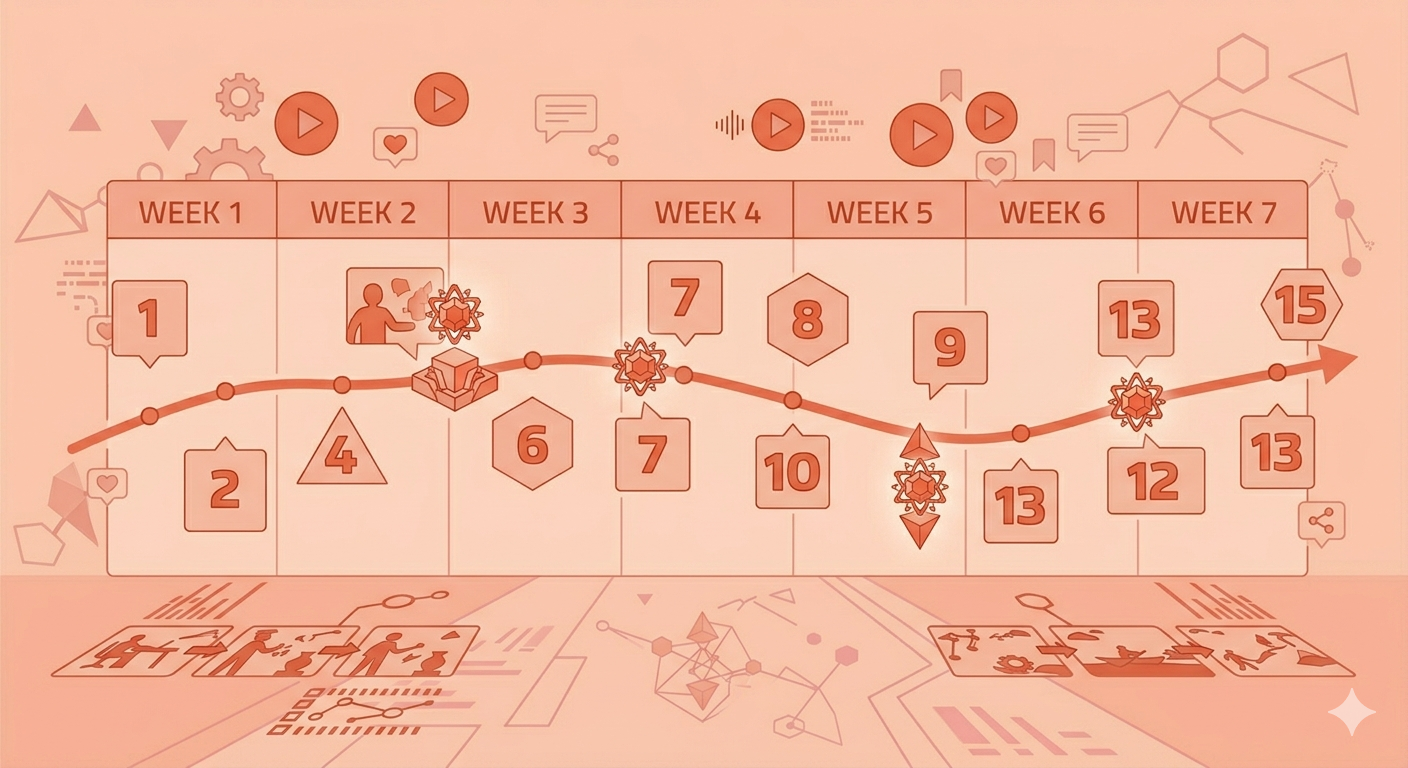
Plan the full series before filming episode one. Know how many episodes the first series will have — six to ten is the ideal range for a first series. Know the arc of the story from beginning to end. Know where your product will appear and how it will be integrated. Knowing the full shape of the story before you start means every episode is written with the ending in mind, which produces stronger narrative tension throughout.
Film multiple episodes in a single session. Since micro-drama episodes are short — 60 to 90 seconds of footage — you can film three or four episodes in a single afternoon if you are working from outlines. Batch filming is the single biggest efficiency gain in micro-drama production, because it eliminates the setup and teardown cost for every episode and ensures visual consistency across the series.
Release on a consistent schedule. The cliffhanger model only works if viewers know when the next episode is coming. Weekly releases build habitual viewing. Daily releases build obsessive viewing. Choose a cadence you can genuinely maintain and stick to it — an inconsistent release schedule breaks the narrative tension that makes the format work.
Engage with episode-specific comments. When viewers leave comments asking what happens next, responding to those comments — even briefly — builds the kind of community investment that turns casual viewers into loyal followers. The micro-drama format naturally generates this kind of speculation and anticipation, and engaging with it signals that the people behind the brand are paying attention.
Why Micro-Drama Is Especially Powerful for Small Brands
Large brands have enormous advantages in almost every traditional marketing format. Bigger ad budgets. Wider distribution. More production resources. More data. In most marketing arenas, the gap between a large brand and a small brand is very difficult to close.
Micro-drama marketing partially inverts this dynamic. The format rewards storytelling authenticity, narrative creativity, and genuine audience connection — qualities that are not functions of budget. A small brand with a compelling story, a consistent visual world, and characters that viewers care about can build a micro-drama audience that no amount of paid advertising could replicate. Large brands often struggle with the format precisely because their content governance processes make it difficult to produce the kind of raw, personal, emotionally authentic storytelling that micro-dramas require.
The small brand that starts building a micro-drama library in 2026 is building a content asset that compounds. Early episodes attract viewers. Those viewers follow the brand. Later episodes deepen the relationship. The audience grows with the series. The brand becomes not just a product people buy but a story people follow — and a story people follow is infinitely more durable than a brand people simply remember.
SnapReel AI helps small brands produce consistent video content automatically — so the creative and strategic energy you have goes into the story you want to tell, not into the production logistics of getting that story onto every platform where your audience is watching.