Why Going Niche Is the Smartest Social Media Strategy for Small Brands in 2026 — And How to Do It
SnapReel
May 13, 2026 · 18 min read

Table of Contents
There is a piece of advice that has been quietly destroying small brand social media strategies for years. It sounds completely logical. It gets repeated in every marketing course, every business podcast, every social media tips article. And it is almost entirely wrong for 2026.
The advice is this: reach more people.
Post more. Broaden your audience. Use broader hashtags so more people see you. Create content that appeals to everyone. Grow your follower count. More reach, more awareness, more customers. The math seems obvious — the more people who see your brand, the more people who buy from it.
Except the math is broken. And the brands discovering this in real time are the ones watching their follower counts grow while their engagement rates collapse, their content gets buried in algorithm changes, and their conversion rates stubbornly refuse to move despite months of consistent posting.
Meanwhile, a small coffee brand that only talks to specialty coffee obsessives is building a community of 8,000 people who buy from them every month and tell every coffee-interested person they know about them. A sustainable skincare brand that only creates content for people with sensitive skin and a genuine interest in ingredient transparency is generating more revenue from 12,000 highly specific followers than competitors with 150,000 generic ones. A fitness equipment brand that speaks exclusively to people over 40 who want to stay active without injuring themselves is the first result that comes up when those people search their exact situation on TikTok.
The days of worldwide viral hits are being replaced by an era of niche alignment with smaller segments of highly relevant followers. Brands must understand their audience's niche struggles and interests deeply, because users now have the power to actively filter out content that isn't immediately relevant to them. ALM Corp
This is the niche content strategy — and in 2026, it is the most powerful thing a small brand can do on social media. Not because it is a trend, but because it is a direct response to how algorithms actually work, how audiences actually behave, and how trust actually gets built in a feed that is more saturated than it has ever been.
Why Broad Is Broken — Understanding What Changed
To understand why niche content works so well in 2026, you have to understand what fundamentally changed in how social media algorithms distribute content and how audiences behave within those algorithms.
Three years ago, reach was still a reasonable proxy for success. A brand could post broadly appealing content, accumulate followers across a wide demographic, and expect the algorithm to show that content to a meaningful percentage of those followers. Follower count meant something because the relationship between followers and reach was relatively stable.
That relationship is now gone. With even more competition and changing platforms, just being active on your brand's social accounts isn't enough — what worked last year may not deliver the same results going forward. Instagram's organic reach for brand pages now sits between 1% and 5% of followers. Facebook organic reach has effectively collapsed for business pages. Even TikTok, which still offers stronger discovery than other platforms, has become saturated enough that average content from an unknown brand struggles to surface without either exceptional quality or exceptional relevance. Greenfroglabs
What the algorithms are actually rewarding in 2026 is a completely different set of signals than follower count or raw reach. Every major platform — TikTok, Instagram, YouTube, LinkedIn — now measures and rewards engagement depth, watch time, save rate, and share rate. These metrics all share one common characteristic: they are generated by people who found the content genuinely relevant to them specifically, not by people who happened to scroll past it.
Niche marketing on social media is about narrowing your focus to speak directly to a specific audience. Instead of casting a wide net, brands that embrace this strategy create content that resonates with a smaller community of people who share a particular interest, need, or identity. This approach leads to stronger engagement because the content feels personal, relevant, and valuable to the audience it is made for — and this is especially effective on social media where algorithms reward engagement and relevance over reach. Substack
When your content speaks to a specific person about a specific situation they are actually in, they watch it all the way through. They save it. They share it with the three people they know who are in the same situation. They comment with genuine reactions. Every single one of these behaviors sends the algorithm a signal that your content is high-quality and worth distributing further. The algorithm does not care that you only reached 2,000 people — it cares that 1,800 of those 2,000 watched to the end and 400 of them saved it. That engagement profile gets your next piece of content shown to 10,000 people who share the same characteristics as the ones who engaged.
This is the compounding logic of niche content. Broad content gets mediocre engagement across a large audience. Mediocre engagement tells the algorithm the content is average. Average content gets average distribution. Niche content gets exceptional engagement from a small, highly relevant audience. Exceptional engagement tells the algorithm the content is outstanding. Outstanding content gets dramatically amplified distribution — to more people who share the characteristics of the ones who engaged. Over time, the niche brand builds an audience that is actually larger than the broad brand, and infinitely more valuable because every member of it is a genuine potential customer.

What Niche Actually Means — And the Mistake Most Brands Make
The word "niche" gets misused constantly in marketing conversations, and the misuse leads to strategies that are either too broad to work or so narrow that they are unsustainable. Understanding what niche actually means in the context of social media content strategy in 2026 is the prerequisite for getting the rest of the strategy right.
A niche is not a product category. "Skincare" is not a niche. "Coffee" is not a niche. "Fitness equipment" is not a niche. These are industries — vast, competitive, and impossibly crowded from a content perspective. Creating content for "people interested in skincare" puts you in direct competition with every dermatologist, beauty influencer, beauty brand, skincare retailer, and skincare blog that has ever existed. That is not a niche. That is a war you cannot win.
A niche is a specific intersection of audience identity, problem, and context. "Women in their 30s with hormonal acne who have tried everything and are skeptical of new products" is a niche. "Home coffee brewers who want specialty-quality results without spending more than $100 on equipment" is a niche. "Men over 45 who want to maintain their fitness without the knee and back issues that come with high-impact training" is a niche. Each of these descriptions is so specific that a person who fits it reads it and immediately thinks — "that is exactly me."
A niche is only useful when it supports profitable growth and can be reached consistently through owned and paid channels — the most effective niche programs identify valuable segments where customer lifetime value, buying urgency, and message differentiation align. This means a good niche has three characteristics simultaneously: it is specific enough to generate exceptional engagement, it is large enough to sustain a growing brand, and it is underserved enough that your content stands out rather than getting buried by existing competitors. Substack
The Three Levels of Niche — Finding Where You Belong
Most brands operate at what could be called Level 1 niche — they have identified a broad product category and a general audience. This is where almost everyone starts, and it is where almost everyone stays because the next steps feel risky.
Level 2 niche is where brands start to add genuine specificity to their audience definition. Instead of "skincare for women," they move to "skincare for women with sensitive skin." Instead of "coffee for home brewers," they move to "pour-over and specialty coffee for serious home brewers." This level of specificity already dramatically improves content relevance and engagement — but it is still not the territory where the most dramatic results happen.
Level 3 niche is where the most powerful content strategies live. At Level 3, you are speaking to a specific person in a specific situation with a specific problem that your brand is uniquely positioned to address. Leaning into niche-specific terms to attract your ideal audience, not just any audience, and asking yourself "what would my target audience search to find this?" and then building content around that exact phrase is what separates the brands that dominate search from the ones that disappear into it. Level 3 niche content is content that makes a very specific person feel like it was made entirely for them — because it essentially was. Substack
How to Find Your Niche — The Research Process That Works
Finding the right niche is not a guesswork exercise. It is a research process with specific inputs and a specific output — an audience definition specific enough to generate exceptional engagement but large enough to sustain growth.
Step 1 — Start With Your Existing Customers
The most reliable source of niche intelligence is the customers you already have. Not the demographic data — age, location, gender — but the specific people. Who are your most enthusiastic customers? Not the ones who bought once and never came back, but the ones who buy repeatedly, who tag you in their posts, who recommend you to friends, who send you messages about how much they love what you do.
Map those customers. What do they have in common that goes beyond obvious demographics? What specific situation were they in when they found your brand? What specific problem were they trying to solve? What language do they use when they describe your product to other people? The patterns that emerge from this mapping are your niche indicators — they tell you exactly who your content should be made for and what it should address.
Step 2 — Listen to the Conversations Nobody Is Answering Well
Through social media listening, marketers can uncover real-time insights into audience preferences, interests, and pain points, validating niche viability with data-driven evidence. Search your product category keywords on TikTok, Reddit, YouTube, and Instagram. Look not at the popular content — the broad, already-covered topics that everyone in your category has addressed — but at the comments, the questions, the threads where people are frustrated, confused, or underserved. La Growth Machine
Every question in a Reddit thread that has no good answers is a niche content opportunity. Every comment on a competitor's video saying "but what about X situation?" is a specific audience signal. Every TikTok search autocomplete that suggests a hyper-specific query is telling you exactly what a real person typed into the search bar because they could not find the answer anywhere else. These are the content gaps — the places where a specific audience exists and nobody is serving them well yet.
Step 3 — Test Before You Commit
The beauty of social media as a niche research tool is that you can test specific content angles quickly and cheaply before committing to them as your primary strategy. Prioritizing niche audiences over broad, unfocused campaigns and experimenting with micro-communities rather than blanket engagement lets brands measure results before and after adopting new specific content directions. ALM Corp
Post three pieces of content targeting slightly different niche angles within your broader category. Watch the engagement patterns carefully — not just total numbers, but who is engaging, what they are saying in the comments, and whether the people engaging fit your customer profile. The niche angle that generates the most genuine, specific, on-point engagement from people who look like your best customers is the one worth committing to as your primary content direction.

What Niche Content Actually Looks Like — Platform by Platform
Understanding niche strategy conceptually is valuable. Seeing what it looks like in practice across specific platforms makes it actionable.
On TikTok, niche content wins through hyper-specific hooks. The hook — the first two to three seconds — should reference the exact situation your specific audience is in, using the exact language they use to describe it. Not "if you struggle with skincare" but "if your skin is combination but your T-zone gets oily by noon and everything you try breaks out your chin." The person that sentence describes stops scrolling immediately because they have never heard their exact situation described that precisely before. On TikTok, niche content, authentic personality, and consistent posting are the combination that builds real audiences — and brands that focus on niche content find their ideal customers far more efficiently than those chasing broad trends. Medium
On Instagram, niche content wins through specificity in captions and carousel content. The brands performing best in niche strategies on Instagram are those whose captions read like they were written for one specific person rather than optimized for broad appeal. Carousel posts that walk through a specific problem with genuine depth and specificity consistently generate save rates that broad promotional posts never approach. Value-driven posts that speak directly to your audience's lives and challenges build loyal communities that evangelize, which is marketing gold — and a loyal community doesn't just engage, they actually convert. Substack
On YouTube, niche content wins through search-intent alignment. YouTube's search algorithm rewards content that precisely matches what a specific user typed into the search bar — and niche content by definition is built around specific search queries rather than broad topics. A YouTube video titled "how to maintain an active lifestyle in your 50s without aggravating a bad knee" will never generate mass viral views, but it will rank at the top of YouTube search for that specific query for months or years, continuously delivering highly qualified viewers to a brand that serves them exactly.
On LinkedIn, niche content wins through perspective specificity. The LinkedIn content that builds the largest, most engaged audiences is almost never the broad thought leadership piece — it is the founder who writes specifically about their industry, their specific experience, their specific perspective on something their specific professional audience cares deeply about. Discord, Reddit, and LinkedIn matter significantly for niche audiences and community building — the key is prioritizing based on specific audience behavior rather than trying to be everywhere at once. Substack
SnapReel generates hyper-targeted branded content for your exact niche audience — every single day.
Create AI-powered videos and auto-post to all your platforms.
The Competitive Advantage That Niche Creates
Beyond the engagement and algorithm benefits, going niche creates a competitive advantage that broad brands simply cannot replicate — and it does so in a way that compounds over time.
One of the underrated perks of niche marketing is how much smaller your competitive pool becomes. With many brands focusing on broader audiences, this is your chance to really dial in and stand out. The lack of competitors in niche space allows for focus on brand awareness, community building, and in-depth personalization that niche audience members will not be able to resist. Substack
When you speak specifically to a narrow audience, you are not competing with every brand in your category. You are competing only with the brands that speak to the same specific audience — which is almost always a dramatically smaller number. A broad skincare brand competes with thousands of other brands for every person interested in skincare. A skincare brand that specifically addresses hormonal acne in women over 30 competes with a handful of brands that have made the same specific choice — and wins among that specific audience because its content, messaging, and product positioning all speak to them with a precision that the broad brands can never match.
This specificity also creates a loyalty depth that broad audiences never develop. Roughly 75% of agencies believe that smaller creators with niche audiences are outperforming celebrities in engagement and ROI — because niche audiences develop genuine trust and loyalty that broad audiences, by definition, cannot. A customer who found your brand specifically because it spoke to their exact situation is a dramatically more loyal customer than one who encountered you in a general feed and happened to buy. They feel understood by your brand in a way that goes beyond the product — and that feeling of being understood is the most powerful retention mechanism available. Substack
The Niche Content Calendar — Making It Practical Every Week
The most common reason small brands fail at niche content strategy is not strategy — it is execution. They understand the concept, they identify the niche, and then they sit down to create content and immediately default to broader, safer, more generic topics because they cannot think of enough specific content ideas to maintain a consistent posting schedule.
Here is the framework that makes niche content sustainable week after week.
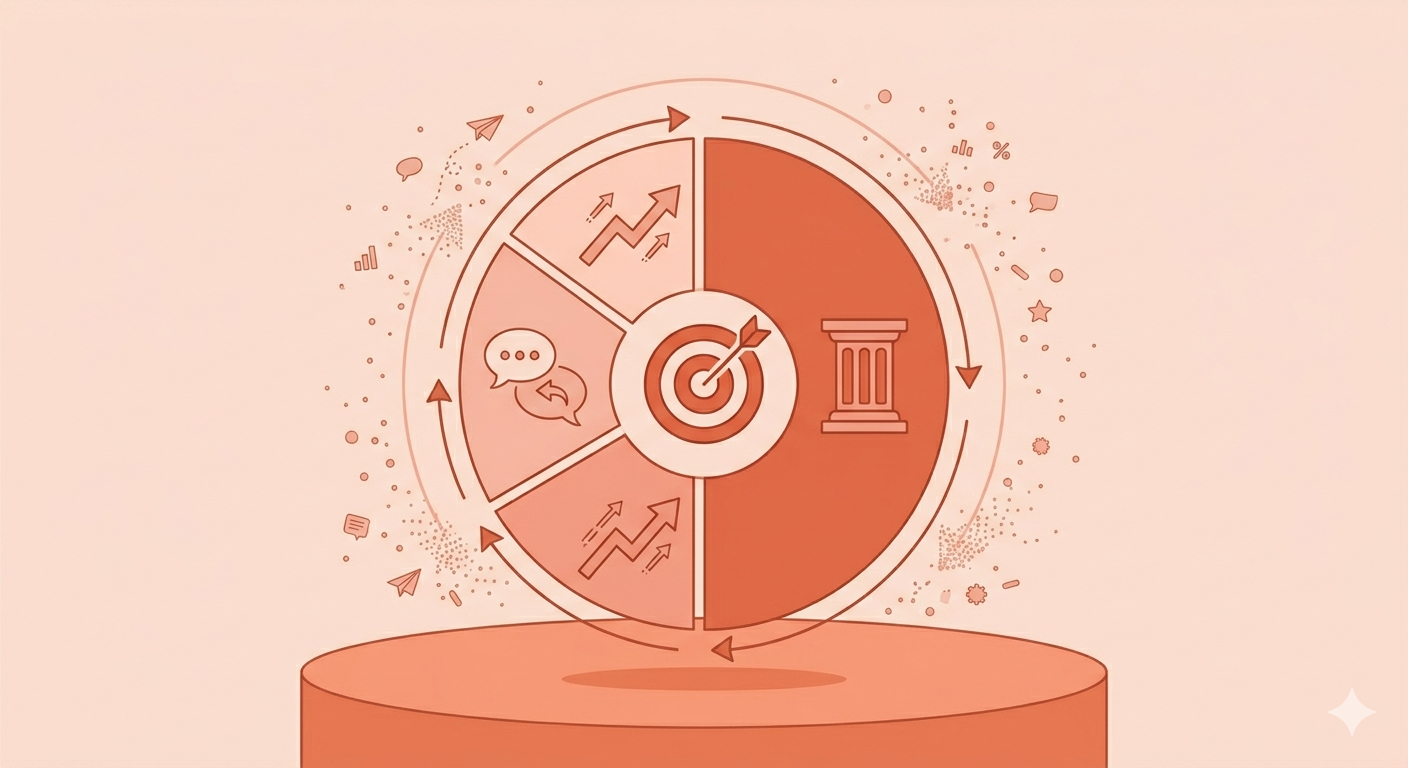
Pillar content is the deep, comprehensive content that establishes your niche authority — the thorough YouTube video answering the most important question in your niche, the comprehensive Instagram carousel covering the full picture of your audience's main problem, the long-form blog post that covers every aspect of your specific topic. You create one piece of pillar content per week — it takes more time and effort than your other content, but it is also the content that generates the most long-term traffic, saves, and authority.
Response content is created directly from your community's activity. Every question in your comment section, every DM asking for clarification, every trend in your customer service conversations is a specific content idea from your niche audience telling you exactly what they want to know. Response content takes the friction out of ideation entirely — you are not guessing what your niche audience wants, you are directly answering what they have explicitly asked. This content also performs exceptionally because the person who asked the question in comments will almost always engage with the video that answers it — and people with the same question will find it through search.
Trend content is created when a broader social media trend can be adapted specifically for your niche. Not every trend is relevant to every niche — and a niche brand should never force a trend that does not fit their specific audience just for the sake of participation. But when a trend is genuinely adaptable to your specific audience's situation, adapting it with niche-specific language and context is one of the fastest ways to generate discovery from new members of your specific audience who are participating in the trend from their own angle.
When Going Niche Feels Scary — Addressing the Fear of a Smaller Audience
Almost every small brand that understands the logic of niche content strategy hits a moment of genuine fear before committing to it. The fear is rational on the surface: if you narrow your content to a specific audience, you will reach fewer people. And if you reach fewer people, you will have fewer potential customers. The math seems straightforward.
The math is wrong — but the fear is understandable, and addressing it directly is important before a brand can fully commit to a niche strategy with enough consistency to see results.
The first thing to understand is that reach without relevance generates almost no revenue. A post that reaches 50,000 people who are mildly interested in your broad category generates far fewer conversions than a post that reaches 5,000 people who are your exact ideal customer in the exact moment they need what you offer. The gap in relevance makes the difference in audience size irrelevant to actual business outcomes.
The second thing to understand is that niche audiences are self-expanding. When your content speaks specifically to a certain kind of person, those people share it with others exactly like them. The friend they send it to, the group they post it in, the person they tag in the comments — all of these distribution actions are happening within your niche, bringing you more members of your specific ideal audience without any additional content effort. Niche content markets itself within its own community in a way that broad content, which gets shared more randomly and retained less specifically, never does.
The third thing to understand is that the algorithm works in your favor once you build niche engagement history. After a month of consistently specific content generating strong engagement from a defined audience type, the platform's algorithm understands who your content is for. Every subsequent piece of content gets distributed with that understanding built in — which means your reach grows, but it grows specifically within your niche. You end up reaching more of the right people, not fewer people overall.
Niche content marketing levels the playing field for everybody — and 49% of businesses say that organic search brings them the best marketing ROI, with niche content being the most cost-effective way to build a brand and stand out in a sea of competition. The brand that commits to a specific audience and speaks to them with genuine precision and consistency builds something that no broad competitor can easily replicate: a reputation as the definitive brand for a specific kind of person. In a crowded market, being the definitive choice for a specific person is worth infinitely more than being a vague option for everyone. Jurgenappelo
Stop trying to reach everyone. Find your specific person. Make everything for them. The growth that follows will surprise you.
SnapReel AI helps small brands produce consistent, niche-specific video content at scale — so your perfectly targeted content keeps reaching the right audience every week, without you spending every hour of your day creating it.