What Is Organic Social Media — And Why Small Product Brands Should Prioritize It in 2026
SnapReel
June 18, 2026 · 14 min read
Table of Contents
- 1.
- 2.
- 3.
- 4.
- 5.
- 6.
- 7.
- 8.
- 9.
What Is Organic Social Media And Why Small Product Brands Should Prioritize It in 2026
Organic social media reach dropped 62% between 2020 and 2024. Every year, another headline declares organic is dead. Yet in 2026, small product brands that prioritize organic content are outperforming paid-only competitors in customer loyalty and long-term revenue.
The confusion makes sense. Paid ads give you instant reach. Organic requires consistency without guaranteed results. When your budget is tight and your time is limited, betting on organic feels risky.
But here is what the data actually shows — and why the smartest small brands are doubling down on organic in 2026. This guide breaks down what organic social media really means, why the math has changed, and how to make it work without adding hours to your daily workload.
🎯 KEY TAKEAWAYS
Organic social media refers to any content you post without paying for distribution — it builds trust and compounds over time while paid ads stop working the moment you stop paying.
Small product brands in 2026 are seeing 3.2x higher customer lifetime value from organic followers compared to paid ad conversions.
The time problem is the real barrier — organic requires daily consistency, but autonomous tools now eliminate that requirement for small brands.
Prioritizing organic does not mean ignoring paid — the most effective strategy uses organic as your foundation with paid as an amplifier.
What Organic Social Media Actually Means in 2026
Organic social media is any content you post without paying for distribution. When you upload a Reel, publish a TikTok, or post a Story, that content reaches people based on the platform's algorithm — not based on how much you paid.
The opposite is paid social media. When you run an Instagram ad or boost a post, you pay the platform to show your content to a specific audience. Your reach is determined by your budget, not the algorithm's assessment of your content quality.
What is the difference between organic reach and paid reach?
Organic reach counts how many unique accounts see your content without paid promotion. Paid reach counts how many unique accounts see your content because you paid for distribution. A single post can have both — organic reach from followers who see it naturally, plus paid reach from a boost or ad campaign.
Here is why this distinction matters for small product brands:
Organic followers chose you — they followed your account because they wanted your content. This self-selection creates a higher-intent audience.
Paid impressions are rented — the moment you stop paying, those impressions stop. Organic followers stay on your list indefinitely.
Algorithm favor compounds — accounts with strong organic engagement get more organic reach over time. Paid-heavy accounts do not build this advantage.
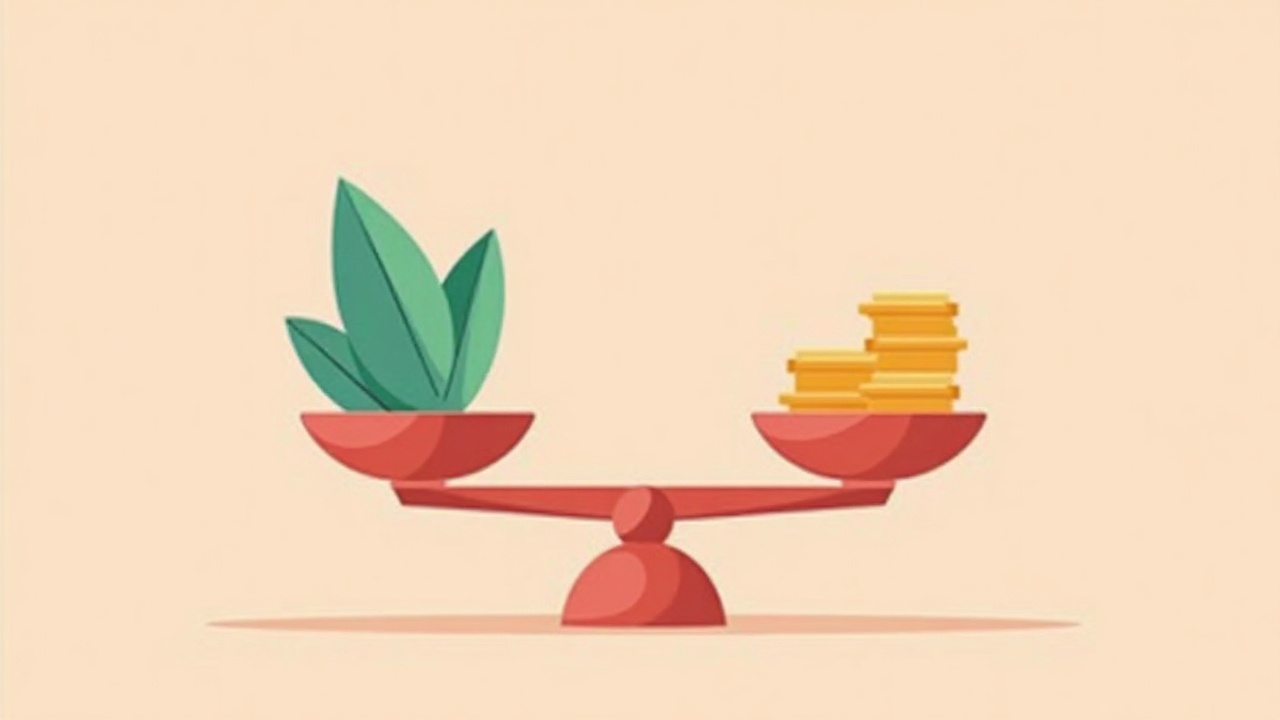
💡 PRO TIP: Check your Instagram insights to see the split between organic and paid reach for your recent posts. If more than 80% of your reach is paid, your account is not building organic equity — you are renting attention rather than owning it.
Why Organic Reach Dropped — And Why It Still Matters
Between 2018 and 2024, Facebook organic reach for brand pages dropped from 7.7% to under 2%. Instagram followed a similar path. Every platform that introduced ads subsequently reduced organic distribution to make those ads more valuable.
This is not a conspiracy. It is the business model. Social platforms make money from advertising. The more valuable paid reach becomes, the more revenue they generate.
If organic reach keeps dropping, why should small brands still prioritize it?
Organic reach dropped for static feed posts. But short-form video changed the equation. Instagram Reels, TikTok videos, and YouTube Shorts operate on recommendation algorithms that can give unknown accounts massive reach based on content quality alone. A brand with 500 followers can get 100,000 views on a single Reel if the content performs well.
Here is the kicker:
Paid social costs have increased 47% since 2022 according to Statista. Customer acquisition costs through paid ads now exceed $50 for many product categories. Meanwhile, organic short-form video remains free to distribute.
The math has shifted. In 2020, paid was cheap and organic was dying. In 2026, paid is expensive and organic short-form video is the most accessible reach opportunity small brands have.
📊 STAT: According to HubSpot's 2025 State of Marketing Report, brands that post short-form video at least 5 times per week see 73% higher engagement rates than brands posting 1-2 times weekly. Frequency matters more than production quality for algorithm favor.
The Real Reason Small Brands Struggle With Organic
Small product brand founders understand the value of organic social media. The problem is not awareness. The problem is time.
Organic requires consistency. The algorithm rewards accounts that post daily. But posting daily means spending 1-2 hours creating content every single day. For a founder running operations, customer service, inventory, and everything else, that time does not exist.
Why do most small brands fail at organic social media?
Most small brands fail at organic because they cannot maintain the posting frequency the algorithm requires. They post for two weeks, see modest results, get busy with other business demands, stop posting, lose momentum, and then start over months later. This stop-start pattern destroys algorithmic momentum and wastes the effort already invested.
Now you might be wondering:
If consistency is the problem, why not just batch content or hire someone?
Batching helps but does not solve the problem — you still need to create the content, just in concentrated bursts. Most founders batch once, post for a month, then never batch again.
Hiring is expensive for small brands — a part-time social media manager costs $1,500 to $3,000 per month. Most small product brands cannot justify that expense until revenue scales.
Freelancers require management — you save time on creation but spend time on briefing, review, and feedback. The net time savings is smaller than expected.

The truth is:
The consistency problem is a systems problem, not a willpower problem. Small brand founders do not lack motivation. They lack a system that maintains organic presence without requiring their daily involvement.
What if your organic social media ran without you having to post every day?
Create AI-powered videos and auto-post to all your platforms.
SnapReel AI is the only fully autonomous social media manager for small product brands. Set up once and your branded Reels post automatically to Instagram, TikTok, and YouTube Shorts every day.
No credit card required • 2-min setup • 2,000+ small brands already using it
Organic vs Paid — The Math for Small Product Brands
The organic versus paid debate misses the point. Both have a role. The question is which deserves priority in your limited budget and time.
Here is the math that most small brands get wrong:
Paid ads show immediate results. You spend $500, you get 10,000 impressions, you track conversions. The ROI is measurable within days. Organic shows delayed results. You post for three months before the algorithm starts favoring your content. The ROI is harder to measure and takes longer to materialize.
Should small product brands spend money on paid ads or focus on organic?
Small product brands should build an organic foundation first, then layer paid amplification on top. Organic content creates the trust layer that makes paid ads more effective. Brands that run paid ads to an account with no organic presence see 40% lower conversion rates than brands with an active organic feed because customers check your profile before purchasing.
⚠️ WARNING: Running paid ads to an empty or inactive Instagram profile is one of the most common mistakes small brands make. Customers who see your ad will visit your profile before purchasing. If they see no recent posts or low engagement, your credibility drops and the ad spend is wasted.
Here is where the long-term math favors organic:
Factor | Paid Social | Organic Social | Winner for Small Brands |
|---|---|---|---|
Immediate reach | Yes — instant | No — builds over time | Paid |
Cost per 1,000 impressions | $5-$15 | $0 | Organic |
Customer lifetime value | Lower — transactional | Higher — relationship-based | Organic |
Works when you stop paying | No — stops immediately | Yes — compounds over time | Organic |
Trust and credibility | Lower — perceived as advertising | Higher — perceived as authentic | Organic |
Time investment | Low — set and monitor | High — daily content required | Paid (without automation) |
And it gets better.
The time investment problem for organic disappears with autonomous tools. When your organic content posts automatically without daily work, organic wins on every factor that matters for small brands.
How to Build an Organic Strategy Without Daily Work
The organic social media playbook from 2020 assumed you had a content team. Create a content calendar. Batch shoot on Sundays. Edit throughout the week. Schedule and post daily. Engage with comments for an hour each day.
That playbook does not work for small product brand founders who are also handling fulfillment, customer service, supplier negotiations, and actual product development.
What is the best way to maintain organic social media as a small brand founder?
The best way for small brand founders to maintain organic social media is through autonomous posting tools that generate and publish content without daily input. This removes the consistency bottleneck entirely. The founder sets up brand information once and the system handles daily content creation and posting automatically.
Let us break this down:
There are three tiers of organic social media tools based on how much daily work they require:
Scheduling tools (Buffer, Later) — require you to create all content yourself. They just automate the posting time. Daily work: 1-2 hours.
Generation tools (Canva, Predis.ai) — help you create content faster with templates and AI. Still require daily prompts and decisions. Daily work: 30-60 minutes.
Autonomous tools (SnapReel AI) — generate and post content automatically based on your brand information. No daily prompts required. Daily work: 0 minutes.
💡 PRO TIP: When evaluating social media tools, ask this question: will I still need to show up every day? If the answer is yes, the tool speeds up your work but does not eliminate it. Only autonomous tools solve the consistency problem completely.
Tired of choosing between daily content work and organic reach?
Create AI-powered videos and auto-post to all your platforms.
SnapReel AI generates and posts branded Reels to Instagram, TikTok, and YouTube Shorts automatically. You maintain organic presence without the daily time investment.
No credit card required • 2-min setup • 2,000+ small brands already using it
What Organic Social Media Looks Like When It Works
When organic social media works for a small product brand, it creates three compounding effects that paid advertising cannot replicate.
First, trust accumulates. Every organic post that shows your product in use, explains a feature, or shares a customer story adds to a library of content that builds credibility. New customers can scroll your feed and see months of consistent presence. This trust layer makes every touchpoint — paid or organic — more effective.
Second, algorithm favor increases. Accounts that post consistently with good engagement metrics get prioritized by the algorithm. Your fifth month of daily posting gets more reach than your first month with the same content quality. Momentum compounds.
Third, customer acquisition cost drops. Organic followers who convert have zero acquisition cost. Even if only 10% of your customers come from organic, that 10% drops your blended CAC significantly. As organic grows, paid efficiency improves because your overall CAC decreases.
How long does it take to see results from organic social media?
Most small brands see meaningful organic traction between 60 and 90 days of consistent daily posting. The algorithm needs time to learn your content patterns and audience response. Brands that post for two weeks and quit never reach the traction threshold where organic starts compounding.
📊 STAT: According to Sprout Social's 2025 benchmark report, accounts that maintain daily posting for 90+ days see an average 156% increase in organic reach compared to their first month. The algorithm rewards sustained consistency more than sporadic high-quality posts.
What does that mean for your brand?
The biggest organic social media mistake is quitting before the compounding kicks in. The first month feels like shouting into a void. The third month starts to show momentum. By month six, organic becomes a reliable customer acquisition channel with zero marginal cost per customer.
Making Organic Work in 2026 — The Practical Path
Here is the practical path for small product brands that want organic social media to work without becoming a full-time job:
Accept that daily posting is required — the algorithm rewards frequency. Posting three times weekly will not build momentum. Daily posting is the baseline for serious organic growth.
Focus on short-form video — Reels, TikToks, and Shorts have the highest organic reach potential. Static posts and carousels have lower distribution in 2026.
Automate creation, not just scheduling — scheduling tools save time on the posting step but not the creation step. Look for tools that generate content autonomously.
Measure the right metrics — follower count matters less than reach per post, saves, shares, and profile visits. These engagement signals determine algorithm favor.
Give it 90 days minimum — organic is a compounding asset. Evaluating results after two weeks leads to false conclusions and wasted effort.
⚠️ WARNING: Avoid the trap of perfectionism in organic content. Small brands that spend hours perfecting each post cannot maintain daily frequency. A good-enough video posted daily beats a perfect video posted weekly. The algorithm favors volume and consistency over individual post quality.
The brands that win at organic in 2026 are not the ones with the biggest content teams. They are the ones that figured out how to maintain daily presence without daily work. That is the real competitive advantage for small product brands.
FAQ
Organic social media is any content you post without paying for distribution. Your reach is determined by the platform's algorithm based on content quality and engagement rather than your advertising budget. Every non-boosted post, Reel, or Story is organic content.
Yes. While organic reach for static posts has declined, short-form video platforms like Instagram Reels and TikTok still offer significant organic reach potential. Brands posting daily short-form video see higher engagement and lower customer acquisition costs than paid-only strategies.
Small brands should post daily for optimal organic growth. The algorithm rewards consistent accounts with higher distribution. Posting less than five times weekly makes it difficult to build the momentum needed for meaningful organic reach in 2026.
Yes. Small product brands can grow on Instagram without paid ads by posting daily Reels, using relevant hashtags, engaging with comments, and maintaining consistent visual branding. Organic growth takes longer than paid but builds a higher-value audience with better customer lifetime value.
Organic reach counts unique accounts that saw your unpaid content. Impressions count total views including repeat views from the same account. If one person watches your Reel three times, that counts as one reach and three impressions. Reach is generally the more useful metric for growth tracking.
Small brands can maintain organic posting without daily work by using autonomous social media tools that generate and post content automatically. Tools like SnapReel AI create and publish branded content based on a one-time brand setup, eliminating the daily content creation requirement entirely.
Organic Is the Foundation — Build It Without the Daily Work
Organic social media in 2026 is not dead. It has shifted. The brands that understand the shift are building compounding assets while their competitors keep renting attention through paid ads alone.
The barrier was never understanding organic's value. The barrier was maintaining the daily consistency the algorithm requires. That barrier no longer exists for brands willing to use autonomous tools that handle content creation and posting automatically.
Your organic presence should grow every day whether you touch your phone or not. That is the new standard for small product brands that want to compete without burning out.
Ready to build organic presence without the daily content grind?
Create AI-powered videos and auto-post to all your platforms.
✓ Fully autonomous daily posting — no prompts, no scheduling, no daily decisions required
✓ Branded Reels generated from your product information and posted to Instagram, TikTok, and YouTube Shorts
✓ Free forever plan included with no credit card required to start
Free forever plan • No credit card • 2-min setup