How to Create Serialized Content on Instagram and TikTok — The Small Brand Episode Strategy for 2026
SnapReel
May 21, 2026 · 13 min read
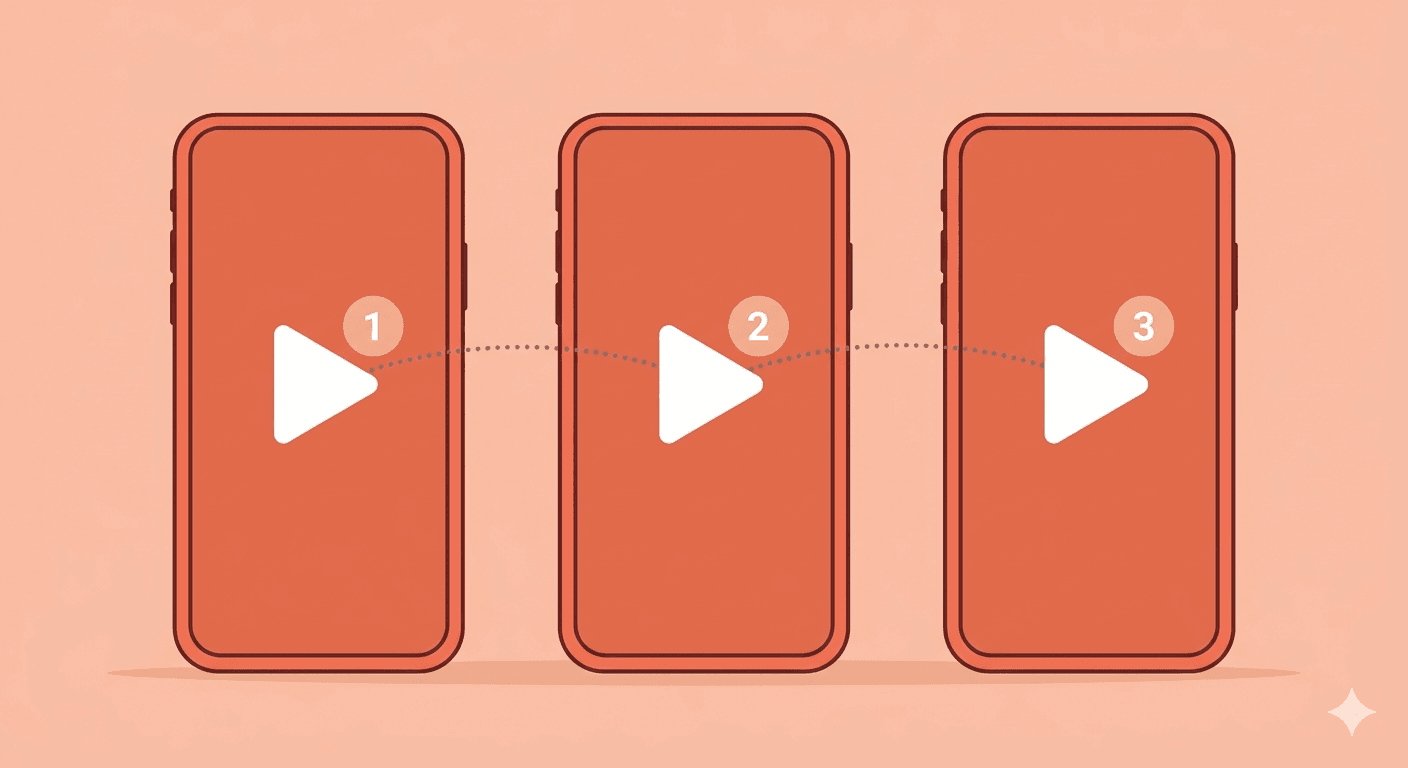
Table of Contents
Posting one-off Reels and hoping something goes viral is a dying strategy. In 2026, the brands winning on TikTok and Instagram are not posting randomly — they are building shows. Serialized content — episodes that keep audiences coming back — is now outperforming single posts across every major platform.
The good news is you do not need a production crew, a script team, or a Netflix budget to do this. You need a format, a cadence, and a system. This guide gives you all three.
🎯 KEY TAKEAWAYS
Serialized content outperforms one-off posts — episodic series drive cumulative watch time and return visits that single Reels cannot match.
Small brands need just one recurring format — behind-the-scenes, founder story, or product education — to build a loyal following that treats your profile like a show.
Weekly or daily episode drops are both viable — weekly works for longer episodes, daily countdowns work for short clips under 60 seconds.
AI tools make serialized production sustainable — generating consistent episode scripts, visuals, and captions without manual production every day.
Why Serialized Content Is Beating One-Off Posts in 2026
The algorithm has changed its reward system. TikTok and Instagram no longer just measure how a single video performs — they measure whether people come back to your profile after watching. Return visits, profile clicks, and follow actions after watching a post are now among the strongest distribution signals on both platforms.
Serialized content is built to generate exactly these signals. When a viewer finishes Episode 3 of your series, they follow your account to get Episode 4. That follow signal tells the algorithm your content is worth recommending to new people. One-off posts rarely generate this loop.
Why do audiences respond to serialized content differently than single posts?
Audiences respond to serialized content the way they respond to a TV show — they form habits around it. When a brand drops episodes on a consistent schedule, viewers start anticipating the next one. That anticipation drives follow actions, profile visits, and notification enables — all signals that compound over time into stronger algorithmic distribution for every future post.
But here is the problem:
Most small brands treat every post as a standalone piece of content. They brainstorm a new idea for each Reel, film it independently, and post without any narrative thread connecting it to what came before. That approach produces no return visits, no habit formation, and no compounding growth.
The brands growing fastest on Instagram and TikTok in 2026 have made one structural shift — they stopped making posts and started making episodes.
💡 PRO TIP: You do not need to announce that your content is a series from the start. Post the first two or three episodes and see what resonates. Once you identify the format that gets the strongest return-visit signals, formalize it as your recurring series and commit to the cadence.
The Four Serialized Content Formats That Work for Small Brands
Not every serialized format works for every brand. These four are the ones small product brands can execute consistently without a large production team.
What are the best serialized content formats for small brands on TikTok and Instagram?
The four best serialized formats for small brands are behind-the-scenes episodes, founder story arcs, product education series, and customer transformation stories. Each works because it has a natural recurring structure — a new episode fits logically into the format every week without requiring creative reinvention from scratch.
Format 1 — Behind the Scenes: "How We Make It"
What it is: Weekly episodes showing one step of your product creation, sourcing, or operations process.
Why it works: Authenticity and transparency are the #1 content traits audiences say they want from brands in 2026. Behind-the-scenes content delivers both without feeling like marketing.
Episode structure: Open with one surprising fact about this step → show the process → close with a tease for next week's episode.
Best for: Product brands with a manufacturing, sourcing, or handmade process worth showing.
Format 2 — The Founder Story Arc
What it is: A multi-part series telling the story of how you built your brand — one chapter per episode.
Why it works: People follow people, not brands. A founder story arc creates a recurring character (you) that audiences invest in emotionally over multiple episodes.
Episode structure: Each episode covers one era, decision, or turning point in the brand story. End every episode on an open question that the next one answers.
Best for: Founder-led brands where the personal story is genuinely interesting or relatable.
Format 3 — Product Education Series: "Did You Know?"
What it is: Short educational episodes teaching your audience one thing about your product, category, or niche per episode.
Why it works: Educational content builds authority and trust faster than promotional content. Viewers who learn something useful from you are far more likely to buy from you.
Episode structure: One question or myth per episode → quick answer → actionable tip → product connection.
Best for: Any brand in a category with genuine depth — skincare, food, home goods, apparel with a story.
Format 4 — Customer Transformation Stories
What it is: A recurring series featuring real customers and the specific result they got from using your product.
Why it works: Social proof at scale. Each episode is a standalone testimonial that also reinforces the series brand. Audiences start watching episodes to see whose story comes next.
Episode structure: Introduce the customer and their before-state → show the transformation → let the customer describe the result in their own words.
Best for: Brands with strong repeat customers and tangible, describable results.
Here is the kicker:
You only need to pick one of these four formats to start. Brands that try to run multiple series simultaneously almost always lose consistency across all of them. Pick the format that matches your brand's natural strengths and commit to it for at least eight episodes before evaluating results.
Stop reinventing your content every week.
Create AI-powered videos and auto-post to all your platforms.
SnapReel AI plans and generates your brand's episodic content automatically — same format, consistent brand voice, new episode every day. No creative burnout, no blank page.
No credit card required • 2-min setup • 2,000+ small brands already using it
How to Plan Your First Content Series in 30 Minutes
Planning a serialized content series sounds more complicated than it is. Most small brands overthink the upfront structure and never start. Here is a simple 30-minute planning process that gets you to Episode 1 without paralysis.
How many episodes should a small brand plan before launching a content series?
Plan five to eight episodes before launching your series. This gives you enough runway to establish the format and build audience habit without requiring you to plan an entire season upfront. Five episodes also gives you enough data — watch time, follows, return visits — to decide whether the format is working before committing further.
Step 1 — Name your series (5 minutes)
Give your series a simple recurring name that appears in every episode caption. It does not need to be clever. "Behind the Label," "Week in the Workshop," "Customer Spotlight," or "Did You Know?" are all sufficient. The name creates searchability and signals to returning viewers that a new episode has dropped.
Step 2 — Define your episode structure (10 minutes)
Every episode follows the same skeleton. Define it once and reuse it every time. A three-part structure works best for short-form: hook (the one thing this episode reveals) → content (the actual episode) → close (what is coming in the next episode). Write this skeleton down and keep it visible during every production session.
Step 3 — Plan five episode topics (10 minutes)
Brainstorm five specific episode topics within your chosen format. For a product education series, list five myths or questions your customers commonly have. For a behind-the-scenes series, list five steps in your process worth showing. For a founder story arc, list five turning points in your brand history. You now have your first five episodes mapped.
Step 4 — Set your drop day (5 minutes)
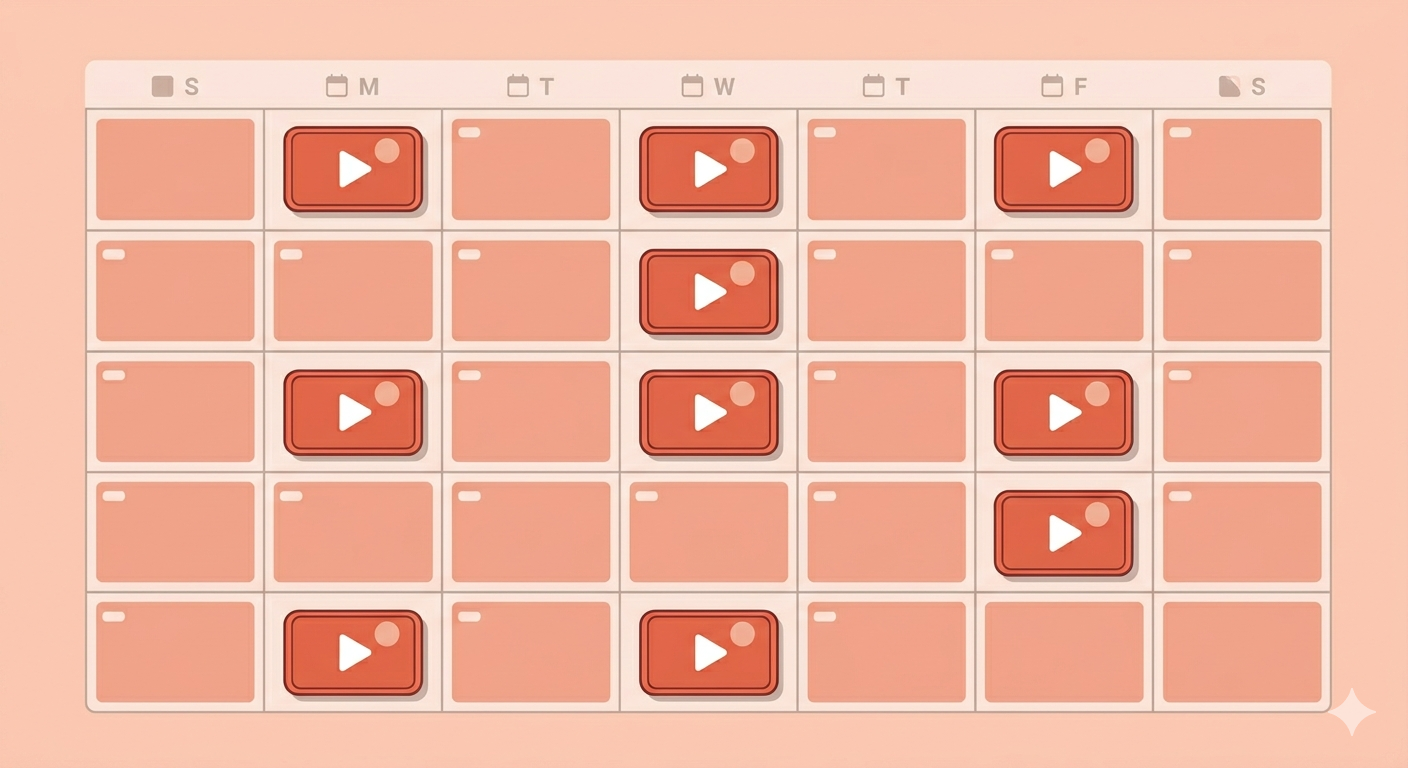
Choose one consistent day per week for your episode drop — or one consistent time per day if you are doing daily short episodes. Consistency of timing builds the anticipation habit in your audience. Wednesday and Thursday perform best for weekly series on both TikTok and Instagram based on 2026 engagement data.
📊 STAT: Brands using serialized content see up to 3x higher cumulative watch time across episodes compared to equivalent standalone posts — because each episode carries forward the attention built by the previous one. (IQFluence, 2026 Social Trends Report)
Cadence, Consistency, and the Episode Drop Strategy
Serialized content only works if the audience can form a viewing habit around it. That requires absolute consistency in two things — the format of each episode and the timing of when it drops.
The format consistency means every episode looks and sounds recognizably like the others. Same opening structure, same visual style, same recurring element that ties the series together — a catchphrase, an intro graphic, a consistent location, or a recurring question format. Audiences need to immediately recognize "this is the next episode" the moment a new post appears in their feed.
The timing consistency means dropping on the same day every week or the same time every day. Audiences who enjoy a series will start checking your profile before your episode drops if you are consistent enough for long enough. That proactive profile visit is one of the strongest algorithmic signals you can generate.
Now you might be wondering:
What happens if you miss a drop day? Missing one episode in an established series is recoverable. Missing two in a row typically breaks the viewing habit for a significant portion of your audience. Build your episode production pipeline at least two weeks ahead so a missed day requires a genuine crisis, not just a busy week.
How to Use AI to Produce Episodes Without Burnout
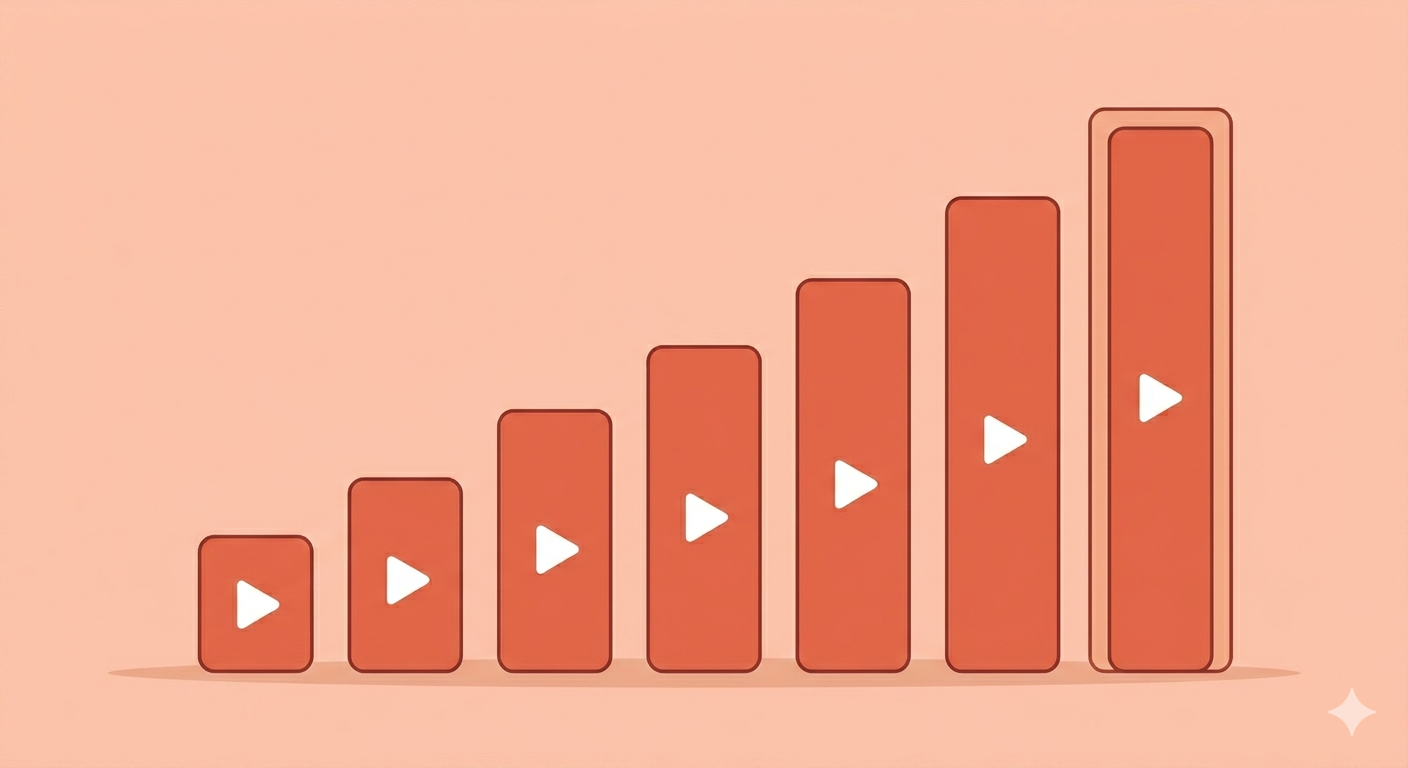
The biggest barrier to serialized content for small brands is not ideas — it is production. Filming, editing, captioning, and posting one episode per week sounds manageable. Doing it consistently for six months without a system is where most brands stop.
AI changes this equation entirely. Instead of producing each episode from scratch, AI tools generate the episode script, caption, hashtags, and visual structure automatically from your series format and product information. You define the format once. The AI produces the content on an ongoing basis.
How does AI help small brands produce serialized content consistently?
AI tools handle the repeatable parts of episode production — script generation based on your series format, caption writing in your brand voice, hashtag selection, and visual assembly from your product images. This reduces weekly episode production from two to three hours down to twenty to thirty minutes, making a consistent weekly or daily drop schedule genuinely sustainable for a one-person brand team.
The practical workflow for a small brand using AI for serialized content looks like this. On Sunday, you spend 20 minutes inputting the week's episode topic into your AI tool. The AI generates the episode script, caption, and visual layout. You review and approve. The episode auto-publishes on your chosen drop day at the optimal time for your audience.
That is the entire workflow. Twenty minutes of input. Consistent weekly episode. Zero production burnout.
The brands building the largest serialized audiences on TikTok and Instagram in 2026 are not the ones with the biggest production budgets. They are the ones with the most consistent systems — and AI is what makes that consistency achievable for brands operating with one or two people.
Your brand deserves its own show.
Create AI-powered videos and auto-post to all your platforms.
SnapReel AI generates branded episodic content from your product information automatically — consistent format, consistent voice, consistent schedule. Your series runs itself.
No credit card required • Free forever plan • 2-min setup
FAQ
How long should each episode in a serialized content series be?
For TikTok and Instagram Reels, episodes between 30 and 90 seconds perform best for serialized formats. Under 30 seconds rarely delivers enough content to build the narrative hook that makes viewers return for the next episode. Over 90 seconds risks drop-off before the close teaser that drives series follows.
Do I need professional equipment to produce a content series?
No. The serialized content formats performing best in 2026 — behind-the-scenes, founder stories, customer spotlights — are specifically strong because they look unpolished and authentic. Smartphone footage shot in a consistent location outperforms studio-produced content in these formats because authenticity signals are what drive the return-visit behavior serialized content depends on.
Can a brand run more than one series at the same time?
Technically yes, but most small brands should not. Running two simultaneous series splits your production capacity and confuses your audience's habit formation around a single format. Start with one series, run it for at least eight episodes, then evaluate whether a second series makes strategic sense based on what your audience data shows.
What if I run out of episode ideas?
A well-chosen series format should generate at least 20 to 30 episode ideas before requiring creative reinvention. Customer questions, product features, brand milestones, seasonal angles, and industry myths are all endless sources of episode topics within any of the four formats described above. If you genuinely exhaust the format after 20+ episodes, introduce a new recurring segment within the existing series rather than starting a completely new one.
How do I measure whether my series is actually working?
Track four metrics specifically: return visit rate (how many viewers visit your profile after watching), new follows per episode, cumulative watch time across the series, and drop-off rate between consecutive episodes. Growing cumulative watch time and shrinking drop-off rate across episodes means the series is building audience habit. Declining metrics after Episode 3 typically means the format needs refinement before committing further.
The Bottom Line
The brands that will dominate Instagram and TikTok through 2026 and beyond are not the ones posting the most content — they are the ones whose audiences have formed a habit around watching them. Serialized content is the mechanism that creates that habit.
One format. One consistent drop day. Five planned episodes to start. That is all it takes to begin the shift from random posting to building a real show your audience waits for.
The production challenge is real for small brands — but it is solvable. AI tools handle the repeatable parts of episode creation, so the creative energy you do invest goes into the format and the story, not the scripting and editing grind.
SnapReel AI generates your brand's serialized content automatically — episode scripts, captions, visuals, and scheduling — so your series runs consistently every week without requiring hours of manual production from a founder who already has a business to run.
Ready to turn your brand into a show your audience can't stop watching?
Create AI-powered videos and auto-post to all your platforms.
✓ Generates branded episode content automatically from your product
✓ Consistent format and brand voice across every episode
✓ Auto-posts to Instagram, TikTok, and YouTube Shorts on your schedule
Free forever plan • No credit card • 2-min setup