Why Small Brands Are Creating Mini-Shows Instead of Posts — The Serialized Video Strategy That's Winning on Instagram and TikTok in 2026
SnapReel
May 11, 2026 · 12 min read

Table of Contents
Think about the last time you genuinely looked forward to a piece of content from a brand. Not just stumbled across it — but actually remembered it was coming and sought it out. That feeling, that anticipation, is what separates a content series from a random post. And in 2026, it's what separates the brands growing fast from the ones spinning their wheels.
For years, social media advice for small brands has been the same: post consistently, stay on trend, and hope the algorithm picks you up. And for a while, that worked. But the game has changed. Feeds are more saturated than ever, attention spans are shorter, and the brands that relied on one-off viral moments are finding that viral doesn't compound — it spikes and disappears. What does compound is loyalty. And loyalty is built through repetition, familiarity, and the kind of anticipation that only comes from serialized content.
In 2026, the most effective small brands on TikTok and Instagram aren't just posting — they're running shows. A coffee brand drops a new "Behind the Roast" episode every Tuesday. A skincare founder does a weekly "Fix My Routine" series where she reviews a follower's skincare regimen. A clothing brand runs a monthly "How We Made This" documentary-style video. These aren't influencer budgets or production studios. These are small teams — sometimes one person — who figured out that a mini-show builds an audience in a way that random content never could.
This guide breaks down exactly why serialized video is the most underused strategy for small brands right now, how to build a content series from scratch, and what it looks like when done right.
What Is Serialized Video Content — And Why Is It Exploding in 2026?
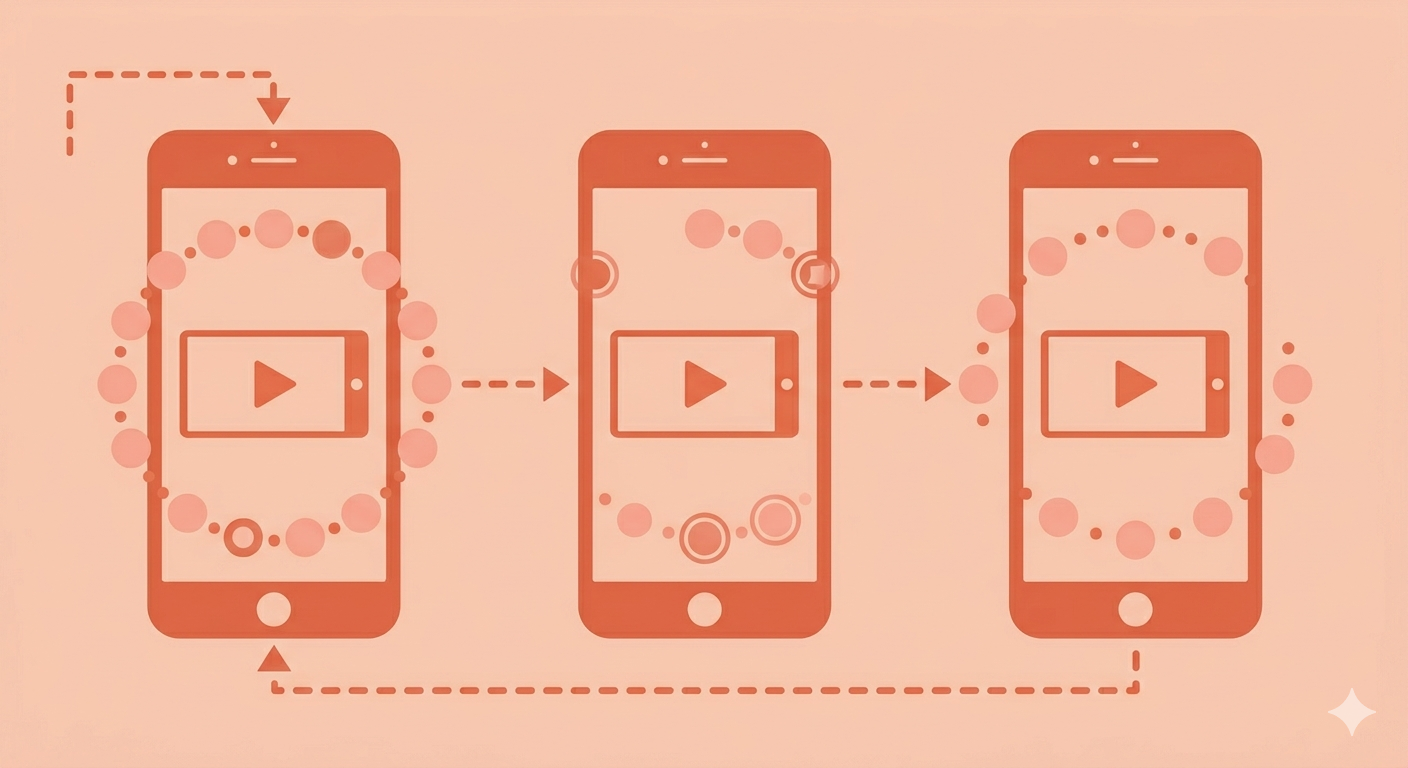
Serialized video content, also called episodic content, is simply a recurring video format built around a consistent theme, format, or story — published on a predictable schedule. Think of it like a TV show, except it lives on your Instagram Reels or TikTok, each episode is under 90 seconds, and your brand is the network.
The concept itself isn't new — YouTube creators have been building serialized content for years. What's new in 2026 is that short-form platforms like TikTok and Instagram are now explicitly rewarding this format. The algorithm has caught up to what audiences already knew: people who watch one episode of something are dramatically more likely to watch the next one. That behavior — return visits, saves, shares, and rewatch time — sends the strongest possible engagement signals to any platform's recommendation system.
Sprout Social's Q2 2025 Pulse Survey found that 57% of social media users want brands to prioritize posting original content series. That number nearly tied with "interacting with audiences" as the top thing consumers want from brands on social — which tells you everything about where audience appetite is headed. People are no longer satisfied with a steady stream of disconnected posts. They want something to follow. Something to come back to. Something that feels like it was made for them specifically, not just blasted at the general feed.
Why One-Off Posts Are Losing Power
The era of posting a great piece of content and watching it spread organically is mostly over. Algorithms on every major platform have shifted from rewarding reach to rewarding retention. A video that gets a million views but only 10% completion rate performs worse than a video that gets 50,000 views with 90% completion rate. Platforms want people to stay on the app longer — and content that makes people stay, save, and come back is content that gets promoted.
Random posts, no matter how good, don't build the habit of return. There's no reason for a viewer to come back tomorrow for the next one — because there is no "next one." Serialized content changes that equation entirely. When someone watches Episode 1 of your series and enjoys it, they have a reason to follow your account, turn on notifications, and come back next week. You've converted a casual viewer into a recurring audience member. That's the difference between reach and loyalty — and in 2026, loyalty is what drives actual revenue.
The Three Types of Mini-Shows That Work Best for Small Brands
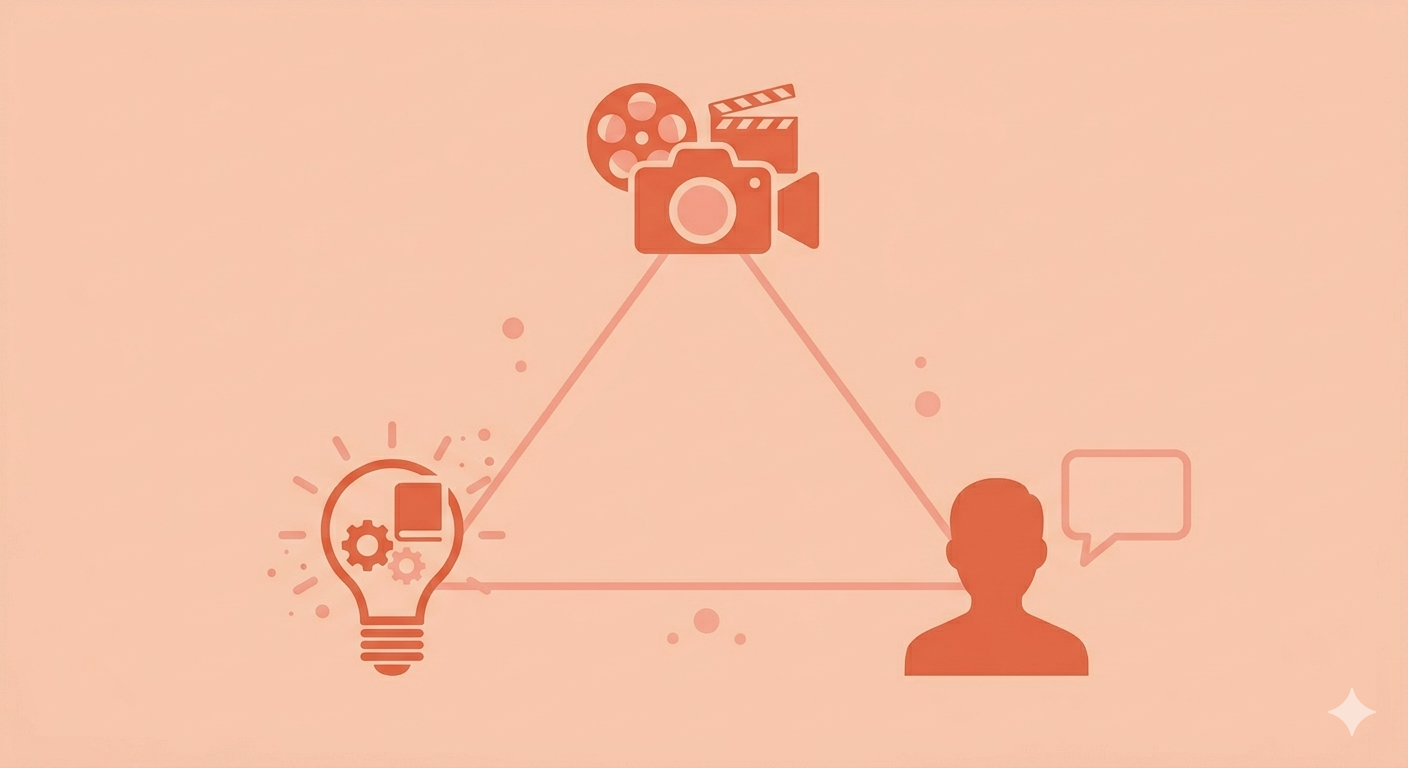
Not all content series are created equal. The formats that work best for small brands are the ones that are cheap to produce, easy to repeat, and genuinely interesting to a specific audience. Here are the three that are consistently winning in 2026.
Format 1 — The Behind-the-Scenes Series
This is the most accessible format for any small brand, and it's also the most powerful. People are deeply curious about how things are made, how businesses actually operate, and what it really looks like behind the polished exterior of a brand they like. A behind-the-scenes series gives them exactly that — and it works because it costs almost nothing to produce.
A candle brand can do a weekly "How We Make This" series showing the entire production process for one candle from start to finish. A clothing brand can do "The Making Of" for every new drop — showing the fabric sourcing, the design process, the production mistakes. A food brand can show what goes wrong in recipe testing, not just the perfect final product. The key is specificity and honesty. Behind-the-scenes content that feels genuinely raw and unfiltered consistently outperforms polished brand films in 2026, because audiences have developed an almost superhuman ability to detect inauthenticity.
Format 2 — The Educational Mini-Series
If your brand has expertise in any area — and every brand does — a structured educational series is one of the most effective ways to build authority and attract a loyal audience simultaneously. The format is simple: pick a topic your audience genuinely wants to learn about, break it into episodes, and teach one focused lesson per episode.
A skincare brand might run "5 Ingredients You're Using Wrong" as a five-episode series. A fitness brand might do "The 6 Biggest Training Mistakes" — one mistake per episode, published weekly. A coffee brand might do "Coffee Explained" — a series demystifying everything from brewing methods to origin sourcing. Each episode stands alone and delivers value independently, but together they build a body of work that positions the brand as an authority. Educational series also perform extremely well in social search — which is a separate growth engine altogether.
Format 3 — The Recurring Character or Segment Format
This is the format most brands overlook, and it's the one with the highest upside. Instead of building a series around a topic, you build it around a recurring format or character that audiences start to recognize and anticipate. It doesn't require a full script or professional actors — it just requires consistency.
A founder who does a weekly "This Week in [their industry]" update — same format, same energy, every week — builds a personal brand that becomes synonymous with that space. A brand that does a weekly customer feature — same questions, same structure, different customer every episode — creates a community spotlight that viewers actually look forward to. The recurring format creates what creators call "appointment content" — content people actually schedule time to watch, rather than just consuming passively when the algorithm serves it up.
How to Build Your First Content Series From Scratch — Step by Step
Starting a content series feels more complicated than it actually is. Most small brands overthink the launch and end up never starting. Here's the simplest possible framework to go from zero to your first episode published.
Step 1 — Pick One Format and One Topic
The most common mistake is trying to build something too elaborate. Your first series should be simple enough that you can produce an episode in under two hours. Pick one format from the three above — behind-the-scenes, educational, or recurring segment — and pick one specific topic your audience genuinely cares about. Don't try to serve everyone. The more specific your topic, the more loyal your niche audience will be.
Step 2 — Plan at Least 6 Episodes Before You Launch
A content series only works if it continues. Before you publish Episode 1, plan out Episodes 1 through 6 in detail. Know what each episode covers, how long it will be, and what the hook of each one is. This isn't just about being organized — it's about proving to yourself that the idea has enough depth to sustain a series. If you can't think of 6 episodes, the topic might be too narrow. If you can think of 20, you've found something worth committing to.
Step 3 — Set a Publishing Schedule and Name Your Show
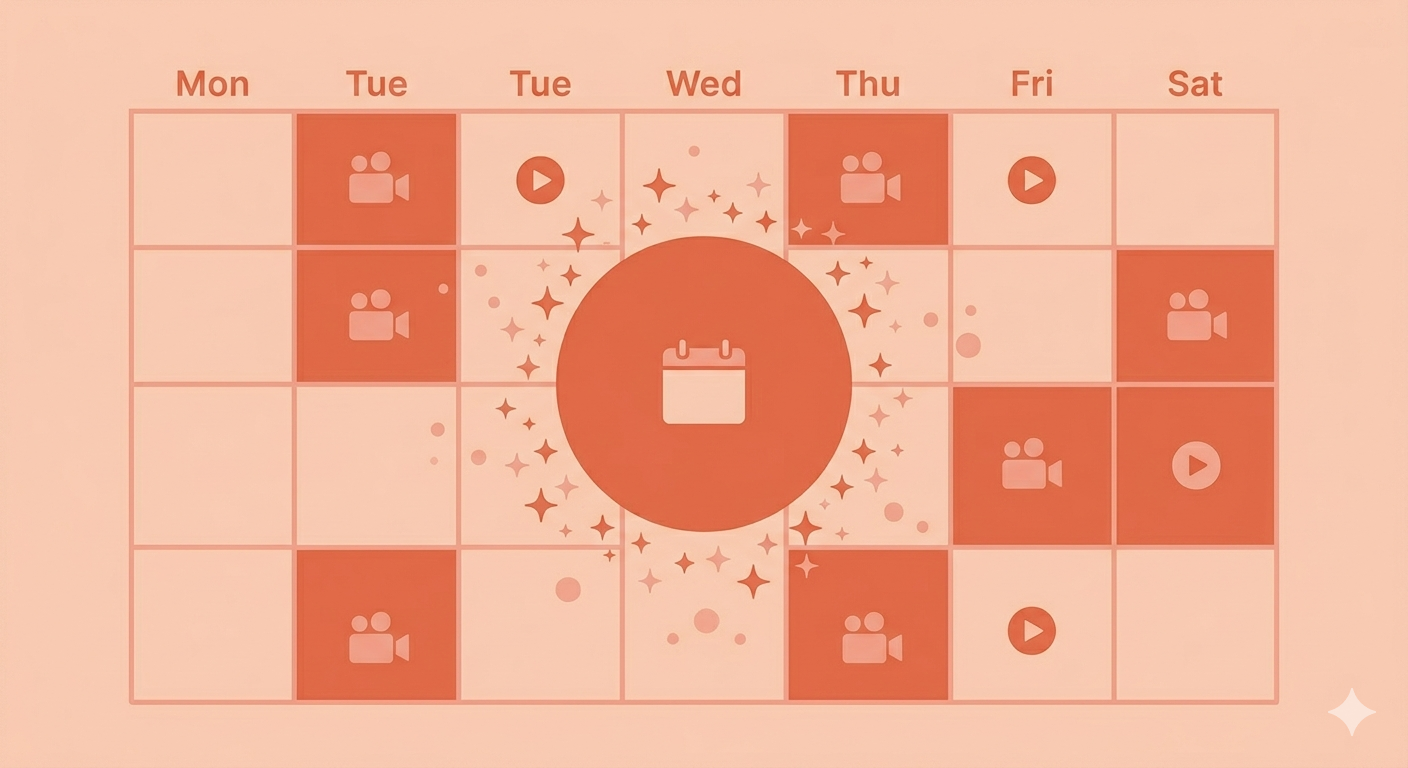
Your series needs a name and a schedule that you announce publicly. "Every Tuesday, we drop a new episode of Behind the Roast" is infinitely more compelling than "we post videos sometimes." The name gives your audience something to search for and something to remember. The schedule creates anticipation. Announce both in your first episode, pin the announcement to your profile, and reference the series name in every episode caption so it becomes searchable on the platform.
Step 4 — Use Your First Episode to Hook and Promise
The first episode of any series is the most important — it either converts a viewer into a subscriber or loses them forever. Structure your first episode with three things: a clear hook that explains what the series is and who it's for, a piece of value that proves the series is worth following, and a promise of what's coming next episode. That last part is critical. End every episode with a tease of Episode 2. "Next week we're covering the one thing most brands get completely wrong about X" — that's what makes people hit follow.
Turn your brand into a must-follow series — SnapReel generates every episode automatically.
Create AI-powered videos and auto-post to all your platforms.
How Serialized Content Works With AI — The Smart Brand Advantage in 2026
One of the biggest barriers small brands face with serialized content is the production workload. A series sounds great until you realize it means producing a new piece of content every single week, indefinitely. But in 2026, AI tools have completely changed this equation — and the brands using them strategically are producing far more content at far lower cost.
AI can handle the parts of content production that are repetitive and time-consuming: writing scripts for each episode based on a simple prompt, generating scene-by-scene visual storyboards, creating consistent voiceover narration across episodes, and even producing video content from text prompts that maintains a consistent visual style across the entire series. The creative strategy — choosing the topic, the format, the angle, the brand voice — still needs a human. But the production execution? That's increasingly automated.
This is the core promise behind AI-powered social media tools in 2026. A small brand founder who doesn't have a production team can now create a weekly video series that looks consistent, sounds professional, and publishes on a schedule — without spending their entire week producing it. The playing field between small brands and large marketing departments is narrowing fast, and the brands that figure out how to use AI as a production assistant — not a replacement for strategy — are the ones pulling ahead.
The Metrics That Tell You Your Series Is Working
Unlike one-off posts where you're chasing reach and impressions, a content series is measured differently. The metrics that matter are about retention and return — not just how many people saw it, but how many came back.
Series Save Rate is the most important metric. When someone saves an episode, it means they intend to come back to it — or share it. A save is a much stronger signal than a like, and it directly influences how widely the algorithm distributes future episodes.
Follower Growth Per Episode tells you if each new episode is pulling in new audience members. If your follower count spikes consistently after each episode drops, your series is working as a discovery engine. If it flatlines, your hook or topic needs adjustment.
Comment Thread Depth on series content tends to be much richer than on one-off posts. People ask "when does the next episode drop?" or reference something from a previous episode — both are strong signals that you've built genuine community around your content.
Episode-to-Episode Retention — how many people who watched Episode 1 also watched Episode 2, and so on — is the metric that tells you if your series concept has genuine audience appetite. If retention drops off sharply after the first episode, your premise might need rethinking. If it holds or grows, you've found a format worth scaling.
The brands that track these numbers and iterate based on them — adjusting formats, episode length, topics, and publishing cadence — build series that grow over time. The ones that create a series, post six episodes without analyzing performance, and then give up are the ones that miss out on what is genuinely one of the most effective long-term growth strategies available to small brands in 2026.
Social media in 2026 rewards consistency, depth, and the kind of loyalty that only comes from giving your audience a reason to come back. A content series is the most direct path to all three. Stop posting into the void and start building something worth watching.
SnapReel AI helps small brands produce consistent video series on autopilot — so you never miss an episode and never run out of content ideas. Your mini-show, running itself.