How to Build a Social Media Content Calendar for Your Small Brand — Step-by-Step Guide (2026)
SnapReel
May 22, 2026 · 15 min read
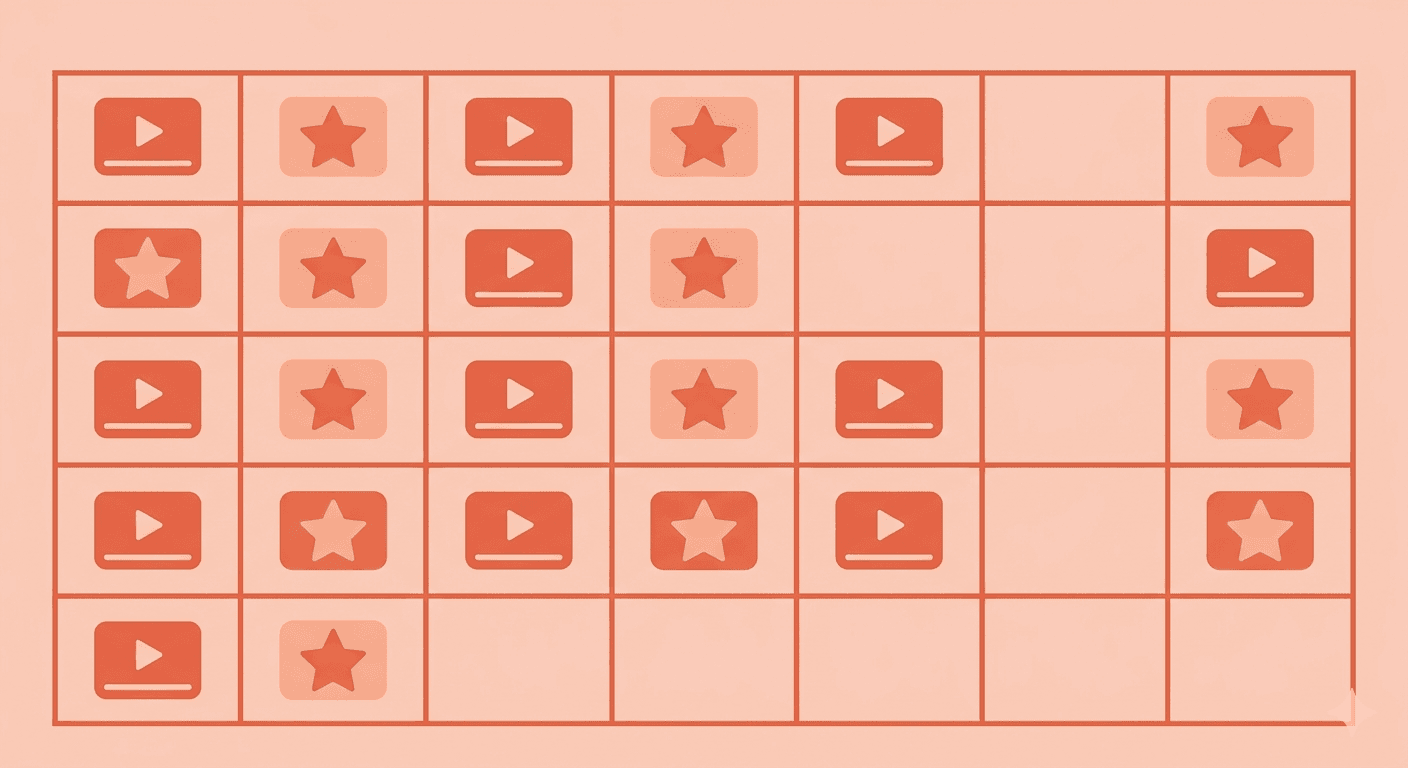
Table of Contents
Posting when you feel inspired is not a content strategy. It is the reason most small brands post three times one week, go silent for ten days, and wonder why their reach keeps dropping. The brands growing consistently on Instagram and TikTok in 2026 are not more creative than you. They are more organized.
A content calendar is what separates brands that post consistently from brands that scramble. It turns scattered ideas into a working system your brand can follow every week without daily stress or creative paralysis. This guide builds that system from scratch in six steps.
🎯 KEY TAKEAWAYS
Planning content two to four weeks in advance saves the average small brand founder over ten hours per month and eliminates the daily decision fatigue that kills posting consistency.
Three to five content pillars are the foundation of every strong content calendar because they give every post a purpose and prevent blank-screen syndrome during planning sessions.
Posting frequency benchmarks for 2026 are four to seven Reels per week on Instagram and five to seven videos per week on TikTok for growth-focused small brands.
A content calendar only works if it is reviewed monthly and updated based on what your audience data actually shows is working versus what you assumed would work.
What a Content Calendar Actually Is and Why It Matters
A social media content calendar is a forward-looking schedule that maps out what your brand will post, on which platform, in which format, and on which date. It does not need to be complicated. A Google Sheet with columns for date, platform, format, caption status, and image status is a fully functional content calendar for a small brand.
What a calendar gives you is not just organization. It gives you the ability to make content decisions in a focused planning session once per week rather than in a fragmented, reactive way every single day. That shift from reactive to planned is what produces the consistency that social media algorithms reward.
Why do small brands need a content calendar if they are only posting to one or two platforms?
Even one-platform brands benefit significantly from a content calendar because the planning bottleneck is not the posting itself but the daily decision of what to post. A content calendar removes that decision from your daily routine entirely. When Tuesday arrives, you are not deciding what to post on Tuesday. You are executing a decision you already made on Monday during your weekly planning session. That removal of daily decision-making is where the ten-hours-per-month time saving comes from.
But here is the problem:
Most small brands build a content calendar once, use it for two weeks, and abandon it when life gets busy. The calendar was not the problem. The system around the calendar was. A calendar without a weekly creation workflow, a monthly review process, and a realistic posting frequency is just a spreadsheet that creates guilt rather than content. This guide builds the whole system, not just the calendar.
💡 PRO TIP: Start your content calendar with two weeks of planned content rather than a full month. Two weeks is achievable in a single Sunday planning session and gives you enough runway to build the planning habit before scaling to a full monthly calendar. The goal in the first month is to build the habit of planning ahead, not to produce a perfect 30-day content plan.
Step 1 — Define Your Content Pillars

Content pillars are the three to five core themes your brand consistently creates content around. They are the answer to the question "what do we post?" before the question ever comes up. Every post on your content calendar belongs to one of your pillars.
What are content pillars and how do small brands define them?
Content pillars are recurring content themes that reflect your brand's expertise, values, and audience interests. For a small product brand, they typically include one educational pillar, one product pillar, one community or social proof pillar, and one brand story or values pillar. Having three to five defined pillars means you never face a blank screen during planning because you always have a category to create within, even when you do not yet have a specific idea.
Here is what a content pillar set looks like for a small skincare brand:
Pillar 1 — Education: Skincare tips, ingredient explanations, myth-busting, routine guides. Content that builds authority and earns saves.
Pillar 2 — Product: Product demonstrations, features, use cases, new launches, behind-the-label content. Content that drives product page visits.
Pillar 3 — Community: Customer testimonials, UGC reposts, comment features, audience questions answered. Content that builds trust and social proof.
Pillar 4 — Brand Story: Founder content, sourcing decisions, values-in-action, behind-the-scenes production. Content that builds identity connection.
Pillar 5 — Trending: Relevant trending audio, format experiments, seasonal content, cultural moments relevant to the brand. Content that drives reach to new audiences.
The five pillars distribute evenly across a weekly posting schedule without overlap and without any single type of content dominating the feed. A feed with all five pillars represented looks like a brand with depth. A feed with only product posts looks like a catalogue.
Now you might be wondering:
What if your brand does not fit neatly into five pillars? Start with three. Education, product, and community cover the primary needs of any small product brand. Add pillars as your content volume increases and you identify additional themes your audience responds to consistently.
Step 2 — Choose Your Platforms and Posting Frequency
Choosing the right platforms and a realistic posting frequency is the step most small brands get wrong in two opposite directions. Either they try to post on every platform simultaneously and burn out within three weeks, or they post so infrequently that the algorithm never builds momentum for their content.
The right answer for most small brands in 2026 is two primary platforms with a consistent frequency on each, rather than six platforms with sporadic posting across all of them.
2026 Posting Frequency Benchmarks by Platform
Instagram: Four to seven Reels per week for growth-focused brands. Three to five carousels or static posts per week additionally if capacity allows. Daily Stories for brands with active community engagement.
TikTok: Five to seven videos per week for growth. Three to four per week for maintenance once a baseline audience is established.
YouTube Shorts: Three to five Shorts per week repurposed from Instagram or TikTok content.
Facebook: Three to five posts per week for brands with an established Facebook audience. Lower priority for brands targeting under-35 demographics.
LinkedIn: Three to four posts per week for founder-led brands in categories with professional relevance.
The right platform selection for small product brands
For most small physical product brands in 2026, Instagram and TikTok are the two primary platforms. Both are discovery-first, video-first, and have the largest addressable audiences for product-focused content. YouTube Shorts is a strong secondary channel for repurposed content that costs minimal additional production effort.
Choose your primary platforms based on where your existing customers spend time, not where you personally prefer to consume content. If your customers are predominantly on TikTok but you find Instagram more comfortable, Instagram is still the wrong primary platform for your brand.
📊 STAT: Brands that post consistently on three or fewer platforms generate stronger algorithmic distribution and higher engagement rates per post than brands posting sporadically across six or more platforms. Platform algorithms reward consistency within a platform more heavily than they reward presence across multiple ones. (Sked Social, 2026 Platform Analysis)
Step 3 — Map Your Key Dates and Campaigns

A content calendar without key dates mapped into it is just a blank posting schedule. The brands that create their strongest content are the ones that plan it around dates that are already meaningful to their audience and their business.
Three types of key dates to map at the start of each month:
Type 1 — Business milestones: Product launches, restocks, sales events, new collection drops, brand anniversaries. These are your highest-priority content moments and should anchor your entire monthly calendar. Work backward from each milestone and plan a lead-up content sequence that builds anticipation in the two weeks before the date.
Type 2 — Seasonal and cultural moments: Major shopping events, seasonal transitions, and cultural moments relevant to your product category. For a candle brand, the shift from summer to fall is a content moment. For a skincare brand, UV awareness month is an educational content opportunity. Map these at the start of each quarter so they never sneak up on you.
Type 3 — Social media awareness days: Thousands of awareness days exist on the annual calendar. Filter for the ones with genuine relevance to your brand and ignore the rest. A food brand posting on National Pizza Day has relevance. The same brand posting on National Dentist Day does not. Relevance is the filter, not volume.
Here is where it gets interesting:
The brands with the strongest monthly content performance are the ones whose calendars have a clear narrative arc across the month rather than a flat sequence of disconnected posts. The month builds from awareness content at the start, through educational content in the middle, toward conversion content as a campaign or key date approaches. That narrative arc is only possible when key dates are mapped before individual posts are planned.
Step 4 — Build Your Weekly Content Workflow
A content calendar without a production workflow behind it produces planned content that never gets created. The calendar tells you what to post. The workflow tells you how and when to create it.
Here is a realistic weekly content workflow for a small brand founder posting five times per week across two platforms:
Monday — Weekly planning (30 minutes)
Review your content calendar for the week ahead. Confirm the pillar and format for each of the five posts. Write the hook line or caption concept for each one. Identify which posts need new visual assets created versus which can use existing product photography or repurposed footage.
Tuesday — Batch creation (60 to 90 minutes)
Create all visual assets and record all video content needed for the week in a single session. Filming everything in one session is significantly more efficient than filming one video per day because setup time, lighting adjustment, and the mental transition into content creation mode each represent fixed costs you pay only once in a batch session.
Wednesday — Captions and scheduling (30 minutes)
Write and finalize captions for all five posts. Apply your hashtag sets. Schedule everything through your scheduling tool to auto-publish at optimal times throughout the week. Once Wednesday's scheduling session is complete, the week's content is done. No daily decisions. No morning scrambles.
Friday — Engagement review (15 minutes)
Check comment sections and DMs on the week's posts. Respond to comments that need a reply. Note which posts are performing above average, as these formats and topics inform next week's planning session.
What does that mean for your week?
It means social media content creation takes approximately two to three hours on Tuesday and Wednesday, with fifteen-minute check-ins the rest of the week. A founder working this workflow spends roughly three hours per week on content instead of ten hours of fragmented daily effort. That time difference compounds over a year into hundreds of hours redirected from content production back into the business.
What if your content calendar filled itself automatically?
Ready to follow along? Create your first AI video for free.
SnapReel AI plans, generates, and schedules your brand's content automatically every day so your calendar is always full without a weekly production session taking up your Tuesday morning.
No credit card required • 2-min setup • 2,000+ small brands already using it
Step 5 — Review, Measure, and Iterate Monthly
A content calendar that is never reviewed is a static document that drifts further from reality every week. A content calendar that is reviewed monthly against actual performance data is a living system that gets more effective every month.
The monthly content review takes 45 minutes and covers four questions:
Question 1 — Which content pillar drove the most engagement this month?
Pull your top five posts by engagement rate. Which pillars do they represent? If four of your top five posts are from your education pillar and none are from your product pillar, your calendar mix for next month should shift toward more education. The data is telling you what your audience responds to. Follow it.
Question 2 — Which format performed best?
Did Reels outperform carousels? Did talking-head videos outperform product demonstrations? Did posts with text overlays outperform posts without? Format performance data tells you where to direct your production effort in the month ahead.
Question 3 — What was your average posting frequency versus planned frequency?
If you planned five posts per week but averaged three, your planned frequency is not realistic for your current capacity. Adjust down to three and post consistently at three rather than aspirationally planning five and consistently falling short. Consistency at a lower frequency outperforms inconsistency at a higher planned frequency every time.
Question 4 — What is one change to make next month based on this month's data?
One change per month. Not five. Not a complete content strategy overhaul. One specific adjustment based on one clear signal from your performance data. This constraint keeps the calendar system from becoming overwhelming to manage and ensures each change is isolated enough that you can measure whether it worked.
Your content calendar should run on data
Ready to follow along? Create your first AI video for free.
SnapReel AI generates content that is automatically optimized for your brand voice and posting schedule so you spend your monthly review analyzing results instead of scrambling to produce content.
No credit card required • Free forever plan • 2-min setup
FAQ
Planning two to four weeks in advance is the practical sweet spot for most small brands. Two weeks gives you enough runway to eliminate daily decision-making without requiring such long lead times that planned content feels stale or misaligned with current events by the time it publishes. Campaigns and key dates can be mapped further ahead, but individual post content works best planned two to four weeks out.
Google Sheets is the most practical free tool for small brands building their first content calendar. Create columns for date, platform, content pillar, format, caption status, visual asset status, and scheduled time. Color-code by pillar for visual clarity. For brands ready to add scheduling automation, Buffer's free tier allows scheduling across three platforms and includes a basic calendar view.
Three to five content pillars is the optimal range for small brands. Fewer than three and your content feed becomes repetitive. More than five and planning sessions become complex enough that the calendar system itself becomes a creative burden. Start with three pillars and add a fourth or fifth only when you have built a consistent posting habit at three.
The key for solo founders is to separate planning from production from scheduling into three distinct sessions rather than trying to complete all three in one sitting. Plan on Monday, create on Tuesday, schedule on Wednesday. This structure makes the workflow manageable for a single person because each session has a clear, limited scope. The entire weekly workflow should take two to three hours total for a brand posting five times per week.
Reset rather than catch up. If you miss a week of planned content, do not try to post double the following week to compensate. Post your normal frequency for the week ahead and use one planning session to rebuild two weeks of forward content. Trying to catch up creates stressed, low-quality content. Resetting creates the clean start that re-establishes your normal rhythm without compounding the gap.
The Bottom Line
A content calendar is not a constraint on your creativity. It is the structure that gives your creativity somewhere to go every week without requiring you to rediscover that direction from scratch each morning.
The brands posting consistently on Instagram and TikTok in 2026 are not doing it because social media comes naturally to them or because they have more time than you do. They are doing it because they solved the planning problem once, built a system around the solution, and now execute that system on autopilot every week.
The six steps in this guide build that system from scratch. Define your pillars. Choose your platforms and frequency. Map your key dates. Build your weekly workflow. Schedule in advance. Review monthly and adjust once. That is the entire content calendar system. Everything beyond it is optimization.
SnapReel AI takes the production step out of the workflow entirely by generating your brand's content automatically every day from your product information, so your calendar is always full, your posting is always consistent, and your weekly creation session becomes a ten-minute review rather than a ninety-minute production scramble.
Ready to build a content calendar that fills itself every single week?
Ready to follow along? Create your first AI video for free.
✓ Generates and schedules your brand's content automatically every day
✓ Consistent posting across Instagram, TikTok, and YouTube Shorts without manual effort
✓ Your content calendar runs on autopilot so you focus on your business
Free forever plan • No credit card • 2-min setup