What Is a Social Media Funnel — And How Small Product Brands Use It to Drive Sales in 2026
SnapReel
June 18, 2026 · 15 min read
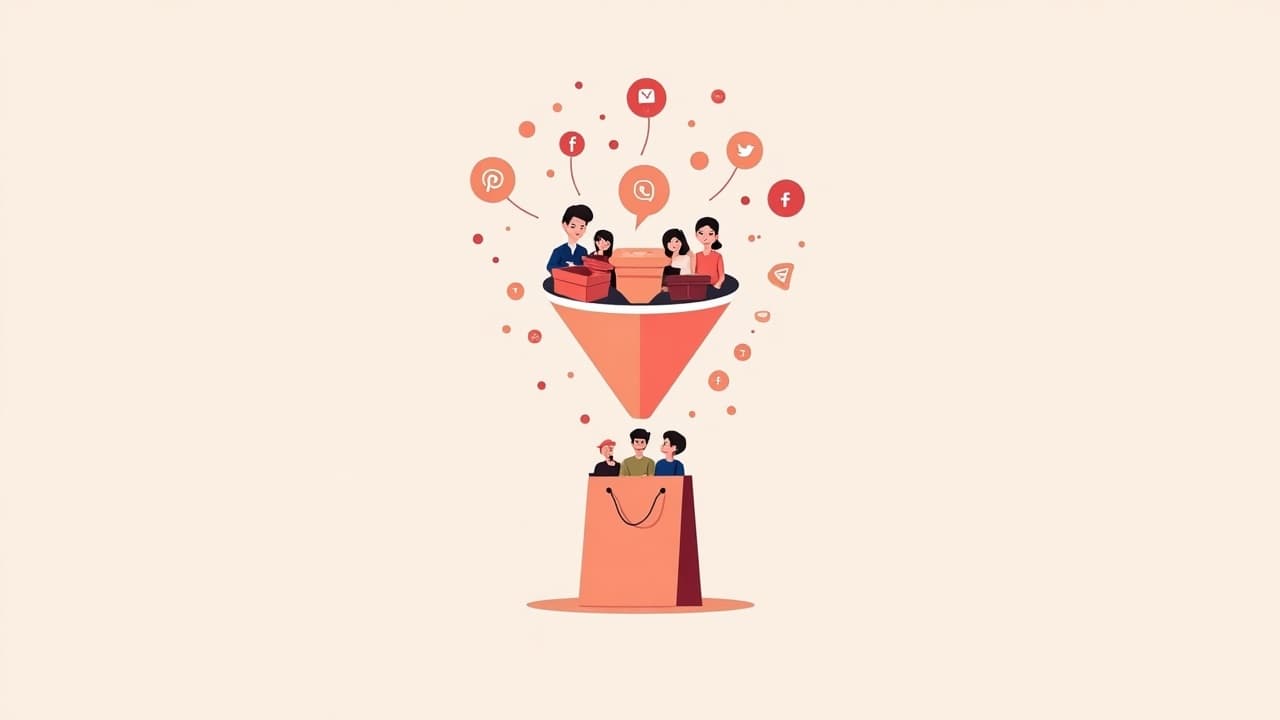
Table of Contents
- 1.
- 2.
- 3.
- 4.
- 5.
- 6.
- 7.
What Is a Social Media Funnel — And How Small Product Brands Use It to Drive Sales in 2026
72% of consumers now discover new products through social media before making a purchase. That number was 54% just three years ago. The shift is not slowing down.
But here is the problem for small product brands: posting randomly and hoping for sales does not work anymore. Your competitors are running structured social media funnels that turn casual scrollers into paying customers. Without a funnel strategy, you are leaving money on the table every single day.
This guide breaks down exactly what a social media funnel is, why it matters for small product brands in 2026, and how to build one that actually drives sales — even if you have zero marketing background. You will also learn how autonomous AI tools are changing the game for brands that do not have time to post daily.
🎯 KEY TAKEAWAYS
- A social media funnel — is a structured path that moves potential customers from discovering your brand to making a purchase through intentional content at each stage.
- Small product brands in 2026 — need funnels because algorithm changes now reward consistent posting and engagement over sporadic viral content.
- The three funnel stages — awareness, consideration, and conversion — each require different content types to move customers forward.
- Automation is the unlock — for small brands that cannot post daily, autonomous tools handle the top-of-funnel content that feeds the entire system.
What Is a Social Media Funnel
How does a social media funnel actually work?
A social media funnel is a structured content strategy that guides potential customers through three stages: awareness, consideration, and purchase. Each stage uses specific content types to move people closer to buying. The funnel works because it matches content to where each person is in their buying journey.
Think of it like a real funnel. At the top, you have thousands of people who might see your content. In the middle, you have hundreds who are interested enough to follow or engage. At the bottom, you have the smaller group who actually buy.
The key difference between posting randomly and running a funnel? Intentionality.
Random posting puts content out and hopes the right people see it at the right time. A funnel strategy creates specific content for each stage and posts it consistently so new people always enter the top while existing followers move down toward purchase.

Here is what makes funnels powerful for product brands:
- Top of funnel content — reaches new people who have never heard of your brand through entertaining or educational short-form video.
- Middle of funnel content — builds trust with people who already follow you through product demonstrations, behind-the-scenes content, and social proof.
- Bottom of funnel content — converts interested followers into buyers through limited offers, customer testimonials, and direct purchase CTAs.
💡 PRO TIP: Most small brands fail at funnels not because they create bad content but because they only create bottom-of-funnel content. Posting "buy now" messages to people who just discovered you does not work. You need content at every stage.
Why Small Product Brands Need a Funnel Strategy in 2026
What changed in 2026 that makes funnels more important?
Three major algorithm changes in 2026 made funnel strategies essential for small product brands. Instagram, TikTok, and YouTube now prioritize accounts that post consistently over accounts that post occasionally. Engagement signals from followers now weight more heavily than raw view counts. And short-form video now drives more product discovery than static posts or stories.
The truth is: social media platforms want users to stay on the app. They reward accounts that keep users engaged over time. A funnel strategy aligns your posting with what platforms want to promote.
Here is what that means for your brand:
If you post three times per week, you are competing against brands posting daily. The algorithm learns which accounts reliably produce content and promotes those accounts to new users. Inconsistent posting means inconsistent reach.
📊 STAT: Brands that post daily on Instagram Reels see 4.2x more profile visits than brands posting three times per week, according to Later's 2026 Social Media Benchmark Report. Profile visits are the first step in the funnel from awareness to consideration.
But here is the kicker:
Small product brand founders do not have time to post daily. You are running inventory, handling customer service, managing suppliers, and actually making or sourcing your products. Content creation falls to the bottom of the list.
This is exactly why autonomous posting tools have become essential for small brands running funnels in 2026. The top of your funnel — awareness content — can be automated. The middle and bottom still need your personal touch.
The Three Stages of a Social Media Funnel
What content works at the awareness stage?
Awareness stage content reaches people who have never heard of your brand. This content should be entertaining, educational, or trending enough that platforms show it to non-followers. Short-form video like Reels, TikToks, and YouTube Shorts work best because platforms push them to discovery feeds.

At the awareness stage, your goal is not sales. Your goal is stopping the scroll and getting a follow.
Effective awareness content for product brands includes:
- Trending audio Reels — featuring your product in a creative way that fits the trend format.
- Educational short videos — teaching something related to your product category without being salesy.
- Aesthetic product shots — in video format showing your product in aspirational settings.
- Behind-the-scenes clips — showing how your product is made or packaged.
Now you might be wondering: how do you create this content daily when you have a business to run?
This is where automation fits into the funnel. Awareness content follows patterns. It can be templated. AI tools can generate branded Reels from your product information and post them automatically while you focus on running your business.
Struggling to post awareness content daily? SnapReel AI does it for you.
Create AI-powered videos and auto-post to all your platforms.
SnapReel AI generates and posts branded Reels to Instagram, TikTok, and YouTube Shorts automatically — no daily input required. Your awareness funnel runs on autopilot while you handle the rest of your business.
No credit card required • 2-min setup • 2,000+ small brands already using it
What content works at the consideration stage?
Consideration stage content targets people who already follow you but have not purchased yet. This content builds trust, demonstrates product value, and addresses objections. It speaks directly to followers rather than trying to reach new audiences.
At this stage, you are answering the question: "Why should I buy from this brand?"
Effective consideration content includes:
- Product demonstration videos — showing exactly how your product works and what results it delivers.
- Customer testimonial reposts — sharing real reviews and user-generated content from buyers.
- Comparison content — showing how your product differs from alternatives without being negative.
- FAQ response videos — answering common questions followers ask in comments or DMs.
- Founder story content — sharing why you started the brand and what makes it different.
⚠️ WARNING: Do not automate consideration content. This stage requires your personal voice and genuine customer interactions. Automated content at this stage feels impersonal and breaks trust. Save automation for awareness content only.
What content works at the conversion stage?
Conversion stage content turns interested followers into paying customers. This content includes direct calls to action, limited-time offers, and urgency messaging. It targets warm followers who have engaged with your consideration content.
Conversion content is where sales actually happen. But it only works if you have filled the top of your funnel first.
Effective conversion content includes:
- Limited offer announcements — flash sales, holiday discounts, or exclusive drops.
- Restock alerts — letting followers know popular items are available again.
- Bundle promotions — offering product combinations at a discount.
- Social proof compilation videos — showing multiple customer reviews in one video with a purchase CTA.
- Story shopping links — using Instagram and TikTok shopping features for direct purchase.
How to Build a Social Media Funnel for Your Product Brand
What is the first step to building a social media funnel?
The first step is auditing your current content to see which funnel stage you are missing. Most small brands post too much conversion content and not enough awareness content. Review your last 20 posts and categorize each one as awareness, consideration, or conversion. The imbalance will become obvious.
Here is the kicker:
If more than 30% of your content is conversion-focused, your funnel is bottom-heavy. You are constantly asking people to buy without bringing in new potential customers at the top.
The ideal content ratio for most small product brands:
- 60% awareness content — to reach new people and grow your audience.
- 30% consideration content — to build trust with existing followers.
- 10% conversion content — to turn warm followers into buyers.
This ratio seems backwards to most brand owners. Why spend 60% of your content on people who might never buy?
Because without top-of-funnel content, your middle and bottom dry up. You end up marketing to the same small audience over and over until they tune out.

How do you create a content calendar for your funnel?
A funnel content calendar maps specific content types to each day of the week based on the funnel stage. For daily posting, plan four awareness posts, two consideration posts, and one conversion post per week. This maintains the 60-30-10 ratio while keeping your funnel fed.
Example weekly funnel calendar for a product brand:
| Day | Funnel Stage | Content Type | Platform Priority |
|---|---|---|---|
| Monday | Awareness | Trending audio Reel | Instagram, TikTok |
| Tuesday | Consideration | Product demo video | All platforms |
| Wednesday | Awareness | Educational short video | YouTube Shorts, TikTok |
| Thursday | Awareness | Behind-the-scenes clip | Instagram, TikTok |
| Friday | Consideration | Customer testimonial | All platforms |
| Saturday | Awareness | Aesthetic product Reel | |
| Sunday | Conversion | Weekly offer or CTA | All platforms |
What does that mean for your brand?
You need a system to produce four awareness posts per week minimum. For most solo founders, that is not realistic to do manually alongside running a business. This is exactly where autonomous tools become the difference between having a funnel strategy and actually executing one.
Automating Your Funnel With AI Tools
Which parts of the funnel can be automated?
Top-of-funnel awareness content is the most automatable because it follows repeatable patterns and does not require your personal voice. Branded Reels featuring your products with trending formats can be generated and posted automatically. Middle and bottom funnel content should remain personal and manual for best results.
And it gets better.
Automating awareness content does not mean sacrificing quality. AI tools trained on your brand assets, colors, and product information create content that looks consistent with your brand identity. The difference is you set it up once instead of creating from scratch every day.
💡 PRO TIP: Use automation for volume and consistency at the top of your funnel. Use your personal time for high-impact consideration and conversion content. This combination gives you the reach of a full marketing team with the authenticity of a founder-led brand.
Want your awareness content to run on autopilot while you focus on sales?
Create AI-powered videos and auto-post to all your platforms.
SnapReel AI handles the most time-consuming part of your funnel — daily awareness content. Set up your brand once and get branded Reels posted automatically to Instagram, TikTok, and YouTube Shorts.
No credit card required • 2-min setup • 2,000+ small brands already using it
How do autonomous AI tools fit into a funnel strategy?
Autonomous AI tools like SnapReel AI fill the top of your funnel without requiring daily input. You complete a one-time brand setup with your product information, brand colors, and assets. The tool then generates and posts branded short-form video content daily while you focus on consideration and conversion content yourself.
The math works out simply:
If you need to post seven times per week to maintain an effective funnel, and four of those posts are awareness content, automation saves you four content creation sessions weekly. That is 16 hours per month if each post takes one hour to ideate, create, and post.
Here is how the division of labor looks:
- AI handles — daily branded Reels, trending format adaptations, consistent posting schedule, multi-platform distribution.
- You handle — product demonstrations, customer testimonial curation, conversion offers, community engagement, DM responses.
This split lets you run a complete funnel strategy as a solo founder. You show up for the high-touch content that requires your expertise. Automation handles the volume content that feeds your funnel.
📊 STAT: Small product brands using autonomous posting tools see 3.1x higher follower growth than brands posting manually at the same frequency, according to SnapReel AI's internal 2026 user data. Consistent daily posting at the awareness stage compounds over time.
Measuring Your Funnel Performance
What metrics matter at each funnel stage?
Awareness metrics focus on reach and new audience growth — track impressions, reach, and new followers. Consideration metrics focus on engagement depth — track saves, shares, comments, and profile visits. Conversion metrics focus on sales actions — track link clicks, website visits from social, and attributed purchases.
Do not measure awareness content by sales. Do not measure conversion content by reach. Each stage has different success metrics.
Key metrics by funnel stage:
- Awareness stage — impressions, reach to non-followers, follower growth rate, video views.
- Consideration stage — saves, shares, comments, profile visits, story replies, DM conversations.
- Conversion stage — link clicks, promo code usage, website traffic from social, direct message purchase inquiries.
The truth is: most small brands only look at follower count and sales. But follower count without engagement is a vanity metric. And sales without funnel tracking does not tell you which content actually drives revenue.
Set up simple tracking for each stage. Review weekly. Adjust content that underperforms. Double down on content that moves metrics at each stage.
FAQ
A social media funnel is a specific type of sales funnel that uses social media content to move customers through awareness, consideration, and purchase stages. The traditional sales funnel applies to all marketing channels while a social media funnel focuses specifically on content strategy for platforms like Instagram, TikTok, and YouTube.
Most small product brands see measurable awareness growth within two to four weeks of consistent funnel content. Consideration and conversion results typically take six to twelve weeks as followers move through the stages. Funnels are long-term strategies that compound over time rather than instant sales tactics.
You can run a funnel with less frequent posting but results will be slower. Algorithms in 2026 reward consistent daily posting. If daily posting is not realistic manually, autonomous AI tools can handle awareness content while you post consideration and conversion content two to three times per week.
Instagram remains the strongest platform for product brand funnels because it supports all three stages — Reels for awareness, feed posts and stories for consideration, and shopping features for conversion. TikTok excels at awareness but has weaker conversion tools. Use both for best results.
A social media funnel strategy can be executed at zero cost if you create content yourself. Autonomous tools like SnapReel AI offer free plans that handle awareness content automatically. Paid advertising to boost funnel content is optional and works best after you have organic content performing well.
You can repurpose core content across platforms but should optimize formatting for each. Vertical video works across Instagram Reels, TikTok, and YouTube Shorts. Captions, hashtags, and posting times should be adjusted per platform. Autonomous tools handle multi-platform formatting automatically.
A social media funnel is not complicated. It is simply intentional content at each stage of the customer journey instead of random posting and hoping for sales.
The challenge for small product brands is execution. Knowing you need awareness content is easy. Creating that content daily while running a business is hard. This is exactly why autonomous tools have become essential for brands that want funnel results without funnel workload.
Start by auditing your current content ratio. If you are posting too much conversion content, shift toward awareness. If you cannot post daily, automate the top of your funnel. The brands that win in 2026 are not the ones with the best products. They are the ones with the most consistent funnels.
Ready to run a social media funnel without the daily content grind?
Create AI-powered videos and auto-post to all your platforms.
✓ Automated daily awareness content — branded Reels generated and posted without your input
✓ Multi-platform posting to Instagram, TikTok, and YouTube Shorts from one setup
✓ Free forever plan so you can test the funnel approach without financial risk
Free forever plan • No credit card • 2-min setup