How to Optimize Your Brand for Social Search — The TikTok, Instagram & YouTube SEO Guide for Small Brands in 2026
SnapReel
May 12, 2026 · 14 min read

Table of Contents
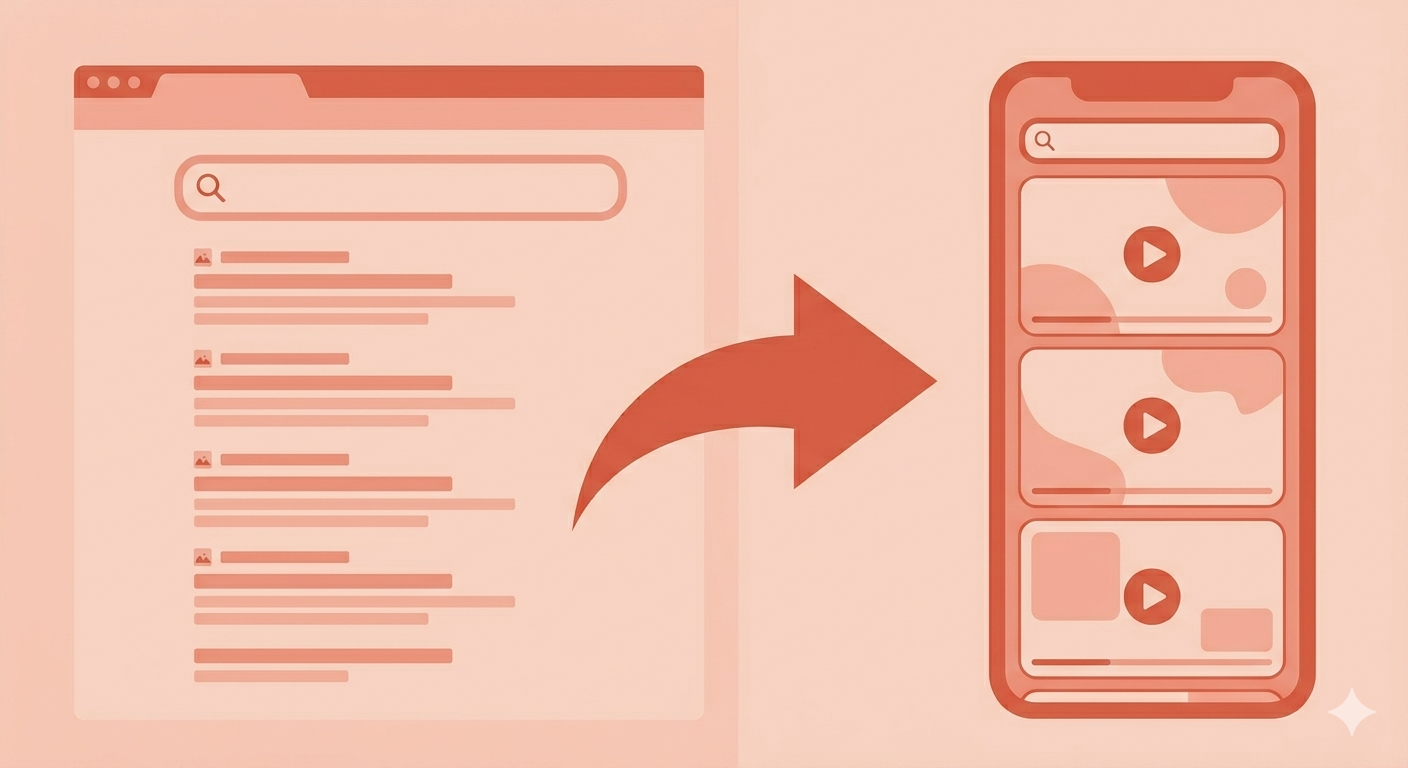
Here's a behavior that's become completely normal for anyone under 35 in 2026: instead of opening Google to search for something, they open TikTok. They type "best skincare routine for oily skin" or "how to style wide-leg jeans" or "small coffee brands worth trying" directly into TikTok's search bar — and they buy from whatever shows up.
This isn't a niche behavior anymore. By 2026, 49% of all US consumers and 65% of Gen Z now use TikTok as a primary search tool — not Google, not YouTube, TikTok. Nearly one in three consumers skip Google altogether, starting their search journey on networks like TikTok, Instagram, or YouTube — and for Gen Z, that number rises to more than half. Social platforms have quietly become the most important discovery engines for an entire generation of buyers, and most small brands have no idea how to show up in those results. SubstackOnline Writing Club
This is Social SEO — and it's the most underused growth strategy available to small brands right now. Most brands are still optimizing their websites for Google while their ideal customers are typing questions into TikTok and Instagram and finding their competitors instead. This guide explains exactly what Social SEO is, why it matters more than ever in 2026, and how to implement it platform by platform — so your brand shows up when your customers are actively looking for what you sell.
What Is Social SEO — And How Is It Different From Regular SEO?
Traditional SEO is about optimizing your website so it appears at the top of Google search results. Social SEO is the same idea applied to social platforms — optimizing your content so it appears at the top of TikTok search results, Instagram search results, and YouTube search results when your potential customers type in a relevant query.
Social SEO is the practice of optimizing your content to surface inside social platform search results — not just on Google. It means treating every caption, video title, pin description, and post the way you'd treat a page title: with deliberate keyword placement, clear structure, and an understanding of how real people phrase their questions. Substack
The critical difference between social SEO and traditional SEO is where the optimization happens. On Google, you optimize web pages — titles, meta descriptions, headings, internal links, page speed. On social platforms, you optimize content pieces — video titles, captions, on-screen text, audio scripts, hashtags, and profile bios. The underlying logic is identical: match what you publish to what people are actively searching for. The execution is platform-specific.
What makes Social SEO particularly powerful for small brands is the timeline. TikTok SEO is faster than Google SEO — with properly optimized content targeting content gaps, you can see search rankings within 2-4 weeks, compared to the months Google SEO typically requires. And unlike Google, where established domains with massive backlink profiles dominate results, social platform search algorithms weight content relevance and engagement quality far more than account authority. A small brand with zero followers can outrank a competitor with 100,000 followers if their content better matches what the searcher is looking for. Substack
TikTok SEO — How to Rank in the Fastest-Growing Search Engine in the World
TikTok's transformation from entertainment app to search engine happened entirely through user behavior — nobody announced it, nobody planned it, it just happened. And what makes TikTok's search engine genuinely different from every other platform is what it actually indexes.
TikTok doesn't just read captions. TikTok can parse on-screen text, audio transcripts, and spoken words — so a keyword in your video script carries the same indexable weight as one in your caption. This means optimizing for TikTok search isn't just about what you write — it's about what you say and what appears visually on screen. A keyword spoken clearly in the first five seconds of your video, displayed as text on screen, and included in your caption is three separate indexing signals pointing at the same search query. Substack
How to Find Your TikTok Keywords
The most effective TikTok keyword research costs nothing and takes five minutes. Open TikTok, tap the search bar, and start typing phrases related to your product or brand. Don't finish the phrase — watch what autocomplete suggests. Those autocomplete suggestions are real searches that real TikTok users are typing right now. They are your keywords. Write them down. Build your content around them.
Go deeper by searching your main keyword and looking at what the top-performing videos are doing. Read their captions. Listen to their first five seconds. Note what on-screen text they're using. The videos ranking at the top of TikTok search results are your template — not to copy, but to understand what combination of signals is working for that specific query.
The TikTok SEO Content Formula
Every TikTok video optimized for search should follow a consistent structure. Your hook — the first two to three seconds — should include the exact search phrase you're targeting, either spoken or displayed as on-screen text. This is why creators who say things like "Here are three TikTok SEO tips for 2026" in the first five seconds often outperform others — the search query is stated immediately, which signals relevance to both the algorithm and the viewer. Jurgenappelo
Your caption should be written around the same keyword phrase — naturally, not forced — in the first line. Use three to five relevant hashtags that mix broad category tags with specific intent tags. And critically: say your keywords out loud in the video. TikTok's audio transcription means spoken keywords are just as powerful as written ones. A video where the presenter says "the best lightweight moisturizer for oily skin" out loud, has that phrase displayed on screen, and includes it in the caption is sending the algorithm three clear signals that this content matches that search query.
Instagram SEO — How to Make Your Brand Discoverable Beyond the Algorithm
Instagram SEO operates differently from TikTok SEO, but the underlying principle is the same: treat every piece of content as a searchable document, not just a post.
Google has started indexing public Instagram content and short-form videos from other platforms — which means Instagram SEO now has implications beyond the app itself. An Instagram post with a well-written, keyword-rich caption can appear in Google search results, in Instagram's own Explore and search pages, and increasingly in AI-powered search summaries. For small brands, this represents a significant expansion of what Instagram can do as a discovery channel. 2POINT Agency
Your Instagram Bio Is a Search Asset
Most small brands treat their Instagram bio as a one-line description of what they do. In 2026, it's one of the most important SEO real estate pieces you have on the platform. Profile bios should use niche-relevant terms that reflect what you offer — such as "organic skincare for sensitive skin" or "handmade leather goods UK" — because this boosts your brand's search visibility when people search for those terms inside Instagram. Substack
Your business name field in Instagram settings is also searchable separately from your username — and you can include keywords in it. A brand named "Bloom" might set their name field to "Bloom — Natural Skincare" rather than just "Bloom." That keyword addition significantly increases the chance of appearing when someone searches "natural skincare" on Instagram.
Caption Strategy for Instagram Search
For Instagram, prioritize the first 125 characters of the caption and use location tags when local intent matters. The first 125 characters are what appear before the "more" cutoff in the feed — make them count. Lead with your primary keyword phrase naturally integrated into the opening line. Don't bury your keywords at the bottom of a caption no one reads. Jurgenappelo
For hashtags, the strategy has evolved significantly. Keyword-driven hashtags still matter — but volume matters less than specificity. Three to five precise, niche hashtags consistently outperform twenty broad generic ones. Think "#oilyskincare" and "#sensitiveskinroutine" over "#skincare" and "#beauty." The niche hashtags put your content in front of people actively searching that specific topic — which means higher intent and better engagement.
Get discovered on every platform with daily keyword-rich branded content generated automatically.
Create AI-powered videos and auto-post to all your platforms.

YouTube SEO — The Search Engine That Never Forgets Your Content
YouTube deserves special attention in any Social SEO guide because it has a capability no other platform can match: content that ranks in search keeps performing for months and years. A well-optimized YouTube video isn't a post with a 72-hour lifespan — it's a permanent search asset that compounds in value over time.
A well-optimised YouTube video can rank on YouTube's own search, appear in Google's standard results, surface in Google AI Overviews, and get cited by tools like Perplexity and ChatGPT — no other content format has that range. For small brands with limited content production budgets, this evergreen multi-surface visibility makes YouTube the highest-ROI investment in Social SEO. Substack
YouTube Keyword Research — The Right Way
YouTube keyword research starts the same way TikTok research does: use the autocomplete in YouTube's search bar to find exactly what people are typing. But YouTube gives you additional tools. The "People also searched for" section that appears below search results tells you the related queries your audience is exploring. The "People also watched" suggestions on competitor videos tell you the content clusters your audience is consuming together.
The most effective YouTube SEO strategy for small brands in 2026 targets what are called "content gaps" — search queries that have real search volume but weak, low-quality, or outdated videos in the results. Rather than trying to compete with channels that have 500,000 subscribers on head-on keywords, find the specific questions in your niche that nobody has answered properly yet. A clear, well-made, 10-minute video answering a specific question nobody else has answered well will outrank a mediocre video from a big channel every time.
Titles, Descriptions, and Chapters — The YouTube SEO Essentials
Your YouTube video title should function exactly like a Google search headline — your primary keyword phrase, positioned naturally, early in the title. Not a creative title that obscures the topic, and not a clickbait title that doesn't match the content. The clearest, most direct description of what the video actually answers. Strategically embedding target keywords into titles and descriptions mirrors how a user searches — and high watch time and saves signal content quality that directly boosts a video's authority on that topic. Substack
Your description should be written like a short article — not just a few lines, but a 150-300 word text that describes the video's content in detail, using your primary and secondary keywords naturally. YouTube's algorithm reads your description as indexable content. The more substance it contains, the more search queries your video can potentially rank for.
If your video covers multiple subtopics, add timestamped chapters with keyword-rich labels. Chapters appear in Google search results as clickable links within the video preview, dramatically increasing click-through rate and giving your video additional search surface area.
The Universal Social SEO Principles That Work Across Every Platform
Beyond the platform-specific tactics, there are principles that apply everywhere — and getting these right is the foundation of any effective Social SEO strategy.
Say your keywords out loud. Every major social platform now uses audio transcription to index spoken content. TikTok, Instagram Reels, and YouTube all read what you say and treat it as searchable text. The first five to ten seconds of every video should naturally include your primary keyword phrase — spoken, not just displayed as text. On-screen text should include the exact query in the first frame, large enough to read on mobile, and captions should be structured as: first line equals query plus promise, next lines equal the content, last line equals a call to action. Jurgenappelo
Engagement signals are ranking signals. On every social platform, how people interact with your content directly determines how widely it gets distributed in search results. In 2026, engagement equals exposure — if users don't interact with your post, algorithms won't rank it no matter how keyword-rich it is. Design for interaction: ask questions that prompt comments, add calls to action like "save this for later," respond to comments within the first hour of posting, and use in-built polls and Q&As. A video that gets strong engagement signals goes to more people in search results — not just in the feed. Substack
Saves are the most powerful signal. Across TikTok, Instagram, and YouTube, saves are the strongest single engagement signal for search ranking. A save tells the algorithm that your content was valuable enough to keep — which is exactly the quality signal platforms want to surface in search results. Create "saveable" content like checklists, tips, frameworks, and how-tos that people want to reference later. Content that teaches something specific and actionable gets saved. Content that just entertains gets watched and forgotten. Substack
Consistency builds topical authority. Just like Google rewards websites that consistently cover a specific topic with higher authority rankings, social platforms reward accounts that consistently create content in a specific niche. An account that posts 30 videos about organic skincare for sensitive skin over three months builds far more search authority in that niche than an account that posts about skincare one week, fashion the next, and food the week after. Move from broad topics to an intent-driven niche and stay there — topical consistency is how social platforms learn what your account is about and which searches to show it in. Substack

Your 30-Day Social SEO Action Plan for Small Brands
Understanding Social SEO is one thing. Implementing it consistently is another. Here's the most practical way to get started without overhauling your entire content workflow.
In week one, audit your existing presence on TikTok, Instagram, and YouTube. Update every profile bio with clear, keyword-rich descriptions of what your brand does and who it serves. Make sure your business name fields include relevant category keywords. Check that your profile photos are consistent and professional across platforms. This takes two hours and immediately improves your baseline search visibility.
In week two, do keyword research for your niche on each platform using the autocomplete method. Build a simple keyword list of 15-20 phrases your potential customers are actually searching for — real, specific, intent-driven phrases, not broad categories. Organize them by platform and by search intent: informational ("how to"), commercial ("best X for Y"), and navigational ("brand name + product type").
In weeks three and four, create two to three pieces of content per platform that are explicitly optimized for specific keywords from your list. Structure each piece using the platform-specific tactics in this guide — spoken keywords in the first five seconds, keyword-rich captions, relevant hashtags, and a clear call to action that encourages saves or comments.
Then measure. After 30 days, check your analytics for search impressions, profile visits from search, and which pieces of content are driving the most search discovery. Double down on the topics and formats that are working. Refine the ones that aren't. Social SEO is not a one-time setup — it's an ongoing optimization process that compounds significantly over three to six months of consistent effort.
The brands that invested in Social SEO in 2024 when it was still a relatively new concept are now sitting on search visibility their competitors can't buy and can't copy quickly. The brands that invest in it in 2026 — when it's clearly established but still underused by small brands — will have the same compounding advantage in 2027 and beyond. The best time to optimize was last year. The second best time is your next post.
SnapReel AI helps small brands create consistent, keyword-optimized video content at scale — so every piece of content you publish is working to get you discovered in social search, not just floating in the feed.