How to Use TikTok for Product-Based Small Businesses — Complete Guide 2026
SnapReel
June 17, 2026 · 16 min read

Table of Contents
- 1.
- 2.
- 3.
- 4.
- 5.
- 6.
- 7.
- 8.
- 9.
- 10.
How to Use TikTok for Product-Based Small Businesses — Complete Guide 2026
72% of TikTok users have purchased a product after seeing it on the platform. That number comes from TikTok's own commerce research from late 2025. For small product brands, no other platform converts discovery into sales at that rate.
But here is the problem most small brand founders face. They know TikTok works. They see competitors gaining traction. They understand the opportunity is real. What they do not have is a clear system for actually using TikTok without it becoming another full-time job.
This guide covers exactly how to use TikTok for product-based small businesses in 2026 — from account setup to content strategy to posting systems that do not require daily effort. By the end, you will have a complete framework you can implement this week. SnapReel AI can handle the execution automatically if you want to skip the manual work entirely.
🎯 KEY TAKEAWAYS
- TikTok converts browsers into buyers — 72% of users have purchased after discovering products on the platform, making it the highest-converting social discovery channel for small product brands.
- Product brands need different content — lifestyle and entertainment accounts play by different rules than product-focused accounts. Your strategy must center on showing products in use, not chasing viral trends.
- Posting consistency matters more than virality — brands posting 4-7 times weekly see 3x higher follower growth than those chasing occasional viral hits.
- Automation solves the time problem — manual TikTok management takes 8-15 hours weekly. Autonomous tools like SnapReel AI reduce that to a one-time setup.
Why TikTok Works for Product-Based Small Businesses in 2026
TikTok's algorithm does something no other platform does as well. It shows your content to people who have never heard of your brand based entirely on whether the content matches their interests. Instagram and Facebook prioritize existing followers. TikTok prioritizes content relevance.
For small product brands with limited audiences, this changes everything. You do not need 10,000 followers to reach 100,000 people. You need content that resonates with the right viewers.
What makes TikTok different from Instagram for product brands?
TikTok's discovery algorithm favors new accounts and fresh content over established follower counts. A brand-new product account can reach thousands of potential customers in its first week if the content matches viewer interests. Instagram requires months or years of audience building before reaching comparable numbers organically.
The truth is: most small product brands struggle on Instagram because they are competing against accounts with years of momentum. TikTok resets that playing field with every single video.

Here is what the data shows for product brands specifically:
- Average engagement rate on TikTok — 5.96% compared to 0.83% on Instagram according to Socialinsider's 2025 benchmark report
- Product discovery behavior — 67% of TikTok users say the platform inspires them to shop even when they were not planning to
- Small account advantage — accounts under 10K followers see 8.5% engagement rates on TikTok versus 2.4% on Instagram
- Purchase intent after viewing — TikTok users are 1.7x more likely to purchase products they discover on the platform compared to other social channels
📊 STAT: TikTok users spend an average of 95 minutes per day on the platform according to Data.ai's 2025 report. That is nearly double Instagram's 51-minute average. More time on platform means more chances for your product to appear in someone's feed.
Setting Up Your TikTok Business Account Correctly
Most small brand founders skip proper account setup because they want to start posting immediately. This is a mistake that costs you algorithm favor and analytics access from day one.
TikTok treats business accounts differently than personal accounts. Business accounts get access to analytics, advertising tools, and commercial music. Personal accounts get the full music library but limited business features.
Should product brands use a TikTok Business Account or Creator Account?
Product brands should use a Business Account for three reasons: access to TikTok Shop integration, detailed analytics on audience demographics and content performance, and the ability to run paid promotions. Creator Accounts offer more music options but lack the commerce features product brands need to convert viewers into customers.
Here is the kicker: you can switch between account types later, but your analytics history does not transfer. Set it up correctly from the start.
Follow this exact setup sequence for maximum algorithm favor:
- Switch to Business Account first — do this before posting any content so TikTok categorizes you correctly from the beginning
- Select the correct business category — choose the category closest to your product type, as TikTok uses this to determine which audiences see your content
- Complete every profile field — empty profile fields signal an inactive or spam account to the algorithm
- Add your website link immediately — TikTok prioritizes accounts that drive traffic off-platform because it signals legitimate business intent
- Connect your other social accounts — cross-platform presence signals account legitimacy to TikTok's trust systems
💡 PRO TIP: Your TikTok bio gets exactly 80 characters. Do not waste them on generic phrases like "We sell great products." Instead, state your specific product category and your unique angle. "Handmade soy candles that burn 50% longer" tells viewers and the algorithm exactly what you offer.
Content Strategy for Product Brands — What Actually Works
Here is where most guides get it wrong. They tell product brands to follow trending sounds, participate in challenges, and create entertainment content. That advice works for personal brands and content creators. It does not work for product-based businesses.
Product brands need content that shows products in use. Entertainment value matters, but product visibility matters more.

What types of TikTok content work best for product-based small businesses?
The five highest-performing content types for product brands are product demonstrations showing the item in use, behind-the-scenes creation or packaging content, customer unboxing and reaction videos, before-and-after transformation content, and product comparison or "why this over that" explanations. These formats naturally showcase products while providing viewer value.
Now you might be wondering: what about trending audio and viral challenges?
Trending content can work, but only when you adapt it to feature your product. A candle brand should not just dance to a trending sound. A candle brand should show their candle-making process synced to trending audio. The product stays central.
Here is the content mix that works for most product brands:
- 40% product demonstrations — showing your product solving a problem or being used in real situations
- 25% behind-the-scenes content — creation process, packaging, workspace tours, day-in-the-life as a small brand owner
- 20% social proof content — customer reviews, unboxing reactions, user-generated content reposts
- 15% trend adaptations — trending sounds or formats adapted to feature your product
⚠️ WARNING: Avoid posting content with no product visibility. Entertainment-only content might get views, but it does not convert viewers into customers. Every video should include at least a brief product appearance, even if the video is primarily educational or entertaining.
Tired of creating TikTok content every single day?
Create AI-powered videos and auto-post to all your platforms.
SnapReel AI generates branded Reels for your products and auto-posts them to TikTok, Instagram, and YouTube Shorts. Set it up once and your content posts itself daily.
No credit card required • 2-min setup • 2,000+ small brands already using it
How Often to Post on TikTok and When to Post
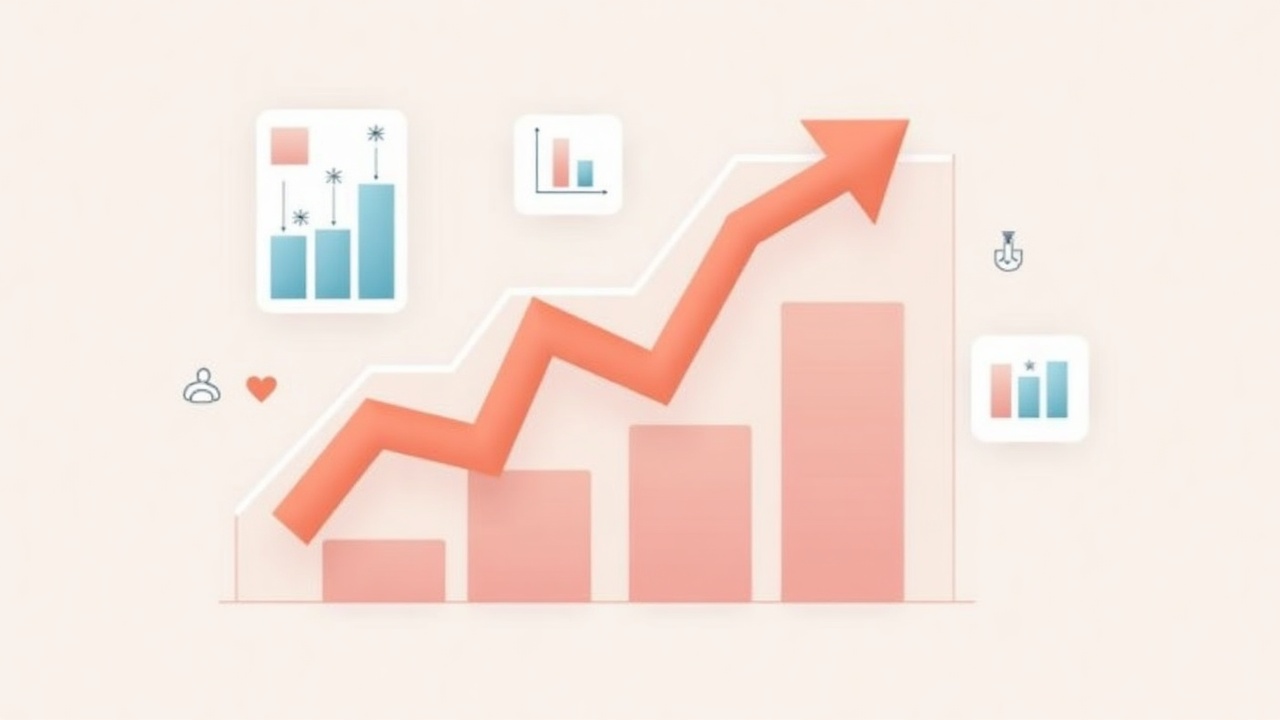
TikTok's algorithm rewards consistency more than volume. Posting three times per week consistently outperforms posting ten times one week and zero the next.
The data from Hootsuite's 2025 social media benchmarks shows that brands posting 4-7 times weekly see 3x higher follower growth than brands posting inconsistently at higher volumes.
What is the best posting schedule for product brands on TikTok?
Product brands should post 4-7 times per week with content going live between 6 PM and 9 PM in their target audience's timezone. Tuesday through Thursday consistently shows the highest engagement rates, while Sunday mornings show the lowest. Consistency matters more than hitting perfect timing — a regular 5 PM post schedule beats sporadic "optimal time" posts.
What does that mean for your brand?
If you cannot maintain 7 posts per week, do not try. Four consistent posts will outperform seven posts one week followed by two posts the next. The algorithm notices patterns.
- Minimum viable frequency — 3 posts per week is the floor for algorithm favor. Below this, TikTok deprioritizes your content in recommendations
- Optimal frequency for growth — 5-7 posts per week maximizes reach without quality degradation for most small brands
- Best days for product content — Tuesday, Wednesday, and Thursday consistently outperform weekends for product discovery
- Best posting times — 6 PM to 9 PM local time for your target audience, with 7 PM showing peak engagement across most product categories
💡 PRO TIP: Use TikTok's built-in analytics to find when your specific audience is most active. Go to your Business Suite, tap Analytics, then Followers. The "Follower activity" section shows exactly when your followers are online. This data is more valuable than generic "best times to post" advice.
TikTok Shop Integration for Small Product Brands
TikTok Shop changed the platform from a discovery channel to a complete sales channel. Viewers can now purchase products without leaving the app.
For small product brands, this eliminates the friction of "link in bio" conversions. When someone sees your product in a video and wants it, they can buy it immediately.
How do small brands set up TikTok Shop in 2026?
Small brands can apply for TikTok Shop through the TikTok Seller Center. Requirements include a registered business, valid identification, and a connected bank account for payouts. Approval typically takes 2-5 business days. Once approved, you can tag products directly in videos and add a shop tab to your profile.
And it gets better. TikTok Shop's commission rates are currently lower than Amazon and Etsy. As of early 2026, TikTok charges 5% plus payment processing, compared to Amazon's 15% and Etsy's 6.5% plus listing fees.
- Product tagging in videos — link specific products in your videos so viewers can tap to purchase without leaving
- Shop tab on profile — your profile becomes a storefront where visitors can browse your full product catalog
- Live shopping capability — host live streams where viewers can purchase products in real-time as you demonstrate them
- Affiliate program access — allow TikTok creators to promote your products for commission, expanding your reach without ad spend
📊 STAT: TikTok Shop generated $33.2 billion in gross merchandise value in 2025 according to Bloomberg. Small product brands represented 47% of that volume. The platform actively favors small sellers over major retailers in its shop algorithm.
Ready to turn TikTok viewers into customers without daily content work?
Create AI-powered videos and auto-post to all your platforms.
SnapReel AI creates and posts product Reels automatically while you focus on fulfilling orders. Your TikTok stays active even when you are busy running your business.
No credit card required • 2-min setup • 2,000+ small brands already using it
Automating Your TikTok Content — The Time Problem Solution
Here is the reality most TikTok guides ignore: creating 5-7 quality product videos per week takes 8-15 hours. For a solo founder running a product business, that time does not exist.
You have two options. Hire someone to handle content creation, which costs $500-2,000 monthly for quality work. Or automate the process with AI tools designed for product brand content.
Can small product brands automate TikTok content creation?
Yes. AI tools can now generate product videos from product photos and brand information. Autonomous tools like SnapReel AI create and post branded Reels without daily input required. Semi-automated tools like Predis.ai and Canva require daily prompts but speed up the creation process. Full automation removes the time requirement entirely after initial setup.
The truth is: most "automation" tools still require daily work. They speed up content creation but do not eliminate it. You still have to show up, write prompts, review outputs, and schedule posts.
True automation means the system runs without you. You set it up once with your brand information and product details. Then it generates and posts content on schedule without requiring daily decisions.
- Full automation tools — SnapReel AI operates autonomously after one-time brand setup, generating and posting daily without input
- Semi-automation tools — Predis.ai, Canva, and similar tools require daily prompts but generate content faster than manual creation
- Scheduling tools — Later, Buffer, and Hootsuite schedule content you create but do not generate anything themselves
- Time savings comparison — manual creation takes 8-15 hours weekly, semi-automated tools take 3-5 hours, full automation takes zero hours after setup
⚠️ WARNING: Not all AI video tools work for product brands. Many generate generic content that does not feature your specific products. Look for tools that use your actual product photos and brand guidelines rather than stock imagery and templates.
Measuring TikTok Success for Product Brands
Views do not pay your bills. Sales do. The metrics that matter for product brands are different from the metrics that matter for influencers and content creators.
Too many small brand owners celebrate viral videos that generate zero sales. A video with 100,000 views and no conversions is worth less than a video with 5,000 views and 50 sales.
What metrics should product brands track on TikTok?
Product brands should prioritize profile visits, website clicks, and shop conversions over raw view counts. A high profile-visit-to-view ratio indicates your content is driving genuine interest in your brand. Track cost per acquisition by dividing your content creation time investment by conversions generated. Engagement rate matters only as a signal for algorithm favor, not as a standalone success metric.
Here is the kicker: TikTok's built-in analytics show video performance, but you need external tracking to measure actual sales impact.
- Profile visits per 1,000 views — aim for 10+ profile visits per 1,000 views, indicating content drives brand curiosity
- Website clicks — track link clicks in your TikTok analytics and compare to your website's traffic sources
- TikTok Shop conversions — if using TikTok Shop, track which videos drive the most direct purchases
- Follower-to-customer rate — percentage of followers who eventually purchase, tracked through customer surveys or unique discount codes
💡 PRO TIP: Create a unique discount code specifically for TikTok and mention it occasionally in your videos. This gives you accurate attribution data showing exactly how many sales come from TikTok versus other channels.
Common TikTok Mistakes Product Brands Make
After analyzing hundreds of small product brand TikTok accounts, patterns emerge. The same mistakes appear repeatedly, and they are all avoidable.
The biggest mistake is not posting inconsistently or creating bad content. The biggest mistake is creating content that could belong to any brand. Generic content does not build brand recognition or convert viewers into customers.
- Generic product content — showing products without context, personality, or differentiation from competitors
- Inconsistent posting schedules — going viral once then disappearing for weeks, losing algorithm favor and audience attention
- Ignoring comments and engagement — TikTok's algorithm rewards accounts that respond to comments and engage with viewers
- Chasing trends without product integration — participating in trends that do not showcase products wastes content opportunities
- Neglecting the first 3 seconds — TikTok's algorithm judges videos on early retention. Boring openings kill reach before content quality matters
Now you might be wondering: how do I create scroll-stopping openings consistently?
Start with movement, a question, or a surprising statement. Never start with "Hey guys" or a slow pan. The first frame should demand attention. Show the product doing something interesting immediately, or pose a question that makes viewers want the answer.
Your TikTok Action Plan for This Week
Information without action is worthless. Here is exactly what to do in the next seven days to implement this guide.
Day 1: Set up or audit your TikTok Business Account using the setup sequence from section two. Complete every profile field and add your website link.
Day 2: Film three product demonstration videos showing your products in use. Keep each under 30 seconds. Focus on showing results or benefits, not features.
Day 3: Film two behind-the-scenes videos. Your workspace, packaging process, or creation process. Authenticity beats production value.
Day 4-7: Post one video per day at 7 PM in your target audience's timezone. Respond to every comment within the first hour of posting.
Or, if daily content creation does not fit your schedule: set up SnapReel AI once and let it handle the posting automatically while you focus on running your business.
Stop spending hours on TikTok content. Let AI handle it.
Create AI-powered videos and auto-post to all your platforms.
✓ Fully autonomous daily posting — no prompts, no scheduling, no daily decisions required
✓ Branded Reels generated from your product information and posted to TikTok, Instagram, and YouTube Shorts
✓ Free forever plan included with no credit card required to start
Free forever plan • No credit card • 2-min setup
FAQ
You need at least 1,000 followers to access TikTok Shop's full selling features in most regions. However, you can apply for a TikTok Shop seller account with fewer followers and start tagging products in videos once approved. The follower requirement is lower than most brands expect.
TikTok offers better organic reach for new and small accounts due to its content-based algorithm versus Instagram's follower-based algorithm. Small product brands typically see 3-5x higher organic reach on TikTok. However, Instagram may convert better for premium products where audiences research before purchasing.
TikTok ads start at $50 per campaign with a minimum daily budget of $20. However, most small product brands see better ROI from organic content initially. Start with organic posting and only add paid promotion once you identify which content types resonate with your audience.
Yes. Tools like SnapReel AI generate product Reels automatically from your product photos and brand information. The quality of AI-generated product content has improved significantly since 2024. Autonomous tools can now create and post branded content without daily human input required.
Peak engagement for product content occurs between 6 PM and 9 PM in your target audience's timezone, with 7 PM showing the highest conversion rates. Tuesday through Thursday outperform weekends for product discovery. However, your specific audience may differ — check your TikTok analytics for personalized timing data.
Product videos between 15-30 seconds perform best for conversion. Longer videos of 60-90 seconds work for detailed demonstrations or tutorials. Videos under 10 seconds rarely provide enough information to drive purchase intent. Match video length to content complexity rather than following generic length advice.