What Is an AI Marketing Agent — How Small Brands Are Replacing Entire Teams in 2026
SnapReel
May 14, 2026 · 13 min read
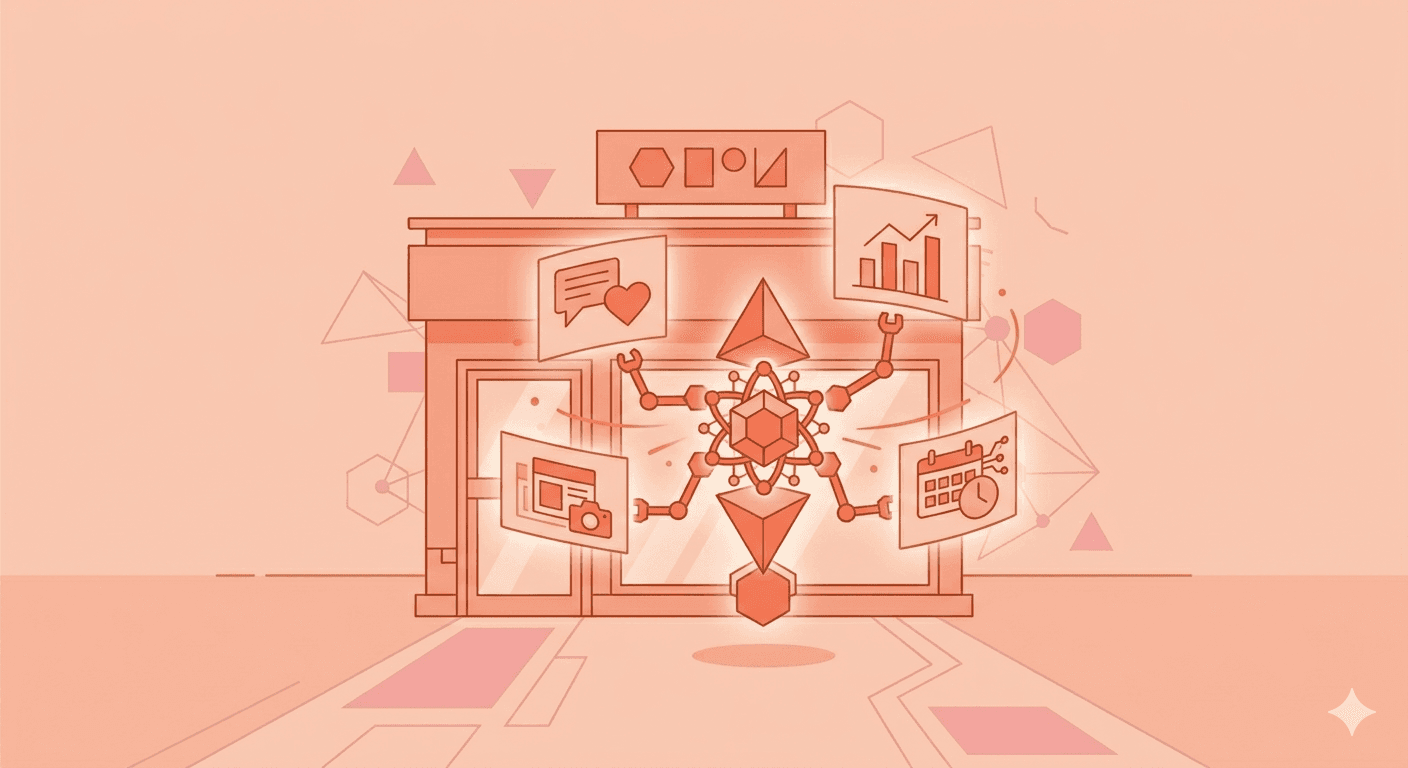
Table of Contents
There is a version of AI that most small brand owners are already familiar with. You open a tool, you type a prompt, it generates a caption or suggests a hashtag or writes a product description. You copy what you like, paste it somewhere, and move on. It saves you time. It is useful. But it is still fundamentally reactive — it only does something when you tell it to, and it does exactly one thing at a time, and the moment you close the tab, it stops.
Then there is a completely different version of AI that most small brand owners have not encountered yet. This version does not wait for you to type a prompt. It understands the goal you gave it — grow this brand's social presence, drive traffic to this product, maintain a consistent posting schedule across these platforms — and it works toward that goal autonomously, executing multi-step tasks across multiple tools, making decisions along the way, and running in the background whether you are watching or not. It analyzes your content performance, adjusts your strategy based on what it learns, creates new content, schedules it across platforms, monitors engagement, and reports back to you with what it found.
This is what an AI marketing agent is. And in 2026, it is the most powerful asymmetric advantage available to small brands — because it gives a one-person operation the operational capability of a full marketing department, for a fraction of the cost.
This guide explains exactly what AI marketing agents are, how they are different from the AI tools you are probably already using, what they can do for a small brand, and why the gap between brands using agents and brands using basic AI tools is widening by the month.
The Difference Between an AI Tool and an AI Agent
This distinction is the most important thing to understand before anything else, because the marketing world uses "AI" to describe both things interchangeably — and they are not the same.
An AI tool is reactive. It responds to a specific input and produces a specific output. You give it a brief, it writes copy. You give it an image, it generates a caption. You give it a keyword, it suggests blog topics. The tool is powerful, but it is passive. It exists at the end of a chain of decisions that you still have to make and execute yourself.
An AI agent is proactive and autonomous. It does not just respond to a single input — it receives a goal and independently determines the steps needed to achieve it. It can use multiple tools in sequence, access data from different sources, make contextual decisions based on what it finds, and execute a complete workflow without human intervention at each step. The difference is the difference between a calculator and an accountant. Both work with numbers. One requires you to operate it constantly. The other takes your business goals and runs the numbers for you.
A Concrete Example
Here is how the same task looks with an AI tool versus an AI marketing agent.
With an AI tool: You decide you need to post about your new product launch. You open your AI writing tool, type a prompt describing the product and asking for five caption options, choose the one you like, open your scheduling platform, paste the caption, find an image, resize it for Instagram, schedule the post, repeat the process for TikTok with different dimensions and tone, and move on to the next item on your list.
With an AI marketing agent: You told the agent two weeks ago that you have a product launch coming. On the day of the launch, the agent has already analyzed which content formats performed best for your account over the last 90 days, generated platform-specific posts for Instagram, TikTok, and Facebook in the tone that matches your brand voice, sourced or generated visuals, scheduled everything at the times your audience is most active, and drafted a follow-up engagement plan for the first 24 hours post-launch. You review it, approve it, and it executes.
That is the difference. One is a tool you operate. The other is a system that operates.
Why 2026 Is the Year AI Agents Went Mainstream for Small Brands
The concept of agentic AI is not new. But for most of the past decade, deploying an AI agent required a development team, significant technical infrastructure, and a budget that put it firmly in the enterprise category. A small brand owner in 2022 had no realistic path to using an autonomous AI system for marketing.
That changed rapidly between 2024 and 2026. Three things happened simultaneously that brought AI agents within reach of small brands.

The underlying AI models became dramatically more capable and dramatically cheaper to run. The cost of running a sophisticated language model dropped by roughly 90% between 2023 and 2025, which meant companies could build AI agent platforms that were affordable enough for small businesses to subscribe to rather than build from scratch.
No-code and low-code interfaces appeared that made agent configuration accessible to non-technical users. Instead of writing code to define agent behaviors, small brand owners could now configure an agent's goals, brand voice, content preferences, and approval workflows through visual interfaces — the same way you configure a Shopify store rather than writing e-commerce software from scratch.
The integrations matured. AI agents became able to connect directly to the platforms small brands actually use — Instagram, TikTok, Facebook, Canva, Shopify, email tools — which meant an agent could execute a complete marketing workflow across real tools rather than operating in isolation.
The result is that the AI agent market reached $12 billion in 2026. Among small and medium businesses, 75% now report using some form of AI in their operations — up from 40% in 2024 and 23% in 2023. The ones growing fastest are not the ones using AI tools to save time on individual tasks. They are the ones using AI agents to replace entire operational workflows.
What an AI Marketing Agent Actually Does
The capabilities of an AI marketing agent depend on how it is built and what platforms it is connected to. But for a small product-based brand, the core functions that matter most fall into five categories.
Content Creation and Planning
An AI marketing agent does not just generate individual pieces of content on demand. It understands your brand's content strategy — your posting frequency, your content pillars, your tone of voice, your audience preferences — and generates content proactively based on that strategy. It knows that Tuesday is your product education day and Friday is your behind-the-scenes day. It knows your brand never uses exclamation marks and always speaks directly to the customer. It generates content that fits those parameters without being reminded every time.
More sophisticated agents analyze your historical content performance and use those insights to improve future content. If your audience responds better to videos that lead with a problem statement rather than a product feature, the agent learns this and adjusts accordingly.
Scheduling and Platform Management
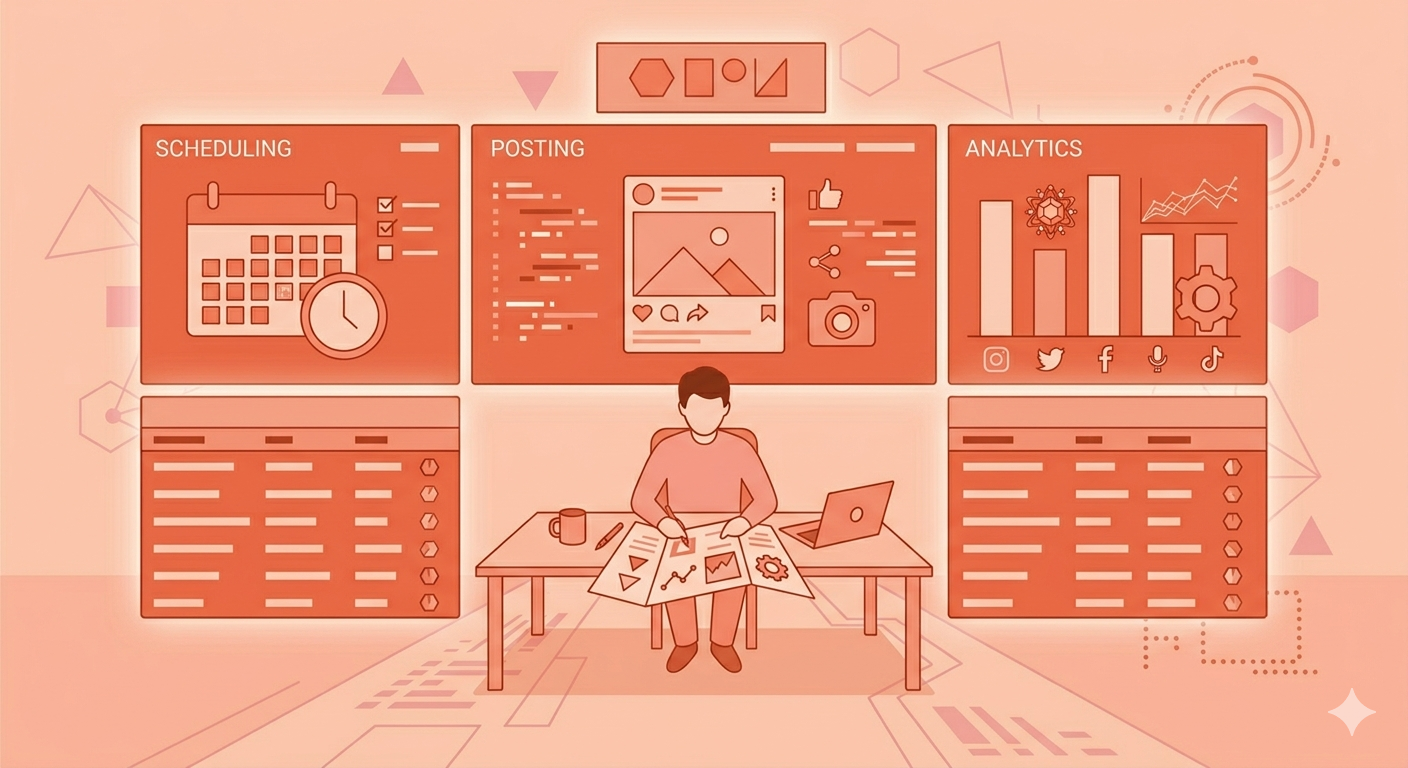
Once content is created, an AI agent handles the entire publication workflow. It formats content for each platform's specific requirements — the right aspect ratio for Instagram Stories versus Reels versus TikTok, the right character count for different captions, the right hashtag strategy for each platform. It schedules content at the optimal times based on your specific audience's activity patterns, not generic best-practice guidelines. And it monitors each post after publication, flagging anything that needs your attention.
Performance Analysis and Strategy Adjustment
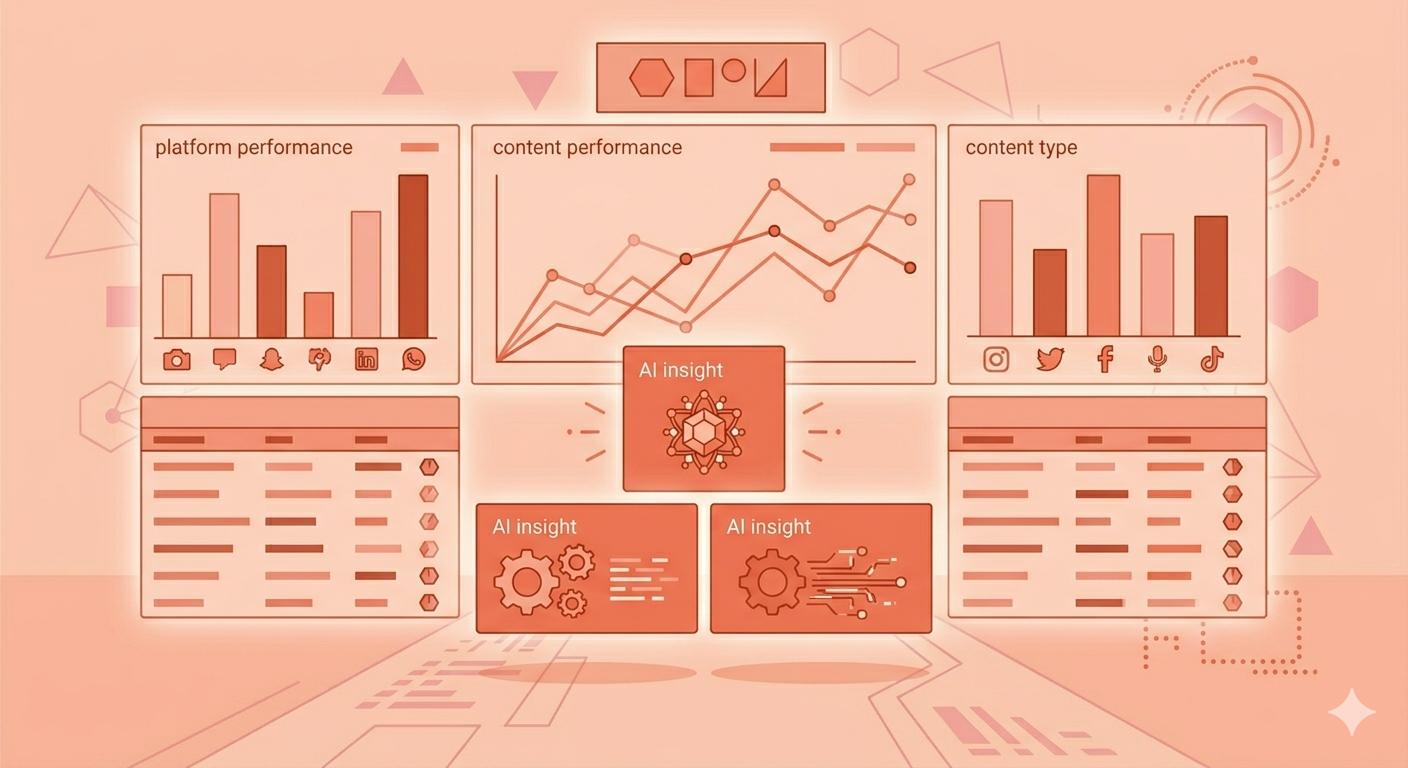
This is where AI agents deliver value that no human marketing assistant working at the same price point could match. An agent can analyze the performance of every piece of content you have ever published — engagement rates, reach, saves, click-throughs, conversion signals — across every platform simultaneously, and surface specific, actionable insights rather than raw data dumps. It tells you not just that video performed better than static last month, but which specific type of video, at which length, posted at which time, on which platform, drove the most meaningful engagement from your most valuable audience segment.
Engagement Monitoring
SnapReel is the AI marketing agent built specifically for small product brands — it plans
Put these tips into action — start creating with SnapReel for free.
An AI marketing agent monitors comments, DMs, and mentions across your platforms and helps you manage engagement at scale. It can flag comments that need a response, draft response suggestions that match your brand voice, identify patterns in what your audience is asking or saying, and alert you to anything that requires your personal attention. For a small brand owner who cannot spend three hours a day in their social media notifications, this is the difference between a community that feels heard and a community that drifts away.
Reporting and Optimization
At the end of each week or month, rather than you spending hours pulling data from multiple platforms and trying to make sense of it, an AI marketing agent synthesizes everything into a clear picture: what worked, what did not, what to do more of, what to stop doing. It connects content performance to business outcomes — not just likes and comments, but traffic, leads, and where possible, revenue signals.
The Real Cost of Not Having One
The marketing work that an AI agent handles — content creation, scheduling, performance analysis, engagement monitoring, reporting — does not disappear just because a small brand cannot afford to hire someone to do it. It either gets done poorly, gets done inconsistently, or does not get done at all. And in 2026, all three of those outcomes are increasingly costly.
Social media algorithms in 2026 reward consistency above almost everything else. A brand that posts every day with content optimized for its specific audience will always outperform a brand that posts sporadically with better individual content. An AI agent makes daily, optimized, consistent posting achievable for a brand owner who is also running operations, managing inventory, handling customer service, and doing everything else that running a small business requires.
The competitive math is straightforward. A human social media manager capable of doing what an AI agent does — content strategy, creation, scheduling, analysis, optimization across multiple platforms — costs between $3,000 and $6,000 per month in salary or contractor fees. An AI marketing agent that handles the core execution work costs a fraction of that. The small brand that deploys an AI agent is not just saving money. It is operating at a speed and consistency that a manually-operated brand cannot match regardless of budget.
What Humans Still Do — And Why It Matters
The rise of AI marketing agents does not make human judgment, creativity, and strategic thinking irrelevant. It makes them more valuable, because they are now freed from the operational weight of execution work.
The brands that use AI agents most effectively are the ones where the human owner focuses on the things only a human can do: defining the brand's values and vision, making strategic decisions about products and positioning, building genuine relationships with key customers and community members, and making the creative calls that determine what the brand actually stands for.
The agent handles the execution. The human handles the soul. That division of labor produces better marketing than either could achieve alone — because the agent ensures that the human's strategic vision is consistently executed at a scale and speed that would be impossible to maintain manually.
This is also why the concern that AI agents produce robotic, inauthentic content is a concern about bad implementation rather than an inherent limitation of the technology. A well-configured AI agent that has been given a detailed understanding of a brand's voice, values, and audience produces content that feels genuinely on-brand. The authenticity comes from the configuration and oversight the human owner provides — not from the human writing every post themselves.
How to Evaluate an AI Marketing Agent for Your Brand
Not all AI marketing agents are built equally. For a small product-based brand evaluating options, five criteria matter most.
Brand voice learning is the first. The agent needs to be able to learn and consistently apply your specific brand voice — not a generic professional tone, not a generic casual tone, but the specific way your brand speaks. Ask how the platform handles brand voice configuration and whether it learns from your existing content.
Platform coverage is the second. The agent needs to connect to the platforms you actually use — Instagram, TikTok, Facebook, Pinterest, or wherever your audience lives. An agent that covers three platforms but not the one where your customers spend most of their time is not the right agent for your brand.
Approval workflow is the third. The best AI marketing agents do not publish content without human review unless you explicitly configure them to. Look for platforms that make it easy to review and approve content before it goes live, especially when you are first starting out and building trust in the system's output.
Analytics integration is the fourth. The agent should connect to your actual performance data and use it to improve future content — not just generate content in isolation without any feedback loop from what is actually working.
Price and accessibility is the fifth. In 2026, there is no reason to pay enterprise pricing for AI agent capabilities as a small brand. The best platforms for small brands offer meaningful automation starting at price points that make the ROI immediate and obvious.
The Brands That Win the Next Five Years Are Already Using Agents
The marketing landscape of 2031 will be defined by what brands built in 2026. The brands that used this window to deploy AI agents — to build consistent content libraries, establish GEO authority, maintain daily platform presence, and compound their audience growth — will have advantages that are genuinely difficult for later adopters to overcome.
The brands that waited — that kept doing marketing manually, inconsistently, reactively — will look back at 2026 the way brands that ignored social media in 2012 look back at that era now. The technology was available. The cost was reasonable. The window was open. And they missed it.
The good news is that the window is still open right now. AI marketing agents are not yet the default operating model for small brands — which means starting today still gives you a meaningful head start.
SnapReel AI is built specifically for small product-based brands that need a fully autonomous AI social media manager — one that creates content, generates videos, schedules posts, and manages your entire social presence automatically, so you can focus on building the brand while the agent handles the execution.