What is AI UGC? How Brands Are Using AI to Generate Fake-But-Real Customer Videos in 2026
SnapReel
April 24, 2026 · 14 min read

Table of Contents
- 1.
- 2.
- 3.
- 4.
- 5.
- 6.
- 7.
- 8.
- 9.
- 10.
You have seen these videos on TikTok. Someone holds a product, looks straight into the camera, and tells you exactly why they love it. It feels real. It feels spontaneous. It feels like a genuine customer review from a real person who bought the product and wanted to share their experience.
In 2026, there is a significant chance that person does not exist. The video was generated entirely by AI — the face, the voice, the gestures, the background, the script — all produced automatically from a product image and a text brief. No filming. No actor. No production team. No real customer.
This is AI UGC — user-generated content created by artificial intelligence instead of real users. It is the fastest-growing content format in performance marketing right now, and brands of every size are using it to generate scroll-stopping review videos, unboxing clips, testimonials, and product demos at a scale and speed that was impossible just two years ago.
This article explains exactly what AI UGC is, how it works, why it performs so well, which tools are producing it, and how SnapReelAI integrates it into a fully autonomous social media system for small brands.
What is UGC and Why Does it Work So Well?
User-generated content — UGC — refers to content created by real customers rather than brands. A customer films themselves unboxing a product they just received. A buyer records a review in their bathroom mirror. A fan posts a casual "this changed my life" style video about a supplement they have been using. This content performs dramatically better than polished brand advertising for one simple reason: it feels authentic.
Engagement jumps 28% when shoppers see a mix of user-generated videos and official brand clips Advertising Week compared to brand content alone. Consumers trust the opinion of a fellow customer far more than a brand speaking about itself. UGC-style content removes the sales feeling that makes most advertising easy to scroll past, and replaces it with social proof that feels organic and credible.
The problem for small brands was always access. Getting real customers to create high-quality video content consistently is difficult, unpredictable, and expensive. You can send free products, run review campaigns, work with micro-influencers — but you cannot control the output quality, the posting frequency, or the message. For brands that needed daily UGC-style content to feed social media and ad campaigns, the traditional model simply did not scale.
AI UGC solves the access problem entirely.
What is AI UGC? Real Definition
AI UGC is user-generated-style content created with AI instead of real creators. It replicates authentic product reviews, testimonials, unboxings, and social-style videos that feel native to TikTok, Instagram, Facebook, and YouTube.
The key word is "style." AI UGC does not claim to be real customer content — it is brand-produced content that adopts the visual language, format, and tone of user-generated content. The same casual framing, direct-to-camera delivery, authentic setting, and conversational script that makes real UGC work — all reproduced by AI with a generated person, a generated voice, and a generated environment.
The result looks and feels like a real customer video. The face is a realistic AI-generated or AI-swapped persona. The voice is natural-sounding AI audio. The background is an authentic lifestyle setting generated or selected by AI. The script is written to sound like genuine personal experience, not brand marketing copy. When it appears in a TikTok feed or Instagram Reel, most viewers cannot distinguish it from real UGC.
Real UGC vs AI UGC — What is the Actual Difference?
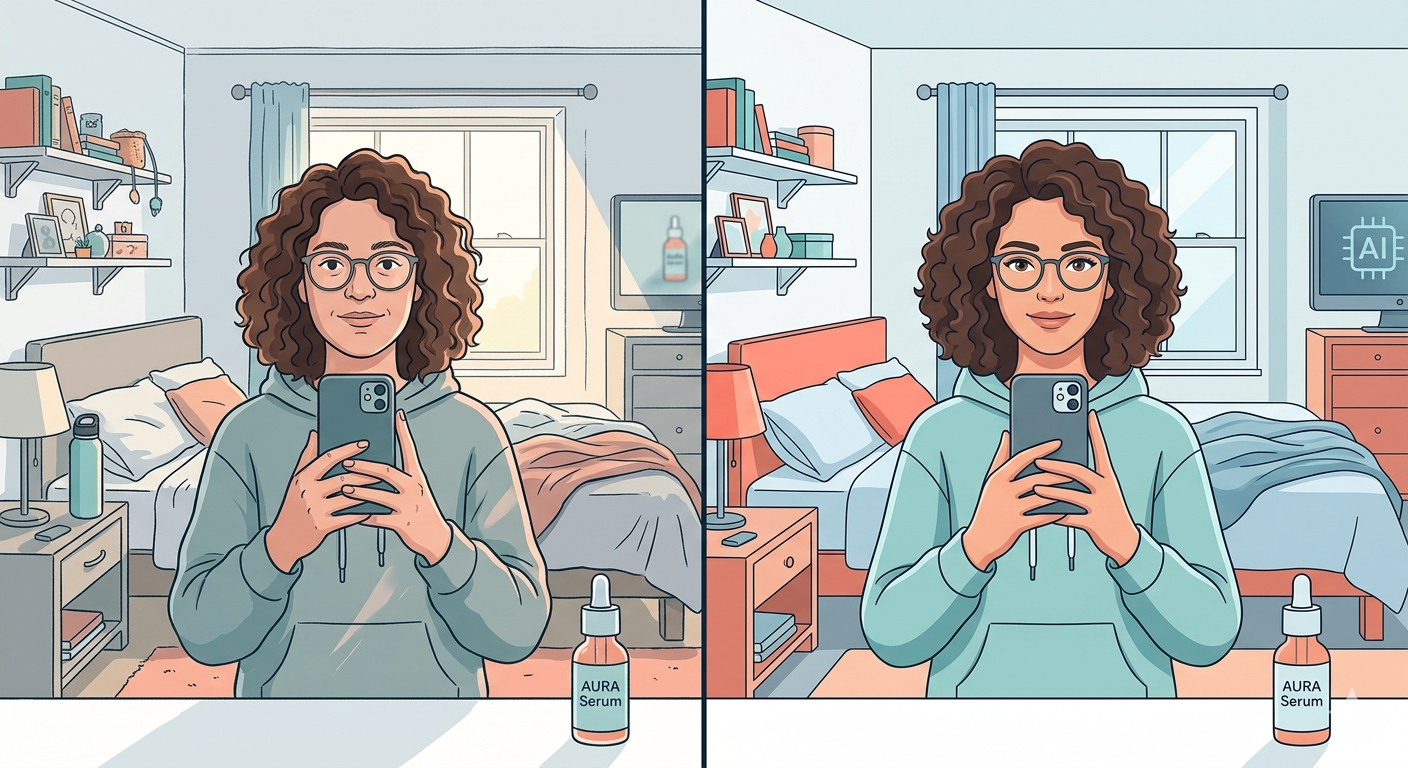
Understanding what separates real UGC from AI UGC helps brands decide how and when to use each.
Real UGC comes from actual customers who chose to create content about a product they bought. The production quality is typically low — natural lighting, handheld camera, unscripted delivery — and that imperfection is part of what makes it feel authentic. The brand has limited control over messaging, visual quality, or posting frequency. Getting consistent real UGC at scale requires an active community, a review incentive program, or paid creator relationships.
AI UGC is brand-controlled content that mimics the style of real UGC. The brand controls the script, the persona, the setting, the product messaging, and the posting frequency. Production is instant — a video can be generated in minutes from a product image and a script. The output can be produced at any volume, for any product, in any style, on demand.
UGC-style ads lift conversions by up to 4.5%, and testing 50 ad variants with real creators can cost over $10,000 — while the same test using an AI UGC video generator costs under $200. Media Search Group For small brands running social media and paid ad campaigns simultaneously, that cost difference is transformative.
How AI UGC Video is Generated — Step by Step
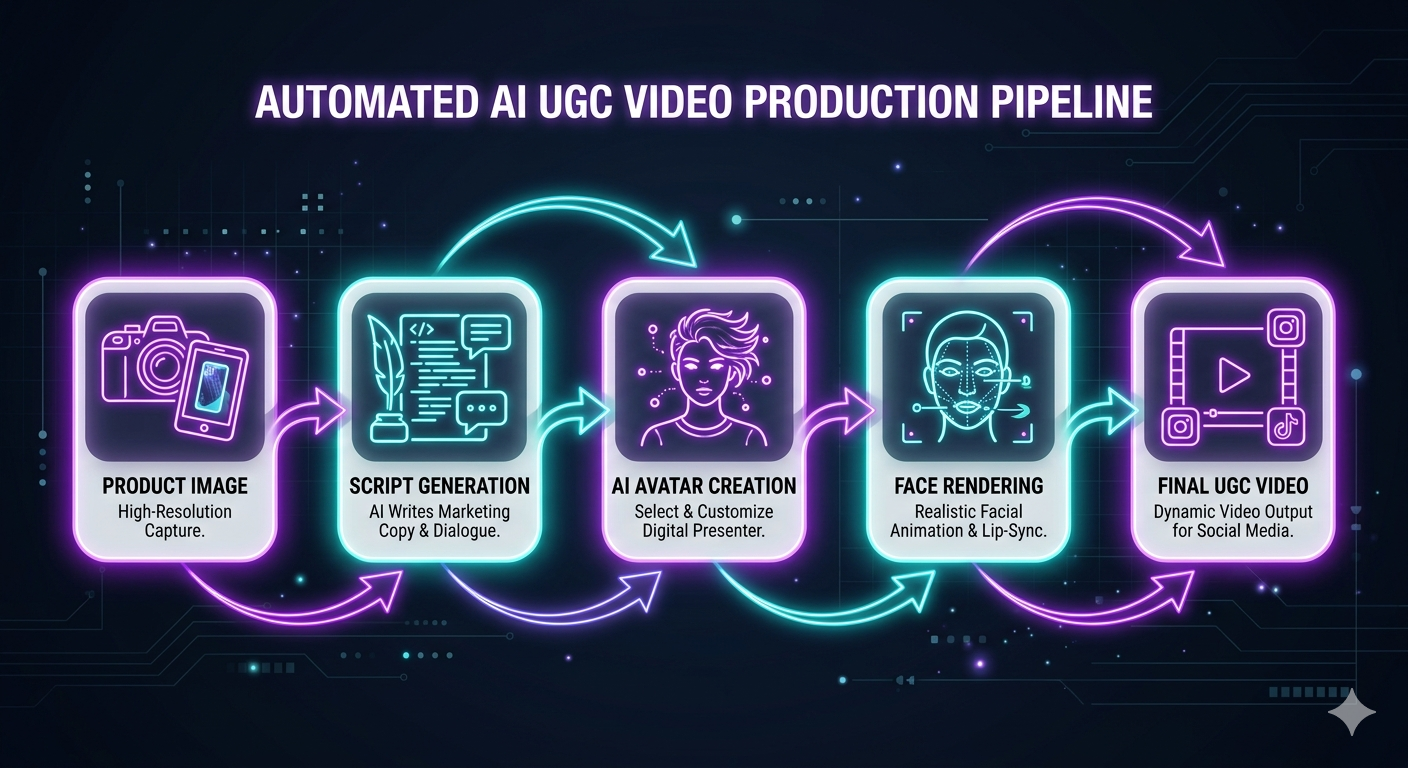
Step 1 — Script Writing
The process starts with a script that sounds like a real person talking about the product — not a brand advertisement. A strong AI script engine writes in first-person conversational language: "I have been using this for three weeks and honestly I was not expecting it to work this fast." The script includes a hook in the first two seconds, a personal product experience narrative, key benefits framed as personal observations, and a casual call to action. It is written to sound discovered, not sold.
Step 2 — AI Avatar or Face Generation
The AI then generates or selects the person who will deliver the script on camera. This can be a pre-built AI avatar — a photorealistic AI-generated person — or it can use face-swap technology to replace a base video with a specific persona. Tools like Arcads, HeyGen, and MakeUGC offer libraries of hundreds of realistic AI avatars with natural expressions, hand gestures, and micro-movements that make the video feel genuinely human. The avatar is matched to the brand's target audience demographic for maximum relatability.
Step 3 — Voice Generation
The script is converted to natural-sounding speech by an AI voice model. Modern voice generation — including models like ElevenLabs — produces audio that is virtually indistinguishable from real human speech in terms of tone, pacing, breath patterns, and emotional inflection. The voice is synchronized with the avatar's lip movements to create a seamless, believable performance.
Step 4 — Background and Environment
The setting is either AI-generated or selected from a library of authentic-looking lifestyle environments — a bathroom counter for skincare, a kitchen for food products, a gym setting for fitness supplements. The environment matches the product context and reinforces the "real person, real life" feeling that makes UGC work.
Step 5 — Face Swap (Advanced UGC)
For brands that want their UGC content to feature a specific person — a celebrity persona, a brand ambassador, or a chosen influencer style — face-swap technology replaces the base video's face with the target persona. Technologies like Kling motion can swap faces in video with high realism, maintaining natural expressions and lip sync, enabling brands to produce celebrity-adjacent review content without celebrity contracts or shooting schedules.
Step 6 — Final Render and Platform Formatting
The complete video is rendered with proper aspect ratios for each platform — vertical for TikTok and Reels, square for Instagram feed, horizontal for YouTube — subtitles are burned in, and the final file is exported ready for posting. The entire process from brief to finished video takes minutes to a few hours depending on the tool and complexity.
Generate authentic-looking branded video content automatically — no creators
Ready to follow along? Create your first AI video for free.
Why AI UGC Performs So Well on Social Media
AI UGC performs strongly for the same reasons real UGC performs strongly — it triggers the social proof psychology that makes consumers trust peer recommendations over brand claims. When a video looks like it was made by a real person who genuinely likes a product, the viewer's guard drops. The message lands differently than an obvious advertisement.
AI UGC video generators simplify tasks like editing, animating, and personalizing videos, enabling even small teams to scale content efficiently — and these platforms leverage AI to handle complex effects like face swaps, lip-syncing, and dynamic expressions.
The format also matches platform algorithms perfectly. TikTok, Instagram Reels, and YouTube Shorts all favor content that looks organic and native to the platform over polished brand productions. AI UGC is designed to look exactly like the organic content that performs best on these platforms — which means better organic reach in addition to paid performance.
For paid advertising, the volume advantage is critical. TikTok's top ten ads refreshed creative four times per week Advertising Week — brands that can generate dozens of UGC video variations quickly and test them against each other find winning creatives faster, lower their cost per acquisition, and scale their ad spend more efficiently. AI UGC makes that volume achievable for small brands without a production team.
AI UGC Tools Available in 2026
Several platforms have built specifically around AI UGC generation. Here is a clear breakdown of the main options.
Arcads is purpose-built for high-volume ad creative testing. Arcads produces some of the most realistic AI UGC videos available in 2026 — the avatars show genuine emotions, natural hand gestures, and micro-expressions that many competing tools miss entirely. Media Search Group It is best for performance marketers running aggressive creative testing programs who need large volumes of UGC video variants quickly. Plans start around $100 per month.
HeyGen specializes in hyper-realistic avatar-led videos with strong multilingual support across 50+ languages. It is ideal for global brands that need the same UGC video delivered in multiple languages with accurate lip-sync and native-sounding voice. Creator plans start at $29 per month.
MakeUGC focuses on fast no-prompt video production — you add your product image and dialogue and the system generates the complete UGC video automatically. It uses models including Kling, Seedance, and Veo for video generation and supports talking-head videos, hook videos, and custom avatars.
Creatify is optimized for e-commerce brands pulling product data directly from URLs. Creatify streamlines the product-to-video workflow by pulling information directly from your product pages — the AI analyzes product descriptions, features, and benefits to generate conversion-focused scripts without manual copywriting. DesignRush Plans start around $39 per month.
All of these tools require manual operation — you brief each video, generate it, review it, and then post it yourself or schedule it through a separate tool. For small brands that want UGC as part of a fully automated daily social media system, none of them close the loop completely.
SnapReelAI — AI UGC Built Into a Fully Autonomous System
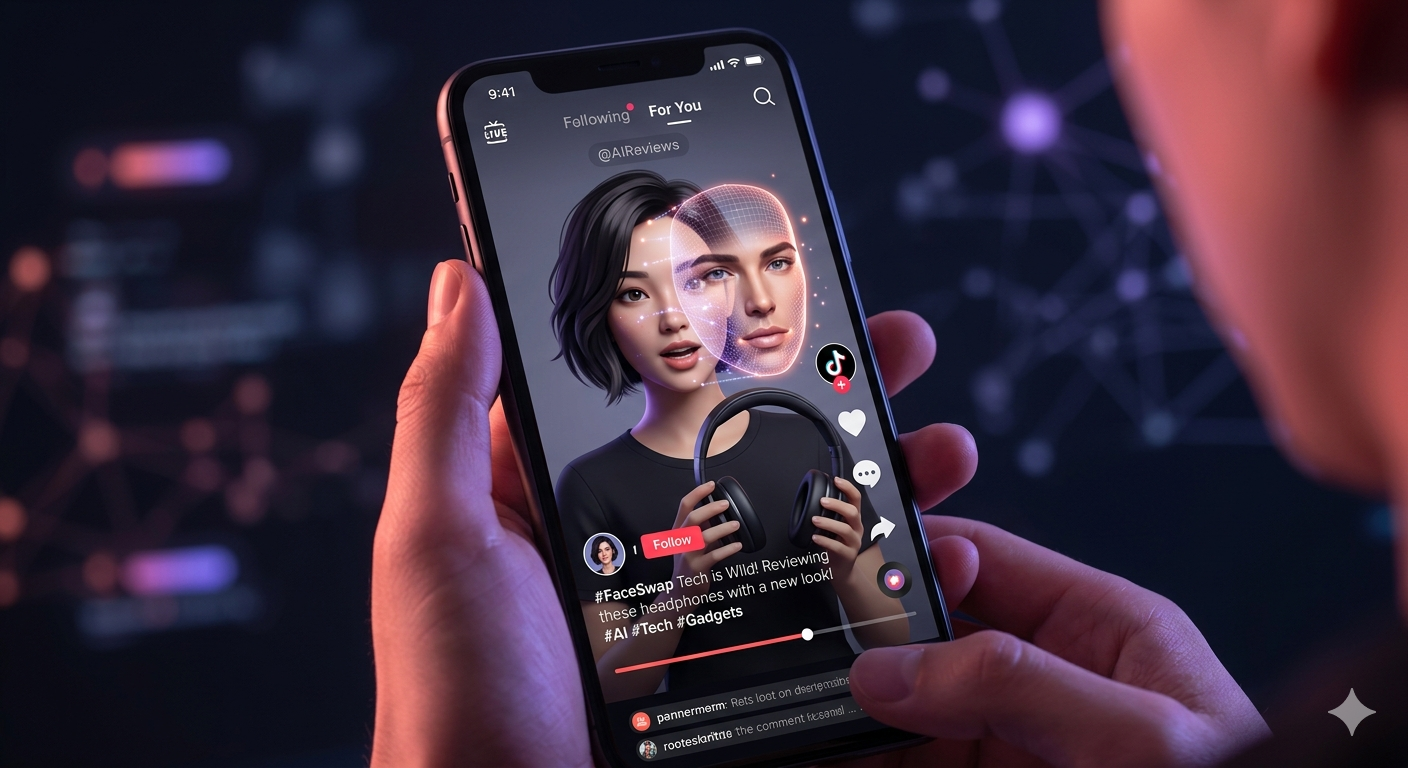
SnapReelAI takes AI UGC a step further by integrating it into a fully autonomous social media management pipeline — so UGC-style content is generated and posted automatically as part of the weekly brand content schedule, with no manual involvement.
Within the SnapReelAI content strategy, the AI decides when a UGC-style review video is the right content type for a given day and platform. It writes the script, generates the video using its production pipeline, and — for brands that want the face-swap layer — uses Kling motion to replace the generated person with a celebrity persona or chosen character style. The result is a celebrity-adjacent product review video, produced entirely by AI, published automatically to every connected platform.
For brands that want to record real human footage but swap the face, SnapReelAI also supports user-recorded clips as the base video for Kling motion face-swap — so you can film a quick review yourself and have the AI replace your face with a chosen persona before it goes live. This creates the most natural-looking UGC possible, with a human performance as the base and AI persona replacement as the output.
The UGC content sits within a broader automated content mix — product videos, carousels, brand stories, educational posts — all managed by the AI and published daily without any human approval loop. For small brands, this means daily UGC-style content across TikTok, Instagram, Facebook, YouTube, LinkedIn, Reddit, and X, generated and posted automatically from the same onboarding data.
Is AI UGC Ethical? What Brands Should Know
The question of transparency around AI UGC is worth addressing directly, because it is a real consideration for brand reputation.
Platform policies in 2026 are evolving. TikTok and Meta require disclosure when AI-generated content is used in paid advertising — AI-generated videos running as paid ads must be labeled as AI-generated in most markets. For organic content, disclosure requirements are less consistent but the trend is moving toward greater transparency.
The ethical approach for brands is to treat AI UGC as a production format rather than a deception tactic. The content is brand-controlled messaging — equivalent to a scripted advertisement — just delivered in a style that looks organic. The product claims in AI UGC should be accurate and based on real product benefits, not fabricated testimonials. Used this way, AI UGC is a legitimate production tool with the same ethical standing as any other form of scripted brand content.
Brands that stay on the right side of this line — accurate product claims, platform disclosure for paid content, no fabricated specific testimonials — can use AI UGC confidently and at scale without reputational risk.
Frequently Asked Questions
Is AI UGC legal? Yes, in most markets. AI-generated content is brand-produced content and carries the same legal standing as any scripted advertisement. For paid ads, disclosure requirements apply on most major platforms. Product claims must be accurate regardless of whether the content is AI-generated or filmed traditionally.
Can viewers tell the difference between real UGC and AI UGC? Increasingly, no. Modern AI avatar generation and face-swap technology has reached a level of realism where most viewers cannot distinguish AI UGC from real creator content in normal viewing conditions. The quality gap that existed in 2023 and 2024 has largely closed.
How much does AI UGC cost compared to real creator UGC? Working with real creators for consistent UGC content costs $500 to $5,000+ per month depending on creator tier and volume. AI UGC tools start from $29 to $100 per month for significant video volume. For brands running paid ad campaigns that need dozens of creative variants, the cost difference is extremely significant.
What products work best with AI UGC? Physical consumer products — skincare, supplements, food and beverage, fitness, fashion, home goods — perform best because they lend themselves to lifestyle demonstration and personal review format. SaaS and digital products can also work well with screen-capture style UGC combined with AI presenter narration.
Does AI UGC work for organic social media or only paid ads? Both. AI UGC-style content performs well organically on TikTok and Instagram Reels because the format matches what the algorithm rewards. It also performs strongly in paid campaigns because it achieves higher engagement rates than traditional ad creative. Small brands using SnapReelAI benefit from both — autonomous organic UGC posting daily, building reach and credibility without an ad budget required.
Conclusion — AI UGC is the New Standard for Small Brand Content
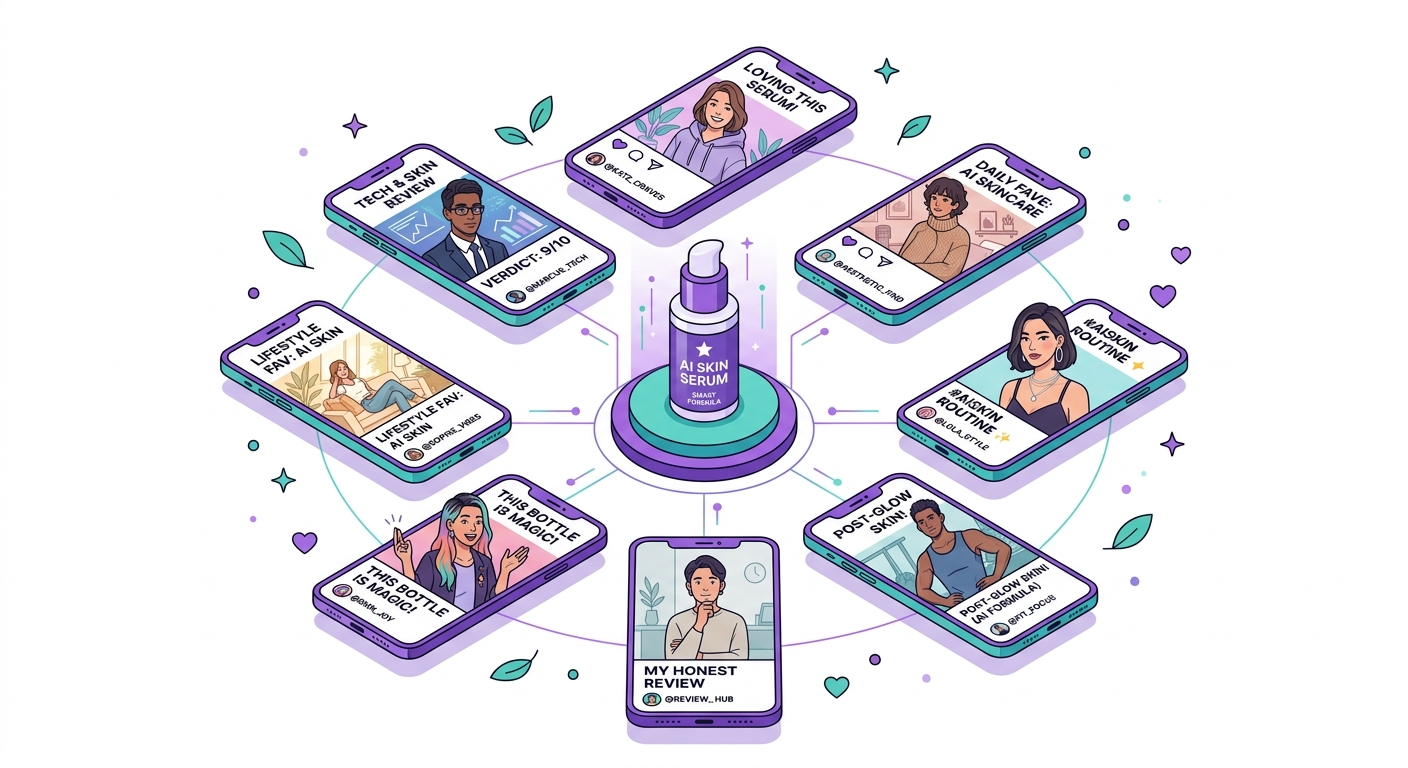
Real UGC built the social media marketing playbook for the past decade — authentic, peer-to-peer, trust-driven content that outperformed every polished brand advertisement. The limitation was always access. Getting consistent, quality UGC at scale required either a massive customer community or a significant creator budget.
AI UGC removes that limitation. In 2026, any brand — regardless of size, budget, or customer base — can generate daily review videos, testimonial clips, unboxing content, and lifestyle demonstrations automatically, with production quality that rivals the best real-creator UGC available.
For small brands, this levels the playing field completely. The trust signals that large brands built through years of influencer partnerships and creator programs are now accessible through AI — in minutes, at a fraction of the cost, with full brand control over the messaging.
SnapReelAI integrates AI UGC into a fully autonomous social media system — so your brand generates and posts review-style content automatically every week, across every platform, without you touching anything after the initial setup.
Start generating AI UGC for your brand at snapreelai.com — and have your first AI-powered review video live before the end of the day.