What Is GEO — How Small Brands Get Found by ChatGPT, Gemini & AI Search in 2026
SnapReel
May 14, 2026 · 16 min read
Table of Contents
There is a version of the internet that most small brand owners haven't fully reckoned with yet. In this version, a potential customer doesn't open Google and type "best skincare brand for dry skin." Instead, they open ChatGPT or Gemini or Perplexity and type that exact same question — and within seconds, an AI engine gives them a direct answer. It names specific brands. It explains why those brands are worth considering. It sometimes even links directly to their websites. And the person reading that answer trusts it, because it came from an AI they use every day, not from a list of ten blue links they have to sort through themselves.
This is not a future scenario. This is happening right now, in May 2026, millions of times every single day. ChatGPT alone has over 800 million weekly active users. Perplexity processes over 780 million monthly requests. Google's own AI Overviews now appear at the top of search results before any organic link. The way people find brands, products, and answers has fundamentally changed — and most small brands are still optimizing for the old version of the internet.
The discipline built around making your brand visible in this new AI-powered search landscape is called Generative Engine Optimization, or GEO. If you have never heard of it, that is both a warning and an opportunity. Gartner predicts that traditional search engine volume will drop 25% by the end of 2026. AI referral traffic to small business websites grew 123% in 2025 alone. And nearly 47% of brands currently have no GEO strategy whatsoever — which means the brands that start now have a genuine first-mover advantage that compounds over time, exactly the way early SEO adoption did in the early 2000s.
This guide explains exactly what GEO is, how it is different from traditional SEO, why it matters more for small brands than almost anything else you could be doing in 2026, and the specific things you can start doing right now to make your brand the one the AI recommends.
What GEO Actually Means — And Why the Name Matters
GEO stands for Generative Engine Optimization. The "generative" part refers to generative AI — the technology behind ChatGPT, Google Gemini, Perplexity, and other AI systems that generate full text responses rather than just returning a list of links. The "engine" part is a deliberate echo of "search engine" — because that is exactly what these AI platforms have become. People use them the way they used to use Google: to find things, research decisions, and discover brands.
Optimizing for these generative engines — making sure your brand appears in their responses — is what GEO is about. It is the practice of structuring your content, building your brand's authority, and managing your digital presence in a way that makes AI systems likely to cite, mention, and recommend your brand when relevant questions are asked.
GEO Is Not the Same as SEO — But It Builds on It
This is the most important thing to understand about GEO: it is not a replacement for SEO. It is an additional layer built on top of it. Brands that do well in GEO are almost always the same brands that have strong traditional SEO foundations — because AI engines use many of the same quality signals that Google's algorithm uses. High-quality content, clear expertise, trustworthy backlinks, consistent information across the web — all of these still matter enormously.
What GEO adds is a set of additional practices specifically designed for how AI systems process and surface information. Traditional SEO is about ranking — getting your page to position one in a list of ten results. GEO is about citation — getting your brand named inside an AI's generated answer. Those are two different goals that require two different but complementary strategies.
The simplest mental model: SEO gets you onto the list. GEO gets you into the answer.
Why 2026 Is the Year GEO Stops Being Optional
If you had started paying attention to SEO in 2003, you would have had a decade-long head start on every competitor who ignored it. If you are paying attention to GEO right now, in May 2026, you are in that exact position again. The window is open. It will not stay open forever.

Several converging forces make 2026 the inflection point for GEO adoption among small brands.
The Numbers Behind the Shift
ChatGPT has 800 million weekly users as of 2026. Perplexity processes 780 million monthly requests. Google's AI Overviews appear on the majority of commercial search queries. These are not niche products used by tech enthusiasts — they are mainstream tools used by the same everyday consumers who buy your products. When someone asks Gemini "what's the best sustainable candle brand" or asks ChatGPT "which small skincare brands actually work for sensitive skin," those AI systems respond with specific recommendations. If your brand is not in their training data, not mentioned across trusted sources, and not structured in a way that AI systems can easily parse and verify — you will not be recommended. Someone else will.
The First-Mover Advantage Is Still Available
Unlike traditional SEO, where dominant brands have spent decades building domain authority that is nearly impossible to overtake, GEO is a field that is still taking shape. The rules are not fully codified. The big players have not locked in their advantages yet. A small brand that builds strong GEO foundations in 2026 can establish citation authority that compounds year after year — the same way a brand that started blogging consistently in 2008 ended up owning their niche on Google by 2015. The opportunity is real, the timing is right, and the cost of starting is low.
AI Traffic Is Already Converting
This is not theoretical traffic. AI referral visits — people who clicked through to a website after it was mentioned in an AI response — grew 123% in 2025 and are still accelerating. More importantly, this traffic converts at higher rates than typical organic search traffic, because people who clicked through from an AI recommendation have already been pre-sold. The AI told them your brand was worth checking out. They arrive with far more intent than someone who landed on your site from a generic search term.
How AI Engines Decide What to Recommend
To optimize for GEO, you need to understand how generative AI systems decide which brands to mention. This is not the same as how Google decides which pages to rank, and the differences matter.
Traditional search engines crawl your website, index your pages, and rank you based on factors like keyword relevance, backlinks, page speed, and user behavior signals. Generative AI engines work differently. They are trained on vast amounts of text from across the internet — articles, reviews, forum discussions, blog posts, directories, news mentions — and they build a knowledge graph of entities and relationships based on that training data. When someone asks a question, the AI synthesizes information from that knowledge graph to generate a response.
What this means for your brand is that GEO is less about any single page on your website and more about how your brand is represented across the entire web. The AI forms its opinion of your brand based on everything it has ever read about you — not just your homepage.
The Factors That Drive AI Citation
Several specific factors make AI systems more likely to cite and recommend a brand:
Being mentioned consistently across multiple trusted sources is the foundation. If ten reputable websites, blogs, and publications have written about your brand, the AI has more evidence to work with when forming a recommendation. A brand mentioned in one place is a weak signal. A brand mentioned across many trusted sources is a strong signal.
The sentiment and specificity of those mentions matters enormously. A review that says "I liked this brand" gives the AI very little to work with. A review that says "This brand's moisturizer solved my dry skin problem because it uses ceramides and hyaluronic acid without fragrance" gives the AI specific, attributable information that it can synthesize into a recommendation. The more specific and positive the things being said about your brand online, the stronger your GEO position.
Structured, clear content on your own website gives AI crawlers the context they need to understand what your brand is, what problems it solves, and who it serves. Schema markup — a technical layer that explicitly tells search and AI engines what type of content is on a page — has been shown to improve AI visibility by 30 to 40%. FAQ sections, direct-answer introductions, and clear categorical organization all help AI systems parse and trust your content.
GEO vs SEO vs AEO — Understanding the Difference
These three terms are increasingly used in the marketing world, and they are related but distinct. Understanding the difference prevents you from confusing your strategy.
SEO (Search Engine Optimization) is what you already know. It is the practice of optimizing your website and content so that Google and other traditional search engines rank your pages highly in their results. Keywords, backlinks, technical site health, content quality — these are all SEO factors. SEO remains essential and is not going away. It is the foundation on which everything else is built.
AEO (Answer Engine Optimization) was originally developed for voice search — optimizing content so that voice assistants like Siri and Alexa would read your page aloud as the answer to a question. In 2026, AEO is largely absorbed into GEO, because most voice queries now route through the same generative AI systems. If you optimize for GEO, you are effectively optimizing for AEO as well.
GEO (Generative Engine Optimization) is the newest layer and the one that requires the most new thinking. It is specifically about making your brand visible in the responses generated by AI systems like ChatGPT, Gemini, Perplexity, and Google AI Overviews. It focuses on your brand's presence across the entire web, not just your own website, and on the quality and specificity of what is being said about you in trusted sources.
Consistent daily content is the foundation of GEO — let SnapReel build that foundation automatically.
Put these tips into action — start creating with SnapReel for free.
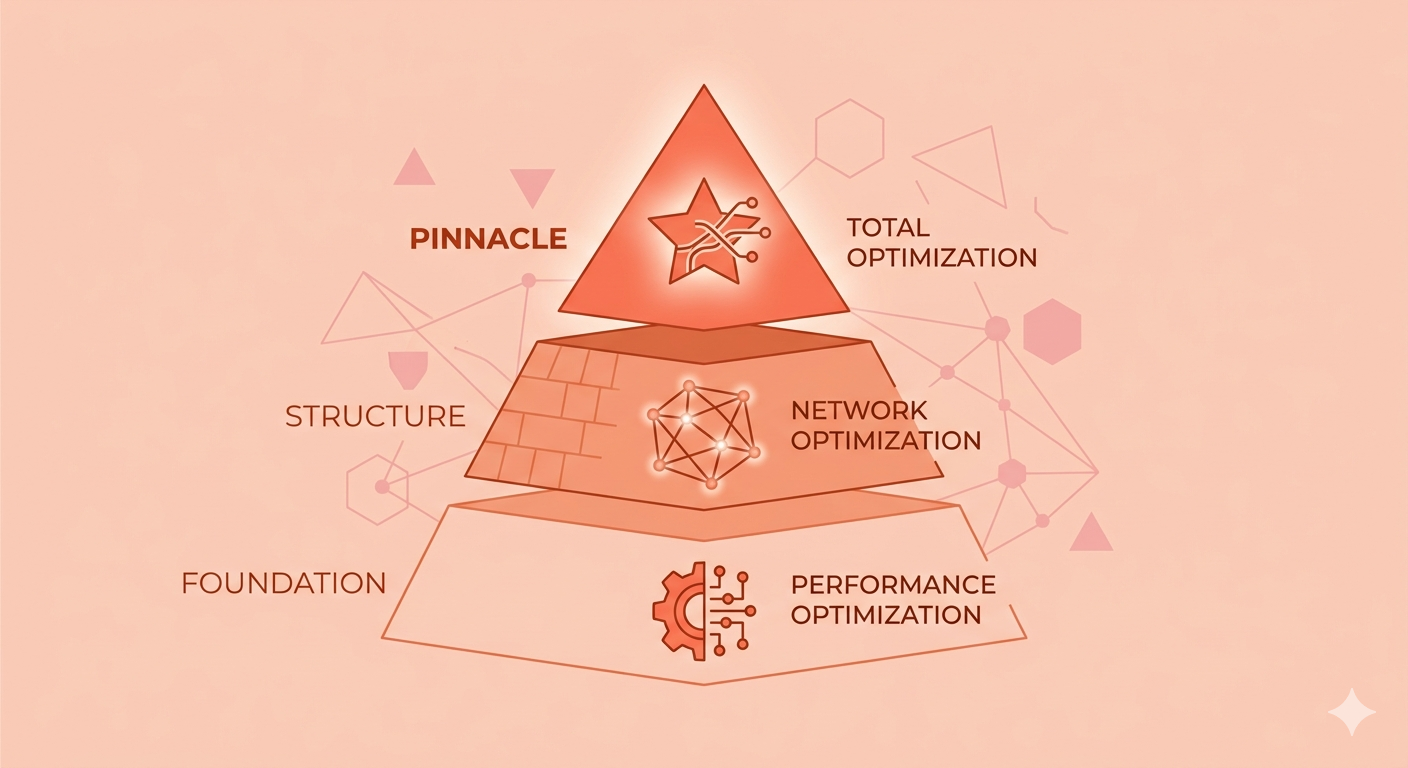
The optimal strategy in 2026 combines all three disciplines. SEO as the foundation. AEO as the structural layer. GEO as the citation and authority layer on top.
The GEO Strategy for Small Brands — What to Actually Do
Understanding what GEO is matters. Knowing what to do about it matters more. Here is a practical framework that small brands can implement without an enterprise budget or a technical team.
Step 1 — Build Content That Directly Answers Specific Questions
The content that AI systems cite most often is content that directly and clearly answers specific questions. Not content that vaguely discusses a topic, but content that gives a precise, authoritative answer and then explains the reasoning behind it.
If you sell a product for sensitive skin, your blog should have an article titled "What Ingredients Should Sensitive Skin Avoid" that gives a clear, specific answer in the first paragraph, then explains each ingredient in detail. If you sell handmade candles, you should have content that directly answers "What Makes a Clean-Burning Candle" with specific, verifiable information about wick types, wax composition, and fragrance load.
Every piece of content you publish should be built around a specific question that your target customer would ask an AI engine. Not a keyword — a question. What would someone type into ChatGPT that, if your brand were mentioned in the answer, would send you the perfect customer? Write the content that makes you the right answer to that question.
Step 2 — Get Mentioned in Trusted Third-Party Sources
Your own website alone is not enough for strong GEO. AI systems build their recommendations by synthesizing information from across the web — and the more places your brand is mentioned in credible, trusted sources, the stronger your citation authority becomes.
This means actively pursuing coverage in publications, blogs, and platforms your audience trusts. It means encouraging customers to write detailed reviews that include specific information about why your product worked for them. It means reaching out to bloggers and journalists who cover your category and making sure they know your brand exists. It means participating in forums and communities where your potential customers are having conversations — not to spam, but to genuinely contribute in ways that build brand recognition.
Every mention of your brand in a credible third-party source is a data point that AI engines can use when forming a recommendation. The brands that win at GEO are the brands that make it easy for AI systems to learn about them from multiple trusted angles.
Step 3 — Optimize Your Website for AI Crawlers
Beyond content strategy, there are specific technical practices that make your website more AI-friendly. Schema markup is the most impactful — it is a layer of structured data that explicitly tells AI and search engines what type of content you have, what it is about, and who it is for. Adding schema markup to your product pages, blog posts, and FAQ sections has been consistently shown to improve AI visibility.
FAQ sections on key pages are particularly effective. AI systems love direct-answer content — short, clear, authoritative responses to specific questions. If your homepage, product pages, and blog posts include well-structured FAQ sections that answer the questions your customers are likely to ask, you are giving AI engines exactly the format they prefer to cite.
Consistent information across every directory and platform matters too. Your business name, address, website URL, and product descriptions should be identical across your website, Google Business Profile, social media profiles, and any directory listings. Inconsistency confuses AI systems and reduces the confidence with which they will recommend you.
Step 4 — Prioritize the Right AI Engines
Not all AI engines are equally important for every brand. The three platforms that matter most for small product-based brands right now are Google AI Overviews (highest traffic volume, appears directly in Google search results), ChatGPT (800 million weekly users, heavily used for product research), and Perplexity (780 million monthly requests, high-intent research queries).
Content that is optimized well for one platform tends to perform well across all three, because they share many of the same quality signals. But if you want to prioritize, start with Google AI Overviews — they appear in the search results that your potential customers are already doing, which means the traffic opportunity is immediate and substantial.
Why Consistent Content Is the Single Biggest GEO Lever for Small Brands
Every GEO strategy comes back to one thing: content. The more authoritative, specific, and consistently published content your brand has online, the more data AI engines have to work with when forming recommendations. A brand with one great blog post is a weak GEO signal. A brand with 30 detailed, authoritative blog posts covering every angle of their category is a strong GEO signal. A brand with 30 blog posts plus dozens of customer reviews plus mentions in third-party publications is an irresistible GEO signal.
This is why content volume and consistency matter more in 2026 than at any previous point in the history of digital marketing. It is not about churning out content for its own sake — it is about building the kind of comprehensive, authoritative digital presence that gives AI engines every reason to recommend you over a competitor who has published less.

For small brands without a full content team, this is where the practical challenge lives. Writing one detailed, well-optimized blog post takes hours. Writing thirty of them — consistently, at a quality level that actually earns AI citations — takes infrastructure that most small brand owners simply do not have.
The Timeline for GEO Results — What to Expect
One of the most common questions about GEO is how quickly it works. The honest answer is that GEO follows a similar timeline to traditional SEO — results build over time, and the brands that start early and stay consistent see compounding returns.
Most brands that implement structural changes — adding FAQ sections, improving content specificity, building schema markup — begin seeing measurable improvements in AI search visibility within four to eight weeks. These early gains tend to be modest but trackable. Citation frequency in AI responses increases, AI referral traffic starts appearing in analytics.
Over six to twelve months of consistent content publication and third-party mention building, the gains become substantial. Citation authority builds the same way domain authority does in traditional SEO — slowly at first, then increasingly quickly as the signals accumulate. Brands that start in May 2026 and stay consistent will be in an incomparably stronger position than competitors who start in 2027.
The worst thing a small brand can do is wait to see how GEO develops before investing in it. The brands winning the AI visibility game in 2027 will be the ones who started building their foundations in 2026.
What GEO Means for the Future of Small Brand Marketing
The shift to AI-powered search is not a temporary disruption. It is a structural change in how information is discovered and how buying decisions are made. Voice assistants, AI chatbots, and generative search engines are becoming the default interface between consumers and the products they buy — and that interface rewards brands that have built genuine authority and consistent presence, not brands that have gamed short-term ranking signals.
For small brands, this is actually good news. The GEO game is not won by the brand with the biggest ad budget. It is won by the brand with the most trustworthy, specific, and comprehensive digital presence. A small brand that publishes detailed, authoritative content consistently and earns genuine mentions from satisfied customers and credible publications can absolutely out-cite a larger competitor that has coasted on paid advertising and thin content.
The brands that win the next decade of digital marketing will be the ones that understood this early and built accordingly. They will be the brands whose names the AI engines know, trust, and recommend — not because they paid for placement, but because they earned it through consistent, quality presence across the web.
SnapReel AI helps small brands publish consistent, platform-native social content automatically — so you never fall behind on the content volume that drives both social visibility and the GEO authority that makes AI engines recommend your brand over every competitor that is still waiting to start.