What Is Social Media Automation — And How Small Brands Save 10 Hours a Week in 2026
SnapReel
June 18, 2026 · 15 min read

Table of Contents
- 1.
- 2.
- 3.
- 4.
- 5.
- 6.
- 7.
- 8.
What Is Social Media Automation — And How Small Brands Save 10 Hours a Week in 2026
Small product brand founders spend an average of 12.3 hours per week on social media content in 2026. That is according to a HubSpot survey of over 3,000 small business owners published in January this year.
For a founder juggling product development, customer service, and operations, those 12 hours represent a second job. One that most founders never signed up for when they started their brand.
This guide explains exactly what social media automation is, which types exist in 2026, and how small product brands are using full automation to reclaim 10+ hours every week. You will learn which automation level matches your actual needs — and which tools deliver each level.
🎯 KEY TAKEAWAYS
- Social media automation ranges from basic scheduling to fully autonomous content creation and posting — knowing which level you need prevents wasted money on the wrong tools
- Small brands save 10+ hours weekly only with Level 3 full automation — basic scheduling saves 2-3 hours at most
- The automation gap is the biggest time drain — tools that generate content but require daily input still consume founder hours
- Autonomous AI tools like SnapReel AI represent the newest automation level where brands post daily without any daily founder involvement
What Social Media Automation Actually Means in 2026
Social media automation is any technology that handles social media tasks without manual effort for each action. The definition sounds simple. The reality in 2026 is more nuanced because automation now exists on a spectrum.
At the basic end, automation means scheduling. You create a post on Monday and the tool publishes it on Wednesday. The creation still requires your time. The tool just handles the timing.
At the advanced end, automation means a system that plans your content calendar, generates branded content, and posts it across platforms — all without you logging in daily.
What is the difference between social media scheduling and social media automation?
Scheduling is one component of automation that handles only the timing of posts you have already created. Full automation handles planning, content creation, and posting together. Scheduling saves you from manually hitting publish. Full automation saves you from creating content at all.
Here is where the confusion happens:
Many tools marketed as "social media automation" are actually scheduling tools with some AI features added. They might help you write captions faster or suggest posting times. But they still require you to show up daily with ideas, prompts, and creative direction.
For small brand founders, the distinction matters enormously. A scheduling tool that saves 20 minutes per post still requires you to create 30 posts per month. A full automation tool removes the creation requirement entirely.
- Scheduling tools — Buffer, Later, Hootsuite. You create content, they post it on schedule
- AI-assisted tools — Predis.ai, Jasper, Copy.ai. You provide prompts, they generate content faster
- Full automation tools — SnapReel AI. You set up your brand once, they handle everything daily
💡 PRO TIP: Before evaluating any automation tool, count how many hours you currently spend on social media weekly. Then identify where those hours go — content ideation, creation, editing, or posting. Tools that automate only one part of the process will only save you that portion of your time.
The Three Levels of Social Media Automation
Understanding the three levels of automation helps you match the right tool to your actual problem. Most founders buy Level 1 tools expecting Level 3 results.
What are the different levels of social media automation available in 2026?
Level 1 is scheduling automation that handles post timing only. Level 2 is AI-assisted automation that speeds up content creation but requires daily input. Level 3 is full autonomous automation where systems plan, create, and post without daily involvement from you.
Level 1: Scheduling Automation
This is the oldest form of social media automation. Tools like Buffer and Later have offered this for over a decade. You create content in batches, upload it to the platform, and schedule when each piece publishes.
The time savings are real but limited. Instead of logging into Instagram seven times per week to post, you batch your work into one session. Most founders save 2-3 hours per week with scheduling automation.
The problem? You still need to create all the content yourself. The scheduling part of social media is not what takes 12 hours per week. The creation part is.
Level 2: AI-Assisted Automation
This level emerged around 2022-2023 with tools like Predis.ai and Jasper. You provide prompts, brand guidelines, or product information. The AI generates content faster than you could write it manually.
Level 2 tools genuinely speed up content creation. A caption that took 15 minutes to write now takes 3 minutes to generate and review. Video content that required hiring a designer can now be generated from text prompts.
But here is the problem:
Level 2 automation still requires your daily involvement. You need to provide prompts. Review outputs. Make creative decisions. Approve posts before they go live. The process is faster, but you are still the bottleneck.
Most founders using Level 2 tools save 4-6 hours per week. Better than scheduling alone, but still not solving the fundamental time problem.
Level 3: Full Autonomous Automation
This is the newest level, emerging in 2024-2025 with tools specifically designed for autonomous operation. You complete a one-time brand setup. The system then plans content, creates it, and posts it without requiring daily decisions from you.
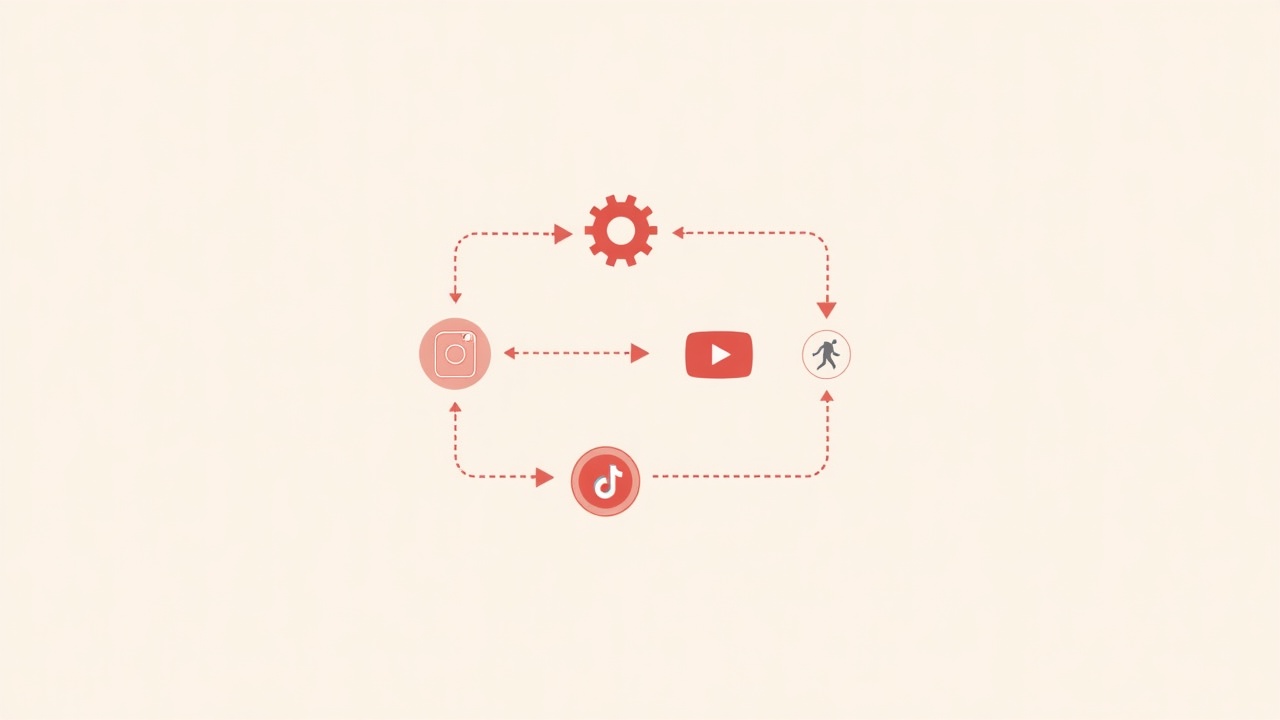
SnapReel AI is the clearest example of Level 3 automation for small product brands. After a 2-minute setup providing your brand information, the system generates and posts branded Reels daily to Instagram, TikTok, and YouTube Shorts.
Level 3 automation delivers the full 10+ hours per week savings because it removes the daily creation requirement completely. The system runs whether you log in or not.
📊 STAT: According to Sprout Social's 2026 State of Social report, small business owners using full automation tools report 83% reduction in weekly social media time compared to 31% reduction for those using scheduling-only tools.
Why Basic Scheduling Does Not Solve the Time Problem
Most small brand founders start with scheduling tools because they are the most established and widely recommended option. The logic seems sound — if posting takes time, automate the posting.
The truth is:
Posting is the smallest part of the social media workload. The real time drains are ideation, creation, and editing. Scheduling automation leaves those time drains completely untouched.
Why do scheduling tools fail to save significant time for small brand founders?
Scheduling tools automate only the final 5-10% of the social media workflow — the actual publishing. The other 90-95% of time spent on planning, creating, editing, and reviewing content remains entirely manual. This is why founders using scheduling tools still report spending 10+ hours weekly on social media.
Consider a typical small brand social media workflow:
- Content planning — 2-3 hours weekly deciding what to post and when
- Content creation — 6-8 hours weekly shooting, writing, designing, or editing
- Review and approval — 1-2 hours weekly checking content before posting
- Actual posting — 30-60 minutes weekly clicking the publish button
Scheduling tools address only that last category. They save you 30-60 minutes per week at best. For founders spending 12 hours on social media, that is less than an 8% reduction.
Now you might be wondering:
If scheduling tools are so limited, why do so many small brands use them?
Two reasons. First, scheduling tools have been around since the early 2010s. They are familiar and widely recommended. Second, until recently, there were no true alternatives. Full automation required enterprise budgets and dedicated social media teams.
⚠️ WARNING: Scheduling tool vendors often market their platforms as "social media automation" without clarifying that they only automate the posting step. Before purchasing any tool, confirm exactly which parts of your workflow it automates. Ask specifically: does this tool create content, or only schedule content I create myself?
Tired of scheduling tools that still require you to create everything?
Create AI-powered videos and auto-post to all your platforms.
SnapReel AI handles content planning, creation, and posting automatically. You set up your brand once, and your social media runs daily without your input.
No credit card required • 2-min setup • 2,000+ small brands already using it
How Full Automation Works for Small Product Brands
Full automation sounds like magic to founders burned by scheduling tools. But the technology behind it is straightforward once you understand the components.
How does autonomous social media automation actually work?
Autonomous automation systems use your brand information, product details, and visual assets to generate content matching your brand voice and aesthetic. They then schedule and post this content automatically based on optimal timing algorithms. The key difference from AI-assisted tools is that no daily prompts or approvals are required.
Here is how the process works with a tool like SnapReel AI:
Step 1: One-Time Brand Setup (2 minutes)
You provide your brand name, product category, brand voice description, and any visual assets like logos or product photos. This is the only time you need to input information.
Step 2: AI Content Planning
The system analyzes your brand information and creates a content calendar. It determines what topics to cover, what formats to use, and when to post for maximum engagement.
Step 3: Automated Content Creation
The AI generates branded video Reels using your product information and brand assets. Each piece of content matches your brand voice and visual style without requiring your creative direction.
Step 4: Auto-Posting
Content posts automatically to Instagram, TikTok, and YouTube Shorts according to the planned schedule. You receive notifications but do not need to approve or manually publish anything.

And it gets better.
Because the system runs autonomously, it posts consistently even during your busiest weeks. Product launches, holidays, personal emergencies — your social media presence remains active without requiring your attention.
This consistency is actually where most small brands see the biggest business impact. Inconsistent posting is the number one reason small brand social media fails. Full automation eliminates inconsistency by removing you as the bottleneck.
- No creative block — the AI always has ideas based on your brand and product information
- No schedule gaps — posting happens whether you remember or not
- No quality variance — every post meets the same brand standard
- No platform switching — content adapts to each platform automatically
💡 PRO TIP: When evaluating full automation tools, check whether they require approval before posting. Some tools call themselves autonomous but still email you for approval on each post. True full automation means content posts without your daily involvement — approvals optional, not required.
Calculating Your Actual Time Savings
The "10 hours per week" headline is based on real data, but your actual savings depend on your current workflow. Here is how to calculate what you will actually save.
How do you calculate time savings from social media automation?
Track your current weekly social media hours across four categories: planning, creating, editing, and posting. Then identify which categories each automation level addresses. Level 1 saves posting time only. Level 2 saves creation and editing time partially. Level 3 saves all four categories almost entirely.
Start by tracking one week of your actual social media work. Use a timer app or simple spreadsheet. Be honest — include the time spent thinking about what to post, not just the time actively creating.
Most founders discover they spend more time than they thought. The mental load of "I need to post something today" counts as social media time even when you are not actively working on it.
What does that mean for your brand?
If you are currently spending 12 hours per week on social media, here is what you can realistically save with each automation level:
| Automation Level | What It Automates | Hours Saved | Hours Remaining |
|---|---|---|---|
| Level 1 (Scheduling) | Posting timing only | 1-2 hours | 10-11 hours |
| Level 2 (AI-Assisted) | Content creation speed | 4-6 hours | 6-8 hours |
| Level 3 (Full Autonomous) | Planning, creation, posting | 10-11 hours | 1-2 hours |
The remaining 1-2 hours with Level 3 automation accounts for occasional brand updates, performance reviews, and strategic decisions. The daily operational work disappears entirely.
📊 STAT: SnapReel AI users report an average of 10.4 hours saved per week in their first month of use, according to internal survey data from 2,000+ small brand accounts collected between January and April 2026.
Ready to calculate your actual time savings with full automation?
Create AI-powered videos and auto-post to all your platforms.
Most SnapReel AI users save 10+ hours weekly because the system handles content planning, creation, and posting automatically after a one-time 2-minute setup.
No credit card required • 2-min setup • 2,000+ small brands already using it
Choosing the Right Automation Level for Your Brand
Not every brand needs Level 3 automation. Some founders genuinely enjoy content creation and only want help with scheduling. Others have team members dedicated to social media who benefit from AI assistance but still want creative control.
How do you know which level of social media automation is right for your brand?
Match your automation level to your primary bottleneck. If you enjoy creating content but hate the logistics, choose Level 1 scheduling. If content creation is slow but you want creative control, choose Level 2 AI assistance. If you want your social media to run without daily involvement, choose Level 3 full automation.
Here is a simple decision framework:
- Choose Level 1 if — you have a content creator on your team or genuinely enjoy creating content yourself. You just need help with consistent posting timing
- Choose Level 2 if — you want to stay involved in creative decisions but need help generating ideas and drafts faster. You are willing to spend 4-6 hours weekly on social media
- Choose Level 3 if — social media is a necessary task, not a passion. You want consistent presence without daily time investment. Your hours are better spent on product and customers
The kicker:
Most small product brand founders fall into the Level 3 category but buy Level 1 or Level 2 tools because they did not know full automation existed. They suffer through months of daily content work before discovering there was another option.
If you started a product brand because you love your product — not because you love creating social media content — Level 3 automation is probably your match.
⚠️ WARNING: Avoid the common mistake of buying Level 2 tools expecting Level 3 results. AI-assisted tools that generate content still require your daily prompts and approvals. If you want truly hands-off social media, confirm the tool operates autonomously before purchasing.
Common Questions About Social Media Automation
Social media automation is technology that handles social media tasks without manual effort for each action. In 2026, automation ranges from basic scheduling that posts content you create, to full autonomous systems that plan, create, and post content without any daily input from you after initial setup.
Time savings depend on the automation level. Basic scheduling saves 1-2 hours weekly. AI-assisted tools save 4-6 hours weekly. Full autonomous automation like SnapReel AI saves 10+ hours weekly by eliminating the daily content creation requirement entirely.
Yes, but only if you choose the right level. Scheduling tools provide limited value because they only automate posting. Full automation tools provide significant value by eliminating daily content work. Calculate your current weekly hours to determine potential ROI before purchasing any tool.
AI-assisted automation speeds up content creation but still requires your daily prompts, reviews, and approvals. Fully autonomous automation operates independently after a one-time setup. The key difference is whether you need to show up daily or not.
In 2026, autonomous AI tools like SnapReel AI generate content that matches or exceeds the quality most small brand founders produce manually. The AI uses your brand information to maintain consistency in voice and visual style. Many brands report better engagement after switching to automation due to improved posting consistency.
SnapReel AI offers the strongest free plan for small product brands seeking full automation. The free forever plan includes autonomous daily posting to Instagram, TikTok, and YouTube Shorts with no credit card required. Most scheduling tools also offer free tiers but require you to create all content yourself.
Your Social Media Does Not Have to Be a Second Job
Small product brand founders started their businesses to sell products they believe in. Not to become full-time content creators posting daily to feed algorithms.
Social media automation in 2026 offers a genuine solution to this problem — but only if you choose the right level. Scheduling tools that only automate posting will not give you your time back. Full autonomous automation that handles planning, creation, and posting will.
The 10+ hours per week you currently spend on social media could go toward product development, customer relationships, or simply having a life outside your business. Full automation makes that possible.
Stop spending 10+ hours weekly on social media content.
Create AI-powered videos and auto-post to all your platforms.
✓ Full automation that plans, creates, and posts without daily input from you
✓ Branded Reels posted daily to Instagram, TikTok, and YouTube Shorts
✓ One-time 2-minute setup — then your social media runs on autopilot
Free forever plan • No credit card • 2-min setup