Why YouTube Is the Most Underrated Platform for Small Brands in 2026 — And How to Start Growing on It Today
SnapReel
May 15, 2026 · 12 min read
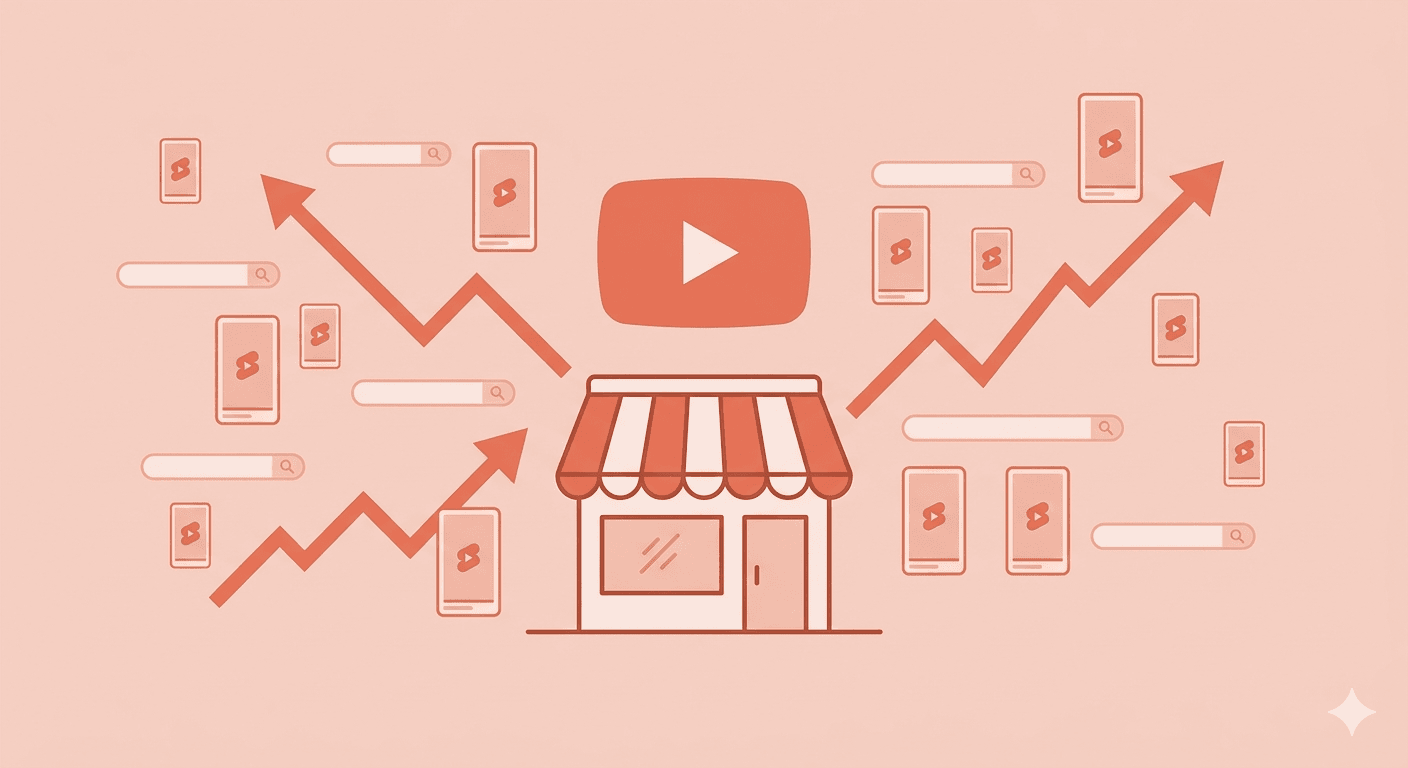
Table of Contents
There is a platform with 2.7 billion monthly active users.
People spend an average of 49 minutes every day on it — more than they spend on Instagram, more than they spend on TikTok.
It is the second largest search engine in the world, processing more queries every day than Bing, Yahoo, and every other search engine combined — second only to Google.
68% of marketing leaders say it drives more business impact than any other social platform.
Views per video grew 76% in a single year.
Comments — the most meaningful engagement signal — increased 38% in 2026 alone.
And yet, if you look at where most small brands are investing their time and content energy in 2026, YouTube barely appears on the list.
Everyone is on Instagram. Everyone is on TikTok. Brands are experimenting with Threads and Bluesky. LinkedIn is having a moment. But YouTube — the platform that reaches nearly a third of the entire global population every single month — is being systematically ignored by the exact brands that stand to benefit from it the most.
This is not a coincidence. It is a misunderstanding. And that misunderstanding is creating one of the clearest content marketing opportunities available to small brands right now.
This guide explains why YouTube works differently from every other platform, why small brands specifically have structural advantages on it that large brands cannot replicate, and exactly how to build a YouTube presence that grows your brand in 2026.
Why YouTube Is Not Just Another Social Platform — And Why That Matters for Small Brands
Every other major social platform is built around the feed.
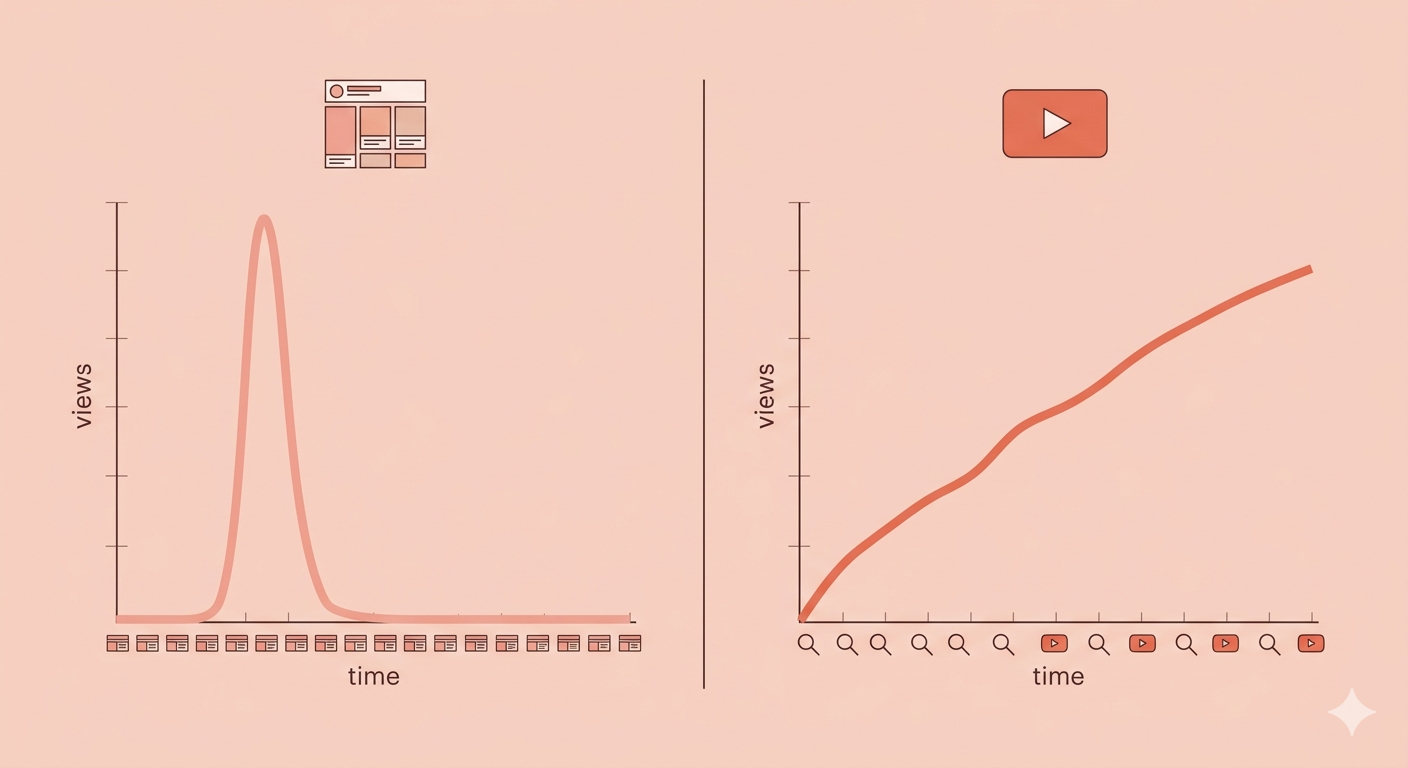
Content appears in a feed. Viewers scroll. If the first second does not grab attention, they keep scrolling. The content disappears into history within hours or days, rarely resurfacing unless paid promotion pushes it back up.
YouTube is built around search.
When someone types a question into YouTube's search bar, they are signaling intent. They want to learn something. They want to solve a problem. They want to make a decision. And the video that answers that question — whether it was uploaded yesterday or three years ago — shows up in search results and keeps bringing in viewers for as long as it remains relevant.
This changes the economics of content creation completely.
On Instagram, a post has a lifespan of 24 to 48 hours before it disappears into the algorithm. On TikTok, a video might go viral immediately or never be seen. Either way, both platforms require continuous posting just to maintain visibility.
On YouTube, a well-optimized video keeps driving organic views for months and years after upload. Small brands that answer the specific questions their customers are searching for build a library of evergreen content assets — each one a permanent entry point into their brand for anyone who searches that topic.
For a small brand with limited content production resources, the math of YouTube is dramatically different from the math of every other platform.
YouTube as a Search Engine — The Opportunity Most Small Brands Have Not Touched
In 2026, 67% of Gen Z users use TikTok as a search engine. The shift toward social search is well documented.
What is less discussed is that YouTube has been a search engine for the past fifteen years — and it is far more powerful for product-related searches than any other platform.
People watch YouTube to learn how products work before they buy. They search for comparisons, reviews, tutorials, and unboxings. They watch a ten-minute video explaining the difference between two products and then make a purchasing decision.
70% of consumers say they have been influenced to make a purchase based on YouTube content.
For a small brand, this means that every video you create answering a question your potential customers are already searching is a sales asset. Not just a piece of content that lives for 48 hours — a permanent asset that drives purchase consideration from viewers who are actively in the decision-making process.
That is a fundamentally different return on content investment than any feed-based platform provides.
The YouTube Barbell Strategy — The Content Framework That Works for Small Brands in 2026
YouTube itself describes the winning content strategy for brands in 2026 as the barbell effect — content that performs best at both extremes of video length, with each format serving a distinct purpose in the growth system.
Understanding this framework is the most important strategic decision a small brand makes before creating a single YouTube video.
The Short End of the Barbell — YouTube Shorts
YouTube Shorts has become something no one predicted three years ago: a genuine competitor to TikTok and Instagram Reels with its own distinct audience behavior.
Shorts now average 200 billion views daily — nearly three times the 70 billion daily views recorded just a year ago. For context, that is more daily views than TikTok generates, on a platform that most brands treat as secondary.
For small brands, YouTube Shorts serves a specific and valuable function in the barbell strategy: discovery.
Shorts reach new audiences who have never heard of your brand. The algorithm distributes them broadly based on topic and interest signals, meaning a channel with zero subscribers can have a Short reach hundreds of thousands of viewers on day one. Shorts convert casual viewers into subscribers — and subscribers are what make the long-form side of the barbell work.
The most effective Shorts for small brands are not standalone pieces of content. They are entry points — quick, high-value clips that introduce a concept, demonstrate a product moment, or answer a common question, and leave the viewer wanting more.
More exists on your long-form channel. The Short is the hook. The long-form video is the conversion.
The Long End of the Barbell — Long-Form Educational Content
Long-form YouTube videos are where trust is built at a depth that no other platform can match.
A ten-minute video explaining how your product works, what problem it solves, and why it is the right choice for a specific customer builds a level of credibility that no amount of short-form content can replicate. Viewers who watch a long-form video through to completion have spent real time with your brand — and that time investment creates a psychological relationship that directly influences purchase decisions.
The categories of long-form content that drive the most consistent results for small brands are: product education and tutorials, comparison and versus videos answering common purchase decision questions, behind-the-scenes brand story content, expert Q&A format addressing your audience's most common concerns, and case study or results videos showing real customer outcomes.
None of these require high production budgets. They require a clear message, a specific question being answered, and enough consistency to let the YouTube algorithm learn your channel's topic authority.
Turn your brand's story into daily YouTube Shorts automatically — no filming
Create AI-powered videos and auto-post to all your platforms.

YouTube SEO — How Small Brands Get Found Without Paying for Ads
YouTube SEO is the single highest-leverage activity for small brands starting on YouTube in 2026 — and it is almost entirely free.
Because YouTube is a search engine, the brands whose videos appear at the top of search results for high-intent queries get organic views continuously, without paying for distribution. Understanding how to optimize for YouTube search is what separates channels that grow from channels that post into silence.
Keyword Research for YouTube — Start With What Your Customers Are Already Searching
The foundation of YouTube SEO is understanding exactly what your potential customers type into YouTube's search bar before they make a purchase decision in your category.
These are not the same as Google search keywords. YouTube queries tend to be more conversational, more question-based, and more video-native. Someone searching for a skincare product on Google might type "best vitamin C serum." On YouTube, the same person searches "how to apply vitamin C serum" or "vitamin C serum before and after results" or "does vitamin C serum actually work."
The difference matters. YouTube rewards content that matches the specific search intent behind a query — not just content that contains the keyword.
Research your YouTube keywords by typing your product category into YouTube's search bar and reading the auto-complete suggestions. These are the exact phrases real people are typing right now. Create videos that answer those specific questions.
Titles, Thumbnails, and Descriptions — The Three SEO Levers
Once you know what your audience is searching for, three elements determine whether your video appears in search results and gets clicked.
Your title should include the primary search query your video answers, positioned naturally within a sentence that makes the video's value clear. Titles that read like clickbait without delivering on the promise destroy watch time, which is the most important ranking signal in YouTube's algorithm.
Your thumbnail is the first visual impression. On YouTube, thumbnails are not just decorative — they are a significant factor in click-through rate, which directly influences how broadly the algorithm distributes your video. High-contrast, clear, emotionally communicative thumbnails consistently outperform busy or generic ones. Test different thumbnail styles and track which drives higher CTR in YouTube Studio.
Your description is where YouTube's algorithm reads the full context of your video. Include the primary keyword naturally in the first two sentences. Write a genuine description of what the video covers — not a keyword list, but a readable paragraph that also signals to the algorithm exactly what topic the video addresses.
Watch Time and Audience Retention — The Metrics That Actually Matter
YouTube's algorithm distributes content based primarily on watch time and audience retention — how much of each video viewers actually watch, and how consistently your channel keeps viewers watching.
This changes the content creation priority significantly compared to other platforms. On Instagram, a visually striking hook is everything. On YouTube, what happens in minutes three through eight of your video matters just as much as the first thirty seconds — because the algorithm is measuring whether viewers are still watching, not just whether they clicked.
Structure your videos with clear value delivery throughout, not just in the opening. Address the specific question your viewer came to have answered. Do not delay the payoff with excessive preamble. And end each video with a clear call to action that tells the viewer exactly what to watch next.
The Small Brand YouTube Advantage — Why You Can Win Against Bigger Competitors
Large brands on YouTube face a specific problem that small brands do not.
Large brands are run by committees. Video content goes through approval processes, legal review, brand guidelines sign-off, and multiple rounds of editing. The result is content that is polished, safe, and almost always generic.
Small brands can post a video of the founder sitting in front of a plain background, speaking directly to the camera about a specific product problem their customers face — and that video, because it is genuine, specific, and useful, will outperform the large brand's produced content on the metrics that matter.
YouTube's algorithm rewards watch time and engagement. Watch time and engagement are driven by relevance and authenticity. And relevance and authenticity are things small brands can deliver that large brands structurally cannot.
A small skincare brand founder who genuinely knows their ingredients and speaks about them with real expertise creates content that a viewer trusts in a way that no large brand's video production team can replicate. That trust converts to subscribers, to purchase consideration, and ultimately to sales.
How to Start Your YouTube Channel as a Small Brand — The 90-Day Launch Plan
Starting a YouTube channel feels overwhelming until it is broken into a specific sequence.
Days 1 to 10 — Research and Setup
Spend the first ten days not creating any content. Instead, research your competitors on YouTube. Find the five channels your target audience is already watching. Identify which videos on those channels have the most views and the most comments. The comment sections are where your content strategy lives — read what questions people are asking, what they wish the video had covered, and what follow-up content they are requesting.
Set up your channel with a clear channel name, a banner that communicates your brand identity, a channel description that includes your primary keywords, and a channel trailer that explains exactly who the channel is for and what they will get from subscribing.
Days 11 to 30 — First Content Batch
Create your first five videos before publishing any of them. This batch-creation approach means your channel already has a library for new visitors to explore when you publish your first video — which dramatically increases subscriber conversion rate compared to launching with a single video.
Your first five videos should each answer a specific high-intent search query in your category. No brand story videos. No introduction videos. Start with the questions your potential customers are already searching for, and answer them completely.
Days 31 to 90 — Publish, Optimize, and Iterate
Publish two videos per week for the first 60 days. After each video, check YouTube Studio's analytics for audience retention — the exact moment viewers stop watching. That drop-off point tells you exactly where your content is losing people, which is where your next video's structure should improve.
At the 90-day mark, review which videos generated the most watch time, the most subscribers, and the most external traffic to your website. Double down on the topics and formats that performed best. The algorithm learns your channel's authority through consistency and watch time accumulation — 90 days of consistent, search-optimized publishing is typically enough to see clear ranking patterns emerge.
SnapReel AI generates the short-form video content that feeds your YouTube Shorts strategy automatically — so while your long-form videos build search authority and deep audience trust, your Shorts channel runs consistently without requiring additional production time, creating the complete barbell content system that drives YouTube growth on both ends simultaneously.