What Are AI Influencers — And Should Your Small Brand Work With One in 2026?
SnapReel
May 15, 2026 · 10 min read
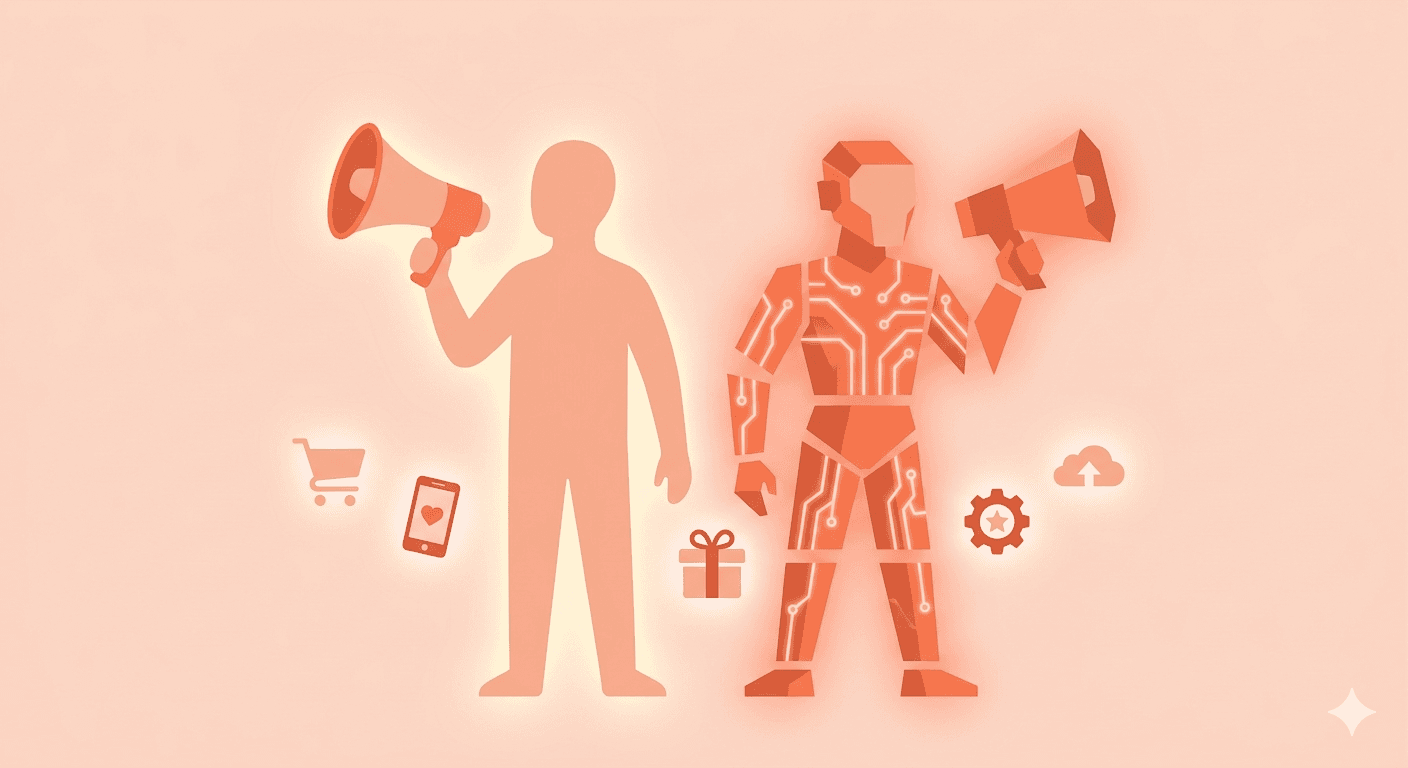
Table of Contents
Influencer marketing has a problem that every brand who has used it knows well.
You find a creator who looks perfect for your brand. The audience size is right. The niche is aligned. The aesthetic matches. You agree on terms, send the product, and then wait.
Sometimes the post comes on time and performs exactly as expected. But sometimes the post comes three weeks late. Sometimes the creator's personal life spills into their feed and your product appears next to content you would never want your brand associated with. Sometimes they post once, take the fee, and disappear.
Human influencers are human. They have bad days. They have opinions. They have controversies. And when their controversy becomes your brand's problem, there is very little you can do about it.
In 2026, a growing number of brands — from major enterprises to small independent labels — are exploring a completely different model: AI influencers. Computer-generated digital personalities that post content, engage with audiences, partner with brands, and produce results, without any of the unpredictability that comes with working with real people.
The numbers are no longer small or speculative. The global virtual influencer market reached 8.3 billion dollars in 2025 and is projected to reach 154.6 billion dollars by 2032. CMOs across the industry are planning to allocate 30% of their influencer budgets to virtual creators by 2026. And AI influencers are currently generating engagement rates averaging 5.67% — compared to 1.89% for human influencers of equivalent following size.
But 46% of consumers still say they are uncomfortable with AI-powered brand promotion.
That tension — between the undeniable efficiency of virtual influencers and the persistent consumer discomfort with them — is exactly what this guide is designed to help you navigate. By the end, you will know what AI influencers actually are, what the real tradeoffs look like, and whether they belong in your small brand's marketing strategy in 2026.
What Are AI Influencers — And How Do They Actually Work
AI influencers, also called virtual influencers or synthetic influencers, are computer-generated characters that exist entirely on social media. They have names, personalities, backstories, aesthetics, and content schedules. They post photos, videos, and stories. They engage with followers. They partner with brands. And they are 100% artificial.
Some are built with photorealistic CGI that makes them visually indistinguishable from real people. Others are stylized digital characters with an obviously illustrated aesthetic. Some represent entirely fictional personas created from scratch. Others are AI avatars based on real creators or brand mascots, used to extend a human personality's reach without requiring that person to be on camera continuously.
The technology behind them combines several AI systems working together. Generative AI produces the visual content — images, video clips, stylized posts. Natural language processing handles the captions, comments, and replies. Machine learning optimizes posting schedules and content formats based on engagement data. And a human team — usually designers, strategists, and writers — manages the overall brand direction and ensures the character stays on-brand and relevant.
The Most Famous AI Influencers and What They Have Achieved
The most well-known virtual influencer is Lil Miquela, a CGI character who has partnered with Calvin Klein, Prada, and Samsung, with millions of followers across platforms.
Lu do Magalu, the virtual brand ambassador for Brazilian retail giant Magazine Luiza, has over 30 million followers across platforms and is one of the most followed virtual personalities in the world.
Imma, a Japanese virtual influencer with a distinct pink bob hairstyle, has partnered with IKEA, Valentino, and Porsche — brands that specifically chose a virtual persona for control over brand messaging and aesthetic consistency.
These are enterprise-level examples. But the cost of creating a brand-ready virtual influencer has dropped dramatically. In 2022, creating a fully operational virtual influencer cost approximately 380,000 dollars. In early 2026, due to advances in generative AI tools, that cost has dropped to approximately 28,000 dollars — and working with an existing virtual influencer's agency for a campaign partnership costs significantly less than that.

The Real Advantages of AI Influencers — What the Data Actually Shows
Before deciding whether AI influencers are right for your brand, understanding what they genuinely offer versus what is marketing hype is essential.
Advantage 1 — Engagement Rates That Outperform Human Influencers
The engagement data on virtual influencers is striking and consistent across multiple research sources.
AI influencers generate engagement rates of 5.67% on average, compared to 1.89% for human influencers of equivalent following size. That is a 3x engagement advantage — and it is largely driven by novelty, the uncanny quality that makes followers interact with AI characters out of curiosity, and the consistent aesthetic quality of AI-generated content that the algorithm rewards.
For brands running awareness campaigns where engagement rate is the primary metric, this advantage is real and significant.
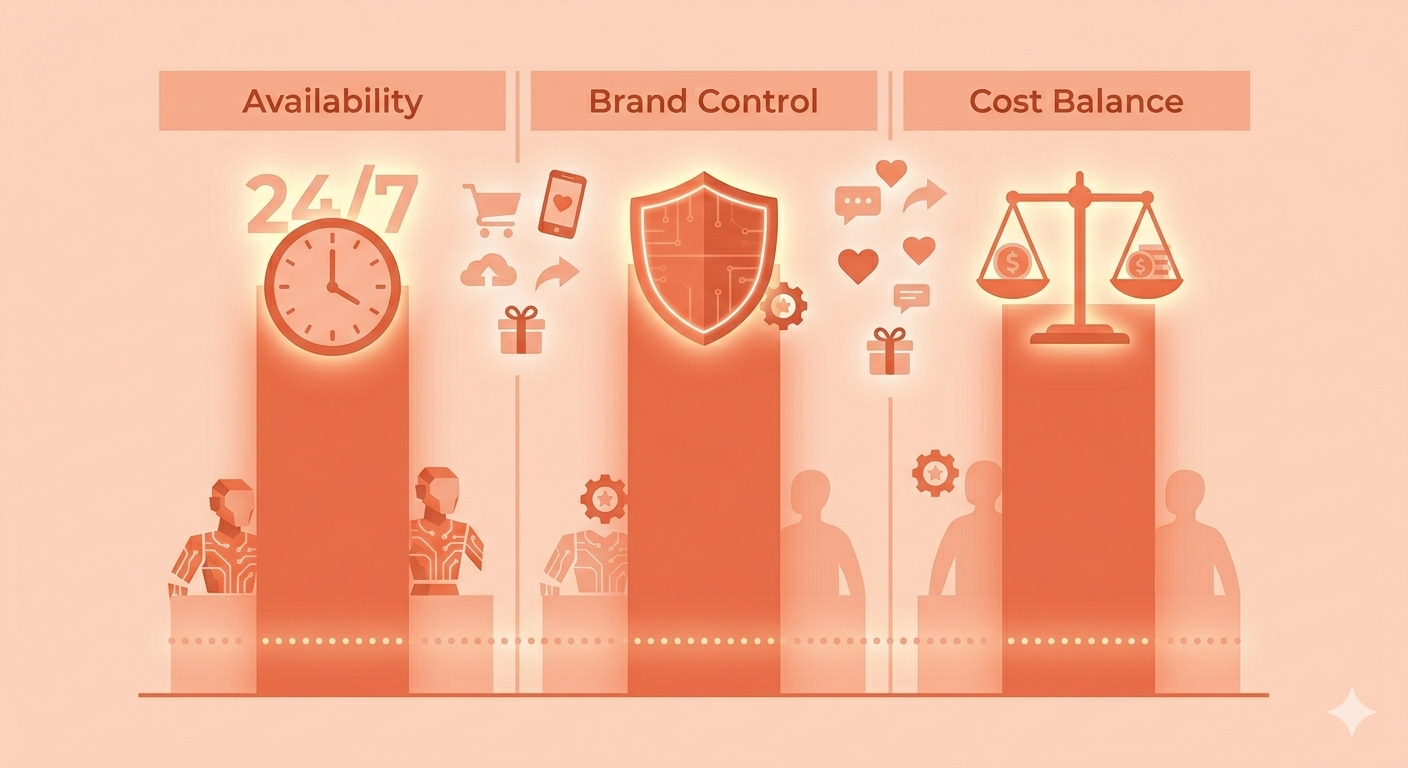
Advantage 2 — Complete Brand Control at All Times
With a human influencer, you have limited control over what appears on their feed before and after your sponsored post. Their personal content, their opinions, and their life events all appear in the same space as your brand partnership — and any of those things can become a problem.
With an AI influencer, every single piece of content that character posts is produced and approved. There is no off-brand content. There is no controversy risk. There is no 3am tweet you have to issue a statement about. The character says exactly what you want, in exactly the tone you want, in exactly the aesthetic you want, every time.
For brands in regulated categories — healthcare, financial products, children's goods — this level of control is not just convenient, it is legally significant.
Advantage 3 — Availability, Scalability, and Cost
A human influencer can post on one platform at a time, in one language, in one location. An AI influencer can be deployed simultaneously across multiple platforms, in multiple languages, in multiple markets, without any additional coordination cost.
The cost per post for a human influencer in a given follower tier increases with each campaign. The cost structure for an AI influencer is essentially fixed once the character is created — additional campaigns cost a fraction of the initial build.
For brands running high-volume content strategies across multiple markets, this scalability changes the economics of influencer marketing entirely.
You don't need an AI influencer — SnapReel makes your own brand the content creator.
Create AI-powered videos and auto-post to all your platforms.
The Real Disadvantages — The Honest Tradeoffs Every Small Brand Must Consider
The advantages of AI influencers are real. So are the disadvantages. And for small brands specifically, the disadvantages carry more weight than they do for large enterprises.
Disadvantage 1 — Consumer Discomfort Is Still Significant
46% of consumers say they are uncomfortable with brands using AI influencers. That is nearly half your potential audience actively experiencing a negative reaction to the format.
For large brands with massive budgets and established brand equity, that 46% is a manageable risk — the awareness gains from the 54% who are comfortable offset the friction with those who are not.
For a small brand still building trust, alienating nearly half your potential audience with your influencer format is a meaningful risk. Trust is the most valuable asset a small brand has, and the format of your influencer marketing directly affects how your brand is perceived.
Disadvantage 2 — Authenticity Is the Core Currency of Small Brand Marketing
The reason small brands can compete with large brands on social media is authenticity. A small brand founder talking directly to their community, sharing the real story of their product, and engaging genuinely with their customers creates a relationship that no large brand can replicate at scale.
AI influencers are, by definition, the opposite of authentic. They are synthetic. They are controlled. They are produced.
For brands whose competitive advantage is realness — the founder story, the human touch, the behind-the-scenes access — layering a virtual influencer into that strategy can create a dissonance that confuses the audience and dilutes the core brand message.
Disadvantage 3 — FTC Disclosure Requirements Are Now Mandatory
In 2026, the FTC requires clear disclosure when brands use AI influencers in promotional content. This means every piece of content featuring a virtual influencer must be labeled as AI-generated — which directly reduces the organic, native feel that makes influencer marketing effective in the first place.
When a viewer sees a disclosure that the influencer promoting a product is AI-generated, the implicit trust that influencer marketing relies on is disrupted. The format that works because it feels like a genuine recommendation becomes visibly branded content the moment the disclosure appears.
So Should Your Small Brand Work With an AI Influencer in 2026?
The answer depends entirely on what you are trying to achieve and where your brand currently is.
AI influencers make sense for your small brand if:
You are running awareness campaigns where engagement rate and content volume matter more than deep trust-building. Your product category is one where novelty and visual consistency are valuable — tech accessories, fashion items with strong aesthetic identity, lifestyle products with a futuristic angle. You are testing entry into a new market or language where a virtual personality can be localized more cheaply than hiring market-specific human creators. You have already established strong brand trust through other channels and are adding AI influencer content as one layer of a broader strategy, not your primary trust-building tool.
AI influencers do not make sense for your small brand if:
Your brand's entire competitive advantage is authenticity, human connection, and founder story. Your audience skews toward demographics most uncomfortable with AI — consumers 35 and older who specifically seek out brands that feel human. Your budget is better spent on micro-influencer partnerships that build deeper trust with smaller, highly engaged audiences. You are in a category — food, wellness, parenting — where consumer trust is paramount and any perception of inauthenticity creates lasting damage.
For most small brands in 2026, the honest answer is that AI influencers are worth understanding and watching, but human micro-influencer partnerships still deliver better ROI on the trust-building investment that small brands need most.
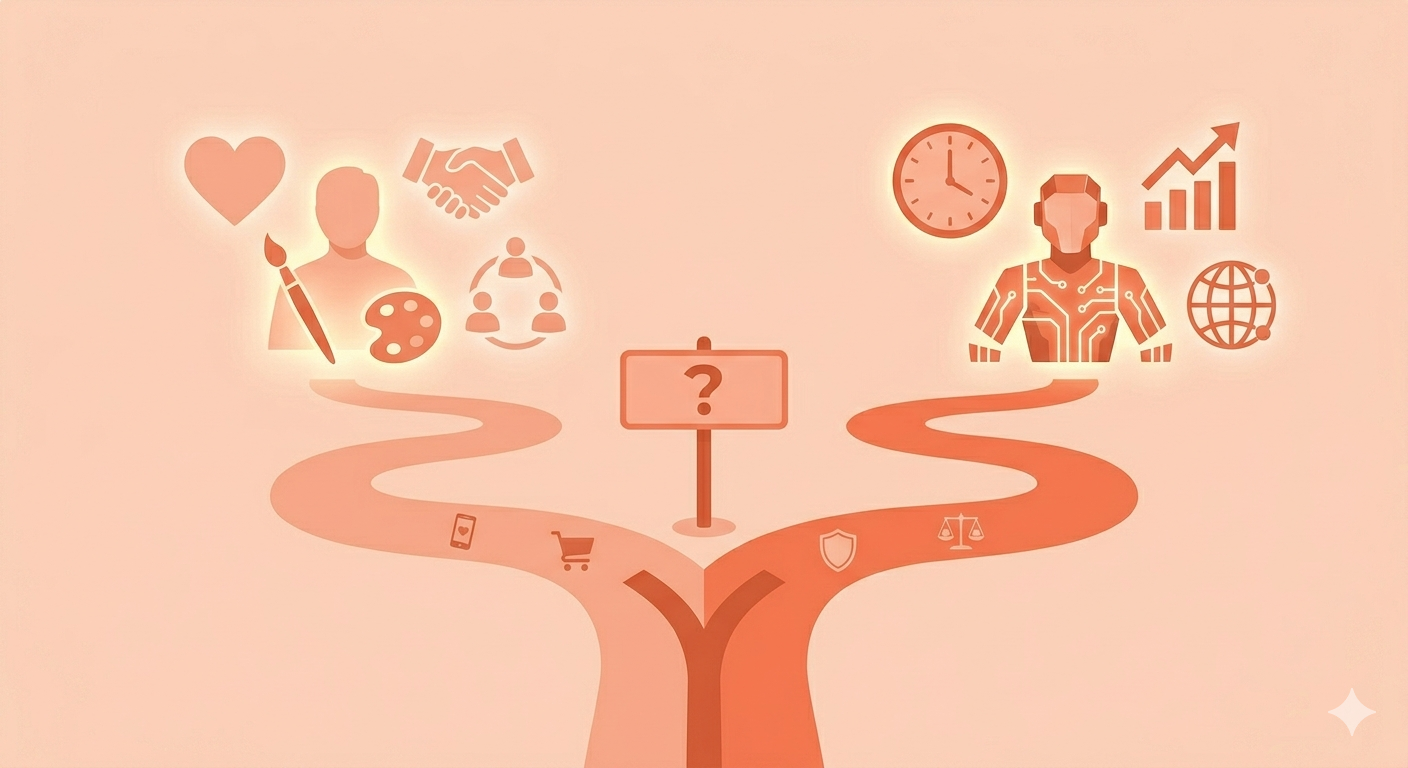
The Middle Path — How Smart Small Brands Are Using AI and Human Influencers Together
The most sophisticated small brand influencer strategies in 2026 are not choosing between AI and human influencers. They are using both for different purposes within the same overall strategy.
Human micro-influencers handle the trust layer — genuine product reviews, authentic usage content, community recommendations that feel like a friend's advice. These partnerships build the credibility that converts skeptical buyers.
AI-generated content handles the volume and consistency layer — branded content that maintains aesthetic standards across platforms, product showcase content that can be produced and adapted quickly, and campaign content that requires a level of visual polish that human-created content rarely achieves at small brand budgets.
When both layers work together, brands get the authenticity signal that human creators provide and the content efficiency that AI production enables — without betting the entire brand perception on either approach alone.
SnapReel AI powers the content consistency layer of this strategy — producing high-quality video content for your brand automatically across platforms, so your human creator partnerships can focus entirely on the authentic storytelling that builds trust, while your brand's social presence stays active, polished, and consistent in between.