Why Founder-Led Content Is the Most Powerful Marketing Strategy for Small Brands in 2026
SnapReel
May 20, 2026 · 15 min read

Table of Contents
There is a version of marketing that most small brand owners know well. Schedule the posts. Write the captions. Choose the hashtags. Post consistently from the brand account. Hope the algorithm picks it up. Watch the reach numbers come back modest. Wonder why it is not working harder.
And then there is a different version — the one that is quietly producing outsized results for the small brands growing fastest in 2026. It does not come from the brand account. It comes from the founder. From the person who built the product, knows it better than anyone, and has a genuine story to tell about why it exists and who it is for.
Founder-led marketing is a strategic approach where the founder's personal brand becomes the primary growth engine, driving awareness, trust, and conversions. At its core, it leverages the most powerful element missing from corporate content: human authenticity. When users connect with a real person behind a product, they are not just buying — they are joining a mission led by someone they know and trust. Vocal Media
The data in 2026 is unambiguous on this. According to analysis of over 1,200 ad campaigns in 2025 and 2026, founder-led creative outperforms traditional brand content by an average of 2.7 times on key metrics including click-through rate, engagement, and conversion rate. Research shows 82% of customers trust companies whose leadership engages on social channels, while founder-led content generates 46% higher engagement than brand channel content. LOOM Brand DesignsThe Social Cat
These numbers are not describing a trend. They are describing a structural shift in how audiences make decisions. People trust people. They tune out brands. And for small brands — which have always had a genuine human at the center of the story — founder-led content is the single most efficient marketing strategy available. You already have the asset. You just need a system for using it.
Why Brand Accounts Are Losing the Attention War
To understand why founder-led content works, you need to understand what brand accounts are competing against and consistently losing to.
The collective LinkedIn networks of employees are on average ten times larger than their company's follower base, and employee content receives eight times more engagement than brand channel content. For early-stage companies, this difference is even more pronounced — companies with years of brand equity built up are the only corporate accounts that get significant engagement. For newer companies, company accounts alone are not going to cut it. Vocal Media
The reason is psychological. A brand account posts from a logo. A founder posts from a face, a voice, a perspective, and a story. Audiences scrolling their feeds are not looking for brand announcements. They are looking for people — for opinions, for stories, for the kind of honest perspective that feels like it comes from a real human being rather than a content calendar.
Consumers in 2026 care more about who they buy from, not just what they buy. Brand transparency — sharing how products are made, who is behind the company, what the business actually stands for — drives purchase intent in ways that polished brand messaging does not. Behind-the-scenes content performs dramatically better than ad-style content, and founders and team members building personal brands feed directly into the company brand. Engage Coders
For a small brand, this is not a disadvantage to overcome. It is an advantage to use. You are not a faceless corporation. You are a person who built something. That is exactly the story audiences in 2026 are most ready to trust.
What Founder-Led Content Actually Looks Like
Founder-led content is not one format. It is a category of content that shares a common characteristic — it comes from the founder's genuine perspective, expertise, and experience, and it sounds like a real person rather than a marketing department.
The formats that work best for small brand founders in 2026 fall into five types.
Behind-the-Business Content This is the most accessible entry point for most founders. What happened this week in the business — a product decision, a customer conversation, a challenge you navigated, a mistake you made and what you learned from it. Behind-the-business content works because it is inherently specific and therefore inherently trustworthy. Generic brand content can be produced by anyone. Content about a specific Tuesday when a supplier shipment arrived damaged and you had to call thirty customers to delay their orders — only one person can write that.
Expertise and Education Content Every founder knows things about their category that their customers do not. A skincare brand founder knows more about ingredients, formulations, and skin biology than most of their customers will ever learn. A food brand founder knows more about sourcing, production, and flavor development than their audience. Sharing that knowledge in the form of accessible, genuinely useful content builds authority that no amount of promotional posting can match. Nearly 40% of Gen Z users now use platforms like TikTok and LinkedIn as primary search tools — which shifts niche authority to becoming more important than broad visibility. When your target audience searches for answers about your category, you want your founder content to be what they find. ALM Corp
Point of View and Opinion Content Having a clear perspective on your category — and being willing to express it publicly — is one of the most powerful things a founder can do on social media. It is also one of the rarest. Most brand accounts avoid opinions entirely in an attempt to be broadly appealing. Founder content that takes a genuine stand — this is what we believe, this is what we disagree with, this is why we made the product the way we made it — creates the kind of strong connection with the right audience that no amount of neutral content ever builds.
Customer Story Content Founders sharing real customer stories in their own voice — with context, with genuine enthusiasm, with the specific detail that makes the story credible — outperforms any testimonial format a brand account can produce. When the founder tells the story, it carries the weight of personal recommendation rather than brand marketing.
Building-in-Public Content Sharing the journey of building the business — the milestones, the struggles, the behind-the-scenes decisions, the numbers when you are comfortable sharing them — creates an audience that feels genuinely invested in the brand's success. Chris Walker generates ten million dollars a year in revenue from his LinkedIn content. Peter Caputa gets hundreds of sign-ups a month from his building-in-public LinkedIn posts. Both are doing nothing more sophisticated than sharing genuine insights from building their businesses. Orange MonkE

The System — How to Build Founder Content Without Burning Out
The single biggest reason founders do not sustain a content strategy is not lack of ideas or lack of skill. It is lack of a system. Posting from scratch every day is exhausting and unsustainable. Posting from a system — where ideas are captured continuously, content is created in batches, and the format is familiar enough to require minimal decision-making — is manageable even for a founder running a small brand with no dedicated marketing team.
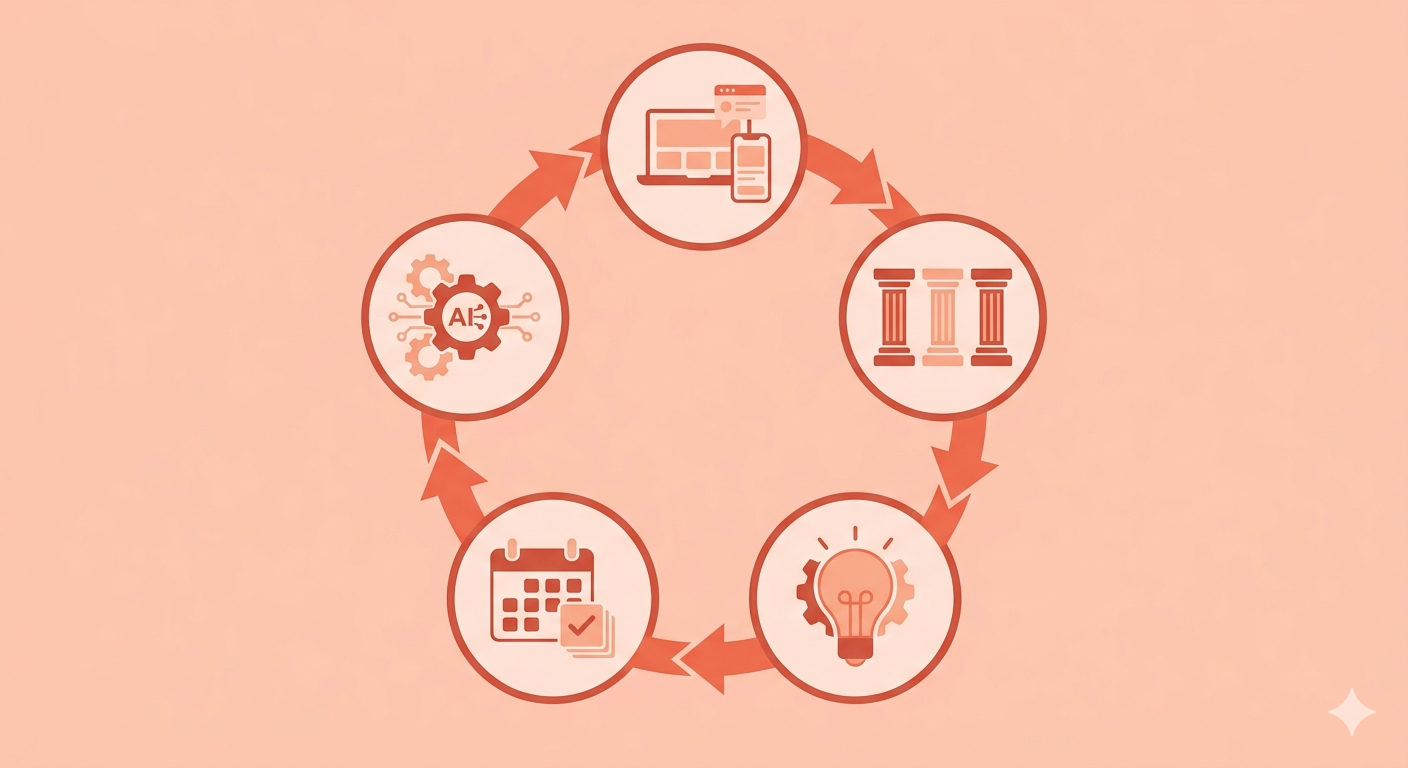
Here is the minimal viable founder content system for 2026.
Step One — Choose One Primary Platform
Trying to be everywhere simultaneously is what makes founder content feel overwhelming and unsustainable. Choose one platform where your target audience is most active and commit to it as your primary focus for the first six months. For most small product brands, this is either TikTok or Instagram. For service-based brands or B2B-adjacent brands, LinkedIn is often the highest-return platform for founder content. Master one before expanding to others.
Step Two — Define Three Content Pillars
Your three content pillars are the recurring themes your founder content will orbit. They should be specific enough to create a recognizable content identity and broad enough to generate ideas consistently. A sustainable fashion brand founder might define their pillars as: the truth about sustainable production, building a brand with no investors, and what I am learning about conscious business. Every piece of content you create fits into one of these three categories. This constraint eliminates the blank-page problem and creates the kind of thematic consistency that builds audience over time.
Step Three — Capture Ideas Continuously
The ideas for founder content are everywhere — in customer conversations, in supplier relationships, in the decisions you make every week, in the questions your customers ask most frequently, in the industry conversations you participate in. The problem is not that ideas do not exist. The problem is that they are not captured before they disappear. Keep a simple running list — a notes app, a voice memo folder, a shared document — where you capture content ideas as they occur throughout the week. A single weekly habit of reviewing your customer messages and noting the three most interesting questions or reactions is enough to generate a month of content ideas.
Step Four — Batch Your Content Creation
Founders who post consistently see significantly higher engagement — consistent creators can get up to two to three times more reach than sporadic ones. Structure is what makes that consistency sustainable. Instead of posting randomly, define a few clear content pillars and build around them in batches. This reduces decision fatigue and ensures your messaging compounds over time rather than resetting with every post. ALM Corp
A practical batching cadence for a small brand founder: one hour per week dedicated to content creation, producing three to four pieces of content from the week's captured ideas. This is enough to maintain a consistent presence on one platform without the daily pressure of deciding what to create and creating it from scratch.
Step Five — Use AI to Accelerate Without Replacing Your Voice
AI tools are now standard in content production. For founder content, the correct application is using AI to expand and polish your raw ideas — not to generate content from scratch. A founder's authentic insight expressed imperfectly is more valuable than a polished AI-written post with no genuine perspective behind it. Use AI to help structure an idea, improve a caption's clarity, or generate a post from a voice memo you recorded while thinking out loud. Always edit the output back into your natural voice before publishing.
What to Actually Post — Practical Content Ideas for Small Brand Founders
The framework is only useful if it produces actual content. Here are specific, immediately usable content ideas for small brand founders across the five content types — ideas that require no special equipment, no professional skills, and no more than thirty minutes to produce.
Behind-the-Business — The decision behind your most recent product change and why you made it — What a typical Tuesday looks like when you are running a small brand with a small team — The supplier relationship you almost lost and what you did to save it — What you would do differently if you were starting the brand today — The customer complaint that changed how you think about your product
Expertise and Education — The one ingredient your customers always ask about — and the honest answer — Three things most people in your category get wrong — What you know about your product category that most consumers do not — How to read a label, understand a specification, or evaluate quality in your category — The question your customers ask most, answered in full
Point of View — Why you disagree with a common practice in your industry — What the big brands in your category get wrong that you are trying to fix — Why you made a business decision that was counterintuitive — What sustainability, quality, or authenticity actually means to you — specifically, not generally — The trend in your category you think is overhyped
Customer Stories — The customer whose use of your product surprised you — The message from a customer that reminded you why you built the brand — A before-and-after from a specific customer, told in detail — The customer who came back after being skeptical — what changed their mind
Building in Public — This month's numbers and what they mean — The hardest thing about running this business right now — The experiment you are running and what you are hoping to learn — The thing you got wrong last quarter and what you changed
Amplify your founder voice with AI-generated branded content that runs while you focus on building.
Create AI-powered videos and auto-post to all your platforms.
The Compounding Effect — Why Consistency Beats Virality
The most important thing to understand about founder-led content is that it does not work through viral moments. It works through accumulation. Each piece of content you publish adds to an audience's understanding of who you are, what you know, and why your brand exists. After ten posts, you are an unfamiliar voice. After fifty posts, you are a recognizable one. After a hundred posts, you are a trusted authority in your category.
The compounding effect of founder content is what makes this strategy so powerful — when a founder posts about their insights, they are not just reaching their followers. They are reaching their followers' followers when those followers share and comment. They are building brand credibility with every insight. They are establishing trust that converts into trials, which convert into revenue. Whyoptimize
This compounding only happens with consistency. One post per week for a year produces fifty-two pieces of content and a genuine audience relationship. One post per day for two weeks and then nothing produces neither. The founder content system exists specifically to make the former possible without the latter becoming the path of least resistance.
The brands with the strongest founder content presence in 2026 started two or three years ago and posted through the periods when it felt like nobody was watching. Because somebody always was — and the accumulated trust of those early posts is now producing results that no late-starting competitor can replicate quickly.

Common Mistakes Founders Make — And How to Avoid Them
Understanding what goes wrong helps avoid the traps that derail most founder content strategies before they compound.
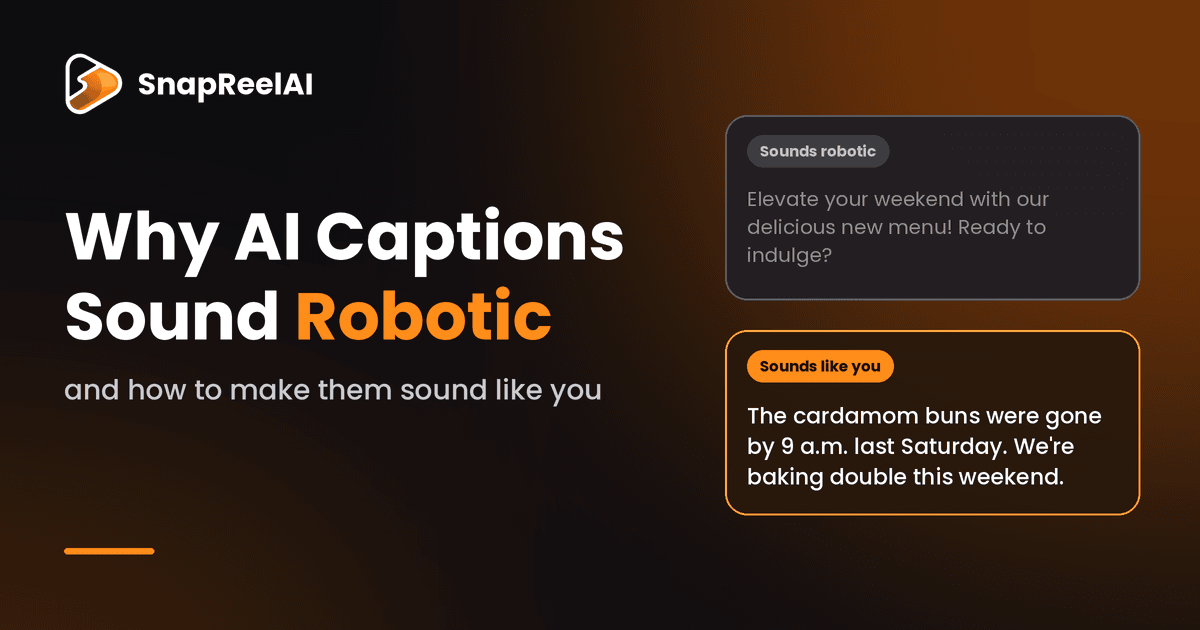
Trying to sound like a brand instead of a person. The moment a founder starts writing captions that sound like they came from a marketing department — polished, formal, benefit-focused, and impersonal — the content loses the quality that makes it valuable. The whole point of founder content is that it sounds like a specific human being. Write the way you talk. Share the things you actually think. Use your natural vocabulary, not marketing language.
Waiting until the business is more successful to share the journey. The most compelling founder content often comes from the early, uncertain, difficult stages of building. The struggles are what create genuine connection. The vulnerability is what builds trust. Waiting until everything is going well to start sharing means missing the content that audiences find most relatable and most worth following.
Posting sporadically and abandoning the strategy after a slow start. Founder content compounds slowly at first and then faster. The early weeks of posting to a small audience with modest engagement are not evidence that the strategy does not work — they are the necessary foundation of what comes later. The brands that abandon founder content after thirty days never reach the inflection point where the accumulated trust starts converting at scale.
Treating it as pure promotion. Founder content that is primarily about promoting products performs significantly worse than content that is primarily about sharing genuine knowledge, perspective, and story — and then naturally connecting that to the brand. The ratio that works is roughly eighty percent value and perspective, twenty percent direct reference to the product or brand. When the value content is strong enough, the audience seeks out the product. The product does not need to be the focus of every post.
Losing consistency when the business gets busy. This is the most common failure point. The brand has momentum, the founder gets busy, the posting slows and then stops, and the audience relationship that took months to build starts to erode within weeks. The batching system exists to prevent this. When content is created in advance during quieter periods, it can be published during busier ones without requiring the founder to stop and create something from scratch under pressure.
Starting Today — The First Week Action Plan
If you have never posted as a founder before, the psychological barrier is often higher than the practical one. Here is the minimum viable first week.
Day one: write down ten things you know about your product category that most of your customers do not. This is your expertise content idea bank.
Day two: write down the five most common questions your customers ask. Each is a content idea.
Day three: write a two-paragraph post about why you started the brand. Not the polished version — the real one. Post it.
Day four: film a sixty-second video answering the question your customers ask most. No script. Just answer it the way you would answer it if a customer called you on the phone. Post it.
Day five: note one thing that happened in the business this week that was interesting, surprising, or challenging. Write about it in two paragraphs. Post it.
You now have three pieces of founder content published and a framework for producing more. That is the beginning of the compounding curve.
SnapReel AI helps small brand founders turn their raw ideas, voice memos, and behind-the-scenes moments into fully produced social media content automatically — so your founder story shows up consistently across every platform without requiring you to spend hours on production every week.