How the New User-Controlled Instagram Algorithm Changes Everything for Small Brands — And What to Do About It
SnapReel
May 19, 2026 · 13 min read
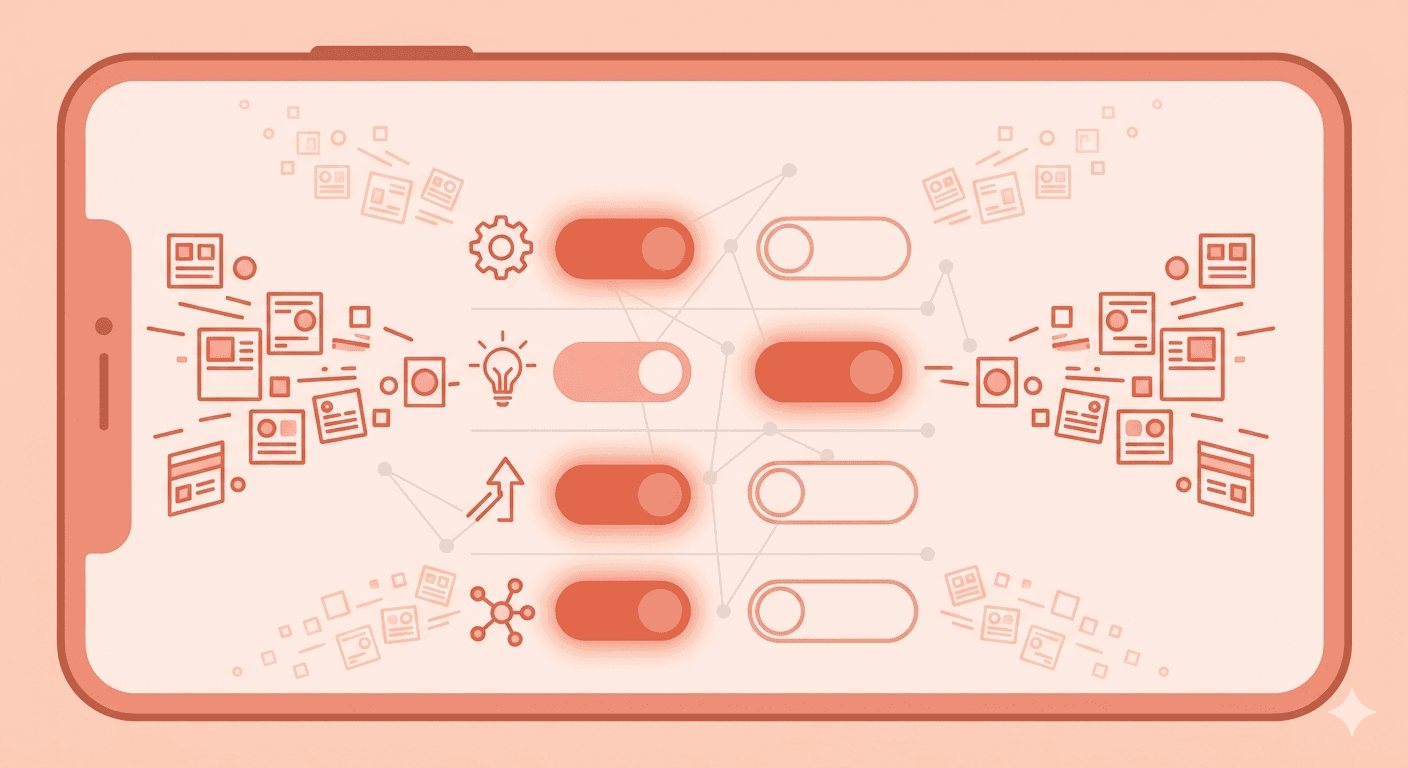
Table of Contents
In December 2025, Instagram quietly rolled out one of the most significant changes to how its recommendation system works in years. By early 2026, it was live globally for every user on the platform. And the majority of small brands posting on Instagram every day have no idea it happened — or what it means for their reach.
The feature is called "Your Algorithm." It gives every Instagram user a personal control panel — accessible through Settings and Content Preferences — that shows them the topics Instagram believes they are interested in. Users can add topics they want to see more of. And more importantly, they can actively remove topics they never want to see again.
The algorithm used to work entirely on inferred behavior — what you watched, scrolled past, liked, and saved. Instagram made its best guess about your interests and served content accordingly. Now users are directly telling Instagram what they want. And when a user removes a topic category from their preferences, every piece of content that Instagram classifies under that category becomes invisible to them — regardless of how well it performs on other signals.
For small brands, this is a fundamental shift in how Instagram discovery works. Broad, unfocused posting has always been a weak strategy. In 2026, it is a survival risk. If Instagram cannot clearly classify your content into a recognizable topic category — or if the people most likely to buy from you have removed that category from their preferences — your content gets filtered out before it ever reaches them.
This guide explains exactly what changed, why it matters more than most brands realize, and what to do about it — in practical terms, starting today.
What "Your Algorithm" Actually Does — And Why It Changes the Rules
To understand why this update matters so much, you need to understand how Instagram's recommendation system worked before versus how it works now.
Previously, Instagram's algorithm inferred your interests entirely from passive signals — your watch history, your likes, how long you paused on different content, what you searched, who you followed. You had no direct control over what you were shown. If Instagram guessed wrong about your interests, you were stuck seeing content that was not relevant to you — and brands whose content Instagram was correctly showing you could still disappear from your feed if you started engaging with different content.
"Your Algorithm" adds a direct feedback layer on top of all those passive signals. Users now see the topic categories Instagram has associated with their interests, and they can edit those categories explicitly. They can tell Instagram: show me more of this. Show me less of this. Never show me this category again.
The "Your Algorithm" feature has also been expanded from Reels to Explore, which means the topic-filtering now applies across both discovery surfaces — the two places where small brands are most likely to reach people who do not already follow them.
What this means for content strategy is significant. Instagram is now combining its traditional passive inference system with active user declarations. When someone explicitly removes a topic category, that declaration carries more weight than any passive signal. A user who says they never want to see fitness content is not going to see your fitness brand posts in Explore or Reels — no matter how good your hook is, no matter how high your watch time, no matter how many shares you get.
Niche clarity has moved from being a growth strategy to being a distribution requirement. If Instagram cannot confidently categorize your content, it cannot reliably surface it to the people who have declared interest in that category. And if it cannot surface it, you are effectively invisible in the discovery surfaces where small brands do their most important audience building.
The Audition System — How Discovery Actually Works Now
Alongside the "Your Algorithm" update, Instagram head Adam Mosseri has publicly confirmed the mechanics of how content gets distributed in 2026 — and it reinforces why the first few seconds of every piece of content are now more consequential than ever before.
Instagram uses what Mosseri describes as an "audition system" for public content. When you post, Instagram first shows your content to a small test group of non-followers. This is the audition. If that initial test group engages well — watching fully, sharing, saving, rewatching — Instagram moves your content to a progressively wider audience. If the initial test group scrolls away quickly, the content gets throttled. It may not even reach your own followers in full distribution.
The first two to three seconds of every Reel now determine whether the content gets seen at all — not just how far it travels. A hook that fails to stop the scroll in the audition phase kills the entire distribution opportunity before it has a chance to compound.
This audition system interacts directly with "Your Algorithm" in a critical way. Instagram is auditioning your content to a test group whose preferences have been shaped by both passive signals and explicit topic declarations. If your content is not clearly legible as belonging to a specific category — if it looks like a fitness post one day and a lifestyle post another and a business motivation post a third day — Instagram struggles to identify the right test group for each piece. A muddled content identity produces muddled audition results, which means throttled distribution across the board.
The brands that are growing fastest on Instagram in 2026 are not the ones posting the most. They are the ones with the clearest topical identity — because the algorithm can accurately match their content to the users who have declared interest in that topic.

What This Means for Small Brand Content Strategy — The Four Shifts
The "Your Algorithm" update and the audition system together require four specific shifts in how small brands approach Instagram content in 2026.
Shift One — From Mixed Content to Clear Topical Identity
The most important change is the most uncomfortable one for brands that have built their Instagram presence around variety. Posting a mix of product content, lifestyle content, humor content, behind-the-scenes content, and motivational content without a clear topical thread is a distribution liability in 2026.
Instagram needs to be able to classify your account and your content into topic categories with confidence. The clearer your topical focus, the more accurately it can match your content to users who have declared interest in that topic, and the more reliably your content reaches the right people at the audition stage.
This does not mean your content needs to be monotonous. It means it needs to be recognizably about something specific. A sustainable skincare brand posts about skin health, clean ingredients, sustainable living, and conscious consumption — all different topics, all clearly part of the same identifiable content universe. A small food brand posts about home cooking, seasonal ingredients, meal prep, and food culture — variety within a clear category. The through-line is what matters.
Shift Two — From Passive Keyword Hope to Active Content Metadata
In 2026, Instagram functions as much as a search and classification engine as a social feed. The words in your captions, the text overlaid on your videos, and the spoken words in your audio are all being read by Instagram's AI systems to classify your content into topic categories.
This means writing captions that include the actual category keywords your target audience uses — not as hashtag stuffing but as natural, searchable language. A caption that describes what the content is about, clearly and specifically, is a better distribution signal than a vague caption paired with generic hashtags. Instagram is reading your content. Write it so it knows what it is.
Shift Three — From Reach Metrics to Share and Save Metrics
In 2026, shares sent via DM are the strongest ranking signal Instagram uses. Saves are the second strongest. Likes have become the weakest signal the platform still reports. This ranking priority exists because shares represent genuine value — someone finding your content worth sending to another person. That behavior tells Instagram your content is distributable and worth recommending more widely.
Small brands that optimize for likes — creating content designed to get thumbs-ups — are optimizing for the weakest signal. The brands growing fastest are creating content designed to be sent to someone specific. A tip so useful a follower sends it to a friend. A product moment so relatable someone tags a partner. A piece of information so surprising someone shares it with a colleague. That send-to-DM behavior is what triggers wider distribution.
Shift Four — From Posting Frequency to Quality Consistency
The audition system punishes weak content aggressively. A post that fails the audition does not just underperform — it carries a negative signal that can suppress the reach of the following several posts. Instagram maintains a rolling estimate of how often your recent content has generated negative signals — quick scroll-aways, "not interested" taps, mutes. A run of weak posts creates a hole that takes strong posts to dig out of.
Three genuinely strong posts per week outperform seven mediocre ones — and the data in 2026 is not subtle about this. Small brands that feel pressure to post daily regardless of content quality are actively working against themselves under the current algorithm architecture.
Stay ahead of every algorithm change with content that consistently earns saves and shares.
Stay ahead with SnapReel — your AI-powered social media manager.
How to Make Your Content Classifiable — The Practical Steps
Understanding the theory of topical clarity is one thing. Making your actual content more classifiable by Instagram's AI systems is another. Here is what actually moves the needle.
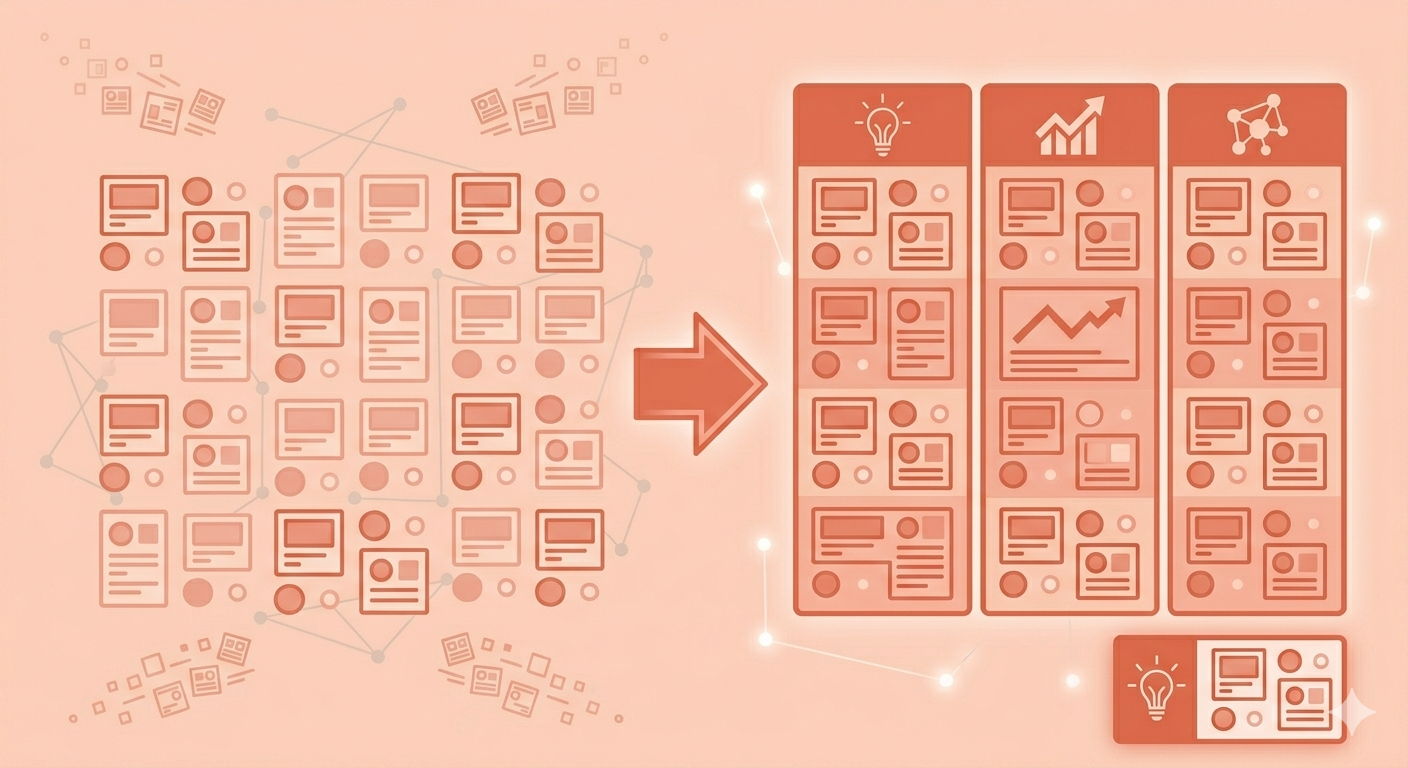
Define your content pillars tightly and stick to them. Pick three to five specific topic categories that authentically represent your brand and commit to them. Every piece of content you create should clearly belong to at least one of these categories. If a content idea does not fit any of your categories, it is a signal that the idea might not belong on your Instagram at all.
Use your category keywords in the first line of every caption. Instagram's AI reads captions and the first line carries the most weight. If your brand is about natural skincare, your captions should naturally include words like "skin health," "clean beauty," "natural ingredients," and "skincare routine" — not as a keyword dump but as the actual language you use to describe what your content is about.
Include keywords in on-screen text. When you use text overlays on your Reels, include the category keywords that describe the content. Instagram reads on-screen text as a classification signal. A Reel about a morning skincare routine should have text that includes words like "skincare," "morning routine," or "skin health" — not just decorative statements.
Audit your last 30 posts for topical consistency. Look at your recent content and ask honestly: could someone unfamiliar with your brand identify a clear category from this content? If the answer is no, identify which posts are creating topical confusion and adjust your strategy going forward. You do not need to delete anything — you need to shift what you create next.
The Opportunity Hidden in the Algorithm Shift
Every major platform algorithm change creates two groups of brands: the ones that adapt early and gain disproportionate reach advantage, and the ones that keep doing what they were doing and wonder why performance is declining.
"Your Algorithm" is still new. Most small brands are not yet optimizing for it. The brands that invest in topical clarity now — before their category becomes crowded with algorithm-aware competitors — are building a discovery advantage that will compound as the feature becomes more widely understood and used.
There is also a specific opportunity in the audition system for small accounts. The audition system means that a small brand with two thousand followers can still go viral if the content performs well in the initial test group. Follower count is no longer the primary determinant of reach. Content quality matched to the right audience is. A small account that deeply understands its niche and creates genuinely shareable content within that niche has the same access to the audition system as a brand with two hundred thousand followers.
This is actually good news for small brands willing to do the work. The playing field on Instagram in 2026 is more merit-based than it has been in years — provided the content is niche-clear, share-worthy, and optimized for the signals the algorithm actually responds to. The brands that spent the previous era chasing follower counts and broad appeal are now disadvantaged. The brands that know their specific audience deeply and create content worth sending to a friend are rewarded.
Responding to the "Not Interested" Reality
One of the more uncomfortable realities of "Your Algorithm" is that some users in your target audience may have already removed your category from their preferences before you even post. This is the audience you can no longer reach through organic Instagram discovery alone — at least not through Reels and Explore.
This reality makes two other strategies more important than they were before.
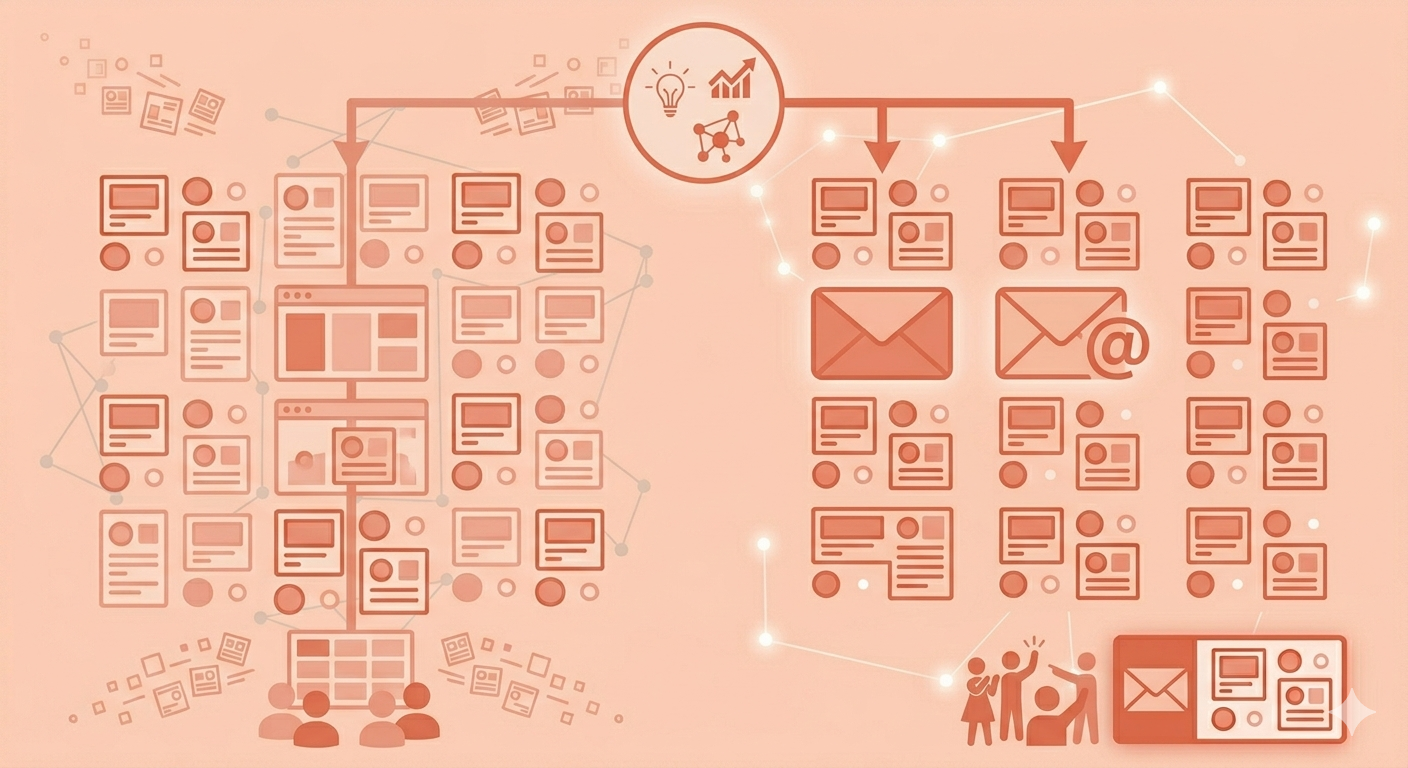
The first is email and direct audience ownership. Users who have opted into your email list or subscribed to your broadcast channel have given explicit permission to hear from you — and that permission cannot be filtered by an algorithm preference setting. Building an email list from your Instagram audience is the insurance policy for your organic reach. The followers who care enough to give you their email are the audience you own, regardless of what they do with their Instagram preferences.
The second is community engagement — the practice of showing up in the comments, DMs, and conversations where your target audience already gathers, rather than waiting for the algorithm to bring them to your content. When someone has an existing relationship with your brand through direct engagement, they are more likely to seek you out directly — through search, through profile visits, through saved posts — rather than relying on the discovery feed to surface you.
Instagram in 2026 rewards brands that build real relationships, not just reach. "Your Algorithm" has made that reality impossible to ignore.
The Summary — What Small Brands Need to Do Right Now
The "Your Algorithm" update and the audition system together represent a genuine shift in how Instagram discovery works. The brands that adapt earliest gain the most. Here is the immediate action list.
Audit your content for topical clarity. If an outside observer cannot identify your category in three posts, your content strategy needs to be tightened. Define three to five clear content pillars and commit to them.
Optimize every caption for classification. Use your category keywords naturally in the first line. Write captions that describe what the content is about — not just clever hooks with no category signal.
Shift your optimization target from likes to shares. Every content decision should ask: who would send this to someone, and why? If you cannot answer that question, the content is probably not share-worthy enough to trigger strong audition performance.
Start building your owned audience now. Every strategy for converting Instagram followers to email subscribers becomes more valuable as algorithm filtering increases. The audience you own is the audience no algorithm can take from you.
Post quality over quantity. The audition system punishes mediocre content with negative signals that affect your next several posts. Three strong pieces per week beat seven forgettable ones in the architecture Instagram is running in 2026.
SnapReel AI helps small brands create consistently high-quality, niche-clear video content on autopilot — so every post is optimized for the signals Instagram actually rewards in 2026, without requiring you to manually strategize every piece of content from scratch.