Why Smart Small Brands Are Mixing IRL Events With Social Media to Build Trust in 2026
SnapReel
May 19, 2026 · 12 min read
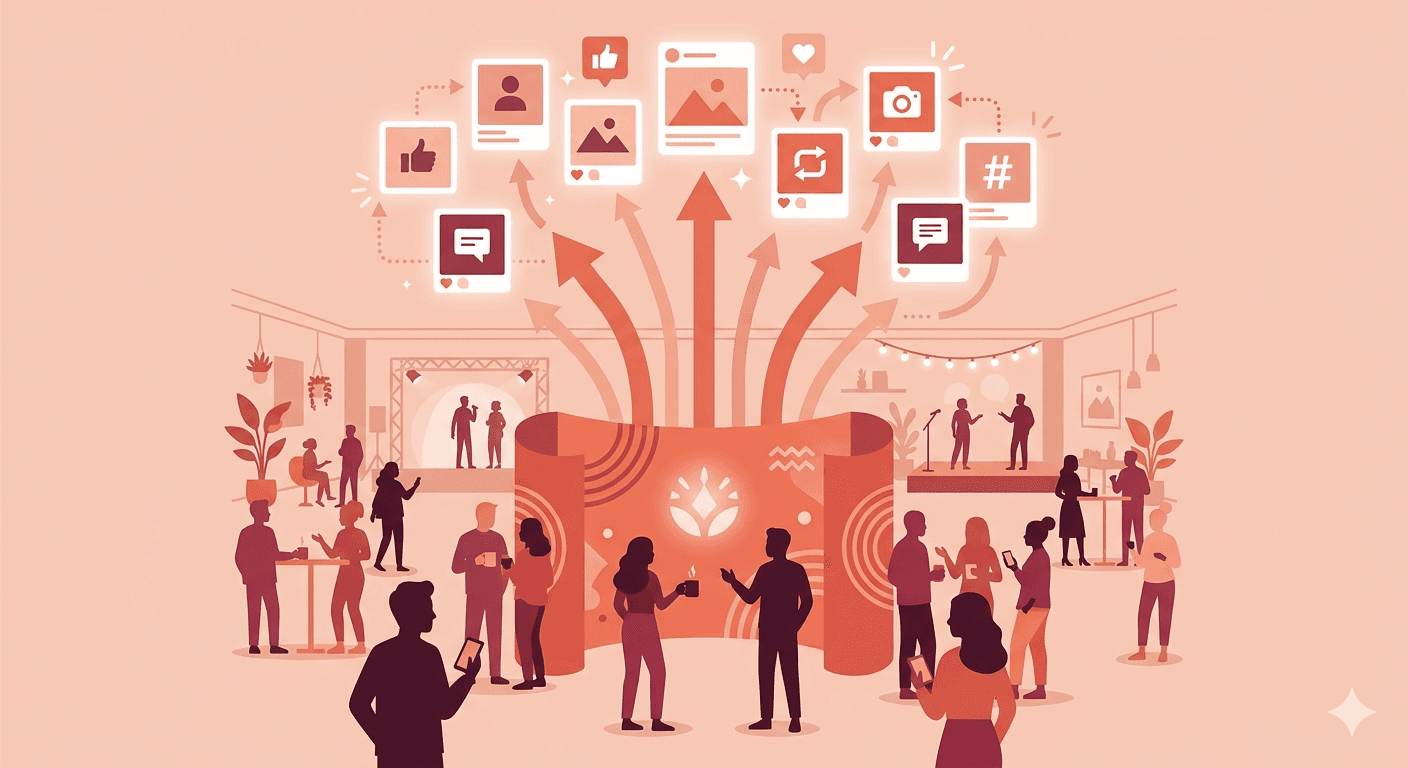
Table of Contents
For the last several years, the dominant assumption in small brand marketing was that everything should be digital first. Build your audience online. Run ads online. Sell online. Grow online. The logic made sense — digital was measurable, scalable, and cheaper than physical presence. Why rent a venue when you could run a TikTok campaign from your phone?
In 2026, that assumption is cracking.
Audiences are increasingly skeptical of brands that only exist on screens. After years of algorithmically optimized content, AI-generated visuals, and polished digital campaigns, consumers have developed a sharp sense for what is real and what is manufactured. They can feel the difference between a brand that genuinely exists in the world and a brand that only exists in a feed. And they trust the former significantly more.
The brands pulling ahead in 2026 are not the ones with the highest posting frequency. They are the ones that show up in real life — at workshops, pop-ups, markets, community events, meetups, and collaborations — and then use those real moments as the raw material for social media content that no digital-only competitor can replicate. IRL events are becoming a competitive moat, and the small brands that understand this early are building trust advantages that will compound for years.
This is not about abandoning digital. It is about understanding that digital content is more powerful when it is documenting something real.
Why IRL Is Surging in 2026 — The Consumer Psychology Behind It
The IRL marketing comeback is not a trend born of nostalgia. It is a direct response to what consumers are experiencing online every day.
Social media feeds in 2026 are saturated with content that looks similar, sounds similar, and performs similar emotional beats. AI tools have made it easier than ever to produce polished, professional-looking content at scale. The result is a feed full of content that is technically competent but experientially hollow. Audiences scroll faster, engage less deeply, and trust less readily than they did even two years ago.
What cuts through this saturation is not better digital content. It is proof that the brand exists beyond the feed. A brand that runs a workshop has something to show. A brand that shows up at a local market has real customers to put on camera. A brand that hosts a small community event has authentic reactions, real conversations, and genuine moments that no content brief can manufacture.
Industry research backs this up clearly. In surveys of consumers aged 18 to 65, over 90% said they would be likely to purchase products at IRL events — with a third saying they would be very likely to buy on the spot. Social and experiential marketing are becoming more intertwined than ever before, with audiences hungry for real connection after years of screen-dominated interaction. People are not rejecting digital — they are demanding that the brands they follow exist beyond it.
For small brands specifically, this creates an enormous opportunity. Large brands can produce impressive digital content at scale. They cannot always produce the intimacy, the access, and the genuine community feel that a small brand can create in person. IRL is one of the few arenas where small and scrappy genuinely outcompetes polished and resourced.
What IRL Marketing Actually Means for a Small Brand
IRL marketing does not mean expensive conferences, elaborate activations, or renting a venue for five hundred people. For a small brand in 2026, IRL marketing is any moment where your brand shows up in the physical world and creates a real interaction with a real person.
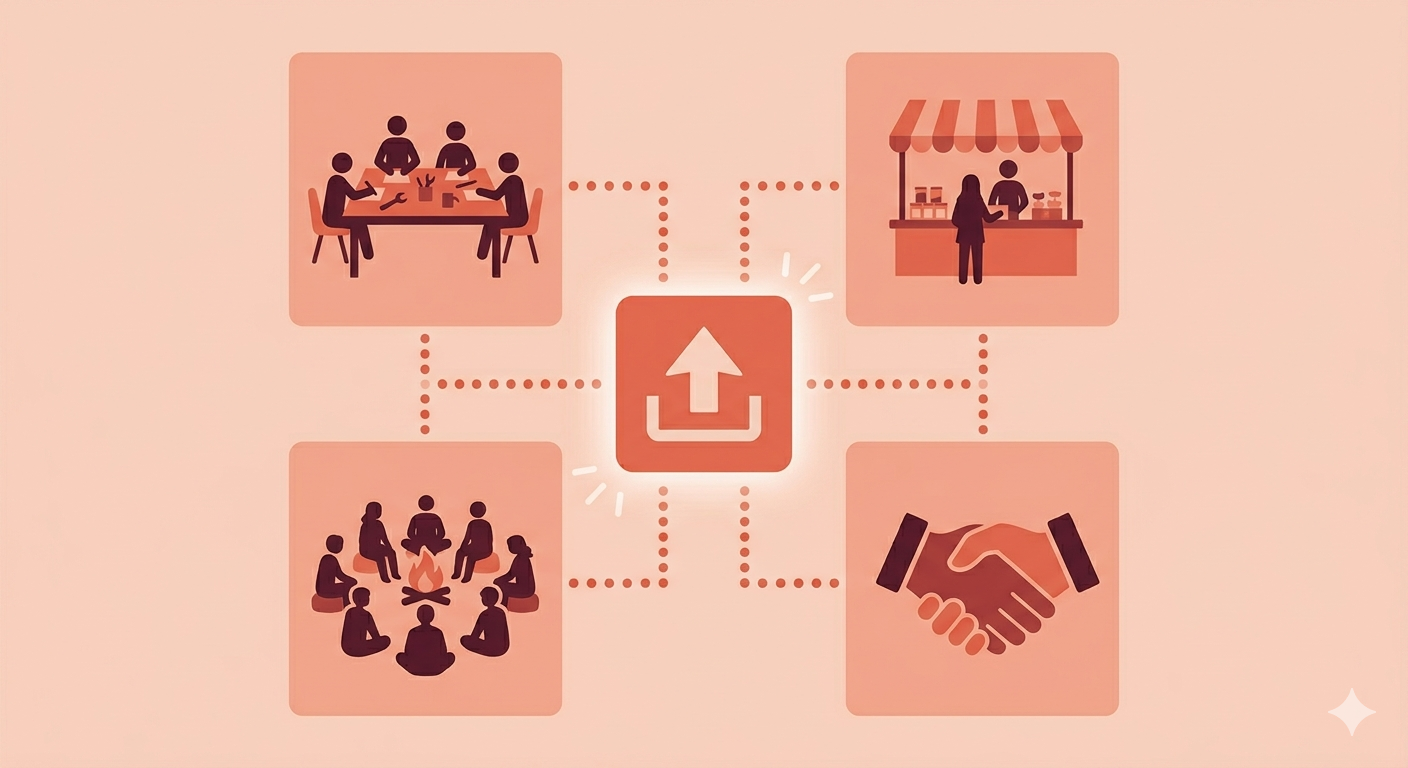
The formats that work best for small brands are deliberately low-overhead and high-authenticity.
Workshops and Demos Teaching something related to your product or category in a real space — a coffee brand hosting a brewing workshop, a skincare brand running a skin consultation event, a fitness brand hosting a form clinic. These events do double duty: they provide genuine value to attendees while creating the kind of authentic content that performs strongly on social media. People walking away from a workshop with real knowledge have a story to tell. That story spreads.
Pop-Ups and Market Presence Appearing at farmers markets, craft fairs, local markets, or temporary retail pop-ups puts your product in real hands with real people watching. The visual of real customers interacting with your products in a physical space is content that digital-only brands simply cannot produce. A customer's genuine reaction to trying your product for the first time is worth more as social proof than any scripted testimonial.
Community Meetups and Casual Gatherings Open houses, customer appreciation events, and informal brand meetups do not need to be polished. They need to be present. A small gathering of twenty of your most engaged followers creates stronger brand advocates than a campaign reaching twenty thousand passive scrollers. The intimacy of a small in-person event accelerates trust in a way that digital interaction rarely matches.
Collaborative Events With Complementary Brands Co-hosting an event with a brand that shares your audience but does not compete with you expands your reach while deepening the sense of community. A candle brand and a plant shop hosting a joint Sunday workshop. A fitness supplement brand and a yoga studio running a shared wellness morning. These collaborations create content opportunities for both brands while introducing each audience to the other in a context of trust.
Turn every event moment into a week's worth of branded social content automatically.
Ready to follow along? Create your first AI video for free.
The Content Flywheel — How One IRL Event Fuels Weeks of Social Media
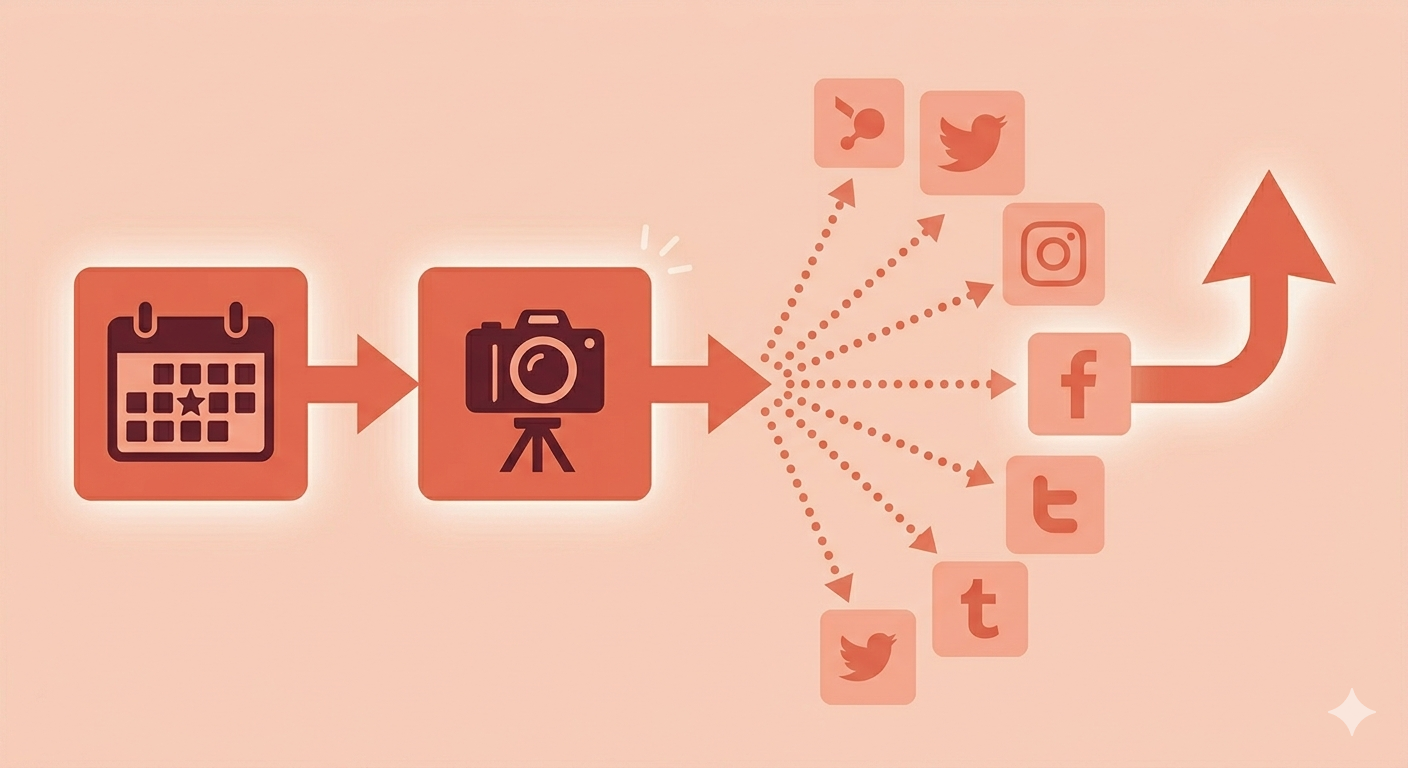
The reason IRL marketing is so strategically valuable in 2026 is not just the event itself — it is what the event produces for your social media pipeline. A single well-documented IRL moment can fuel weeks of authentic content across multiple platforms.
This is the content flywheel that the best small brands in 2026 are building deliberately.
Before the Event — Anticipation Content Announcing the event, showing preparation, giving behind-the-scenes glimpses of setup, and counting down create pre-event content that builds excitement and signals that your brand is active in the real world. This content performs well because it is inherently time-sensitive and personal.
During the Event — Live and Real-Time Content Stories, live video, casual behind-the-scenes clips captured during the event itself are some of the most authentic content a brand can produce. Real customers, real reactions, real conversations. This content requires almost no production value — its authenticity is the production value.
After the Event — Reflection and Social Proof Content Photos and videos from the event become content for weeks afterward. Customer testimonials gathered in person, quotes from attendees, before-and-after moments captured during demos, and recap videos all have long social media lifespans. A well-documented event becomes a content library that pays dividends long after the day itself.
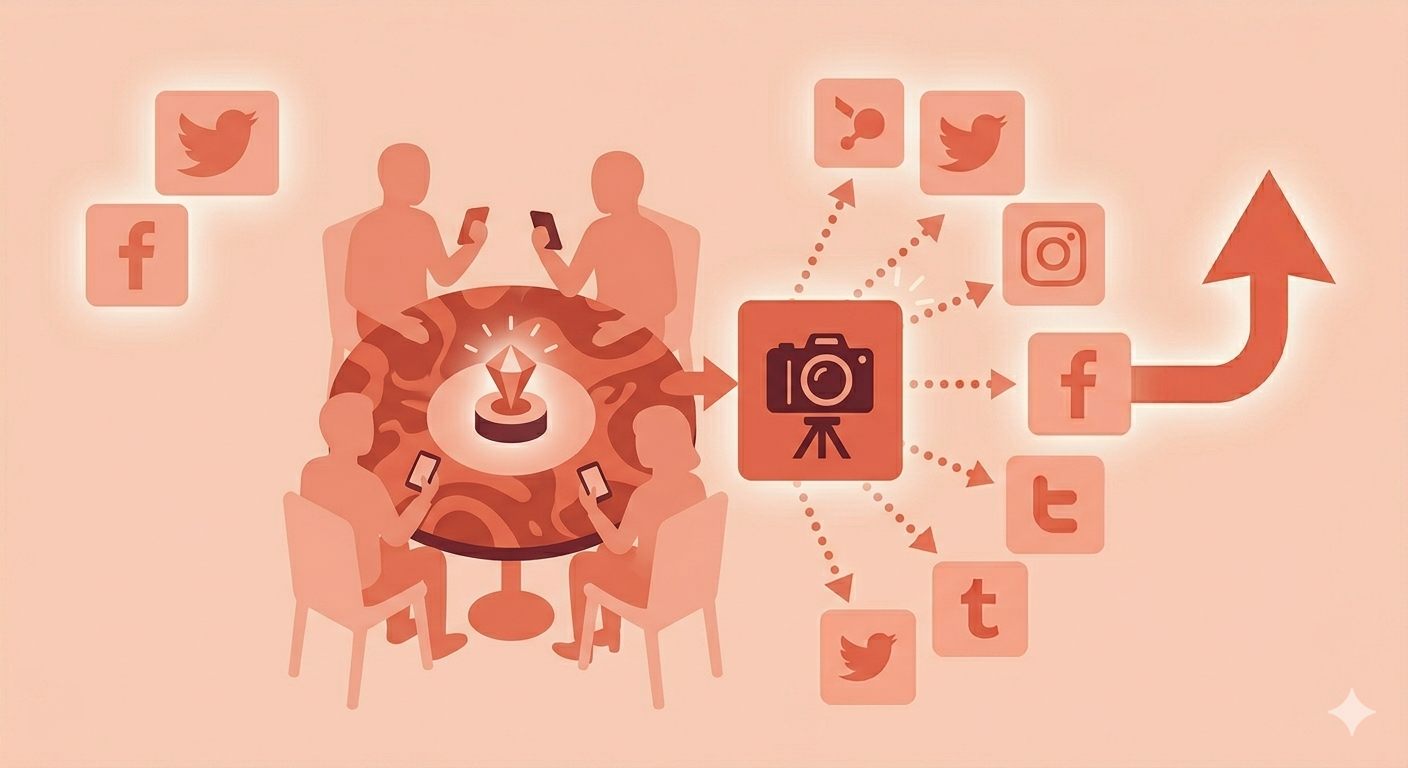
The Ripple Effect — Attendee Content When attendees post about the event from their own accounts, they create organic word-of-mouth content that your brand cannot manufacture. User-generated content from real events is among the most trusted social proof available to a small brand in 2026. It is not a review — it is a story. And stories spread in ways that reviews rarely do.
A single workshop attended by thirty people, documented well, and turned into a deliberate content strategy can produce fifteen to twenty pieces of distinct social content across TikTok, Instagram, and email — all rooted in something real, all with a consistent authentic story behind them. That is a return that no equivalent ad spend reliably produces.
How to Design an IRL Event for Maximum Social Media Return
Running an IRL event well and running an IRL event for maximum content return are two different disciplines. The brands doing this best in 2026 design their events with both in mind simultaneously.
Design Moments Worth Capturing Before the event, think about what specific moments will make compelling content. A before-and-after product demo. A guest expert sharing a surprising insight. A crowd reaction to something unexpected. A customer trying your product for the first time. These moments do not happen accidentally — they are designed into the event structure so someone is ready to capture them when they occur.
Designate a Content Capture Role For small brands without a large team, this is often the founder or one team member whose primary job during the event is to document rather than host. It feels counterintuitive to step back from the room to capture it — but the content that comes out of that documentation is what extends the event's impact far beyond the people in the room.
Create a Simple Capture Checklist Before every event, decide in advance what you need to come away with. Wide shots of the space. Close-up product interaction. At least three genuine customer reactions. One piece of unexpected or spontaneous content. A brief post-event founder reflection. Having this list means the content capture is systematic rather than accidental.
Make It Easy for Attendees to Share Create a simple, branded hashtag. Mention it at the start of the event. If your brand has a recognizable visual element — a specific backdrop, a display style, a product presentation — make sure it is present and photogenic. The easier you make it for attendees to share, the more organic content your event generates without any extra effort from your team.
The Trust Dividend — Why IRL Content Outperforms Studio Content
There is a specific quality that IRL content has that studio-produced content almost never replicates — and audiences can feel it even when they cannot name it. Call it texture. Real events have imperfections. Real reactions are unpredictable. Real spaces have ambient sound and natural light and the kind of energy that does not exist on a set.
When an audience watches a clip from a brand's workshop and sees a customer genuinely laughing, or hears a question from the crowd that the host had to think about before answering, or notices the slightly imperfect setup of the display in the background — they register something important. This brand exists in the real world. Real people showed up for it. Real things happened.
That registration is trust. And it is the kind of trust that no amount of polished studio content can manufacture.
Print media research has shown for years that physical touchpoints drive significantly higher retention than digital — nearly 50% higher in some studies. The same principle applies to in-person brand experiences. The consumer who attends your workshop does not just know your brand — they have a story about your brand. And stories are the currency of word-of-mouth marketing. They are what gets shared at dinner tables and in group chats and in the kind of unsolicited recommendations that no advertising budget can buy.
The small brands building the strongest communities in 2026 are the ones that have given their most engaged followers a story to tell. An IRL event, even a small one, gives people a story. A TikTok post, no matter how well produced, rarely does.
Starting Small — How to Run Your First IRL Event on a Real Small Brand Budget
The barrier to IRL marketing is almost entirely psychological. Most small brands imagine events as expensive, logistically complex undertakings that require significant planning and resources. The reality is that the IRL events generating the best social content in 2026 are often the smallest and most informal.
A workshop in a borrowed space with twenty attendees, a thirty-dollar materials budget, and a phone camera is a legitimate IRL event. A pop-up table at a local market with fifty dollars in product samples and a printed banner is a legitimate IRL event. A casual Saturday gathering for your ten most engaged customers at a coffee shop is a legitimate IRL event.
The principle is not scale — it is presence. Showing up in the physical world with genuine intention creates something digital content cannot create. The investment required is time and attention, not budget.
For your first event, keep the goal simple. Pick one format — workshop, pop-up, or meetup. Choose a location that is accessible and relevant to your audience. Keep attendance small enough that every interaction feels personal. Document it thoroughly. And immediately after, use the content.
The first event will not be perfect. It will produce content that is rougher and less polished than your regular feed. That roughness is a feature, not a bug. It is proof that something real happened.
Integrating IRL Into Your Ongoing Content Strategy
IRL marketing works best not as a one-off event but as a recurring element of your content strategy. The brands building the strongest trust in 2026 run IRL events on a regular cadence — monthly, quarterly, or seasonally — and treat each one as both a brand-building moment and a content production session.
The integration between IRL and social becomes a rhythm. The feed builds anticipation. The event happens. The content that comes out of the event feeds the feed for the following weeks. The community that formed at the event stays connected through social. The social community shows up to the next event. The flywheel turns.
This rhythm is what separates the brands with genuine community from the brands with just followers. Followers watch. Community shows up. And the brands that give their audience a reason to show up in the real world are the brands that convert followers into something far more valuable.
In 2026, every piece of digital content your brand produces is competing with an enormous volume of similar content. The IRL moments you create — and document well — are not competing with anything. They are entirely yours. No competitor can run your workshop. No algorithm change can erase the memory of your customers who attended your pop-up. No AI tool can manufacture the genuine enthusiasm of twenty people who showed up on a Saturday morning because they trust your brand enough to give you their time.
That is the advantage IRL marketing creates. And in an era of infinite digital content, it is one of the most durable advantages a small brand can build.
SnapReel AI turns the authentic content you capture from IRL events into fully produced, platform-optimized social media posts automatically — so every workshop, pop-up, and brand moment you create becomes weeks of content without requiring you to spend hours editing and publishing it yourself.