Best Later Alternative in 2026 — The AI-Powered Social Media Tool Small Brands Are Switching To
SnapReel
May 16, 2026 · 11 min read
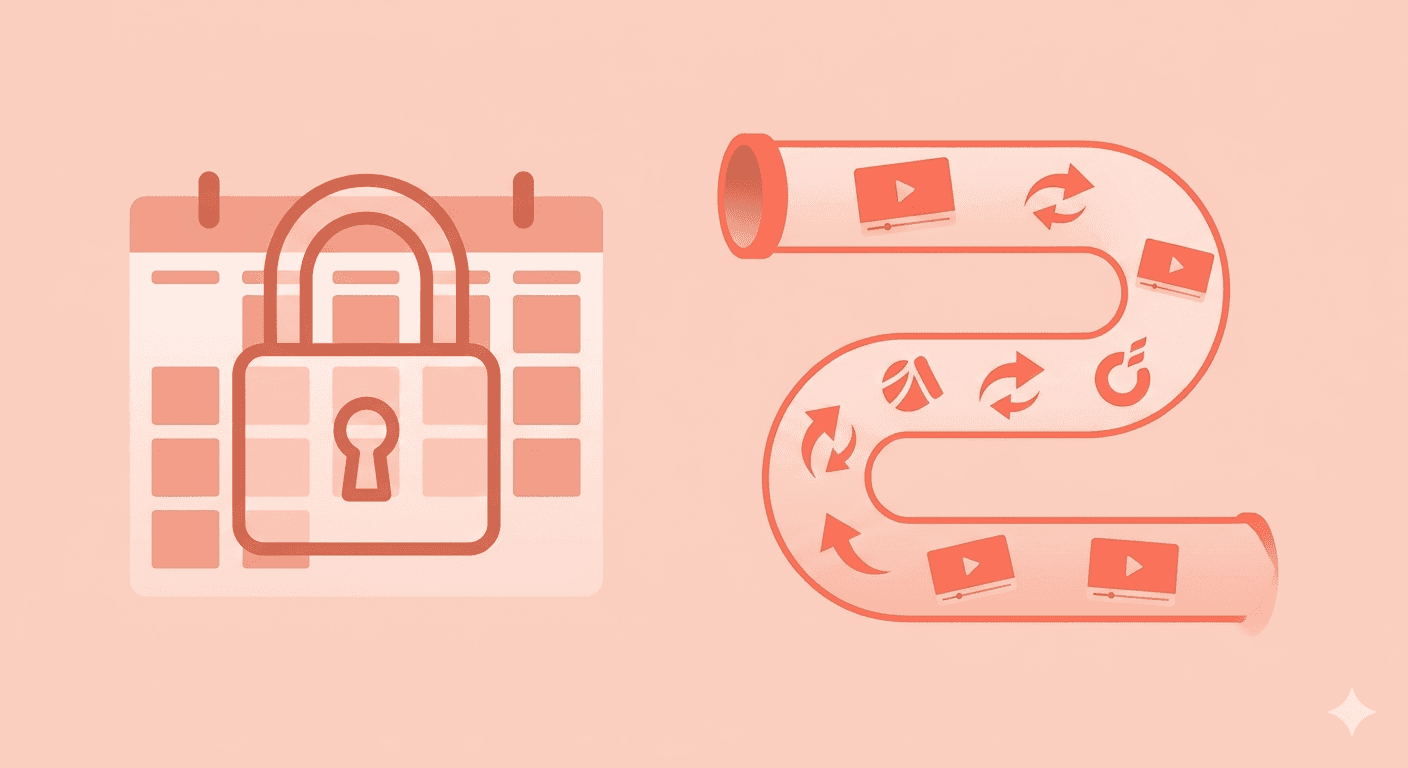
Table of Contents
Later became popular for one reason that was genuinely compelling at the time.
It made Instagram feed planning visual, intuitive, and satisfying. You could drag photos into a grid, preview exactly how your feed would look before publishing anything, and schedule weeks of content in a single sitting. For a certain type of brand — visual-first, Instagram-focused, and primarily posting static imagery — Later was one of the cleanest tools available.
That was the use case Later was built for. And within that use case, it still performs reasonably well.
The problem is that the use case most small brands are operating in has fundamentally changed.
Instagram is no longer primarily a photo grid platform. It is a Reels platform. TikTok has become essential for product discovery. YouTube Shorts is growing faster than almost any other content format. And the brands winning on all of these platforms are not the ones with the prettiest static grids — they are the ones producing consistent, native, video-first content across multiple channels simultaneously.
Later was not built for that. And in 2026, that gap between what Later does and what small brands actually need is becoming harder to ignore.
This guide breaks down exactly what Later does well, where it consistently falls short, and why SnapReel AI is the Later alternative that small brands are choosing when they are ready for something built for the way social media actually works today.
What Later Does Well — And Why It Built Such a Loyal Following
Later earned its reputation honestly. Understanding where it genuinely delivers is the starting point for understanding where it stops being enough.
The visual content calendar is Later's strongest feature and the reason most brands originally chose it. The drag-and-drop interface, the grid preview for Instagram feeds, and the ability to see a full month of content laid out visually before anything goes live — these are features that made content planning feel manageable in a way that spreadsheets and generic calendar tools never could.
The media library is another genuine strength. Later lets you store, organize, and tag your images and videos in a way that makes finding the right asset fast and painless. For brands that produce a consistent volume of visual content, having a well-organized media library directly inside your scheduling tool eliminates a friction point that many competing tools ignore.
The link in bio feature has been useful for Instagram-focused brands that want to turn their profile link into a mini landing page with multiple destinations. For brands whose primary conversion path runs through Instagram, this is a practical tool that removes the need for a separate service.
And Later's ease of use is real. The learning curve is low, the interface is clean, and getting set up and publishing within the first hour is genuinely possible. For a solo founder or a small team with limited technical bandwidth, that accessibility has real value.
These strengths are worth acknowledging. They are also, notably, all focused on the same narrow use case — planning and scheduling visual content for Instagram. As soon as a brand's needs expand beyond that center of gravity, Later's limitations become visible quickly.
The Four Limitations That Are Pushing Small Brands Away From Later in 2026
The brands switching away from Later are not doing so because the tool broke. They are doing so because they grew — and Later did not grow with them. The limitations they hit are structural, not bugs to be fixed in the next update.
Limitation One — No Content Creation, Only Scheduling
This is the most fundamental gap in Later's feature set, and it is the one that matters most in 2026.
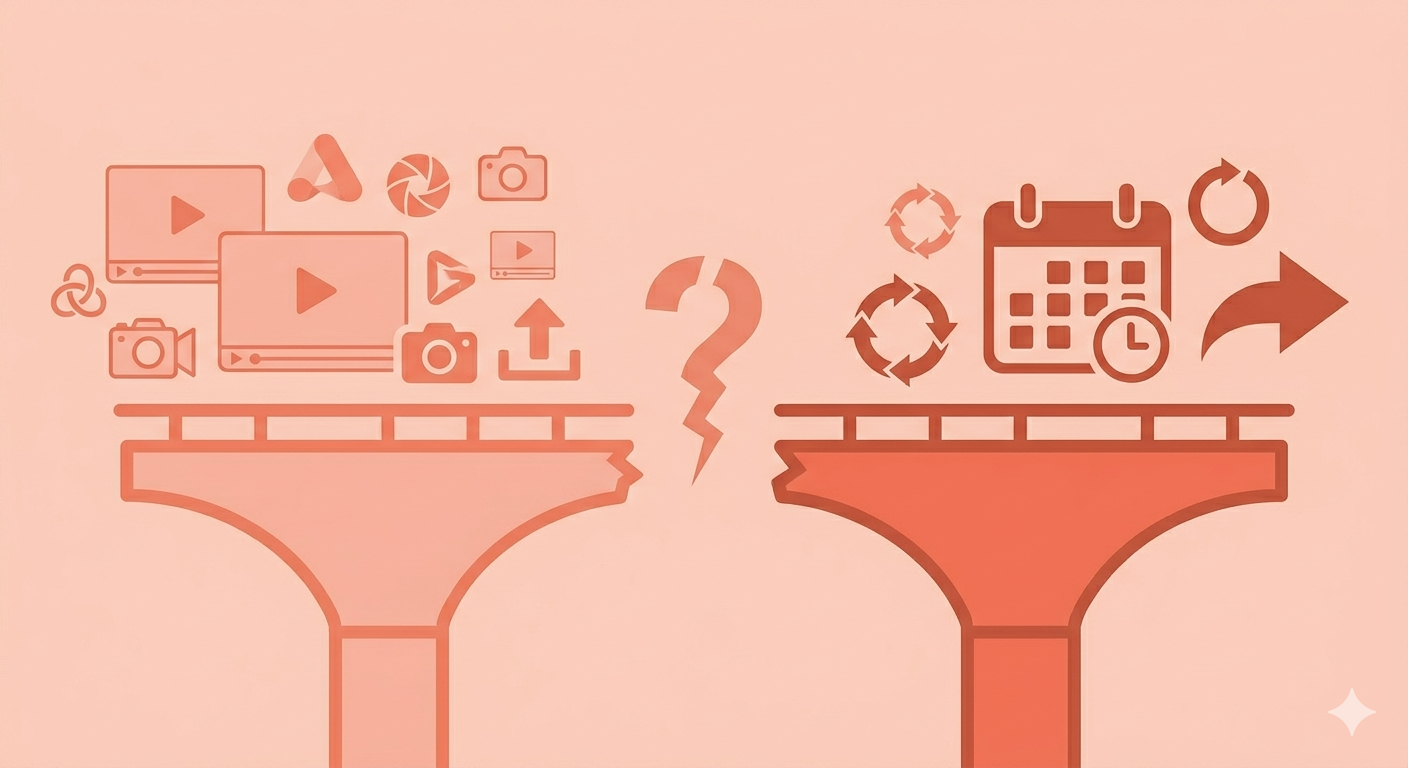
Later is a scheduling tool. It helps you organize, plan, and publish content that already exists. It does not help you create that content. Every piece of media that goes into Later's calendar has to be produced somewhere else first — in Canva, in a video editing app, in a photography session, or in an agency.
In 2026, the most significant shift in social media tools is the collapse of the boundary between content creation and content distribution. The best tools now handle both. They generate content, optimize it for each platform, and publish it — as one continuous workflow without context-switching between multiple applications.
Later's approach of being a pure scheduling layer means every small brand using it still has to solve the content creation problem separately. And for a small brand without a dedicated designer or video team, that separate problem is often the hardest one on the list.
Limitation Two — Pricing That Scales Poorly as Needs Grow
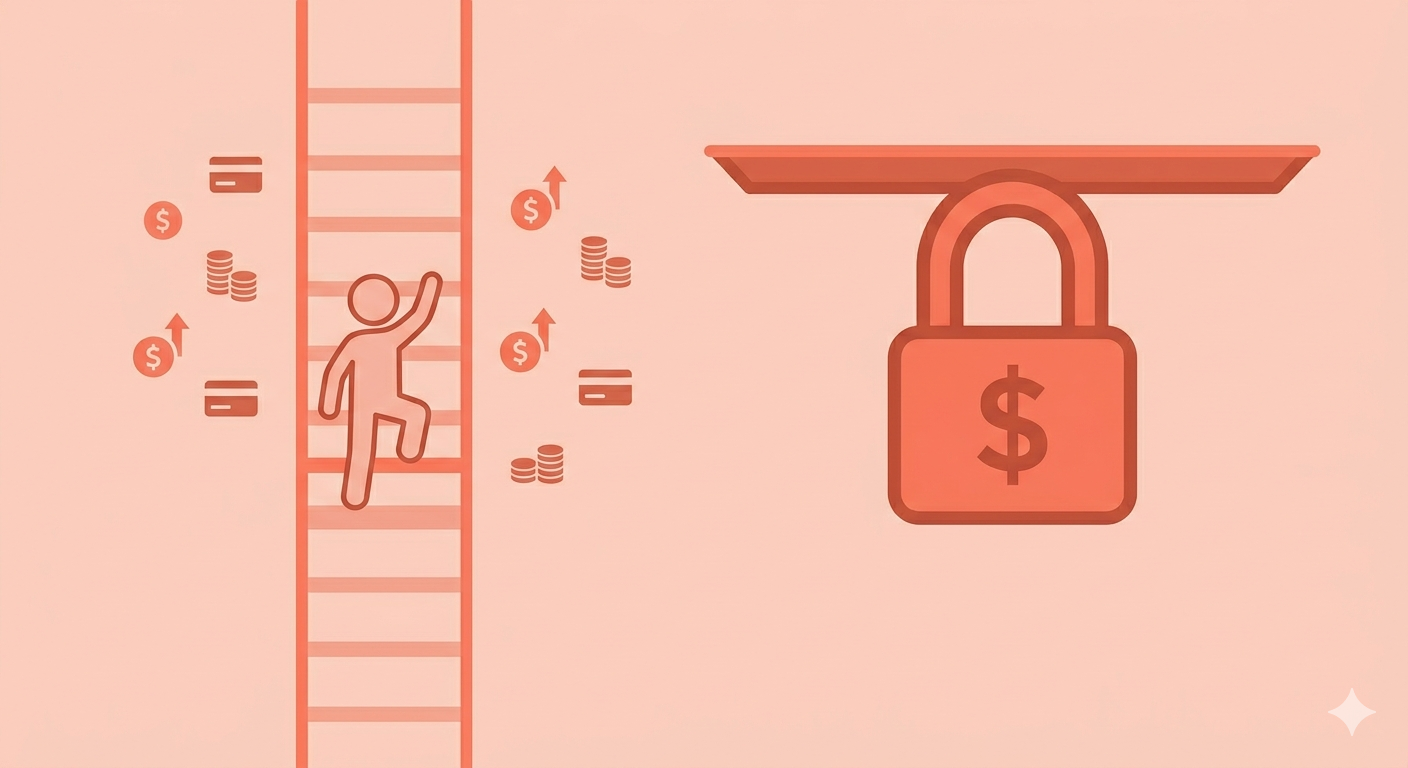
Later's free plan has become increasingly restricted over time. The paid plans start at twenty-five dollars per month and scale upward based on the number of social sets, users, and posts needed.
For a small brand managing one or two social accounts with a single team member, the entry-level plan is manageable. But the moment that brand needs to add a second user, manage a few more accounts, or access analytics that go beyond basic engagement metrics, the cost jumps in ways that feel disproportionate to the feature unlock.
The add-on pricing model makes budgeting unpredictable. Extra social sets, extra users, and AI credits are all charged separately on top of the base plan price. For small brands trying to maintain predictable monthly expenses, a tool where the real cost only becomes clear after the base price is several layers of add-ons is a frustrating experience.
Later's Trustpilot rating sits at 1.3 out of 5 — a stark contrast to its 4.5 on G2. The Trustpilot reviews are dominated by billing complaints, unexpected renewal charges, and difficulties canceling subscriptions. These are not isolated incidents — they are a pattern that reflects how Later's pricing model interacts with real user experience.
Later plans your grid. SnapReel fills it automatically with branded content every single day.
Put these tips into action — start creating with SnapReel for free.
Limitation Three — Video Support Is Limited and Incomplete
Later supports Reels scheduling. It supports TikTok posting. But supporting the scheduling of video content is completely different from supporting the creation and optimization of video content.
For a brand that has already produced a video and simply needs to schedule it, Later works. For a brand that needs to consistently produce platform-native video content — the short-form video that drives reach on TikTok, Instagram Reels, and YouTube Shorts — Later provides no help at all.
In 2026, this is not a minor gap. Video is the dominant content format on every platform that matters for small brand growth. The brands that are growing their audiences fastest are the ones posting video consistently — not because they have large production budgets, but because they have tools that make video creation as easy as static post creation used to be.
Later's tool was built in an era when static images were the primary social media format. That era is over. And a scheduling tool that does not also solve the video creation problem is leaving small brands to figure out the hardest part of their content workflow entirely on their own.
Limitation Four — Analytics That Stop Short of Being Actionable
Later provides performance data — views, likes, reach, and engagement rate for individual posts. For a brand that just wants to know which posts performed best, this is functional.
For a brand that wants to understand why certain content performs, what formats their highest-value audience engages with most, which posting times produce the best reach for their specific audience, or how their performance compares to competitors in their category — Later's analytics run out of depth quickly.
The analytics gap becomes particularly frustrating when paired with the absence of content creation tools. A tool that neither generates content nor gives you deep enough insights to know exactly what content to generate next is leaving the most important strategic decisions entirely to guesswork.
What Small Brands Actually Need From a Later Alternative in 2026
When a small brand decides to move away from Later, they are not just looking for a different scheduling interface. They are looking for something that solves the full problem — not just the scheduling slice of it.
The full problem looks like this. A small brand needs to show up consistently on multiple platforms with content that is native to each platform, on-brand for their specific identity, and produced at a volume that keeps their audience engaged without consuming their entire week. They need the content creation, the optimization, the scheduling, and the performance insights to all exist in one place — because every time a workflow requires switching between tools, there is friction, and friction compounds into inconsistency.
A genuine Later alternative for 2026 does not just do what Later does slightly better. It expands what is possible. It brings content creation into the same workflow as content distribution. It handles video natively. It learns the brand's voice and applies it consistently across every output. It provides insights that are actionable rather than just descriptive. And it does all of this in a way that a small team can maintain without a full-time social media manager.
Why SnapReel AI Is the Later Alternative Small Brands Are Choosing
SnapReel AI was built from the assumption that scheduling is the easy part of social media management. The hard part is producing enough high-quality, on-brand, video-first content to stay consistently visible across the platforms that matter.
Later solved the scheduling part. SnapReel AI solves the whole thing.
Content Creation and Distribution in One Workflow
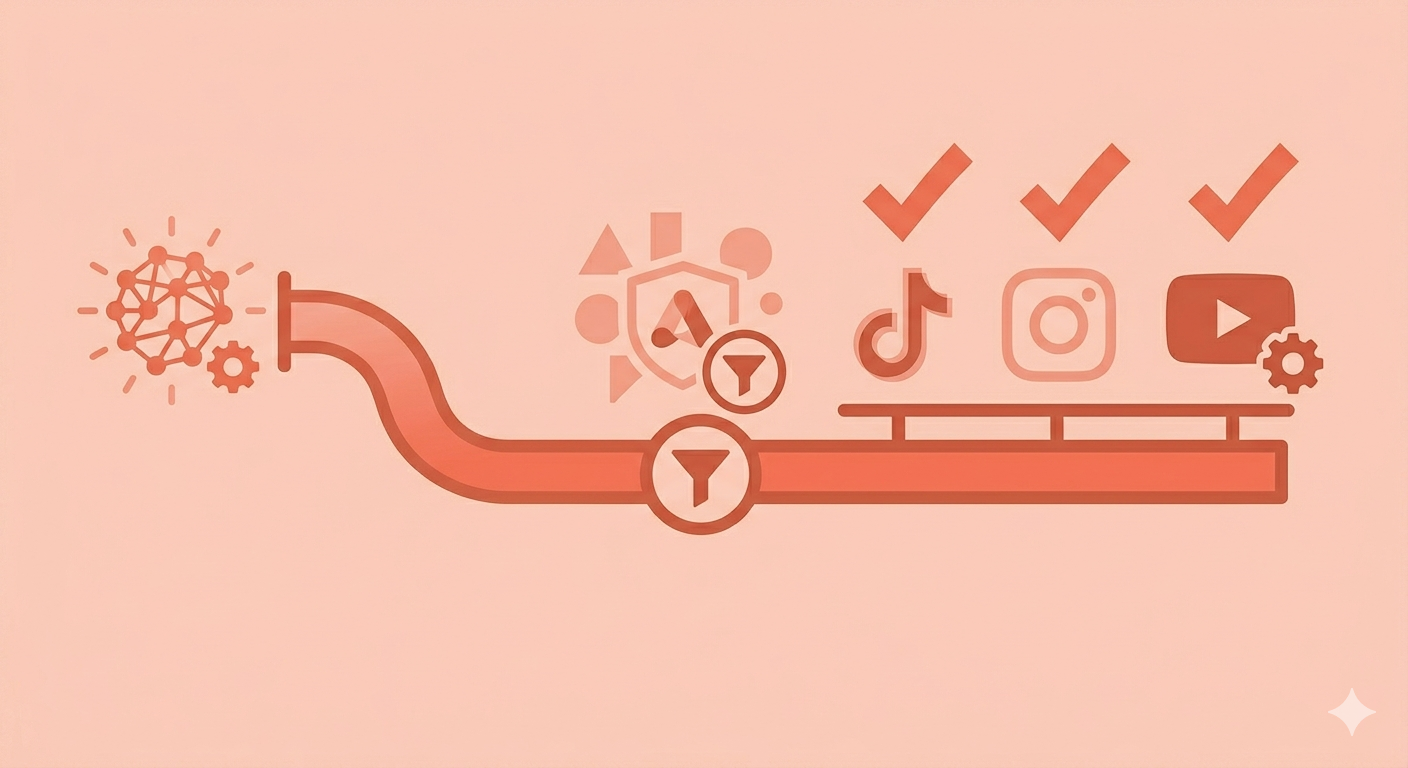
SnapReel AI does not require you to produce content somewhere else before using it. The platform generates your content — video-first, platform-native, branded to your specific identity — and then schedules and publishes it, all within the same tool.
For a small brand that has been running two separate workflows — content creation in one set of tools, scheduling in Later — collapsing those into one represents a significant reduction in time, complexity, and context-switching. The hours spent managing assets across multiple applications are hours that go back into running the business.
Video-First Output Built for the Platforms That Drive Growth
Where Later schedules video content you create elsewhere, SnapReel AI generates video content that is built specifically for TikTok, Instagram Reels, and YouTube Shorts. The content is not adapted from static posts — it is produced from the ground up as short-form video in the formats, pacing, and visual style that perform on each platform's algorithm.
For small brands whose primary growth opportunity in 2026 is video content — which is to say, almost every small brand — this is not a marginal upgrade over Later. It is a fundamentally different capability that Later cannot provide.
Predictable Pricing Built for Small Brand Budgets
SnapReel AI's pricing model is built around what small brands need — predictable costs, no surprise add-on charges for basic functionality, and a structure that does not penalize growth.
Knowing exactly what the tool costs each month, without calculating how many extra users or social sets are pushing the bill up, is a practical advantage that compounds over time. Budgeting for tools should not require a spreadsheet.
Who Should Move From Later to SnapReel AI — And Who Should Stay
Not every Later user should switch. Being specific about who benefits most from making the change is more useful than a blanket recommendation.
SnapReel AI is the right choice if your brand is primarily trying to grow on video-first platforms and Later's scheduling-only model means you are still solving the video creation problem separately with other tools. It is the right choice if you are managing content across more than one or two platforms and the cost of Later's add-ons is making your tool budget feel disproportionate to the value you are getting. It is the right choice if you are spending more time managing your content workflow than creating output — because the right tool should reduce that ratio significantly, not maintain it.
Later is still a reasonable choice if your brand's entire social media strategy is Instagram-first, you are primarily posting static visual content, your team has a dedicated content production workflow already in place, and you are genuinely satisfied with the level of analytics you are receiving. If Later is working for you within those specific parameters, the friction of switching is not worth the benefit.
But if you recognize any of the four limitations described in this guide — in your daily workflow, in your monthly billing, in your video content output, or in your analytics — those limitations are not going to resolve themselves. They are structural features of what Later is built to be.
SnapReel AI gives small brands the complete workflow that Later was only ever the scheduling layer of — content creation, video production, brand voice consistency, scheduling, and performance insights in one place so your team can stop managing tools and start growing an audience.