How Small Brands Can Use Live Shopping to Turn Viewers Into Buyers in Real Time in 2026
SnapReel
May 20, 2026 · 14 min read
Table of Contents
Most small brands spend their social media energy on content that creates awareness — posts, Reels, carousels, Stories. The content gets seen, maybe liked, occasionally shared. But somewhere between seeing the product and deciding to buy it, a significant portion of interested viewers drop off. They mean to come back. They forget. They get distracted. The purchase never happens.
Live shopping eliminates that gap entirely.
When someone watches your brand live — seeing the product demonstrated in real time, hearing their specific questions answered on the spot, watching other viewers react and buy — the distance between interest and purchase collapses. Standard product pages convert at 1 to 3 percent. Email campaigns convert at 3 to 5 percent. Retargeting ads convert at 5 to 8 percent. Live shopping events convert at 15 to 30 percent. That gap is not marginal. It is an order of magnitude — and it exists because live shopping does something no static content format can do: it compresses the entire customer journey into a single session. Later
Shoppers in 2026 are tired of flat product pages and guessing what something is really like. They want to see products in action and ask questions before they buy. Platforms like TikTok, Instagram, and Amazon are investing heavily in live shopping, which means they are giving extra reach to brands that use these tools. Vocal Media
For small brands, this investment from the platforms is a genuine competitive window. The brands that move into live shopping now — while most of their competitors are still debating whether it is worth trying — are building conversion advantages and algorithm favor that will compound as the format becomes more crowded. This guide covers everything you need to run your first live shopping event, do it well, and build it into a repeatable sales system.
Why Live Shopping Works — The Psychology Behind the Conversion Rate
Understanding why live shopping converts so dramatically better than static content makes it easier to design live events that maximize that advantage.
The first reason is the elimination of purchase uncertainty. When a customer considers buying a product from a static page, they are making a decision based on photos, a description, and reviews — all of which are curated by the brand. Uncertainty about how the product actually looks, feels, or performs is one of the most common reasons for cart abandonment. Live shopping removes that uncertainty in real time. The product is demonstrated. Questions are answered. Objections are addressed before they become reasons not to buy.
The second reason is social proof in real time. When a viewer watches other people in the same live session ask about the product, comment positively, and purchase — they experience social proof as it happens rather than reading static reviews after the fact. The psychological effect of watching twenty other people buy something while you are considering it is significantly more powerful than reading twenty reviews on a product page.
The third reason is urgency without manipulation. Live shopping events are time-limited by nature. The session ends. Limited stock can run out. A deal offered during the live may not be available afterward. This urgency is not manufactured through countdown timers and fake scarcity — it is genuine, understood by both the brand and the viewer, and creates purchase momentum that static pages cannot replicate.
The fourth reason is platform algorithmic support. TikTok's algorithm actively surfaces live streams to non-followers, meaning you can reach thousands of potential customers even with a small following. Live content gets preferential distribution on both TikTok and Instagram — platforms are incentivized to promote the format they are investing heavily in building. Every live session is also a discovery opportunity for viewers who have never encountered the brand before. Later
Getting Set Up — What You Need Before Your First Live Event
The technical setup for live shopping is simpler than most small brand owners assume. Here is exactly what you need on each platform.
TikTok Live Shopping Requirements
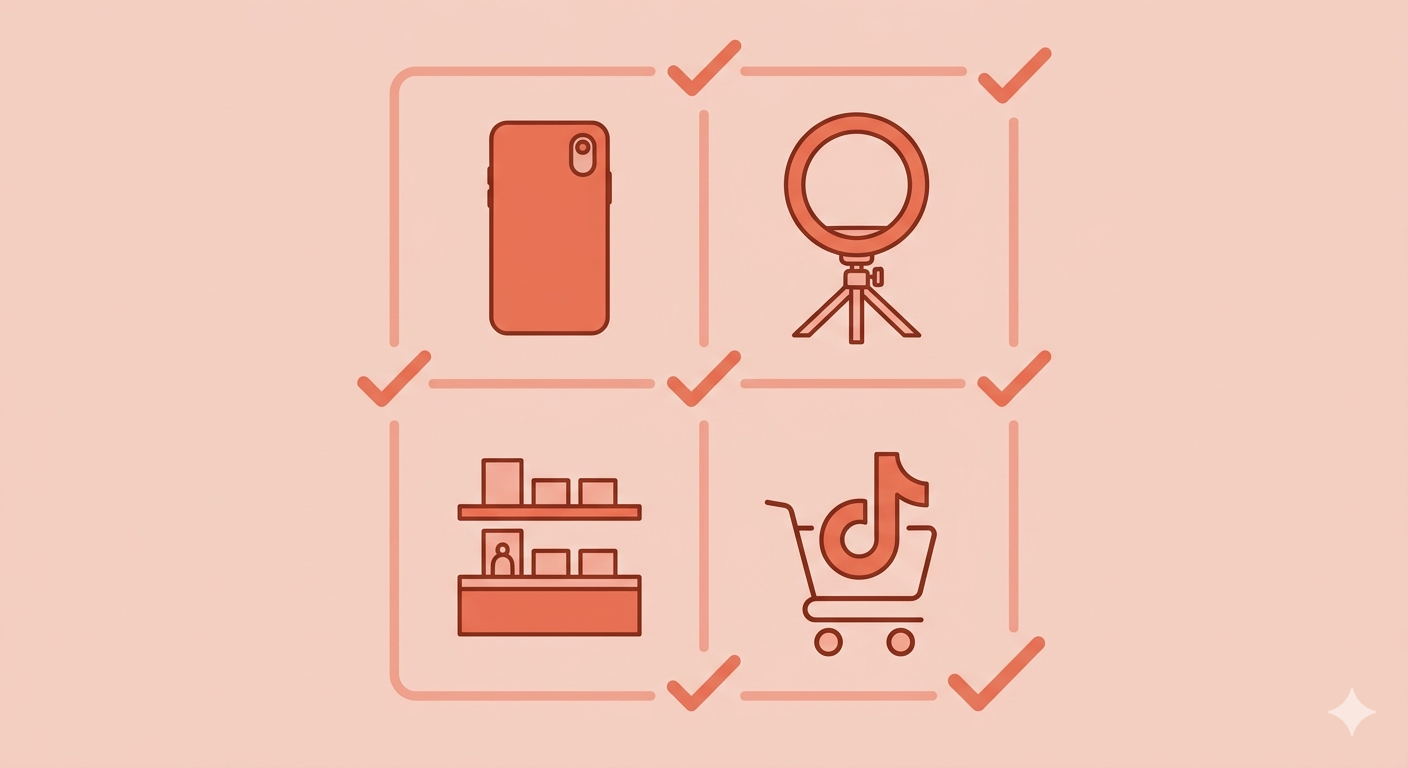
You need a TikTok Business Account, a TikTok Shop approval with your business documentation and bank details, a minimum of 1,000 followers to unlock the Live feature, and product listings uploaded in your TikTok Shop catalog for every item you plan to showcase. The TikTok Shop approval process requires planning ahead — apply at least seven to ten business days before your planned first event. The actual live session requires nothing more than a phone, a stable internet connection, and good lighting. No studio, no professional equipment, no production team. Substack
Instagram Live Shopping Requirements
Instagram Live is accessible to any account without a follower minimum. For in-stream product tagging, you need an Instagram Shop connected to your product catalog. If your TikTok Shop is already set up, connecting your Instagram Shop uses the same product catalog and requires minimal additional setup. Instagram Live does not have native in-stream checkout the way TikTok does — purchases typically happen via link in bio or direct product tags — but the discoverability and audience size on Instagram make it a strong complementary platform.
Equipment That Actually Matters
The production quality that converts in live shopping is not studio-level — it is clarity-level. A phone camera from the last two years produces sufficient video quality. What matters far more than camera quality is lighting and audio. Natural lighting or a basic ring light eliminates the dim, unflattering look that makes products hard to evaluate. A clean, uncluttered background keeps the focus on the product. Clear audio — either phone audio in a quiet space or a basic clip-on microphone — ensures viewers can follow the demonstration without straining.
The brands producing the highest-converting live shopping content in 2026 are not the ones with the most sophisticated setups. They are the ones that prioritize clarity, energy, and genuine product knowledge over production polish.
Planning Your Live Event — The Structure That Converts
A live shopping event without a structure is a conversation without a destination. The brands generating consistent revenue from live shopping are running events with a clear format — not a rigid script, but a planned sequence that moves viewers from watching to buying.
Here is the live event structure that works for small brands in 2026.
The First Five Minutes — Hook and Welcome
The opening of your live determines whether viewers stay or scroll away. Start your stream with a hook — show your best product or biggest deal in the first 30 seconds to retain viewers. Do not spend the opening minutes explaining who you are or thanking people for joining. Lead with the most compelling thing you have to offer. Welcome new viewers as they arrive, call out their names from the chat, and create the immediate sense that something valuable is happening in this session. Later
The single most effective opening for a small brand live shopping event is demonstrating the product's most impressive feature or result within the first sixty seconds. If you sell skincare, show the before and after. If you sell food, taste it on camera. If you sell clothing, put it on. The immediate demonstration of value is what separates the live sessions that build momentum from the ones that struggle to retain an audience.
Minutes Five to Forty-Five — Product Demonstrations and Q&A
This is the core of the live event. Feature three to five products — enough to maintain variety and momentum without overwhelming viewers with too many choices. Start with five to ten hero products and keep your catalog focused — overwhelming customers with choice kills conversions. Sprout Social
For each product, follow the same rhythm: demonstrate it, share the key proof point, answer any questions from the chat, pin the product to the top of the product list, and create a natural reason to buy now rather than later. The reason can be a live-only price, a live-only bundle, limited stock, or simply the fact that you are here now and available to answer any final questions before they decide.
Read and respond to the chat actively throughout. Call viewers by name. Answer questions completely and honestly — including questions about limitations or fit issues. The credibility of honest answers in live shopping is one of the most powerful trust signals available to a small brand.
The Final Ten Minutes — Urgency and Recap
Close the session with a recap of everything featured, a final call to action on the highest-converting product of the session, and a preview of the next live event to build anticipation. Use TikTok's countdown timer feature for flash deals in the final minutes — a ten-minute window on a specific product creates genuine urgency without manufactured scarcity. Thank viewers by name from the chat, and announce the next scheduled session before ending. Mirra
Promoting Your Live Before It Happens
Use TikTok's event feature to let followers set reminders. Build anticipation with teasers — show sneak peeks of products you will feature, hint at exclusive deals only available during the live. Promotion across channels dramatically increases your live audience, particularly for your first few events before viewers have developed the habit of checking for your sessions. Mirra
The promotion timeline that works for small brands: announce the event five to seven days out, post a teaser showing one featured product two to three days before, and send a reminder the day of the event. Each of these touchpoints should include the time, the platform, and one specific reason to tune in — a deal, a product reveal, or a question you will answer live that your audience genuinely wants answered.
Cross-promote on other channels — share your live schedule on Instagram, email newsletters, and your website to bring existing customers to TikTok. Your email list is particularly valuable for live event promotion because email subscribers have demonstrated higher intent than passive social followers, and they receive direct notification rather than relying on an algorithm to surface your announcement. Mirra
Drive more viewers to your live shows with daily Reels that build anticipation automatically.
Create AI-powered videos and auto-post to all your platforms.
What to Do During the Live — The Habits That Drive Sales
Knowing the structure is one thing. The live habits that actually drive conversion are developed through practice but can be accelerated by understanding what the highest-converting live sellers do consistently.
Engage with every viewer by name. When someone joins the chat, greet them. When someone asks a question, use their name before answering. When someone says they just bought, celebrate it. This personal acknowledgment creates the social environment that makes live shopping feel fundamentally different from watching an ad. Engage with every comment by name — this is one of the highest-impact live behaviors for conversion and retention. Later
Demonstrate, do not describe. The most common mistake first-time live sellers make is spending too much time talking about the product instead of showing it. Every feature you can demonstrate on camera is more convincing than any feature you can describe verbally. Put the clothing on. Show the product from multiple angles. Use it in real time. The demonstration is what justifies the live format.
Address objections directly. When viewers ask skeptical questions — will this work for my skin type, does the sizing run small, is this worth the price — answer honestly and completely. A direct, honest answer to an objection in live shopping converts hesitant viewers into buyers more reliably than any amount of positive description. Viewers are watching to get answers they cannot find on a product page. Give them those answers.
Create rhythm with the product list. Pin new products as you feature them so viewers can easily find and add them without leaving the stream. Pin best-selling products at the top of the product list throughout the session. Create a natural rhythm where you feature a product, let buying momentum build, then introduce the next product — rather than racing through all products quickly before viewers have had time to decide. Mirra
How Long to Go Live and When
Stream for 30 to 60 minutes minimum — TikTok's algorithm rewards longer streams with more visibility after the 30-minute mark. For small brands just starting out, a forty-five to sixty minute session is the practical sweet spot — long enough to feature multiple products and build genuine viewer engagement, short enough to maintain energy and focus without the session losing momentum. Later
On timing, TikTok's peak hours are 7 to 11 PM local time on weekdays and 10 AM to 2 PM on weekends. Your specific audience's peak hours may vary from these general guidelines — after a few sessions, your analytics will show when your viewers are most active, and you can adjust your schedule accordingly. Later
Consistency builds habit and algorithmic favor — create a regular schedule, for example Thursdays at 6 PM, so your audience develops the expectation of your live sessions. The brands generating the most reliable revenue from live shopping are the ones running sessions on a predictable weekly cadence rather than going live sporadically when they feel like it. Viewers need to know when to show up. Give them a schedule they can rely on. Sprout Social
Realistic Expectations — What Small Brands Can Expect From Live Shopping
Small accounts with 1,000 to 5,000 followers typically generate between 300 and 2,000 dollars per live session. The key is consistency — daily or near-daily sessions build compounding results. For small brands just launching, the realistic first session expectation is modest — a small live audience, a handful of sales, and a large amount of learning about what your audience responds to. Later
The brands that build significant live shopping revenue do not do it in one session. They do it through consistency — weekly sessions that gradually build a viewer base who know when to tune in, who trust the host, and who have bought before and had a positive experience. Each session compounds the previous one.
The content value of live shopping also extends beyond the session itself. Every live event can be clipped into short-form content — the best product demonstrations, the most interesting Q&A moments, the genuine customer reactions. A sixty-minute live session can produce five to ten clips that perform well as standalone Reels and TikToks, extending the reach of the session long after it ends.
After the Live — Turning One Session Into Ongoing Content and Sales
The live event does not end when the stream stops. The most effective small brands treat the post-live period as a structured opportunity to extend the session's impact across the rest of the week.
Immediately after the session, review your analytics: which products generated the most engagement, which questions came up most frequently, which moments in the stream drove the highest viewer count. This data directly informs both your next live session and your regular content strategy.
Clip the highest-performing moments from the live into short-form content within twenty-four hours while the content is fresh and the products are still top of mind for anyone who tuned in. A thirty-second clip of your most compelling product demonstration, a fifteen-second clip of a viewer reaction, a twenty-second clip of a question-and-answer exchange — all of these perform well as standalone content and drive viewers to your profile where they can find your shop.
Send a post-live email or broadcast channel message to your list within twenty-four hours summarizing what was featured, with direct links to the products showcased. The purchase window for viewers who watched but did not buy during the session extends roughly twenty-four to forty-eight hours afterward. A timely follow-up recaptures a meaningful percentage of those delayed purchases.
Live shopping in 2026 is one of the few formats that genuinely rewards the effort invested. The conversion rates are real. The platform support is real. The community-building effect is real. And for a small brand willing to show up consistently and demonstrate their products in person, it creates a competitive advantage that no amount of static content can replicate.
SnapReel AI turns the content captured from your live shopping sessions into fully optimized short-form videos automatically — so every live event generates weeks of social media content without requiring you to spend hours editing clips and writing captions after each session.