Micro-Influencer Marketing for Small Brands — How to Find, Partner, and Grow Without a Big Budget in 2026
SnapReel
May 22, 2026 · 16 min read

Table of Contents
A single post from a celebrity influencer can cost tens of thousands of dollars and convert worse than five posts from creators with 15,000 followers each. That is not an edge case. It is the consistent finding across every major influencer marketing study published in 2026.
Micro-influencers deliver 3.5 times higher engagement than macro-influencers. They cost 50 to 70% less per partnership. Their audiences trust them more because they feel like peers rather than celebrities. And for small brands with limited budgets, they are the most accessible high-ROI marketing channel available. This guide gives you the exact system to build a micro-influencer program from scratch.
🎯 KEY TAKEAWAYS
Micro-influencers deliver 3.5x higher engagement than macro-influencers at 50 to 70% lower cost, making them the highest-ROI influencer tier for small brands in 2026.
Micro-influencer campaigns generate $5.20 for every $1 spent versus $2.25 for macro-influencers, according to Influencer Marketing Hub's 2026 research.
73% of Gen Z trusts micro-influencers more than brands making creator-led content the most effective trust-building channel for brands targeting under-35 audiences.
Long-term partnerships outperform one-off campaigns because consistent creator presence builds audience familiarity that compounds into higher conversion rates over time.
What Micro-Influencer Marketing Actually Is in 2026
Micro-influencer marketing is the practice of partnering with social media creators who have between 10,000 and 100,000 followers to promote your brand within their specific niche community. Below 10,000 followers sits the nano-influencer tier. Above 100,000 sits the macro-influencer tier.
The distinction matters because follower count is the least important metric in the micro-influencer category. What matters is niche relevance, audience trust, and engagement rate. A micro-influencer with 12,000 followers who posts exclusively about sustainable skincare and maintains a 6% engagement rate is significantly more valuable to a sustainable skincare brand than a macro-influencer with 300,000 followers posting across lifestyle, travel, fitness, and beauty simultaneously.
What is the difference between micro-influencers and nano-influencers for small brands?
Micro-influencers have 10,000 to 100,000 followers and typically operate as semi-professional content creators with established niche audiences and a clear content identity. Nano-influencers have 1,000 to 10,000 followers and function more like highly trusted community members than professional creators. Nano-influencers achieve the highest trust and engagement rates of any tier, with engagement rates averaging 1.7 to 13%, because their audiences treat their recommendations like advice from a close friend rather than a content creator.
But here is what this means for small brands:
The optimal micro-influencer program for most small product brands is a core roster of 10 to 30 micro-influencers supplemented by a wider seeding network of nano-influencers. Micro-influencers provide consistent reach and content production quality. Nano-influencers provide the highest-trust social proof at the community level. Together they create a steady drumbeat of authentic brand mentions that compounds over time in a way that no single large campaign can replicate.
💡 PRO TIP: Before reaching out to any creator, follow their account for at least two weeks. Watch how they engage with their audience in comments, how they integrate brand content into their regular posts, and whether their followers ask questions and have genuine conversations in their comment sections. Active, conversational comment sections are the strongest signal of genuine audience trust regardless of follower count.
Why Micro-Influencers Outperform Macro-Influencers for Small Brands

The performance gap between micro and macro-influencers for small product brands comes down to three structural differences: audience trust, niche relevance, and cost efficiency.
Why do micro-influencers generate better ROI than macro-influencers for small product brands?
Micro-influencers generate better ROI because their audiences follow them for a specific type of content in a specific niche, which means a product recommendation within that niche feels contextually relevant rather than randomly sponsored. A macro-influencer with a broad lifestyle audience recommending your product is one of dozens of unrelated products they promote. A micro-influencer whose entire channel is about sustainable home goods recommending your product is a genuine endorsement from the most trusted voice in their audience's specific interest area.
The trust gap is structural
Micro-influencers build tight communities around shared interests. Their followers know them, comment on their posts regularly, and treat their recommendations as peer input rather than advertising. That trust does not scale linearly with follower count. In fact, it tends to decrease as follower counts grow because larger audiences are necessarily more demographically diverse and less personally connected to the creator.
Here is what the data confirms for 2026:
Engagement rate: Micro-influencers deliver 60% higher engagement rates than macro-influencers. Nano-influencers achieve 5 to 10 times more engagement per post than macro-influencers.
Conversion rate: Micro-influencer campaigns generate 2.4% conversion rates versus 1.1% for traditional ads.
ROI: Micro-influencer campaigns return $5.20 per dollar spent. Macro-influencer campaigns return $2.25 per dollar spent.
Cost: Micro-influencers cost 50 to 70% less per partnership. Many accept product seeding for smaller campaigns without any cash fee.
Here is the kicker:
Working with five micro-influencers instead of one macro-influencer at the same total budget gives you five distinct audiences, five pieces of content, five different creative angles on your product, and five separate trust signals rather than one. The diversification benefit alone justifies the micro-influencer approach for small brands operating with limited marketing budgets.
📊 STAT: Micro-influencers with 10,000 to 100,000 followers deliver 60% higher engagement at approximately one-tenth the cost per post compared to creators with over one million followers. For small brands, this cost-to-engagement ratio makes micro-influencer marketing the most efficient paid content distribution channel available in 2026. (Digital Applied, 2026 Influencer Marketing Analysis)
How to Find the Right Micro-Influencers for Your Brand

Finding micro-influencers who genuinely fit your brand is more valuable than finding micro-influencers with the largest follower counts in your category. A creator with 8,000 followers whose audience is exactly your target customer converts better than a creator with 80,000 followers whose audience only partially overlaps with yours.
How do small brands find micro-influencers without using expensive influencer platforms?
Small brands can find micro-influencers without paid platforms through four organic methods: searching branded and niche hashtags on Instagram and TikTok to find creators already posting content in your category, checking who is already tagging your brand or using your product without being paid, searching competitor brand tags to find creators who recommend similar products, and looking through the follower lists of complementary non-competing brands in your niche for creators who engage actively in that space.
Method 1 — Hashtag and niche search
Open Instagram or TikTok and search the primary hashtag for your product category. Filter results to Recent rather than Top to find active creators rather than established accounts with old viral content. Look for creators posting consistently within the niche, not just occasionally. Creators who post about your category three or more times per week have built their audience around that specific interest, which means their audience is your audience.
Method 2 — Find creators already talking about you
Check your tagged posts, your branded hashtag, and your comment sections for customers who are also content creators. Someone with 15,000 followers who already loves your product and tags you in their posts is a micro-influencer partnership waiting to happen. They require no convincing about product quality because they are already using it. Reach out to these people first before looking for creators who have never heard of your brand.
Method 3 — Competitor brand analysis
Search your closest competitor's brand name and product names on TikTok and Instagram. Look at which creators have posted reviews or mentions of their products. These creators are confirmed to create content in your category and have an audience that has already shown interest in products like yours. They are your most qualified outreach targets.
Method 4 — Audience overlap analysis
Look at who your most engaged followers follow in addition to your brand. If a creator with 25,000 followers appears in the following lists of twenty of your most engaged customers, that is strong evidence their audience overlaps significantly with your customer base.
The four things to check before reaching out to any creator:
Engagement rate: Divide total average engagement (likes plus comments) by follower count. A healthy micro-influencer engagement rate is between 2% and 8%. Below 2% suggests an inactive or disengaged audience.
Comment quality: Read twenty recent comments. Are they genuine conversations or generic one-word reactions? Real community engagement looks like specific responses to specific content, not "great post!" repeated by different accounts.
Content consistency: Has the creator posted in your niche consistently for at least three months? One viral niche post does not make a niche creator.
Sponsored content ratio: If more than one in three posts is clearly sponsored, the creator's audience has likely developed ad blindness to their recommendations. Look for creators where sponsored content is clearly the exception rather than the norm.
Your product content should work as hard as your best creator partnership.
Create AI-powered videos and auto-post to all your platforms.
SnapReel AI generates branded Reels from your product information automatically so your own channels stay active with high-quality content between creator posts.
No credit card required • 2-min setup • 2,000+ small brands already using it
How to Pitch and Partner With Micro-Influencers
The outreach message is where most small brands lose partnerships they could have won. A pitch that feels like a template, leads with follower count requirements, or offers an affiliate link with no product gets ignored. A pitch that feels personal, references specific content the creator has made, and offers genuine value before asking for anything gets responses.
The outreach message structure for small brands
Every successful micro-influencer outreach message for a small brand covers four things in under 150 words: a specific reference to the creator's content that proves you actually watch it, a one-sentence explanation of what your brand does and why it is relevant to their audience, a clear description of what you are offering, and a soft ask that makes it easy to say yes without pressure.
Here is what that looks like in practice:
"Hi [name], I have been following your content on sustainable home goods for a few months and your recent video on zero-waste kitchen swaps was genuinely useful. We make [product] for people trying to reduce single-use plastics in their home routines. I would love to send you a sample to try with no obligation to post. If it fits your content, great. If not, no worries at all. Either way, I think you would appreciate the product. Happy to share more details if you are interested."
That message works because it proves attention, establishes relevance, removes pressure, and creates an easy yes without requiring any commitment beyond receiving a package.
Partnership structures for small brand budgets
Product seeding: Send free product with no posting requirement. The creator posts if they genuinely love it. This produces the most authentic content but the least predictable volume.
Product plus fee: Send free product plus a modest flat fee for one or two posts. Creates a posting commitment without requiring a large budget. Typical micro-influencer fees range from $100 to $500 per post depending on follower count and niche.
Affiliate partnership: Provide a unique discount code or affiliate link. Creator earns a commission on every sale they generate. Works best for creators with highly engaged audiences who actively click through to purchase from their recommendations.
Long-term ambassador: A recurring monthly or quarterly partnership where the creator integrates your brand into their content consistently over time. The most expensive per-creator but the highest-performing structure because audience familiarity with your brand builds over months rather than appearing once and disappearing.
Now you might be wondering:
Should you offer gifting or payment for a first partnership? Start with gifting for creators under 20,000 followers. Most nano and small micro-influencers accept product in exchange for honest content review. For creators between 20,000 and 100,000 followers, expect to offer a small fee alongside the product, typically $100 to $300 per post. Being upfront about your budget and asking what they charge for a product collaboration gets better responses than opening with a gifting-only offer for larger accounts.
How to Manage and Scale Your Micro-Influencer Program
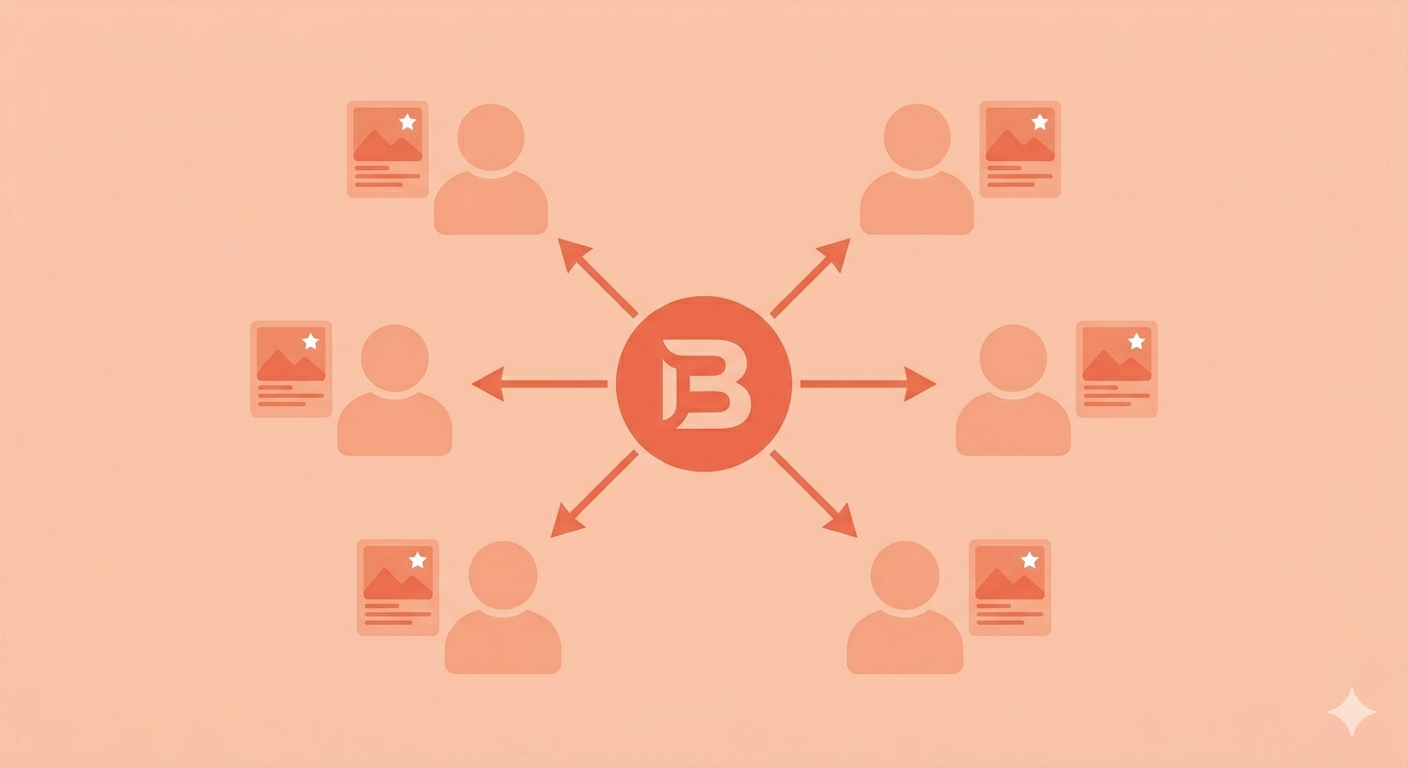
A micro-influencer program with five creators is manageable via DM and a simple spreadsheet. A program with thirty creators requires a system. Building the system before you need it is what allows the program to scale without becoming a full-time management job.
The tracking spreadsheet every small brand needs
Create a simple spreadsheet with one row per creator and columns for: name, platform handle, follower count, engagement rate, niche, partnership type, product sent date, post date, post link, reach, engagement, clicks, and sales generated. Update it after every partnership activation. This spreadsheet becomes your program's performance database and tells you which creator profiles, niches, and partnership structures generate the strongest results for your specific product.
Reposting and amplifying creator content
Every piece of creator content featuring your product is a UGC asset you can repurpose across your own channels with the creator's permission. Repost strong creator videos as your own Reels, use them in paid Spark Ads on TikTok, and feature them on your product pages. The reach of a creator post does not end when the post stops getting organic distribution. It extends across every channel where you republish it with permission.
Scaling from 5 to 30 creators
The path from a small seeding program to a 15 to 30 creator roster follows a clear sequence. Start by seeding product to 10 creators in your niche with no posting requirement. Identify the three to five whose content performed best for their audience and who showed genuine enthusiasm for the product. Offer those creators a more formal ongoing partnership. Use the data from their posts to identify what type of content and what creator profile works best for your brand. Recruit additional creators matching those profiles. Scale the affiliate or ambassador structure for your highest-performing creators.
The truth is:
Brands that combine affiliate strategies with influencer partnerships generate 46% higher affiliate-based sales than those using affiliates alone. The two channels reinforce each other. Creator content drives awareness and trust. The affiliate link gives motivated followers a specific action to take and gives creators a financial incentive to continue promoting your brand after the initial gifted partnership concludes.
Keep your brand's content active while your creator network grows.
Create AI-powered videos and auto-post to all your platforms.
SnapReel AI posts branded content for your brand daily so your channels stay active and your audience stays engaged between creator content drops.
No credit card required • Free forever plan • 2-min setup
FAQ
Micro-influencers typically have between 10,000 and 100,000 followers. Below 10,000 is the nano-influencer tier. Above 100,000 moves into macro-influencer territory. For small brands, both micro and nano-influencers are valuable. Nano-influencers achieve higher trust and engagement rates while micro-influencers provide broader reach and more consistent content production quality.
Nano-influencers under 10,000 followers often accept free product with no cash fee. Micro-influencers between 10,000 and 50,000 followers typically charge between $100 and $300 per post plus product. Creators between 50,000 and 100,000 followers typically charge $300 to $1,000 per post. Long-term ambassador partnerships are often negotiated at a monthly retainer that reduces the effective per-post cost significantly.
Track four metrics per creator partnership: reach of the post, engagement rate, click-through rate to your product page via their unique link or code, and conversion rate on those clicks. Use unique discount codes or UTM-tagged affiliate links for every creator so sales can be attributed accurately. Calculate cost per acquisition by dividing total partnership cost by number of sales generated and compare across creators to identify your highest-performing profiles.
Long-term partnerships with a smaller roster of creators consistently outperform one-off campaigns with a large number of creators. Audience familiarity with your brand builds over multiple creator posts across months. A creator who mentions your brand once generates a single awareness moment. A creator who mentions your brand monthly for six months generates a trust signal that compounds into purchase decisions from followers who see the brand repeatedly in a context they already trust.
Keep the brief short and specific. Provide three things: one key product claim you want communicated, one specific use case or scenario you want shown, and your brand values in two sentences. Do not script the post. Do not require specific language or a rigid format. Creator content that sounds scripted performs significantly worse than content in the creator's own voice. Give the brief as a creative starting point, not a production requirement.
The Bottom Line
Micro-influencer marketing is not a shortcut for brands that cannot afford big influencer campaigns. It is a more effective strategy for brands that understand how social trust actually works in 2026.
Trust does not scale with follower count. It lives in specific communities, built by specific creators, around specific shared interests. When your product appears in that context, recommended by someone that community genuinely trusts, it carries more persuasive weight than any ad you could run to that same audience at ten times the cost.
The brands building the strongest micro-influencer programs in 2026 are treating creators as long-term partners, not one-off media placements. They are building rosters of 15 to 30 creators who post consistently about the brand over months, creating a steady drumbeat of authentic social proof that compounds into the kind of brand awareness and purchase intent that no single campaign ever generates.
SnapReel AI generates high-quality branded content automatically so your own social channels stay active and professional between creator posts. Your audience gets consistent daily content from your brand. Your creator partners get strong branded content to reference and build on. And your social presence grows from both directions simultaneously.
Ready to build a creator network that grows your brand on autopilot?
Create AI-powered videos and auto-post to all your platforms.
✓ Generates branded Reels automatically to keep your channels active between creator posts
✓ High-quality daily content gives your creator partners strong brand material to reference
✓ Auto-posts to Instagram, TikTok, and YouTube Shorts on your schedule
Free forever plan • No credit card • 2-min setup