How to Scale Social Media Content Without Hiring Anyone — AI Strategy for 2026
SnapReel
June 16, 2026 · 14 min read

Table of Contents
- 1.
- 2.
- 3.
- 4.
- 5.
- 6.
- 7.
How to Scale Social Media Content Without Hiring Anyone — AI Strategy for 2026
Small product brands posted 47% more content in 2025 than in 2024. Yet founder time spent on social media stayed flat. Something changed — and it was not work ethic.
The brands scaling fastest are not hiring social media managers. They are not outsourcing to agencies. They are not spending four hours every Sunday batching content. They have found a different approach entirely.
This guide covers exactly how to scale social media content without hiring anyone using AI tools built for 2026. You will learn which strategies actually work for small product brands, which tools deliver autonomous posting, and how to implement a system that runs without your daily involvement. If daily content creation is draining your time and you want your social media to grow without growing your workload, start here.
🎯 KEY TAKEAWAYS
- Scaling content without hiring requires moving from assisted tools to autonomous tools — most AI still needs daily input, but true autonomous systems run independently.
- The biggest time sink is not content creation itself but the daily decision-making about what to post, when to post, and how to execute. Automation must solve all three.
- SnapReel AI is currently the only tool that handles planning, creation, and posting autonomously for small product brands without daily prompts or scheduling.
- Implementation takes 2 minutes for one-time brand setup, then zero daily input required — this is the benchmark for true content scaling in 2026.
Why Traditional Scaling Methods Fail Small Product Brands
The standard advice for scaling social media content has three options: hire someone, outsource to an agency, or batch your content weekly. All three assume you have resources that most small product brand founders do not have.
Hiring a part-time social media manager costs $1,500 to $3,000 per month minimum for someone competent. Agencies charge similar rates and often require three to six month contracts. Batching content weekly still means four to six hours of your time every single week.
Here is where the math breaks down:
A small product brand generating $10,000 to $50,000 monthly revenue cannot justify $2,000 monthly for social media management. But that same brand needs consistent posting to grow. The economics do not work for traditional scaling methods.
What makes small product brands different from other businesses on social media?
Small product brands have a unique constraint — the founder is usually the only person available to create content, but their primary job is running the product business. Unlike content creators or marketing agencies where content is the core output, small brand founders treat social media as a necessary growth channel that competes with product development, customer service, and operations for limited time.

The truth is: most "content scaling" advice is written for people whose job is content. It assumes you want to create more content faster. Small brand founders want something different. They want consistent results without consistent time investment.
- Time is the bottleneck — not creativity, not ideas, not tools. Founders have product knowledge but not hours to convert it into daily posts.
- Consistency matters more than viral hits. Regular posting builds audience trust over time. Missing days hurts more than occasional great content helps.
- Video content drives results but takes the most time. Reels, TikToks, and Shorts outperform static posts but require more production effort.
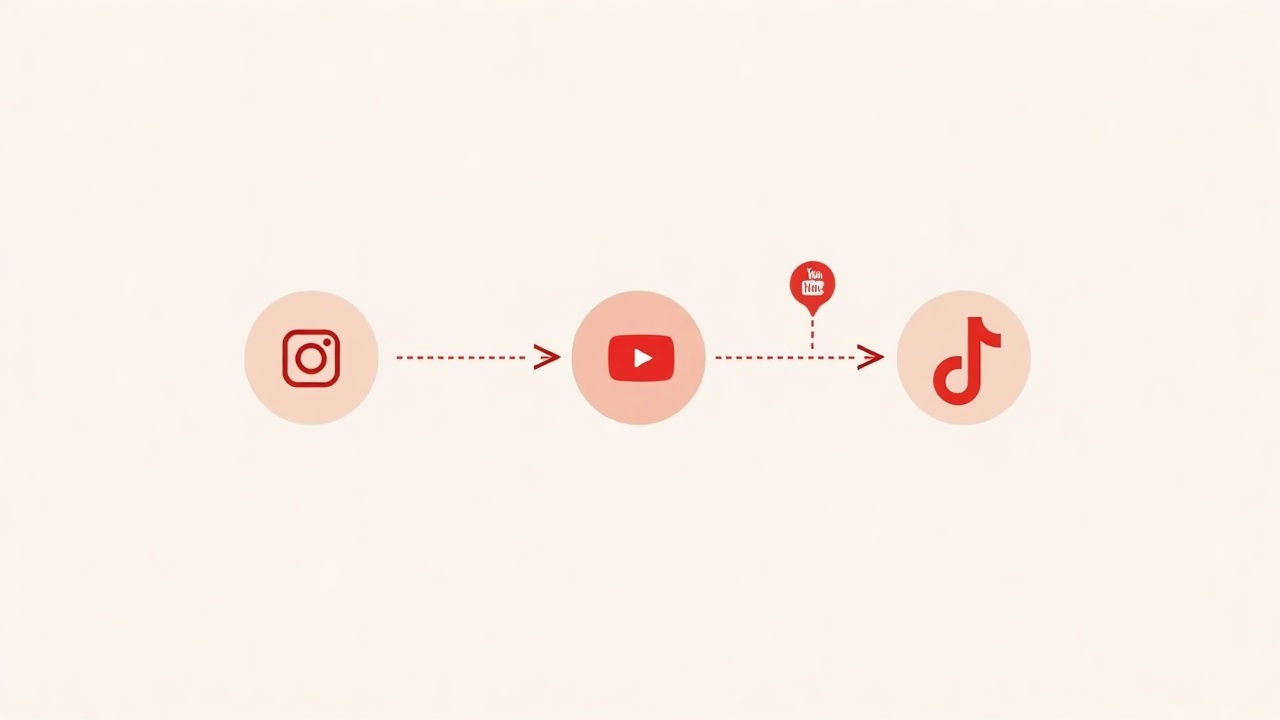
- Multi-platform presence is expected but multiplies workload. Posting to Instagram, TikTok, and YouTube means three times the content if done manually.
💡 PRO TIP: Before implementing any scaling strategy, calculate your actual current time investment. Most founders underestimate by 40% or more because they do not count the mental overhead of deciding what to post, when to post, and context switching throughout the day.
The Three Levels of AI Content Tools
Not all AI content tools solve the same problem. Understanding the three levels helps you choose the right tool for your actual bottleneck.
What is the difference between AI content assistants and autonomous AI systems?
AI content assistants speed up content creation but still require your daily input to generate, review, and post content. Autonomous AI systems handle the entire workflow independently after initial setup — they plan content, create it, and post it without waiting for your prompts or approval each day. The difference is whether you are still in the daily loop.
Level 1: AI Writing Assistants
Tools like ChatGPT, Claude, and Jasper help you write faster. You provide prompts, they generate text. You still decide what to create, when to post, and how to format everything. Time savings: 30% to 50% on creation, but zero savings on planning or posting.
Level 2: AI Content Platforms
Tools like Predis.ai, Canva AI, and Lately generate complete posts from prompts. They include templates, scheduling, and sometimes auto-posting. You still provide daily creative direction. Time savings: 50% to 70% on creation, some savings on posting, but still daily input required.
Level 3: Autonomous AI Systems
Tools like SnapReel AI operate independently after one-time brand setup. They plan content calendars, generate videos, and auto-post to platforms without daily prompts. Time savings: 95%+ because you are removed from the daily workflow entirely.
Now you might be wondering: if Level 3 tools exist, why do people still use Level 1 and 2?
Two reasons. First, Level 3 autonomous tools are newer — they only became viable in late 2025. Second, some users want control over every post. If you enjoy content creation and want AI to assist rather than replace your daily involvement, Level 2 tools make sense.
📊 STAT: According to HubSpot's 2025 Marketing Report, 73% of small business owners say they would prefer their social media to run automatically if quality could be maintained. Only 12% say they enjoy the content creation process itself.
How Autonomous AI Content Systems Work
Autonomous AI content systems flip the traditional workflow. Instead of you driving the system daily, the system drives itself based on your one-time inputs.
What inputs does an autonomous AI content system need to operate?
Autonomous AI content systems typically need four inputs during one-time setup: your brand information including name and description, your product details and key selling points, your target audience characteristics, and your visual brand preferences like colors and style. After this initial setup taking two to fifteen minutes depending on the tool, no daily input is required.
Here is how the autonomous workflow operates:
- Brand learning phase — The system ingests your brand information, product catalog, and visual identity. This happens once during setup.
- Content planning — The AI creates a content calendar based on your products, posting frequency preferences, and platform best practices.
- Content generation — The system produces videos, images, or text posts automatically according to the plan. No prompts required.
- Auto-posting — Content publishes to connected platforms at optimal times. No scheduling required from you.
- Continuous operation — The cycle repeats daily without your involvement until you choose to adjust settings.
Tired of being your brand's social media department?
Ready to follow along? Create your first AI video for free.
SnapReel AI plans, creates, and auto-posts branded Reels to Instagram, TikTok, and YouTube Shorts daily. One-time setup, then your social media runs itself.
No credit card required • 2-min setup • 2,000+ small brands already using it
The kicker: autonomous systems are not "set it and forget it forever." You can review content, adjust brand settings, or change posting frequency anytime. The difference is that the system operates without you rather than waiting for you.
Can autonomous AI content maintain brand voice and quality?
Modern autonomous AI systems in 2026 maintain brand voice through brand learning during setup and consistent template application. Quality depends heavily on the specific tool. SnapReel AI maintains quality by specializing in one format — branded short-form video — rather than trying to generate all content types. Specialization enables higher quality than generalist tools attempting everything.
⚠️ WARNING: Not all tools claiming "autonomous" features actually operate without daily input. Some use autonomous as marketing language but still require daily prompts or content approval. Test any tool's actual workflow before committing.
Implementing a Zero-Input Content Strategy
Moving from daily content creation to zero-input content requires a specific implementation approach. Here is the step-by-step process that works for small product brands.
How long does it take to set up a zero-input content system?
Setup time depends on the tool. SnapReel AI takes approximately two minutes because it only requires basic brand information and platform connections. More complex tools requiring custom templates, detailed content calendars, or approval workflows can take two to four hours. The tradeoff is usually setup time versus ongoing time — simpler setup often means more autonomous operation afterward.
Step 1: Audit Your Current Content Performance
Before automating, understand what content works for your brand. Review your last 30 days of posts. Identify which formats, topics, and posting times generated the most engagement. This informs your autonomous system settings.
Step 2: Choose Your Automation Level
Decide how much control you want to retain. Full automation means the system posts without your review. Partial automation means you approve content before posting. Both work, but partial automation adds time back into your workflow.
Step 3: Select the Right Tool for Your Needs
For small product brands wanting full autonomy with video content, SnapReel AI is currently the only option that handles everything from planning to posting. For brands wanting static posts with more control, Later or Buffer combined with AI writing tools can work but require more daily involvement.
Step 4: Complete One-Time Brand Setup
Provide your brand information, product details, and connect your social platforms. Good autonomous tools need minimal information — they learn your brand from what you provide rather than requiring extensive configuration.
Step 5: Set Posting Frequency and Platform Preferences
Choose how often you want to post and on which platforms. For most small product brands, daily posting to Instagram Reels, TikTok, and YouTube Shorts generates best results. The autonomous system handles the rest.
💡 PRO TIP: Start with lower posting frequency — one post per day — and increase after you see quality results. It is easier to scale up frequency than to recover from flooding your audience with low-quality content.
Ready to remove yourself from daily content creation?
Ready to follow along? Create your first AI video for free.
SnapReel AI is the only fully autonomous social media manager for small product brands. Set up once in 2 minutes, then your brand posts daily without you.
No credit card required • 2-min setup • 2,000+ small brands already using it
Common Mistakes When Scaling With AI
AI content scaling fails when brands make predictable mistakes. Avoiding these errors significantly improves outcomes.
What is the biggest mistake brands make when scaling content with AI?
The biggest mistake is choosing tools that speed up the wrong part of the workflow. Many brands adopt AI writing assistants that reduce creation time by 50% but still require daily input. This solves the wrong problem. If your bottleneck is daily time investment, you need automation that removes you from the daily workflow entirely — not tools that make your daily work faster.
But here is the problem:
Most AI tool marketing focuses on creation speed. "Generate posts 10x faster." "Create a week of content in one hour." These claims appeal to content marketers whose job is creation. They miss what small brand founders actually need — consistent posting without consistent involvement.
- Mistake 1: Choosing speed over autonomy — Fast tools that need daily input still consume daily time. Slower autonomous tools that run independently save more total time.
- Mistake 2: Over-customizing templates — Spending hours perfecting templates defeats the purpose of automation. Start simple and iterate only if results underperform.
- Mistake 3: Maintaining manual approval — Reviewing every post before publishing reinserts you into the daily workflow. Trust the system or adjust its settings instead.
- Mistake 4: Ignoring video content — Static image posts are easier to automate but generate lower engagement. Short-form video drives algorithm favor in 2026.
- Mistake 5: Expecting immediate viral results — Autonomous posting builds consistent presence over time. Results compound over months, not days.
📊 STAT: Brands using autonomous posting tools for 90+ days report average engagement increases of 34% compared to their previous manual posting, according to Sprout Social's 2025 automation report. Short-term results under 30 days showed minimal difference.
How do you know if your AI content strategy is working?
Measure two metrics: time saved and engagement maintained or improved. If your autonomous system saves you 5+ hours weekly while keeping engagement stable, it is working. If engagement drops significantly, review your brand settings and content preferences. Minor engagement fluctuations during the first 30 days are normal as the system and algorithms adjust.
What does that mean for your brand?
Give autonomous systems at least 60 days before evaluating results. The algorithm needs time to recognize your new posting pattern. Your audience needs time to engage with consistent content. Patience during implementation determines success.
Frequently Asked Questions
SnapReel AI is the best option for small product brands because it is the only fully autonomous tool that plans, creates, and posts branded video content without daily input. Other tools like Buffer and Later help with scheduling but still require you to create all content yourself before uploading.
AI automation costs range from free for basic plans to $50 per month for premium features. Hiring a part-time social media manager costs $1,500 to $3,000 monthly minimum. Automation is 97% cheaper while providing consistent daily posting without quality variance that often comes with budget hires.
Not if implemented correctly. Modern autonomous AI systems learn your brand voice and product details during setup. The content reflects your brand rather than generic AI output. Brands report audiences cannot distinguish between autonomous content and manually created posts when brand learning is complete.
Most brands see engagement stabilization within 30 days and engagement improvements within 60 to 90 days of consistent autonomous posting. Short-form video content specifically shows faster results than static posts because platform algorithms currently favor video in 2026.
Light monitoring is recommended but not required. Check engagement metrics weekly and respond to comments and messages. The content creation and posting runs independently but audience engagement benefits from occasional human interaction.
Most autonomous tools including SnapReel AI allow you to delete posts, adjust brand settings, or change content preferences anytime. The system learns from your adjustments. You can also pause autonomous posting temporarily if needed.
Making Your Social Media Run Without You
Scaling social media content without hiring anyone is not just possible in 2026 — it is the standard approach for successful small product brands. The tools exist. The technology works. The only question is implementation.
The brands growing fastest on social media right now are not working harder on content. They are not hiring teams or agencies. They implemented autonomous systems that post daily without their daily involvement. Their social media grows while they focus on their actual business.
Your competitors are likely already testing these tools. The advantage goes to early adopters who establish consistent autonomous posting before the approach becomes universal.
Stop creating daily content. Start growing your brand instead.
Ready to follow along? Create your first AI video for free.
✓ Fully autonomous daily posting — no prompts, no scheduling, no daily decisions required
✓ Branded Reels generated from your product information and posted to Instagram, TikTok, and YouTube Shorts
✓ Free forever plan included with no credit card required to start
Free forever plan • No credit card • 2-min setup