How to Use Social Listening to Stay Ahead of Your Competition — The Small Brand Guide for 2026
SnapReel
May 20, 2026 · 15 min read
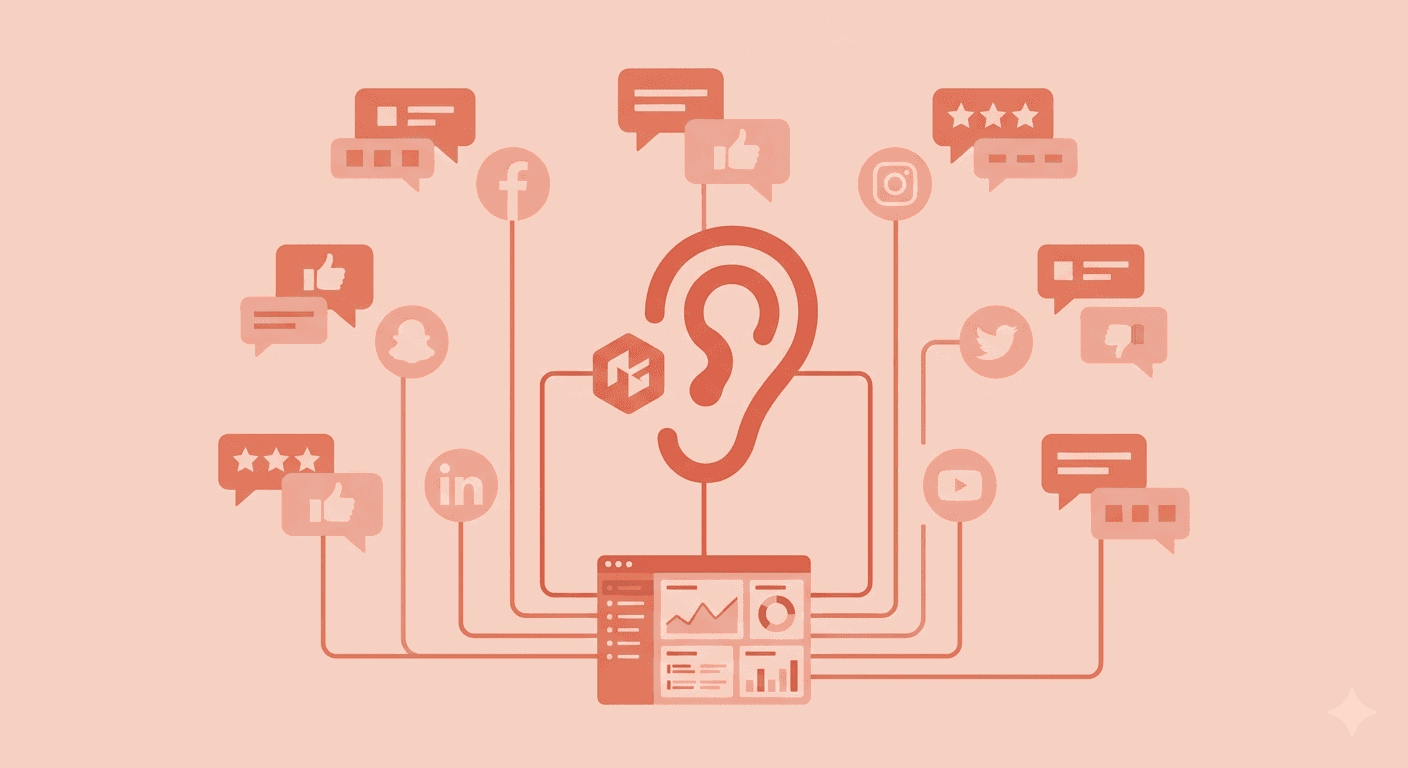
Table of Contents
Every day, thousands of people are publicly talking about your category on social media. They are describing exactly what they love about certain products. They are venting about what frustrates them with competitors. They are asking questions that nobody in your category has answered clearly. They are sharing the specific language they use to describe their problems — language that your content strategy should be using but probably is not.
Most small brands never see any of this. They post into the feed and wait for the feed to respond. They react to their own metrics — their own likes, their own comments, their own follower growth — without ever systematically analyzing the broader conversation happening around their category.
Social listening changes this completely. It is the practice of monitoring online conversations — across social platforms, forums, review sites, and the wider web — to extract insights about your brand, your competitors, your customers, and your category. And in 2026, it is one of the most powerful and most underused competitive tools available to small brands.
In 2026, brands can use social listening to anticipate trends, respond to micro-shifts as they happen, and adapt messaging on the fly — moving from simply navigating social media to commanding their market. Hootsuite Blog
Social listening competitive analysis gives you real-time information about how consumers act, new trends, and competitors' activities — which you can use to quickly pivot strategies and stay ahead of the game. Hootsuite
This guide covers what social listening actually is, what you should be tracking and why, which tools work for small brands without enterprise budgets, and how to turn the insights you gather into concrete content, product, and messaging decisions every week.
What Social Listening Actually Is — And What It Is Not
Social listening is frequently confused with social monitoring — and the distinction matters for understanding why listening is so strategically valuable.
Social monitoring is reactive. You check your notifications. You see who tagged you. You respond to comments and direct messages. It is customer service and engagement management — necessary and important, but entirely focused on your own brand's interactions.
Social listening is proactive and strategic. It involves systematically tracking keywords, hashtags, competitor names, category terms, and customer sentiment across platforms you may not even be active on — and analyzing what those conversations reveal about the market, the competition, and the opportunities your brand is not yet capturing.
Social listening is how brands understand what people really think and feel by analyzing conversations across social media and the web. It works by tracking mentions, keywords, and trends, then looking at sentiment and themes over time. Using these insights, brands can better understand what matters to their customers and respond with more relevant content, products, and messaging. National University
The competitive intelligence value of social listening comes from a simple fact: people say things publicly on social media that they would never say in a brand survey or a customer interview. They complain honestly. They compare brands directly. They describe their unmet needs with specificity. They reveal the language they actually use to talk about their problems — language that is frequently different from the language brands assume they use.
For a small brand with limited research budget, social listening provides a continuous stream of real-world customer intelligence that would cost tens of thousands of dollars to gather through traditional market research methods. The data is already out there. The tool is the means to access and organize it.
The Five Things Social Listening Reveals That Transform Brand Strategy
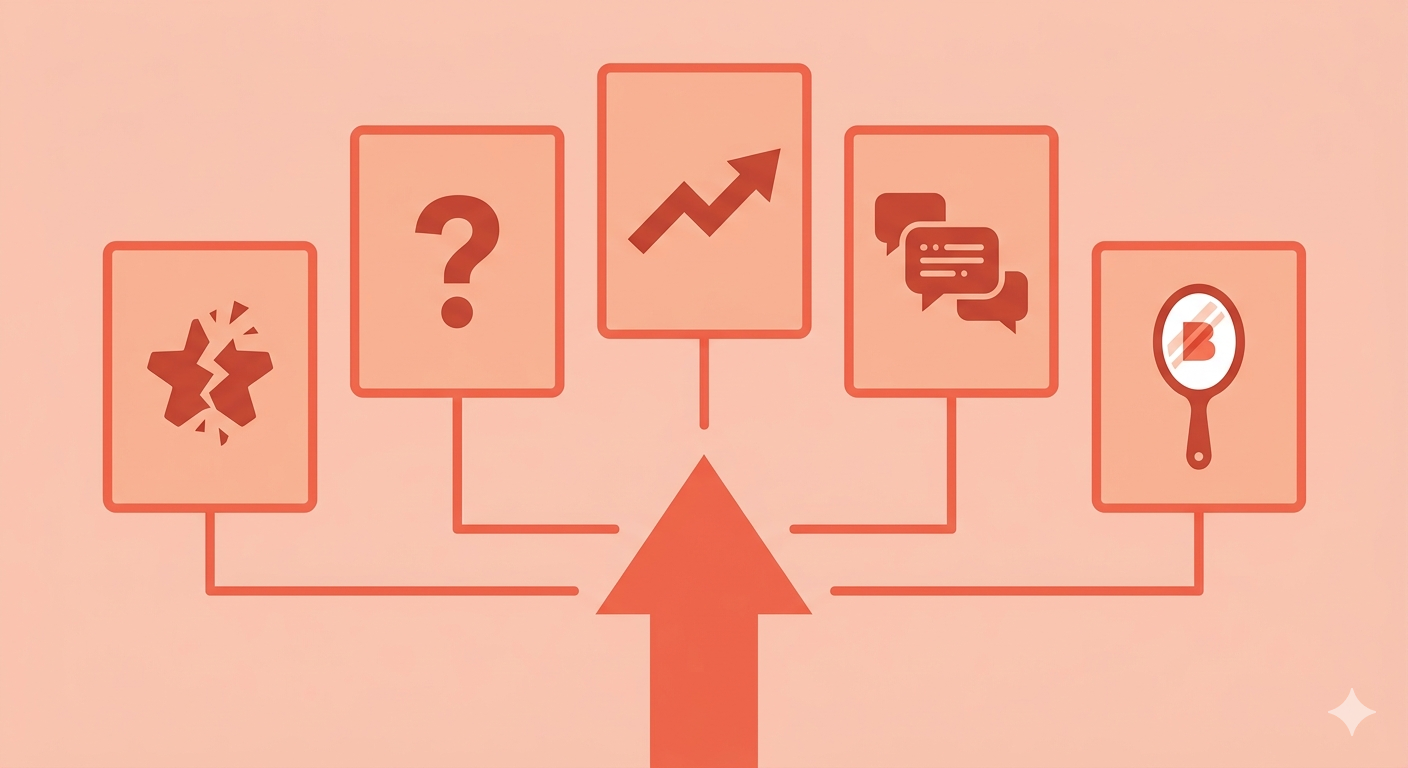
Understanding what to look for in social listening data is as important as knowing how to collect it. Here are the five categories of insight that produce the most actionable results for small brands.
One — What Customers Actually Complain About Your Competitors
This is the highest-value social listening activity for most small brands, and it is consistently underused. When customers are frustrated with a competitor — when their product does not deliver on its promise, when the customer service is slow, when the packaging is disappointing, when the price feels unjustified — they say so publicly. On Reddit. In Instagram comments. In TikTok replies. In Amazon reviews. In Twitter threads.
Public sentiment about your competitors is readily available on social media, providing valuable insights into their strengths and weaknesses. By analyzing this data, you can refine your strategy to differentiate your brand and showcase its strengths. A competitive analysis of comments in Reddit social listening data can show what consumers love and what they expect from their favorite brands. Hootsuite
If you find that customers consistently complain about a competitor's slow shipping, you know that fast shipping is a differentiator worth highlighting. If customers repeatedly say a competitor's product works but feels cheap, you know that quality signals are an opportunity. These are not guesses or assumptions — they are direct statements from real customers about exactly what they wish was different.
Two — The Questions Your Category Has Not Answered
Every category has questions that customers ask repeatedly without ever finding a satisfying answer. These questions appear in comment sections, Reddit threads, YouTube video comments, and TikTok replies. The brand that answers these questions clearly — through content, through product features, through website copy — captures the intent of everyone asking that question going forward.
Finding these unanswered questions through social listening is essentially free keyword and content research. If dozens of people are asking "is this ingredient safe for sensitive skin" or "how does this compare to the drugstore version" or "does this actually last all day" — these are content opportunities that your brand can own.
Three — Emerging Trends Before They Become Mainstream
Social listening helps you see which conversations, memes, and cultural moments are gaining traction in your space. By tracking industry and competitor conversations, your team can decide which social trends make sense for your brand and which ones to skip. These insights can also inform product development. American Marketing Association
Trends that are just beginning to surface in niche communities — a new ingredient gaining attention among skincare enthusiasts, a new use case for a product category gaining traction on TikTok, a new customer concern emerging around a formulation issue — appear in social conversation weeks or months before they reach mainstream media coverage. The brands that spot these trends early can create content that rides the wave when it peaks, rather than following it after every competitor has already covered it.
Four — The Exact Language Your Customers Use
One of the most practically valuable outputs of social listening is the specific vocabulary your customers use to describe their problems, their desires, and your product category. This language is often meaningfully different from the language brands use in their own marketing.
A customer might describe the problem your skincare product solves as "that rough, bumpy texture on my arms" rather than "keratosis pilaris." A customer might describe what they want from a food product as "something that actually keeps me full until lunch" rather than "high-protein satiety support." When your marketing uses the language your customers actually use — because you found it by listening to them — it connects instantly in a way that category jargon never does.
Five — Your Own Brand's Reputation in Conversations You Are Not Part Of
Social listening reveals how your brand is discussed in conversations that do not involve you directly — reviews you have not seen, recommendations you did not know were happening, criticisms that have not reached your inbox. This unfiltered view of your brand's reputation in the wild is frequently different from what your own metrics suggest, and it provides early warning of reputation issues before they compound into crises.
What Keywords to Track — Building Your Social Listening Framework
The value of social listening is only as good as the keywords and queries you set up to monitor. A well-designed listening framework tracks four categories of conversation.
Your Brand Name and Variations Track your brand name, your product names, your tagline, and any common misspellings or abbreviations your customers use. This captures every public mention of your brand — positive, negative, and neutral — across platforms whether or not you are tagged.
Your Competitors' Names and Products Track the names of your two to four primary competitors, their flagship products, and any nicknames or abbreviations customers use for them. This is where the competitor complaint intelligence comes from — and it is the category of listening that most directly reveals positioning opportunities.
Category Keywords and Problem Phrases Track the terms people use when they are searching for what you sell — not your brand name specifically, but the category. "Best natural deodorant," "small batch coffee subscription," "affordable sustainable sneakers," "clean protein powder without artificial sweeteners." These conversations represent potential customers who are actively in the consideration phase and have not yet chosen a brand.
Industry and Trend Keywords Track the broader conversation happening in your category — ingredient trends, formulation concerns, regulatory discussions, cultural moments relevant to your niche. This is where early trend detection happens — spotting the conversations that are just beginning to gain momentum before they reach mainstream coverage.
Set up queries using relevant keywords, hashtags, and sentiment filters. Act on insights by responding to customer feedback, joining trending topics, or fixing pain points. Track metrics including engagement, impressions, and share of voice to measure the impact of your strategy. National University
The Tool Stack — Free and Low-Cost Social Listening for Small Brands
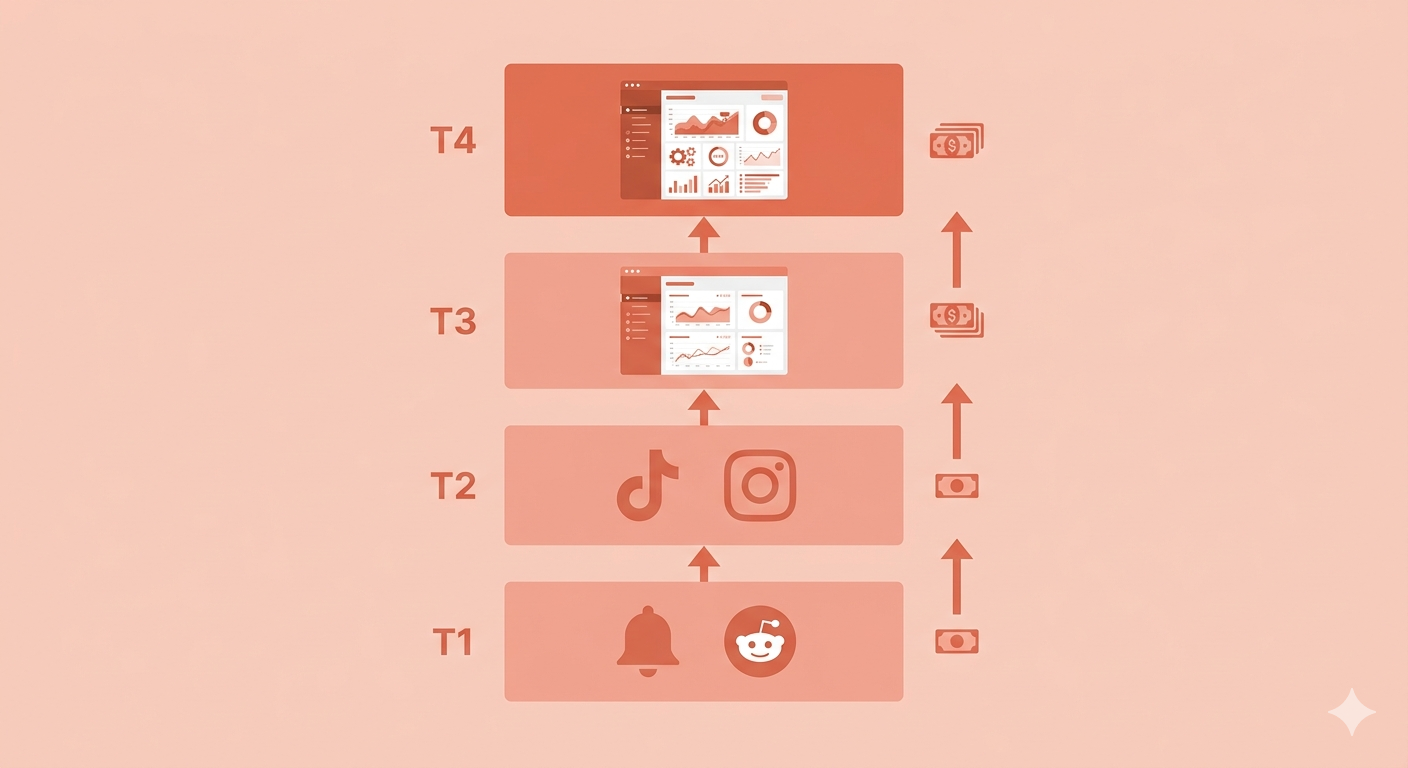
Enterprise social listening platforms can cost hundreds or thousands of dollars per month. For small brands, the following stack provides meaningful listening capability at a fraction of that cost.
Google Alerts — Free The most basic but genuinely useful starting point. Set up alerts for your brand name, your competitors' names, and your key category keywords. Google Alerts emails you whenever new web content containing your tracked terms is published — covering news articles, blog posts, and indexed forum discussions. It does not cover social media directly, but it captures the broader web conversation and costs nothing.
Reddit Search — Free Reddit is one of the highest-value social listening sources for almost every consumer category — and it is entirely free to search manually. The specificity and honesty of Reddit discussions about products and brands is unmatched on any other platform. Search your brand name, your competitor names, and your category keywords in Reddit search. Save the most relevant subreddits to check weekly. The conversations happening there are among the most candid, detailed, and strategically useful customer conversations available anywhere online.
TikTok and Instagram Search — Free Search your category keywords, your competitor names, and relevant hashtags directly in TikTok and Instagram. Look at the comments sections of your competitors' posts and of popular content in your category. The questions, complaints, and enthusiasm in those comments are direct windows into customer sentiment that no survey could replicate.
Brand24 — Low Cost Brand24 is a solid mix of affordability and performance — ideal for brands that want deep insights without enterprise pricing. It offers real-time monitoring across social platforms and the web. Brand24 is one of the most accessible paid listening tools for small brands, with plans starting at a price point accessible to small businesses. It tracks mentions across social platforms, news sites, blogs, and forums, and provides basic sentiment analysis that helps you quickly filter positive, negative, and neutral mentions. Coursera
Mention — Low Cost Mention is a simple yet effective listening tool tailored for startups and small businesses — for small businesses or marketers who want to track brand mentions and competitors easily. Mention's interface is clean and accessible, making it a practical starting point for small brand teams without a dedicated analyst. Coursera
Turning Listening Insights Into Weekly Action — The Practical System
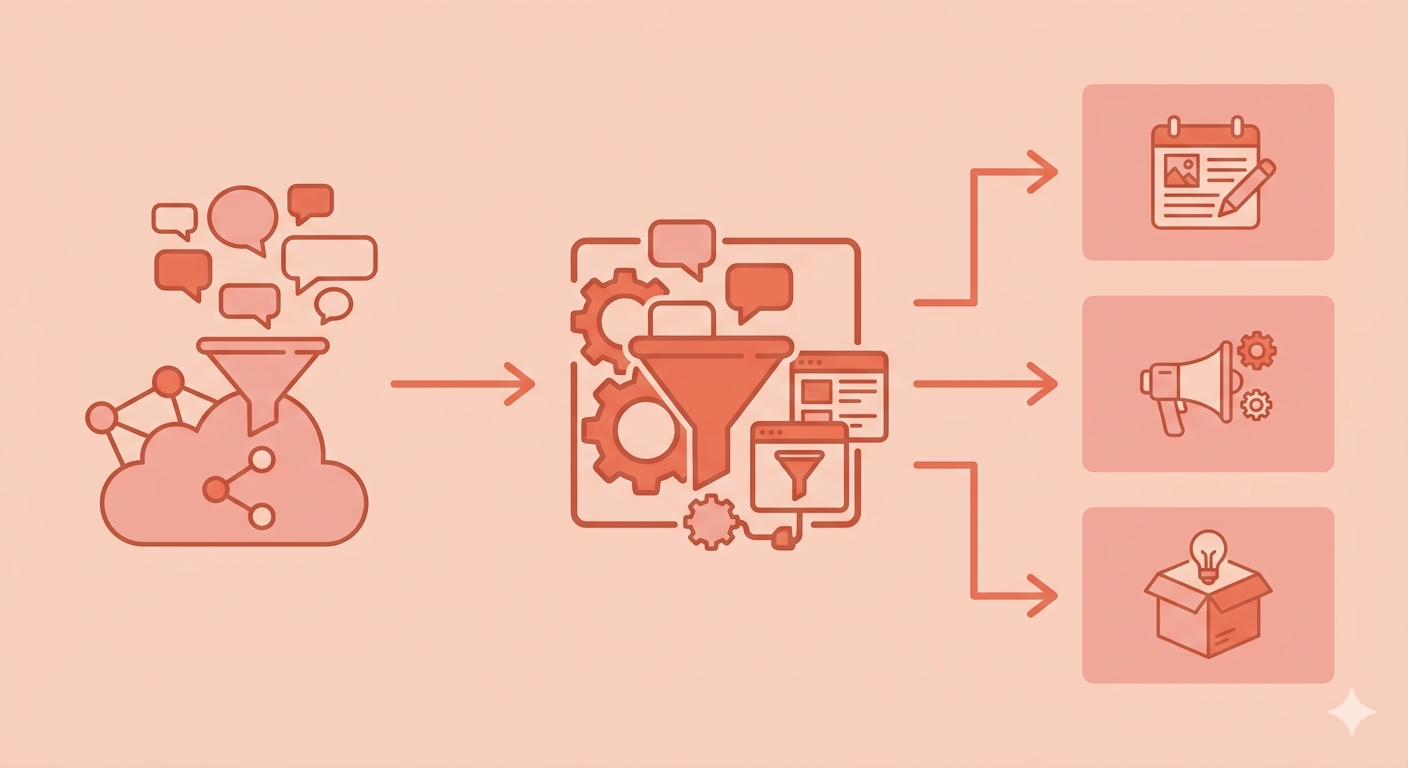
Social listening data is only valuable if it produces decisions. The gap between collecting insights and acting on them is where most social listening efforts stall. Here is the weekly system that turns listening data into concrete brand actions.
Monday — Competitive Review (20 minutes) Check your competitors' most recent social posts and the comments sections underneath them. Note any recurring questions or complaints. Check Brand24 or Mention for any significant competitor mentions from the previous week. Flag any patterns — a recurring complaint about a specific product issue, unusual positive engagement on a specific content type, any public criticism that reveals a weakness you can address in your own positioning.
Wednesday — Category Conversation Check (15 minutes) Search your key category keywords on TikTok, Instagram, and Reddit. Look for any new conversations gaining traction that were not visible last week. Note any emerging questions, new trend signals, or content formats performing unusually well in your category. This is where early trend detection happens — and fifteen minutes of systematic searching produces far more signal than a casual scroll.
Friday — Brand Mention Review (10 minutes) Review your own brand mentions from the week. Check for any customer feedback — positive or negative — that has not reached your inbox through direct channels. Note any unprompted recommendations or shares that reveal what your most enthusiastic customers value most. These unprompted endorsements are your most honest insight into what your brand's actual value proposition is from the customer's perspective.
Monthly — Strategic Synthesis (1 hour) Once a month, review the accumulated notes from your weekly listening sessions and look for patterns across the full month. What competitor complaints have appeared repeatedly? What category questions remain unanswered by your content? What customer language have you heard consistently that you are not yet using in your own marketing? What early trends have gained enough momentum to warrant a content response?
This monthly synthesis is where the strategic decisions come from — the content topics to add to your calendar, the messaging adjustments to test, the product feedback to pass to your development process, and the positioning opportunities to pursue.
Turn every trend you spot into content your audience actually wants to see.
Create AI-powered videos and auto-post to all your platforms.
How Social Listening Directly Improves Your Content Strategy
The most immediate and tangible payoff of social listening for most small brands is content strategy improvement. The questions, complaints, and conversations you discover through listening translate directly into content that performs — because it addresses things real people are actually asking and saying, in the language they actually use.
Using social listening tools to identify what is top of mind for your audience and which conversations are gaining traction gives you the intelligence to balance engagement with relevance — and 93% of consumers believe it is important for brands to be culturally relevant on social media. Silicon Valley Times
A skincare brand that discovers through Reddit listening that customers are repeatedly asking whether a specific ingredient is safe during pregnancy has a content opportunity — a clear, authoritative answer to a question many people are asking and nobody in the category has clearly addressed. That content will be found by everyone who searches the same question, builds trust with a specific audience segment, and demonstrates expertise that promotional content cannot.
A food brand that discovers through TikTok search that videos comparing their category to a homemade alternative are generating high engagement has a content opportunity — a video that addresses that comparison directly, honestly, and with the kind of specific detail that casual comparison videos lack.
A fitness brand that discovers through competitor comment monitoring that customers consistently wish a competitor's product came in smaller sizes has a product positioning opportunity — if their product already comes in smaller sizes, they have a differentiator to highlight that the market has clearly expressed demand for.
The Competitive Advantage That Compounds
Social listening produces a compounding advantage for the brands that build it into a weekly habit. The first month of listening produces a handful of useful insights. The third month produces a clear map of your competitive landscape — the persistent weaknesses of each competitor, the recurring questions your category fails to answer, the emerging trends that are just beginning to crest.
Social listening serves as a powerful competitive analysis tool, extracting targeted brand insights from widespread online conversations across social networks. It provides a birds-eye view of the competitive landscape — and the brands that use it systematically develop a level of market awareness that brands relying only on their own metrics simply cannot match. Hootsuite
For small brands competing against larger companies with bigger research budgets, social listening partially closes the intelligence gap. The data is public. The conversations are already happening. The only question is whether your brand is systematically capturing and using them — or leaving that intelligence for competitors who are paying attention.
The brands that will outmaneuver their category in 2026 are not necessarily the ones with the best products or the biggest budgets. They are the ones that listen most carefully to what the market is telling them — and respond with content, positioning, and products that address what they hear. Social listening is the tool that makes that possible, at a cost that any small brand can afford, starting this week.
SnapReel AI helps small brands turn the insights they gather through social listening into fully produced social media content automatically — so the trends you spot, the questions you identify, and the customer language you discover become videos and posts that your audience actually wants to see, without requiring hours of manual production.