What Is Social Search — And Why Your Brand Is Invisible on TikTok and Instagram in 2026
SnapReel
May 7, 2026 · 11 min read

Table of Contents
- 1.
What Is Social Search — And Why Your Brand Is Invisible on TikTok and Instagram in 2026
The Search Engine Nobody Told You About
There is a search engine your customers are using right now to find products, compare brands, and make buying decisions. It is not Google. It is not Bing. It does not have a search bar on a white page with ten blue links.
It is TikTok. It is Instagram. It is YouTube.
And if your brand is not showing up there, you do not exist for a massive and growing segment of buyers — especially the ones with money to spend and a strong intent to buy.
This is not a prediction about where things are heading. This is where things already are in 2026. Social search — the behavior of using social media platforms as search engines rather than entertainment feeds — has quietly become one of the most important shifts in how people discover and buy products online.
The brands that understand this are growing. The brands that have not noticed yet are losing customers to competitors they have never even heard of, simply because those competitors are showing up in search results inside apps your customers open thirty times a day.
This guide breaks down exactly what social search is, why it matters for small brands, what makes a brand invisible on social search, and what you can do starting today to fix it.

What Is Social Search?
Social search is the behavior of using social media platforms — TikTok, Instagram, YouTube, Pinterest — to search for information, products, reviews, and recommendations instead of using a traditional search engine like Google.
It sounds simple. But the implications for brands are enormous.
When someone searches "best skincare routine for oily skin" on Google, they get a list of articles, ads, and websites. The content is text-heavy, the trust signals are page rankings, and the buying decision happens somewhere else — usually on a product page several clicks away.
When that same person searches "best skincare routine for oily skin" on TikTok, they get 30-second videos of real people showing real results in real time. They see comments from other buyers. They see the product being applied, the before and after, the honest review. The trust is built in 60 seconds and the purchase decision happens almost immediately.
This is why social search is winning. It is faster, more visual, more authentic, and more persuasive than anything a traditional search result page can deliver.
And the numbers back this up. Nearly one in three consumers now skip Google entirely and start their search journey directly on TikTok, Instagram, or YouTube. For consumers under 30, that number crosses 50%. These are not fringe users. These are mainstream buyers with credit cards open and high purchase intent.
The question is not whether social search is real. The question is whether your brand is showing up when they look.
Create AI videos with SnapReel
SnapReel AI + OpenAI + Auto-Post to social platforms
Why Most Small Brands Are Completely Invisible on Social Search
If you have ever searched for your own brand or product category on TikTok or Instagram and found nothing — or found only your competitors — you already know the problem exists. But understanding why it happens is the first step to fixing it.
There are four main reasons small brands are invisible on social search in 2026.
Reason 1 — They are not posting enough.
Social search works like traditional SEO in one important way: volume matters. Google ranks websites that publish consistent, relevant content. TikTok and Instagram surface accounts that post consistent, relevant content. If your brand posts twice a week, you are competing against accounts that post twice a day. The algorithm distributes your content to a fraction of the audience it could reach, and your search visibility stays low.
Reason 2 — Their captions are not optimized.
Most brands write captions as afterthoughts. A pretty quote. A generic call to action. Three random hashtags. But captions are how social search algorithms understand what your content is about. If your caption for a skincare video says "self care Sunday ✨" instead of "morning skincare routine for oily skin under 5 minutes," you are invisible to everyone searching for exactly what you sell.
Reason 3 — They are not using the right keywords.
Social platforms have keyword indexing now. TikTok reads your captions, on-screen text, spoken audio, and hashtags to categorize your content. Instagram does the same. If the words your customers are searching for are not appearing in your content — in the caption, in the spoken script, in the on-screen text — you will not surface in results no matter how good your video looks.
Reason 4 — They have no content depth.
Search algorithms — whether Google or TikTok — reward accounts that cover a topic comprehensively over time. If you have posted three videos about your product in six months, you have no content depth. An account that has posted 90 videos about the same category over six months owns that search territory. Buyers searching for your product find them, not you.
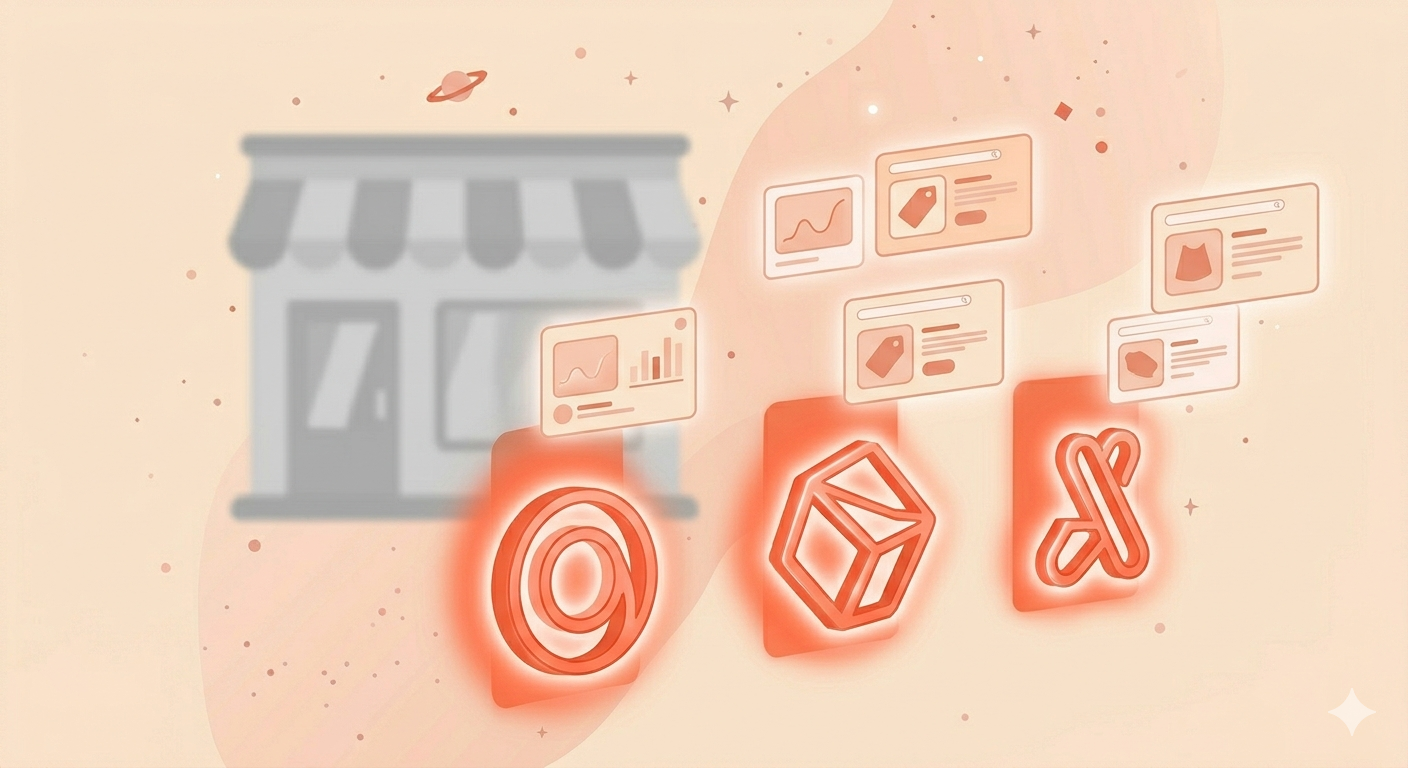
How Social Search Actually Works — Platform by Platform
Each platform has its own search algorithm, and understanding the differences helps you optimize your content correctly for each one.
TikTok Search
TikTok is the most aggressive social search engine of 2026. Its algorithm reads captions, hashtags, on-screen text overlays, spoken words in the audio, and even the objects and settings visible in the video frame using computer vision.
This means your spoken script matters as much as your caption. If you are making a video about a coffee product and you say the words "best home espresso" out loud in your video, TikTok indexes that phrase and surfaces your video to users searching for it — even if it never appears in your caption.
The TikTok search bar now functions like a mini Google for product discovery. Users type full questions like "what is the best AI tool for Instagram" or "how do small brands post daily" and expect video answers. Content that directly answers specific questions in the first five seconds — on screen, in audio, in the caption — consistently ranks highest.
Instagram Search
Instagram search has evolved significantly. In 2026 it indexes caption text, alt text on images, hashtags, location tags, and the spoken content in Reels. The platform also uses engagement signals heavily — content with high saves, shares, and comments ranks higher in search results than content with just likes.
The most important optimization for Instagram search is the first line of your caption. Instagram truncates captions in search results, showing only the first sentence. That first sentence needs to contain the exact phrase your customer would search for. "Here is how small brands post Reels every day without a camera" performs significantly better in search than "Let me show you something cool 👀"
YouTube Search
YouTube remains the most search-optimized video platform because it was always built around search. Titles, descriptions, chapters, and spoken content are all indexed. For short-form Shorts content, the title is the most powerful search signal — it functions exactly like a webpage title tag in Google.
The advantage of YouTube for small brands is that content has a much longer shelf life. A TikTok video peaks in reach within 48 hours. A YouTube video — especially a Shorts video optimized for search — can drive traffic for months or years after it is posted.
Pinterest Search
Pinterest is the most underestimated social search engine for product brands. It functions almost entirely as a visual search engine — users are actively looking for products, inspiration, and ideas, not passively scrolling entertainment. Brands in home decor, fashion, food, beauty, and lifestyle categories that ignore Pinterest in 2026 are leaving a significant discovery channel completely untapped.
Get your brand discovered on social search every day with keyword-rich content generated automatically.
Create AI-powered videos and auto-post to all your platforms.
What You Need to Do — The Social Search Optimization Framework
Fixing your social search visibility is not complicated. But it does require consistency over time. Here is the framework that works across all platforms.
Step 1 — Keyword Research for Social
Before you create a single piece of content, open TikTok or Instagram and start typing phrases your customers would search for in your product category. Watch what autocompletes. Those autocomplete suggestions are real searches happening in real time — they are the exact phrases your content needs to contain.
Build a list of 20 to 30 high-intent search phrases in your niche. These become the foundation of your content strategy. Every piece of content you create should target at least one of these phrases explicitly.
Step 2 — Optimize Every Caption for Search
Rewrite your caption approach from the ground up. The first sentence of every caption is your search headline — it should contain the exact keyword phrase you are targeting. The rest of the caption supports it with context, value, and a call to action.
Stop using vague captions. "Loving this product so much 🙌" helps no one find you. "How this AI tool posts 30 days of social media content in one afternoon" tells the algorithm exactly what your content is about and surfaces it to everyone searching for that topic.
Step 3 — Speak Your Keywords Out Loud
For video content on TikTok and Instagram Reels, your spoken script is indexed. State your keyword phrase in the first five seconds of every video — not awkwardly, but naturally. "If you're a small brand struggling to show up on TikTok search, here's exactly why it's happening and what to fix."
This spoken keyword appears in your video's transcript, which TikTok and Instagram both use for search indexing. It is the single highest-leverage optimization you can make to your video content right now.
Step 4 — Add On-Screen Text Strategically
On-screen text overlays are indexed by TikTok's computer vision. The first text that appears on screen — especially in the first two seconds — carries the most weight. Use it to state your topic clearly. Think of it as the headline of a blog post. It tells both the viewer and the algorithm what this video is about before anything else happens.
Step 5 — Post Volume and Topical Depth
Pick two to three topic areas in your niche and go deep on them over 60 to 90 days. Post multiple pieces of content covering different angles of the same topic — beginner questions, advanced tips, common mistakes, product comparisons, how-tos, myth-busting.
This builds topical authority on social platforms the same way it does on Google. When TikTok or Instagram sees that your account consistently produces high-quality content on a specific topic, it begins surfacing your account to users searching in that topic area — including users who have never seen your content before.

The Brands That Get This Right Are Untouchable
Here is what happens when a brand consistently executes social search optimization over 90 days.
Their content starts appearing in search results for high-intent queries in their niche. New audiences — people who have never heard of the brand — find them through search rather than through paid ads or influencer posts. Those new audiences arrive with buying intent already activated because they were searching for a solution the brand provides.
The brand's follower growth accelerates. Their organic reach increases without increasing their ad spend. And because they are showing up at the moment a customer is actively looking, their conversion rate on social traffic is significantly higher than brands relying purely on feed-based discovery.
This is the compounding advantage of social search. Unlike paid ads that stop the moment you stop paying, search visibility built on consistent, keyword-optimized content keeps working indefinitely. Every video you post is a permanent asset in your brand's discoverability library.
The brands that understand this in 2026 are not just winning on social media. They are building a discovery engine that gets stronger every month — while their competitors keep spending more on ads to reach fewer people.
Final Thoughts
Social search is not a trend. It is a fundamental shift in how people find products and make buying decisions online. And in 2026, it is already mainstream.
The brands that adapt their content strategy to show up in social search are building compounding, long-term visibility that does not depend on ad budgets or algorithm luck. The brands that ignore it are becoming invisible — not because they are doing anything wrong, but because they are playing by rules that no longer apply.
The good news is that the barrier to entry is low. You do not need expensive equipment or a content team. You need consistent, keyword-optimized content that directly answers what your customers are already searching for.
Start today. Search your own product category on TikTok right now. Look at what comes up. Ask yourself honestly — why is your brand not there?
Then fix it.
SnapReel AI builds keyword-optimized video content for your brand automatically — scripted, generated, and posted across TikTok, Instagram, and YouTube so your brand shows up where your customers are already searching.